
Khrut : The Celestial Bird-Warriors of Thailand
| Description | |
|---|---|
| Origin | Thai Mythology |
| Nature | Benevolent |
| Notable Members | Phra Khrut Pha |
| Symbolism | Freedom, Divine authority, Protection |
| Epics | Ramakien |
Mythlok Perspective
In Mythlok’s Perspective, Khrut represent one of Southeast Asia’s most successful examples of cultural adaptation. What began as the Indian Garuda evolved into something uniquely Thai, blending Hindu, Buddhist, and local traditions into a symbol of national identity. Their role extends beyond mythology, connecting divine authority, kingship, and cultural continuity. A fascinating comparison can be made with the Persian Simurgh and the Native American Thunderbird. Like the Simurgh, Khrut occupy a sacred space between heaven and earth. Like the Thunderbird, they embody celestial power and protection. Yet Khrut remain distinct because they became not only mythological guardians but also living symbols of a modern nation.
Khrut
Introduction
Khrut (ครุฑ) are among the most revered supernatural beings in Thai tradition. Often translated as Garuda in English, the term actually carries a broader meaning in Thai mythology. While Garuda is the most famous member and king of the race, Khrut refers to an entire class of celestial bird beings who inhabit the mythological cosmos. This distinction is important because many modern descriptions incorrectly treat Khrut and Garuda as identical figures.
Drawing from both Indian and Buddhist traditions, Khrut evolved into powerful symbols of divine authority, courage, and protection. Their imagery can be found throughout Thailand, from temple decorations and royal insignia to government seals and national monuments. Over centuries, they became more than mythological creatures. They transformed into cultural icons representing the connection between earthly rulers and divine power.
Today, Khrut remain one of the most recognizable figures in Thai culture, embodying ideals of strength, loyalty, and sovereignty while preserving ancient beliefs that arrived in Southeast Asia through Hindu and Buddhist influence.
Physical Description
Khrut are typically portrayed as majestic hybrid beings that combine human and avian characteristics. Traditional depictions show a muscular human torso paired with the wings, beak, talons, and feathers of a great eagle. Their immense wings symbolize their ability to travel between heavenly and earthly realms, while their powerful claws reflect their reputation as formidable warriors.
Thai artistic traditions often depict Khrut with radiant red, gold, and green coloration. Gold signifies divine status and royal authority, while red is associated with power, vitality, and protection. Elaborate crowns, jewelry, and ceremonial garments frequently appear in royal and temple artwork, emphasizing their elevated position within the cosmic hierarchy.
Unlike ordinary birds, Khrut possess intelligence, supernatural strength, and spiritual power. In many representations they appear in dynamic poses, spreading their wings or grasping serpents in their talons, visually reinforcing their role as defenders against destructive forces.
Mythological Context
The mythology of Khrut developed through the blending of Indian religious traditions with local Southeast Asian beliefs. In Hindu cosmology, Garuda serves as the divine mount of the god Vishnu. As these ideas spread across Southeast Asia, they were integrated into local traditions and gradually adapted into Thai religious culture.
Buddhist texts and folklore also feature Garuda-like beings as powerful inhabitants of the celestial realms. They are often portrayed as protectors of sacred teachings and guardians against chaos. In Thai interpretations, Khrut occupy an important place within the supernatural order, existing alongside gods, heavenly beings, spirits, and Nāgas.
Their stories reflect the broader religious synthesis that characterizes Thai culture. Elements from Hindu mythology, Buddhist cosmology, and indigenous beliefs merged over centuries, creating a unique interpretation in which Khrut became both divine servants and protectors of the kingdom.
Origins
The origins of Khrut can be traced to the ancient Indian figure Garuda, a powerful bird deity associated with Vishnu. Through trade, migration, and cultural exchange, Indian religious concepts reached Southeast Asia, influencing local kingdoms and shaping regional mythology.
As these traditions entered what is now Thailand, the image of Garuda underwent a gradual transformation. Rather than remaining solely a singular divine figure, the concept expanded into a broader race of celestial bird beings known collectively as Khrut. Garuda remained their supreme ruler, but the mythology increasingly emphasized the existence of an entire community of similar creatures.
Over time, the symbolism of Khrut became deeply intertwined with kingship. Thai rulers adopted Garuda imagery to reinforce concepts of divine authority and sacred legitimacy. This association eventually elevated Khrut from mythological beings to enduring symbols of the Thai state.
Notable Members
The most important member of the Khrut race is Garuda, known in Thailand as Phra Khrut Pha. He serves as the king of all Khrut and acts as the divine vehicle of Vishnu. In both Hindu and Buddhist traditions, Garuda is renowned for his immense strength, speed, and unwavering loyalty.
Unlike many mythological traditions that provide extensive genealogies for supernatural beings, Thai sources rarely identify individual Khrut by name. Instead, they are usually portrayed collectively in temple murals, religious literature, and traditional performances.
This collective representation emphasizes the role of Khrut as a celestial order rather than focusing on individual personalities. Their significance lies in what they symbolize as a group: guardianship, courage, and divine service.
Relationship with Other Beings
Khrut maintain close relationships with divine beings, particularly Vishnu, whom Garuda serves as mount and companion. This association places them among the most respected creatures in the cosmic hierarchy and reinforces their reputation as defenders of righteousness.
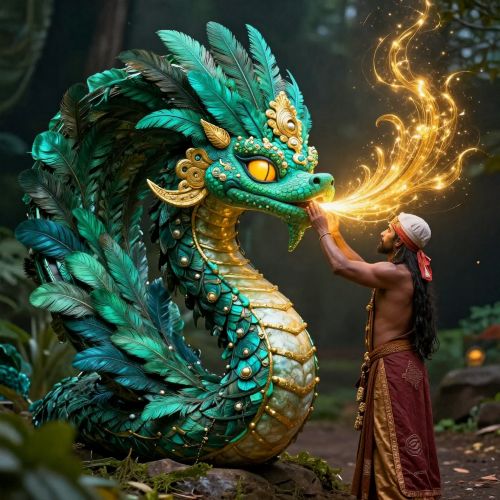
Their most famous relationship is their longstanding conflict with the Nāgas, powerful serpent beings found throughout Hindu and Buddhist traditions. The rivalry between Khrut and Nāgas appears in numerous stories and symbolizes opposing natural and cosmic forces. The sky-dwelling Khrut represent freedom, light, and movement, while the water-associated Nāgas embody mystery, depth, and hidden power.
In relation to humanity, Khrut are generally viewed as protectors rather than adversaries. Thai tradition associates them with kingship, governance, and national security. Their presence in royal and governmental imagery reflects the belief that they safeguard both rulers and the realm itself.
Similar Beings
Several mythological traditions feature giant birds that share characteristics with Khrut. The closest parallel is Garuda from Indian mythology, from whom the Thai Khrut ultimately developed. However, Garuda in Indian tradition is primarily an individual deity, whereas Khrut represents an entire race of celestial beings. The Persian Simurgh also resembles Khrut in its grandeur and supernatural wisdom. Unlike the warrior-like Khrut, however, the Simurgh is more closely associated with knowledge, healing, and guidance.
The Greek Phoenix shares the image of a magnificent sacred bird but differs significantly in symbolism. Its defining characteristic is rebirth through fire rather than protection or martial power. The Roc of Arabian folklore matches Khrut in size and awe-inspiring presence. Yet the Roc is generally portrayed as a giant beast rather than a divine guardian connected to royal authority.
Symbolism and Interpretations
Khrut symbolize a range of ideals that remain important within Thai culture. Their wings represent freedom and transcendence, reflecting the ability to move beyond earthly limitations. This symbolism has made them enduring icons of spiritual aspiration and independence.
Their connection to royal authority is equally significant. For centuries, Khrut have represented legitimate rule, divine favor, and sovereign power. This association continues today through their role in national symbolism and official emblems.
Protection forms another major aspect of their meaning. they are frequently depicted defending sacred spaces, religious teachings, and the kingdom itself. Their victories over serpentine adversaries symbolize the triumph of order over chaos.
At a deeper level, Khrut embody the connection between humanity and the divine. Their hybrid form bridges earthly and heavenly realms, making them powerful symbols of harmony between mortal existence and cosmic order.
Modern Influence
Khrut continue to play an important role in modern Thailand. Their most visible presence is as the national emblem of the country, where the image of Garuda serves as an official symbol of the monarchy and government. Government documents, official seals, and many state institutions prominently display this sacred figure.
In architecture, Khrut appear throughout Thailand on temples, palaces, and monuments. Their images are carved into stone, painted in murals, and incorporated into decorative designs that connect modern structures with ancient traditions.
Traditional performing arts also preserve their legacy. Khon masked dance dramas and literary retellings frequently include Khrut characters, allowing new generations to engage with these ancient stories.
Beyond religious and governmental contexts, Khrut remain a powerful cultural symbol. Their imagery appears in jewelry, fashion, artwork, corporate insignia, and contemporary design. Far from being relics of the past, they continue to represent national identity, resilience, and the enduring influence of Thailand’s mythological heritage.

Sources
GodChecker. “KHRUT – the Thai God of the Sun.” https://www.godchecker.com/thai-mythology/KHRUT/
HD Asian Art. “Unraveling the Majesty: The Profound Significance of the Thai Garuda.” https://www.hdasianart.com/blogs/news/unraveling-the-majesty-the-profound-significance-of-the-thai-garuda
Encircle Photos. “Garuda Emblem of Thailand on Karon Beach in Phuket.” https://www.encirclephotos.com/image/garuda-emblem-of-thailand-on-karon-beach-in-phuket-thailand/
Thailand NOW. “There’s More to a Thai Ghost Story Than Being Scary.” https://www.thailandnow.in.th/arts-culture/theres-more-to-a-thai-ghost-story-than-being-scary/
Mani, F. L. (1980). Thai Myths and Beliefs. Thai National Library.
Coedes, G. (1968). The Indianized States of Southeast Asia. University of Hawaii Press.
Phra Payutto, P. (1997). Buddhism and Thai Culture. Buddhadhamma Foundation.
Terwiel, B. J. (2012). “Mythological Symbols in Thai Political Culture.” Journal of Southeast Asian Studies, 43(2), 245-267.
Frequently Asked Questions
Who is Khrut in Thai mythology?
Khrut are celestial bird beings in Thai tradition, with Garuda serving as their king and most famous representative.
Is Khrut the same as Garuda?
Not exactly. Garuda is the ruler of the Khrut, while Khrut refers to the broader race of divine bird-warriors.
Why is Khrut important in Thailand?
Khrut symbolizes royal authority, protection, and national identity, appearing as Thailand’s official emblem.
Why do Khrut fight Nāgas?
Their rivalry symbolizes opposing cosmic forces, often representing the struggle between sky and water or order and chaos.
Where can Khrut be seen in modern Thailand?
Khrut appear on government seals, temples, royal buildings, official documents, and numerous works of Thai art.