


Black Duwende : The Malevolent Earth Spirits of Philippine Folklore
At a glance
| Description | |
|---|---|
| Origin | Philippine Mythology |
| Classification | Spirits |
| Family Members | N/A |
| Region | Philippines |
| Associated With | Illness, Treasure, Bad Luck |
Mythlok Perspective
In Mythlok’s Perspective, Black Duwende represent the darker consequences of humanity’s disregard for the unseen world. Like Japan’s Kodama, they are associated with natural spaces where human behaviour carries spiritual consequences. Yet, while Kodama are often regarded as guardians of trees, Black Duwende embody a more threatening relationship with their surroundings, responding to intrusion with misfortune and hostility. Their folklore reflects a recurring mythological belief that nature is inhabited, not owned.
Black Duwende
Introduction
The Black Duwende, known in Filipino as Itim na Duwende, are a feared variety of supernatural beings in Philippine folklore. They belong to the broader family of duwende, diminutive earth-dwelling spirits believed to inhabit anthills, earthen mounds, trees and secluded corners around human settlements. While duwende are known for their unpredictable relationships with humans, Black Duwende are particularly associated with hostility, misfortune and supernatural retaliation.
Philippine traditions describe different varieties of duwende, sometimes distinguished by colour. White duwende are commonly associated with benevolence and good fortune, while Black Duwende are regarded as dangerous and malicious. These distinctions are not universal across the archipelago, and descriptions vary between communities. Nevertheless, the Black Duwende occupy an important place in accounts of supernatural beings that punish human intrusion and challenge the boundaries between the natural and unseen worlds.
Physical Description
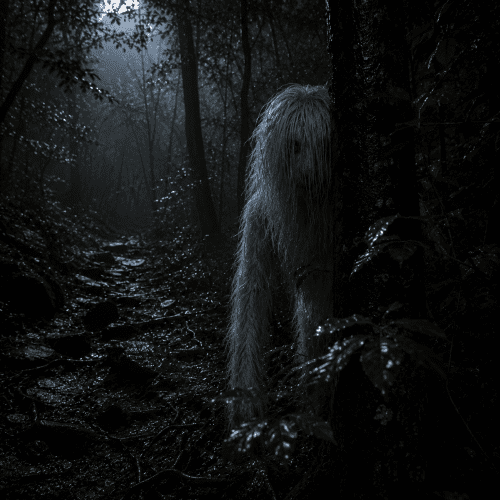
Black Duwende are traditionally described as diminutive humanoid creatures with an unusually disturbing appearance. Unlike the more familiar representations of duwende as small, elderly men, this variety possesses distinctive physical characteristics that reflect its darker reputation.
Folklore descriptions portray them with greasy, coal-black skin resembling the texture of a frog. Their eyes are bloodshot, and they are said to possess a pair of small horns on their heads. Some accounts also describe them covering their bodies with leaves rather than wearing conventional clothing. Their unusual appearance distinguishes them from other varieties of duwende, whose descriptions frequently include beards, colourful garments and traditional headwear.
Like other duwende, Black Duwende are believed to be considerably smaller than humans. Their diminutive size allows them to remain concealed within their surroundings, particularly around the earthen mounds and natural formations associated with their dwellings. Their appearance is therefore closely connected with the mysterious environments they inhabit.
Mythological Context
Black Duwende belong to the supernatural world of Philippine folk belief, where numerous unseen beings are believed to coexist with humans. These spirits are associated with particular places, natural features and domestic environments, and their presence is often understood through encounters involving unexplained illness, misfortune or unusual occurrences.
The broader duwende tradition reflects a relationship between humans and the land that is governed by respect and restraint. Earthen mounds, anthills and certain trees are treated as possible dwelling places of these beings. Disturbing such locations without acknowledging their inhabitants is traditionally believed to invite supernatural retaliation. Within this belief system, the Black Duwende represent the more threatening side of the relationship. They are associated with curses, mysterious ailments and hostile encounters. Their reputation contrasts with accounts of other duwende that reward respectful humans with gifts or good fortune.
Origins
The origins of the Black Duwende are connected to the wider history of duwende beliefs in the Philippines. The word duwende is related to the Spanish duende, a term historically used for supernatural household spirits and goblin-like beings. However, the beliefs associated with Philippine earth-dwelling spirits also draw upon older indigenous traditions concerning unseen inhabitants of the natural world. Philippine folklore does not provide a single creation narrative explaining the emergence of Black Duwende. Instead, their identity comes primarily from descriptions, oral accounts and regional classifications of supernatural beings.
Folklore collections associated with Maximo D. Ramos and earlier ethnographic records preserve descriptions of duwende, including their physical differences and relationships with humans. In particular, an account from the H. Otley Beyer Ethnographic Collection, recorded by Catalino Alfafara in 1917, describes the distinctive appearance of Black Duwende. Such records help preserve details of beliefs that might otherwise have remained confined to local oral traditions. Their classification as a dark variety of duwende should therefore be understood through regional folklore rather than a single established mythology shared by every Filipino community.
Notable Members
Black Duwende are a collective category rather than a supernatural individual with a personal biography. Philippine folklore does not establish a universally recognised king, queen or named ancestral figure specifically belonging to this variety.
The term Itim na Duwende identifies the group through its characteristic appearance and malevolent reputation. Individual encounters are generally described through stories involving particular households, disturbed dwellings or people who experience unexplained misfortune. This distinction is important because the wider duwende tradition includes named characters and individual supernatural figures in contemporary storytelling. These should not automatically be treated as members or leaders of the Black Duwende.
Relationship with Other Beings
Black Duwende exist within the broader supernatural community of Philippine earth spirits. Their relationship with other varieties of duwende is frequently characterised by differences in temperament and behaviour. White Duwende are commonly associated with protection, good fortune and beneficial relationships with humans. Black Duwende, by contrast, are feared for their hostility and their tendency to punish those who disturb their surroundings. Red Duwende also appear in some colour-based classifications, although their characteristics vary between accounts.
Their relationship with the Nuno sa Punso is particularly interesting. Both are associated with earthen mounds and supernatural retaliation when their dwelling places are disturbed. However, the Nuno sa Punso is often understood as a distinct earth-dwelling spirit, sometimes described as an old supernatural inhabitant of a mound. The two should not automatically be treated as identical. Other Philippine spirits, including the broader category of lamang-lupa, also share an association with the earth and places inhabited by humans. These similarities reflect overlapping beliefs rather than proof that all such beings belong to the same supernatural species.
Similar Beings
Several supernatural beings from Philippine and international folklore share characteristics with the Black Duwende. The Nuno sa Punso is perhaps the closest Philippine comparison. Traditionally associated with earthen mounds, this spirit is believed to punish people who disturb its dwelling. Like the Black Duwende, it represents the dangers of disregarding places believed to be spiritually inhabited. The Ugaw of Pangasinan is another interesting comparison. This small folkloric being is associated with stealing rice and causing disturbances within households. Although its behaviour resembles some accounts of troublesome duwende, it belongs to a separate regional tradition.
Outside the Philippines, Spanish duendes provide an important cultural comparison. Both traditions feature diminutive supernatural beings associated with human settlements and concealed environments. However, Philippine Black Duwende have their own distinctive characteristics and should not be treated simply as direct equivalents of Spanish goblins.
Symbolism and Interpretations
The Black Duwende represent the dangerous consequences of disregarding the unseen world in traditional Filipino belief. Their association with mysterious illnesses, curses and supernatural retaliation reinforces the importance of respecting natural surroundings and acknowledging the spiritual presence attributed to certain places.
Their contrasting relationship with white duwende also reflects a recurring folkloric distinction between benevolent and malevolent supernatural forces. Rather than representing an entirely separate mythology, the colour classification provides a way of understanding the different possibilities within humanity’s relationship with the spirit world.
The Black Duwende can also be interpreted as guardians of boundaries between human habitation and the natural environment. Their stories communicate the idea that not every place belongs exclusively to humans, even when it appears unoccupied. These interpretations connect the creature to broader Filipino beliefs concerning respect, responsibility and the consequences of disturbing spaces associated with unseen inhabitants.
Modern Influence
Black Duwende continue to influence Filipino popular culture through horror stories, folklore retellings, illustrations and contemporary supernatural fiction. Their distinctive appearance and association with curses make them particularly suitable for stories exploring the darker aspects of Philippine supernatural traditions.
Modern interpretations of duwende also appear in the comic and television universe of Trese, which incorporates various supernatural beings into an urban fantasy setting inspired by Filipino folklore. These adaptations introduce traditional creatures to younger audiences while allowing creators to reinterpret their relationships and characteristics.
Despite changes in contemporary lifestyles, expressions such as tabi-tabi po remain culturally recognisable. The phrase is traditionally used when passing places believed to be inhabited by unseen spirits, asking permission to pass without disturbing them. The Black Duwende therefore remain part of a larger cultural tradition in which supernatural beings are connected to everyday surroundings. Their stories preserve a distinctive understanding of the relationship between humans, nature and the unseen world in Philippine folklore.
Related Images






Source
De Guzman, D. (2019). Duwende Lore in the Philippines. The Aswang Project. Retrieved from https://www.aswangproject.com/duwende-lore/
Ramos, M. D. (1990). Creatures of Philippine Lower Mythology. Phoenix Publishing House.
Licauco, J. T. (1990). Dwarves and Other Nature Spirits: Their Importance to Man.
Tan, B., Baldisimo, K., Hontiveros, D., Guerrero, B., & Malonzo, M. (2016). The Lost Journal of Alejandro Pardo: Creatures and Beasts of Philippine Folklore. Summit Books.
Ablir, R. (2024). The Enigmatic Dwende: Benevolent Guardians or Mischievous Tricksters?. PinoyMyths.com. Retrieved from https://www.pinoymyths.com/dwende-mythology/
Sinclair, J. (2024). Duwende: The Naughty Dwarves of the Philippines. Midnight Archives. Retrieved from https://www.midnightarchives.org/duwende-philippines/
Gaverza, J. K. (2024). Halimaween! Spirits That Rule the Night. Positively Filipino. Retrieved from https://www.positivelyfilipino.com/magazine/halimaween-spirits-that-rule-the-night
Cervantes, C. L. (2023). Urban Legends as Modern Folklore. The Aswang Project. Retrieved from https://www.aswangproject.com/urban-legends-philippines/
Trese Wiki. (n.d.). Amang Paso. Retrieved from https://trese.fandom.com/wiki/Amang_Paso
Frequently Asked Questions
What is a Black Duwende in Philippine folklore?
A Black Duwende, or Itim na Duwende, is a malevolent variety of supernatural earth spirit in Philippine folklore, feared for curses, mysterious illnesses and hostility towards humans.
Where do Black Duwende live?
Black Duwende are believed to inhabit natural spaces such as anthills, earthen mounds, trees and secluded areas where humans are expected to respect their presence.
What do Black Duwende look like?
Black Duwende are described as tiny humanoid beings with greasy, coal-black skin, bloodshot eyes and small horns, giving them a distinctive and frightening appearance.
Are Black Duwende evil?
Black Duwende are generally portrayed as malevolent spirits associated with misfortune, supernatural curses and mysterious illnesses, particularly when humans disturb their dwellings.
What is the difference between Black Duwende and White Duwende?
Black Duwende are associated with hostility and misfortune, while White Duwende are traditionally linked with good fortune and helpful interactions with humans.


