Figures Associated With Luck in Ancient Civilizations and Sacred Traditions
Luck and bad luck are among the most unpredictable forces represented in mythology. Across cultures, fortune is rarely understood as something entirely within human control. Instead, prosperity, success, sudden opportunity, loss, and misfortune may be influenced by gods, spirits, personifications, or supernatural forces whose favour can change without warning.
In Greek mythology, Tyche is the personification of fortune, prosperity, and chance. Her influence could bring unexpected success or reverse a person’s circumstances just as suddenly. Tyche was particularly associated with the fortunes of cities, and different communities developed their own relationships with her. Her Roman counterpart, Fortuna, became one of the most prominent figures associated with luck and fate in the Roman world.
Fortuna’s symbolism emphasizes the unpredictability of fortune. She was famously associated with the wheel of fortune, an image representing the constant rise and fall of human circumstances. Her gifts could include wealth, success, political power, or prosperity, but none were necessarily permanent. Fortuna therefore represents luck as something changeable rather than an entitlement.
In Indian traditions, Lakshmi is associated with wealth, prosperity, good fortune, abundance, and auspiciousness. Her presence is traditionally connected with material and spiritual prosperity, making her an important figure in household and religious traditions. Unlike the arbitrary nature often associated with Tyche and Fortuna, Lakshmi’s mythology also connects prosperity with order, generosity, purity, and righteous living.
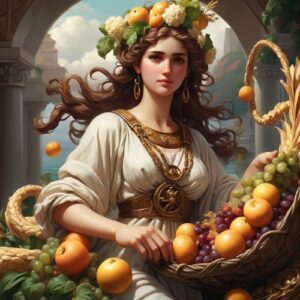
Roman tradition also included Abundantia, a personification of abundance and prosperity. Often depicted carrying a cornucopia overflowing with produce or wealth, she represents the more favourable side of fortune: plenty, success, and material abundance. Her imagery demonstrates how luck could be represented not only as chance but as an overflowing supply of desirable things.
Mythologies also contain figures associated with the darker side of fortune. Greek Nemesis, for example, is associated with retribution and the consequences of excessive prosperity, pride, and injustice. Although she is not simply a goddess of “bad luck,” her presence reflects an important ancient idea: good fortune could become dangerous when it exceeded appropriate limits, and the balance of life could eventually be restored.
Beyond formal deities, folklore around the world contains countless spirits and supernatural beings believed to influence prosperity or misfortune. Household spirits might bring good fortune when respected, while others could cause disruption when neglected. Charms, omens, animals, objects, and ritual practices likewise became associated with attracting favourable fortune or avoiding disaster.
The figures associated with luck therefore reveal different understandings of uncertainty. Some bring prosperity, some govern chance, some restore balance, and others embody the possibility that fortune can suddenly turn against us.
From Tyche and Fortuna to Lakshmi, Abundantia, and figures associated with misfortune and retribution, mythology gives a face to the forces that can unexpectedly transform a person’s circumstances. Luck becomes not merely an accident but a supernatural relationship between humanity, destiny, prosperity, and the unpredictable nature of life.