


Aralez : The Winged Resurrection Spirits of Armenia
At a glance
| Description | |
|---|---|
| Origin | Armenian Mythology |
| Classification | Spirits |
| Family Members | N/A |
| Region | Armenia |
| Associated With | Healing, War |
Mythlok Perspective
In Mythlok’s Perspective, the Aralez are more than mythological creatures; they represent the ancient Armenian belief that valor should never fade into silence. Their act of reviving fallen warriors reflects a culture where heroism carried spiritual weight beyond death itself. Unlike many resurrection figures in global traditions, the Aralez do not judge or command. They heal. Their canine form also reveals how early societies viewed animals not merely as companions, but as sacred mediators between worlds. Similar themes appear in the Norse ravens of Odin and the Egyptian jackal god Anubis, where animal beings bridge mortality and the divine. The Aralez stand apart, however, because their power is rooted in compassion rather than fear or conquest.
Aralez
Introduction
In Armenian mythology, the Aralez stand out as one of the most mysterious and spiritually profound beings. Unlike many deities who command elements or reign over kingdoms, the Aralez are remembered for their extraordinary gift—the power to revive the dead by licking their wounds. This myth reflects a deep cultural reverence for loyalty, bravery, and the hope of rebirth. Often envisioned as celestial dogs descending from the heavens, the Aralez are among the oldest divine figures in Armenia’s pre-Christian traditions. Their legend not only highlights the spiritual imagination of ancient Armenians but also serves as a symbolic reminder of the enduring bond between life, death, and divine mercy.
Physical Traits
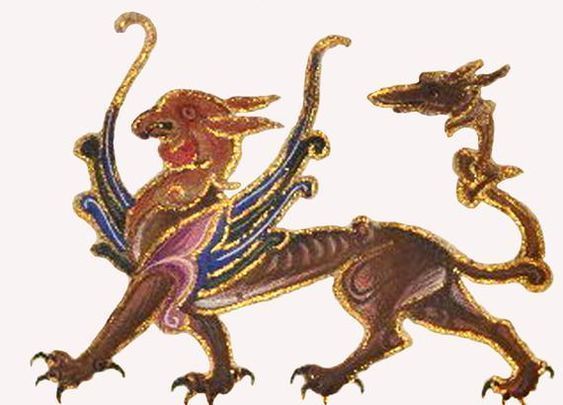
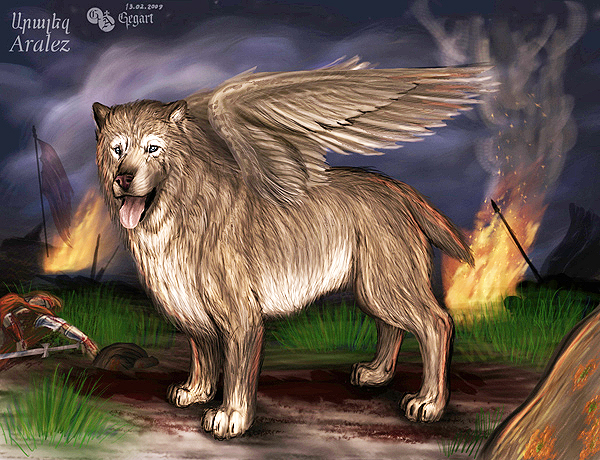
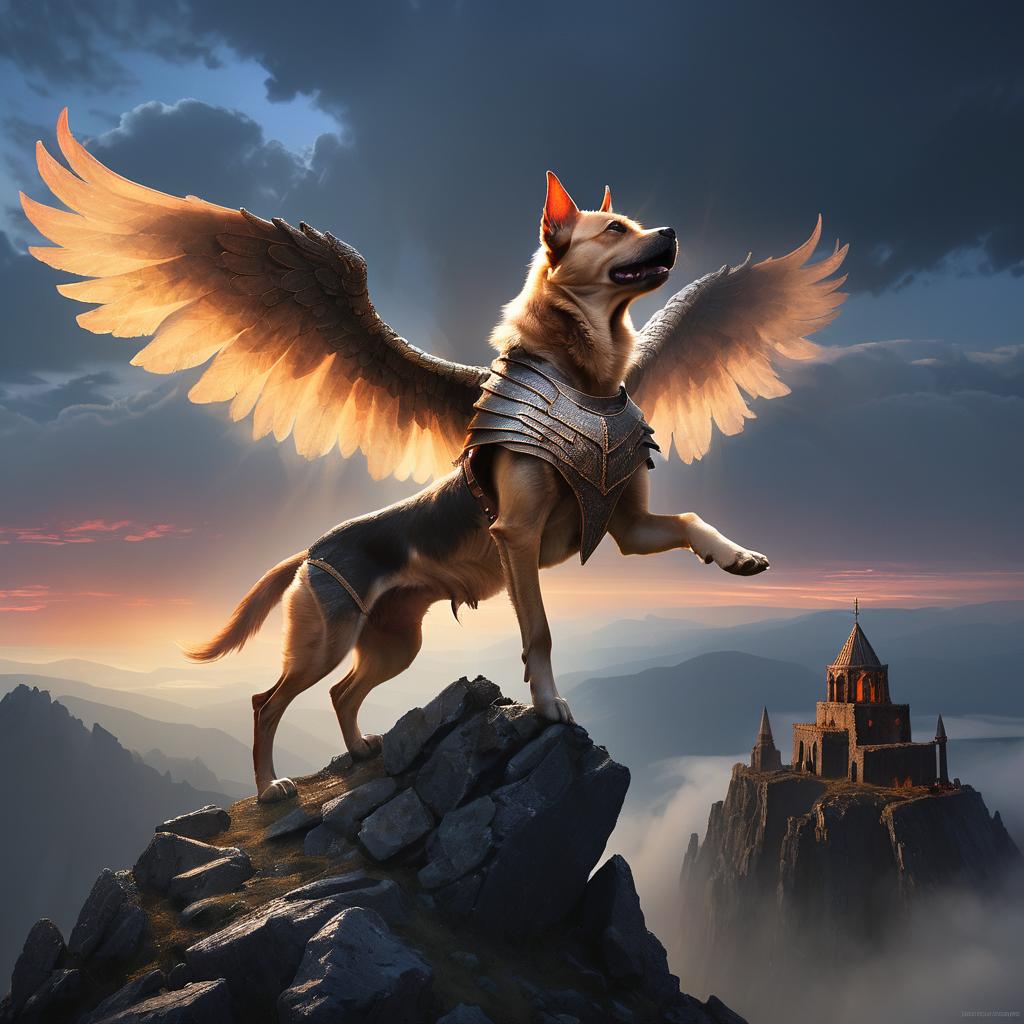
Descriptions of the Aralez vary across Armenian folklore, but they are most commonly depicted as winged canines of celestial beauty. Their form is rooted in the ancient Armenian Gampr, a powerful and loyal dog breed that has guarded families and flocks for centuries. Yet, the Aralez were no ordinary hounds. They were often imagined with angelic wings that allowed them to descend swiftly from the heavens to aid fallen warriors. Some depictions amplify their divine aura by giving them bird-like talons or plumage, blending the features of both canine and avian beings. Their fur is described as radiant white or earthy brown, soft as clouds, while their eyes are said to contain a depth of wisdom that surpassed human comprehension. This fusion of dog, bird, and spirit created a creature that embodied loyalty, healing, and transcendence.
Family
Unlike many gods and spirits in regional mythology, the Aralez are not bound by kinship or lineage. They exist as a collective race of divine beings rather than a family with ancestors and descendants. Their role in Armenian myth is most famously tied to the legend of Ara the Beautiful, the beloved king whose death in battle led Queen Semiramis of Assyria to summon the Aralez in hopes of reviving him. According to tradition, the winged dogs descended to lick his wounds, attempting to restore him to life. Another enduring story tells of Mushegh Mamikonian, a fourth-century commander whose body was placed atop a tower after his death so the Aralez might descend and resurrect him. These stories reveal how deeply Armenians believed in the possibility of divine intervention through these celestial beings, even centuries after the nation’s conversion to Christianity.
Other names
The Aralez are referred to by different names across Armenian regions and historical texts. The plural form, Aralezner, is often used in storytelling, while variations such as Arlez, Haralez, or Yaralez appear in folktales and regional dialects. Linguistic interpretations of the name shed light on their mythological function. One common explanation links it to Ara, the fallen king, and lez, from “lizel,” meaning “to lick.” This interpretation frames them as the “lickers of Ara,” directly tied to the legend of Ara the Beautiful. Another theory connects “har” (eternal) with “lez,” suggesting meanings like “eternal healers” or “ever-lappers,” which emphasize their timeless role as divine restorers. These variations illustrate how oral traditions adapted their names while preserving the core image of the winged dogs of resurrection.
Powers and Abilities
The defining power of the Aralez is their miraculous ability to heal and resurrect. They descend from the heavens to lick the wounds of fallen warriors, their saliva described in myth as more powerful than any earthly medicine. This act of healing was not a trivial gift but a divine privilege, reserved for the brave and noble whose lives held meaning for the community. Beyond resurrection, the Aralez are believed to offer general healing, acting as guardians of life itself. Their wings allow them to traverse realms, symbolizing their role as mediators between the mortal world and the divine. In some interpretations, they serve as psychopomps, guiding souls on their journey after death when revival was not granted. Their duality—both fierce canines with strong jaws and benevolent healers—captures the balance of protection and mercy that they embodied in Armenian belief.
Modern Day Influence
Though largely forgotten in daily religious practice after Armenia’s Christianization, the Aralez remain deeply symbolic in modern culture. They are celebrated as icons of resilience and hope, embodying the spirit of a people who have endured hardship and sought renewal across centuries. In literature, they reappear in works such as Micheline Aharonian Marcom’s novel Three Apples Fell from Heaven, where their legendary powers symbolize the longing for revival in the face of destruction. Contemporary Armenian artists and folklorists have also revived interest in the Aralez, using them as symbols of healing, heroism, and ancestral strength. Within the diaspora, they serve as cultural touchstones, reconnecting Armenians to a pre-Christian heritage that emphasizes continuity between the living and the divine. In modern interpretations, the Aralez are sometimes envisioned as spiritual guardians of the Armenian people, protectors of memory, and representations of an undying cultural spirit.
Related Images



Source
Ananikian, M. H. (1916). Armenian Mythology. Kessinger Publishing.
Blanchard, M. J., & Young, R. D. (1998). Eznik of Kołb, On God. Peeters Publishers.
Chahin, M. (2001). The Kingdom of Armenia: A History. Psychology Press.
Garsoïan, N. G. (1989). The Epic Histories Attributed to Pʻawstos Buzand. Harvard University Press.
Katvalian, M. (1983). “Haralezner.” In Arzumanian, M. (Ed.), Armenian Soviet Encyclopedia, Vol. 6. Yerevan: Armenian Encyclopedia.
Tashjian, V. A. (Ed.). (2007). The Flower of Paradise and Other Armenian Tales. Libraries Unlimited.
History of Armenia. (2017, June 21). Dog-like gods of the ancient Armenians – Aralez. https://historyofarmenia.org/2017/06/21/dog-like-gods-ancient-armenians-aralez
Armenian History. (n.d.). Armenian Mythology – Mythical Creatures. https://armenian-history.com/armenian-mythology-mythical-creatures/
Wikipedia contributors. (n.d.). Aralez (mythology). Wikipedia. https://en.wikipedia.org/wiki/Aralez_(mythology)
Frequently Asked Questions
What is an Aralez in Armenian mythology?
An Aralez is a divine winged dog spirit in Armenian mythology believed to heal or resurrect fallen warriors by licking their wounds.
Were the Aralez considered gods or spirits?
The Aralez were viewed as a class of ancient divine beings or spirits connected to healing, resurrection, and heroic protection.
What powers did the Aralez have?
The Aralez possessed the power to heal fatal wounds, revive the dead, fly between realms, and guide heroic souls.
Which Armenian legend is connected to the Aralez?
The Aralez are most famously linked to the legend of Ara the Beautiful, whom they attempted to resurrect after battle.
What do the Aralez symbolize today?
Today, the Aralez symbolize resilience, hope, healing, and the enduring spirit of Armenian cultural identity.
