


Amalanhig : The Undead Blood Drinkers of Philippine Folklore
Mythlok Perspective
In Mythlok’s Perspective, the Amalanhig represents more than the fear of the returning dead; it reflects the belief that death does not always sever familial obligations. Unlike the European vampire, whose transformation often follows a bite or curse, the Amalanhig is connected to the inheritance of supernatural conditions within a family. Its legend reveals a distinctly Visayan anxiety about mortality, kinship and the consequences of leaving the supernatural unresolved.
Amalanhig
Introduction
The Amalanhig, also known as Amaranhig or Maranhig, is a class of undead beings found in the folklore of the Visayas in the Philippines, particularly among Hiligaynon-speaking communities. Often described as reanimated corpses with an insatiable hunger for human blood, these creatures occupy an unsettling place in traditional beliefs about death and the supernatural. Unlike spirits that exist independently of the human world, Amalanhig are believed to originate from deceased individuals who return from their graves under particular circumstances.
The creature is associated with the broader aswang tradition, although its characteristics distinguish it from other supernatural beings grouped under that name. Its rigid movements, decaying appearance and unusual physical limitations make it a distinctive figure in Filipino folklore. Stories about the Amalanhig also preserve beliefs concerning death rituals, family obligations and the consequences of failing to manage supernatural conditions before death.
Physical Description
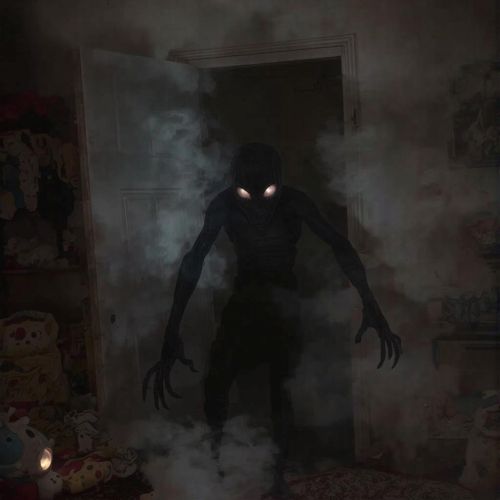
The Amalanhig is commonly described as an emaciated, corpse-like figure with an unusually stiff body. Its appearance resembles that of a person who has been dead for some time, with a skeletal frame, sunken features and the unpleasant smell of decomposing flesh. Despite its frail appearance, the creature is believed to possess considerable strength and the ability to overpower unsuspecting victims.
Its physical rigidity is one of its defining characteristics. The Amalanhig moves with stiff, awkward steps, reflecting the condition of a body that has returned from the grave without regaining the flexibility of the living. Some accounts describe prominent canine teeth associated with its blood-drinking habits.
Traditional descriptions also emphasise its limitations. The creature is believed to have difficulty climbing crooked trees because of its inflexible body. Certain accounts maintain that it cannot cross bodies of water and that contact with water causes it to disintegrate into worms. These unusual weaknesses distinguish the Amalanhig from the more familiar supernatural predators found in other traditions.
Mythological Context
The Amalanhig belongs to the supernatural landscape of the central Philippines, where beliefs about spirits, ancestral forces and the restless dead have shaped generations of storytelling. It is particularly associated with Western Visayan folklore, where different communities have preserved variations of its legend.
Its relationship with the aswang tradition is important but requires distinction. The term aswang encompasses several types of supernatural beings in Philippine folklore, including blood drinkers, shape-shifters, witches and creatures associated with consuming human flesh. The Amalanhig shares certain characteristics with the vampiric aswang, particularly its appetite for human blood and its association with death.
However, it has a more specific identity as an undead creature. Its existence is connected to the transition between life and death, rather than simply possessing the ability to transform into another form. This association makes the Amalanhig an important part of the wider collection of beliefs surrounding supernatural beings in the Philippines.
Origins
One prominent explanation for the appearance of an Amalanhig concerns the transmission of supernatural abilities within families. In certain Visayan traditions, individuals possessing aswang characteristics are believed to pass their condition to another family member before dying. If this transfer does not take place, the deceased may return from the grave as an Amalanhig. This belief connects the creature’s existence to family relationships and traditional understandings of inheritance. The transformation is not necessarily presented as a deliberate choice made by the deceased. Rather, it is understood as the consequence of an unresolved supernatural condition.
Other accounts offer different explanations. Some describe the Amalanhig as a restless corpse returning because of an unresolved attachment, an unfulfilled obligation or a significant wrongdoing committed during life. In these narratives, the creature may seek someone willing to confront it, sometimes pursuing that person relentlessly. The existence of these variations demonstrates how oral traditions develop differently across communities. The inheritance explanation and the restless-dead narratives should therefore be understood as related but distinct strands of Visayan folklore.
Notable Members
The Amalanhig is a category of supernatural beings rather than an individual character with a personal genealogy or established collection of named members. Traditional accounts generally describe individual manifestations of the creature through local encounters and stories rather than assigning them separate identities.
One notable folkloric account concerns the Amamanhig of Mahanlod, recorded by Amparo Barza in Bisaya Beliefs in the Vicinity of Capiz (1927). The narrative describes a sick man whose behaviour changes dramatically before he begins pursuing people and sucking blood from their noses. Those attacked subsequently become Amamanhig themselves, causing the number of creatures to increase.
Relationship with Other Beings
The Amalanhig is closely associated with the aswang, particularly the blood-drinking varieties found in Visayan folklore. Both are feared for their predatory behaviour and their ability to threaten ordinary human communities. However, the Amalanhig is distinguished by its association with reanimated human bodies and the belief that an individual can become one after death. Its relationship with the living is equally important. The creature is often portrayed as a threat to unsuspecting travellers and people encountered in isolated surroundings. Its victims may themselves become Amalanhig in certain traditions, creating a continuing cycle of supernatural transformation.
Family members also occupy an important position in its mythology because of the belief that supernatural characteristics can be transferred between relatives. This connection gives the Amalanhig a distinctive place among Filipino supernatural beings, linking its existence to both individual mortality and family inheritance.
Similar Beings
Several supernatural creatures from Philippine folklore share characteristics with the Amalanhig, although they are not necessarily the same entity. The Aswang is the broadest point of comparison. It encompasses several supernatural categories, including blood-sucking creatures and shape-shifting predators. The Amalanhig shares its vampiric characteristics with some of these beings.
The Mandurugo is another blood-drinking creature in Filipino folklore, commonly associated with a vampiric figure that preys on humans. However, its traditional descriptions differ from those of the reanimated Amalanhig. The Manananggal is a supernatural being known for separating its upper body from its lower half and using wings to hunt at night. Although it shares the predatory nature associated with the Amalanhig, its physical abilities and origins are different.
Symbolism and Interpretations
The Amalanhig represents the unsettling boundary between life and death. Its existence challenges the natural expectation that death brings an end to physical existence, presenting instead the possibility that a deceased person might return as a dangerous supernatural presence.
Its association with family inheritance also reflects the importance of kinship within traditional communities. The belief that a supernatural condition must be transferred before death suggests that individual actions and circumstances could have consequences extending beyond one’s lifetime. The creature’s physical limitations offer another interesting dimension. Despite its frightening nature, the Amalanhig is not invincible. Its inability to cross water or climb certain trees introduces vulnerability into its otherwise threatening existence.
Modern Influence
The Amalanhig continues to attract interest in contemporary Philippine folklore and horror storytelling. Its distinctive combination of undead characteristics, blood-drinking behaviour and unusual vulnerabilities makes it an effective subject for supernatural fiction.
Modern writers and creators have drawn upon traditional Filipino creatures to develop horror narratives that connect contemporary audiences with regional folklore. The Amalanhig also appears in modern discussions of Philippine supernatural traditions, where it offers an example of how local beliefs distinguish between different forms of the undead.
Although belief in the creature varies across generations and communities, its stories remain part of the Philippines’ wider folkloric heritage. The Amalanhig represents more than a frightening corpse that returns from the grave. It preserves traditional ideas about family responsibility, death and the possibility that certain conditions remain unresolved even after life has ended.

Sources
Art & Fiction. (2015, December 23). Monsters & other supernatural beings from Filipino folklore & myths. https://stoicaswang.wordpress.com/2015/12/23/supernatural-beings-and-creatures-of-philippine-folklore-and-mythology/
National Library of the Philippines. (n.d.). Religious beliefs and practices. https://nlpdl.nlp.gov.ph/CC01/monographs/1994/NLP00VM052mcd/v1/v29.pdf
GMA Regional TV. (n.d.). Know your Philippine regions: Halloween edition. https://www.gmanetwork.com/regionaltv/specials/29617/know-your-philippine-regions-halloween-edition/story/
Central Philippine University. (n.d.). The social systems in early Bisayan mythology. https://repository.cpu.edu.ph/handle/20.500.12852/761
Barza, A. A. (1927). Bisaya beliefs in the vicinity of Capiz. H. Otley Beyer Ethnographic Collection, National Library of the Philippines.
Demetrio, F. R. (1968). Towards a survey of Philippine folklore and mythology. Ateneo de Manila University Press.
Ramos, M. D. (1967). The creatures of midnight: Faded deities of Luzon, the Visayas and Mindanao. Island Publishers.
Millington, W. H., & Maxfield, B. L. (1906). Philippine (Visayan) superstitions. The Journal of American Folklore, 19(74), 205–211. https://doi.org/10.2307/534567
Frequently Asked Questions
What is an Amalanhig in Philippine folklore?
The Amalanhig is a class of undead beings in Visayan folklore, believed to rise from their graves and prey on the living by drinking human blood.
Where does the Amalanhig originate?
The Amalanhig originates in Visayan folklore, particularly traditions from Western Visayas in the Philippines, including communities with Hiligaynon cultural influences.
How does a person become an Amalanhig?
According to certain Visayan traditions, a person with supernatural abilities may become an Amalanhig after death if the condition is not transferred to another family member.
What are the weaknesses of an Amalanhig?
The Amalanhig is believed to have difficulty crossing water and climbing crooked trees. Some traditions claim that contact with water causes its body to disintegrate into worms.
Is the Amalanhig the same as an Aswang?
No. The Amalanhig is a distinct type of undead creature associated with the broader aswang tradition, sharing certain vampiric characteristics but having its own folklore and abilities.


