


Agalon Hayopan : The Mysterious Crocodile Master of Philippine Folklore
At a glance
| Description | |
|---|---|
| Origin | Philippine Mythology |
| Classification | Spirits |
| Family Members | N/A |
| Region | Philippines |
| Associated With | Crocodiles |
Mythlok Perspective
In Mythlok’s Perspective, the Agalon Hayopan represents a peculiar form of supernatural predation, where intelligence and control replace direct physical aggression. Its relationship with crocodiles echoes traditions such as the Egyptian association of Sobek with crocodilian power, but the distinction lies in its use of animals as hunting companions rather than divine manifestations. It illustrates how mythology often transforms familiar predators into extensions of humanity’s deepest fear
Agalon Hayopan
Introduction
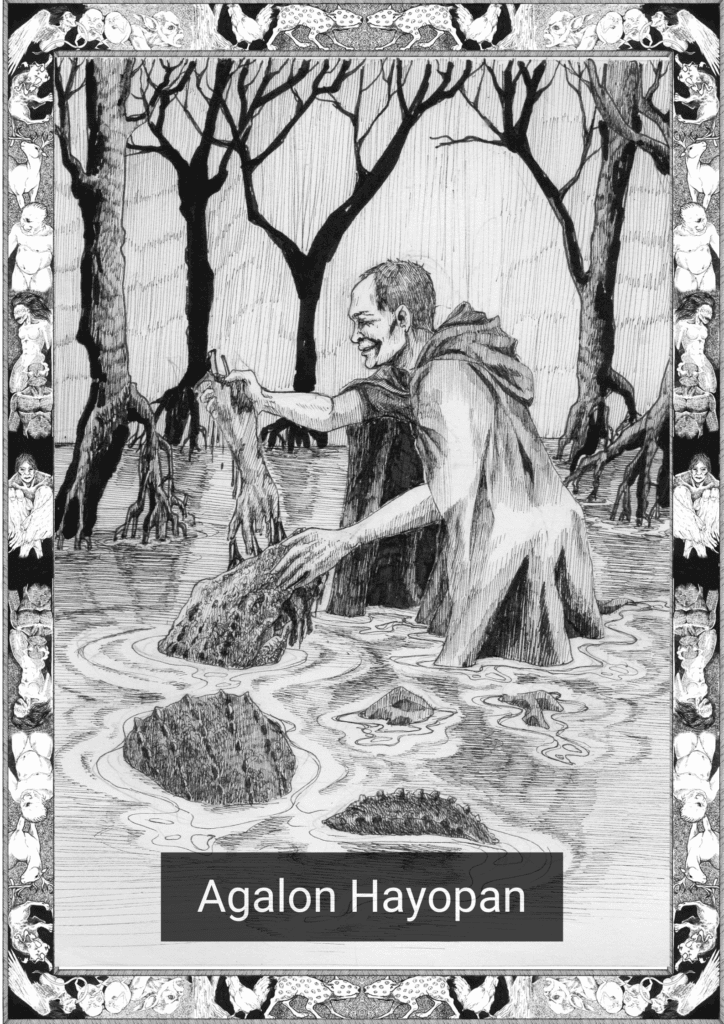
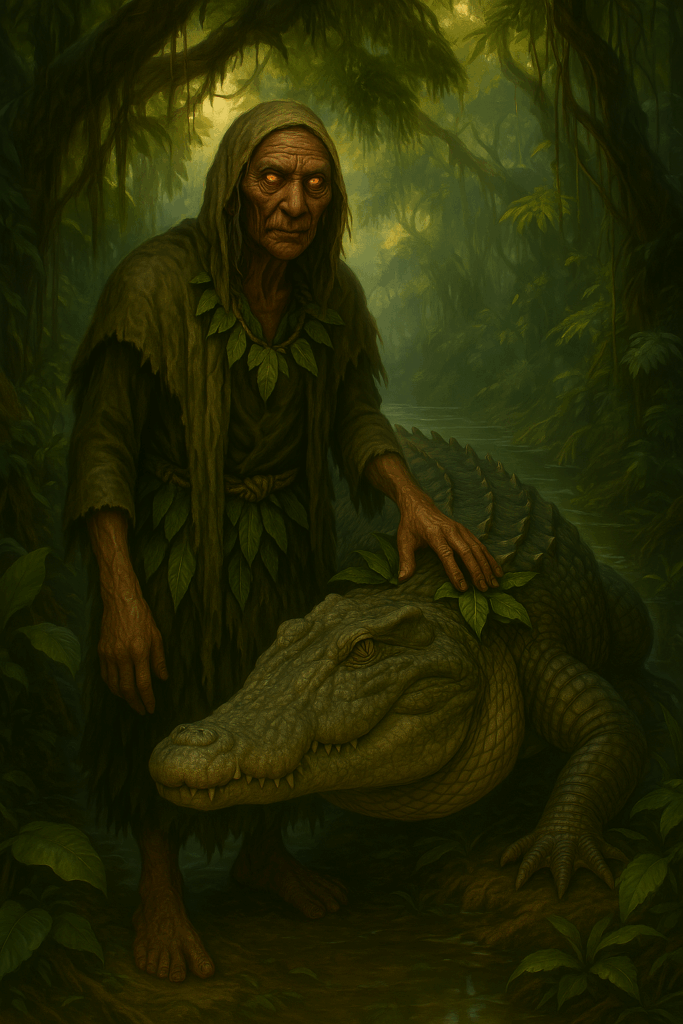
Among the supernatural creatures of Philippine mythology, the Agalon Hayopan occupies a particularly unusual position. Originating in Bicolano folklore, these beings belong to the wider family of aswang, supernatural entities associated with shapeshifting, nocturnal hunting and the consumption of human flesh. What distinguishes them from other aswang is their unusual approach to hunting. Instead of pursuing human victims themselves, Agalon Hayopan raise crocodiles and employ them to capture prey.
The legend presents a disturbing partnership between a flesh-eating supernatural being and one of the most formidable predators of Philippine waterways. Living near rivers where crocodiles are plentiful, these aswang use their animal companions to locate, kill and discreetly bring back human victims. Their dependence on crocodiles has earned them a reputation as relatively inactive or lazy members of the aswang family.
Unlike legendary heroes or individual monsters with established personal histories, Agalon Hayopan refers to a category of supernatural beings. Each member is distinguished by its relationship with crocodiles and its preference for indirect hunting. The tradition offers a fascinating example of how regional Philippine folklore incorporates familiar animals and landscapes into supernatural beliefs.
Physical Description
There is no established physical description that distinguishes an Agalon Hayopan from other aswang. Traditional references concentrate on their behaviour, habitat and relationship with crocodiles rather than their appearance.
As members of the wider aswang category, they are associated with supernatural beings that may conceal their identities among ordinary human communities. Aswang traditions vary considerably across the Philippines, with different regional accounts describing creatures capable of shapeshifting, assuming human appearances or displaying monstrous characteristics.
However, these descriptions should not automatically be attributed to every Agalon Hayopan. Their defining characteristic is not a particular face, body or transformation but their ability to raise crocodiles for hunting. Their natural surroundings are more consistently associated with their identity. Rivers, swamps and other waterways provide the setting for their activities. These environments offer suitable habitats for crocodiles and allow the aswang to remain away from human attention while its companions hunt.
Mythological Context
The Agalon Hayopan belongs to the extensive supernatural tradition of the Philippine aswang. The term aswang encompasses several types of frightening beings, rather than one creature with a fixed appearance or set of abilities. Across different regions, these entities are associated with human predation, shapeshifting and supernatural activities that threaten ordinary communities. Within this broad classification, Agalon Hayopan represents a distinctive hunting specialization. While some aswang are described as actively pursuing victims, these beings depend on crocodiles to obtain their food. Their approach is less confrontational but equally threatening.
The distinction is particularly interesting because crocodiles are real predators that have long occupied an important place in the lives and imagination of communities living near Philippine rivers. Their ability to remain submerged, approach silently and attack with considerable force makes them natural subjects for supernatural storytelling. The Agalon Hayopan legend combines this existing fear of river predators with the broader anxieties surrounding the aswang. It transforms an encounter with a crocodile into something more sinister by suggesting that the animal might be acting under the direction of a supernatural master.
Origins
The Agalon Hayopan is associated with Bicolano folklore from the Bicol region of southeastern Luzon in the Philippines. Its documented description appears in Filipinas, Volume 12, page 53, published by Filipinas Publications in 2003. This reference is cited by The Aswang Project in its compendium of Philippine supernatural beings.
The description identifies Agalon Hayopan as inactive aswang that prefer living beside rivers where crocodiles are plentiful. It also establishes their appetite for human flesh and their practice of employing crocodiles to kill people and discreetly bring back their victims. A later literary retelling by Karl Gaverza, published through Philippine Spirits, expands this description into a narrative about an aswang and its crocodile companion. The story portrays the creature raising a crocodile from an egg and developing a close relationship with it over several years.
This retelling provides additional personality and narrative detail, although it is important to distinguish literary interpretation from the shorter traditional description. Together, these accounts have helped preserve and circulate the Agalon Hayopan tradition among modern audiences.
Notable Members
Agalon Hayopan is a classification rather than the name of a particular supernatural individual. Consequently, traditional accounts do not provide a recognised list of named members, individual biographies or a central figure associated with the entire category. Each Agalon Hayopan can be understood as an individual aswang belonging to this particular group. Their distinguishing feature is the practice of raising and employing crocodiles to hunt humans.
Later retellings sometimes portray individual Agalon Hayopan through their relationships with particular crocodiles. These stories describe the aswang as developing familiarity with their animals over many years, creating partnerships that resemble companionship rather than simple ownership. However, no established mythology identifies a supreme Agalon Hayopan, ancestral founder or legendary leader of the group.
Relationship with Other Beings
The most important relationship in Agalon Hayopan folklore is the one between the aswang and its crocodile companions. Unlike supernatural beings that simply summon animals or transform into them, these aswang raise crocodiles and depend on their natural hunting abilities. The crocodiles are treated as companions and are reportedly raised from an early age. Their familiarity with their masters allows them to operate around riverside settlements and return after capturing prey.
Some later accounts describe these relationships as extending across generations, with crocodiles passed down within aswang families. These stories also portray the animals as fiercely loyal, suggesting that their attachment to their masters continues even in dangerous circumstances. Their relationship with humans is considerably more hostile. Human beings are their intended prey, particularly those who venture into rivers and waterways where the crocodiles hunt.
Within the broader aswang community, Agalon Hayopan are sometimes portrayed as objects of ridicule. Other aswang reportedly consider their reliance on crocodiles a sign of laziness. However, the effort involved in raising a crocodile from an egg offers a different perspective on their supposedly inactive lifestyle.
Similar Beings
The closest mythological relatives of Agalon Hayopan are the other varieties of aswang found throughout the Philippines. Although they share the broader classification, their hunting methods and supernatural characteristics differ considerably. The Manananggal, for example, is known for separating its upper body from its lower half and flying through the night in search of victims. Its hunting method is almost the opposite of the Agalon Hayopan, which avoids direct pursuit and depends on crocodiles.
The Tiktik is another familiar figure associated with aswang traditions. It is connected with nocturnal hunting and is often described through the distinctive sounds associated with its presence. These comparisons demonstrate the diversity within Philippine supernatural folklore. While the Manananggal relies on bodily transformation and the Tiktik on stealth and deception, the Agalon Hayopan uses an animal companion as its primary hunting instrument. They are not identical creatures, but they belong to the wider supernatural landscape of the aswang.
Symbolism and Interpretations
The Agalon Hayopan represents the relationship between supernatural fear and the natural environment. Its association with crocodiles draws upon the danger of rivers and wetlands, particularly in communities where these waterways are essential for fishing, transportation and everyday activities. The crocodile becomes more than a dangerous animal in these stories. It represents a hidden threat beneath an apparently familiar landscape. The possibility that a predator might be controlled by an aswang adds another dimension to the fear associated with entering rivers.
The creature also introduces an unusual interpretation of power. Rather than relying on physical strength or spectacular supernatural abilities, the Agalon Hayopan exercises influence through another living being. Its effectiveness comes from patience, familiarity and the ability to use an animal’s natural instincts. The relationship between master and crocodile also introduces themes of companionship and loyalty. In later interpretations, the crocodile is not merely a hunting instrument but a creature raised and cared for over many years.
These themes should be understood as interpretations of the surviving stories rather than a definitive explanation of what the original Bicolano communities intended. Nevertheless, they demonstrate how the legend can be read beyond its horror elements.
Modern Influence
The Agalon Hayopan has gained renewed visibility through digital platforms dedicated to Philippine folklore. Although it remains considerably less familiar than prominent aswang varieties, its unusual crocodile connection makes it an appealing subject for contemporary horror storytelling. Philippine Spirits has published several treatments of the creature, including a narrative retelling in 2018, a Bicol-Sorsogon translation in 2019 and an expanded collection of characteristics in 2025. These publications have introduced additional details about the relationship between Agalon Hayopan and their crocodiles.
The wider aswang tradition has also reached international audiences through contemporary entertainment. The graphic novel series Trese and its Netflix adaptation have demonstrated the storytelling potential of Philippine supernatural traditions by placing folklore-inspired beings within modern urban settings. Although Agalon Hayopan is not a defining character in Trese, the growing interest in regional supernatural creatures creates opportunities for lesser-known traditions to reach new audiences.
The legend remains particularly interesting because it combines a recognisable animal with an unusual supernatural relationship. Its central idea is simple but unsettling: a crocodile encountered in a river might not be hunting independently. It could be serving a master hidden somewhere along the riverbank.
Related Images

Source
Gaverza, K. (2018, January 1). Agalon Hayopan – Philippine Spirits. https://phspirits.com/agalon-hayopan/
Philippine Spirits. (2025, May 28). Agalon Hayopan 2 – Philippine Spirits. https://phspirits.com/agalon-hayopan-2/
Steemit. (n.d.). Philippine Folklore † AGALON HAYOPAN. https://steemit.com/philippines/@leviathan101/philippine-folklore-agalon-hayopan
Stoic Aswang. (2015, December 23). Monsters & other supernatural beings from Filipino folklore & myths. https://stoicaswang.wordpress.com/2015/12/23/supernatural-beings-and-creatures-of-philippine-folklore-and-mythology/
The Aswang Project. (2016, February 8). Bicolano Pantheon of Deities and Creatures | Philippine Mythology. https://www.aswangproject.com/bikolano-deities-in-philippine-mythology/
Jocano, F. L. (1978). Towards an understanding of Philippine myths. https://www.jstor.org/stable/29792131
Frequently Asked Questions
What is Agalon Hayopan in Philippine folklore?
Agalon Hayopan is a type of aswang in Bicolano folklore known for raising crocodiles and using them to hunt humans and bring back human flesh.
Is Agalon Hayopan a single creature or a type of aswang?
Agalon Hayopan refers to a category of aswang rather than one individual creature. Members of this group share the unusual practice of using crocodiles to hunt.
What animals are associated with Agalon Hayopan?
Agalon Hayopan are associated with crocodiles, which they reportedly raise from hatchlings and train to capture human prey near rivers and waterways.
Where does the legend of Agalon Hayopan originate?
The legend of Agalon Hayopan originates in Bicolano folklore from the Bicol region of the Philippines, where stories describe its connection with crocodiles and river habitats.
What makes Agalon Hayopan different from other aswang?
Unlike other aswang that hunt humans directly, Agalon Hayopan rely on crocodiles to capture victims and bring back human flesh, earning them a reputation as lazy aswang.


