


Apistotoke : The Creator Behind Blackfoot Creation
At a glance
| Description | |
|---|---|
| Origin | Niitsitapi (Blackfoot) Mythology |
| Classification | Gods |
| Family Members | N/A |
| Region | Canada and United States |
| Associated With | Creation, Source of Life, Cosmic Order |
The Mythlok Perspective
In Mythlok’s Perspective, Apistotoke stands apart from many creator gods because power is expressed through quiet creation rather than constant intervention. While figures like Zeus or Odin shape history through direct action, Apistotoke establishes the universe and entrusts creation to function through harmony and balance. This worldview reflects a profound Indigenous philosophy where true authority lies not in ruling over the world but in creating a system where every living being has its rightful place.
Apistotoke
Introduction
Apistotoke is the supreme creator deity in Niitsitapi mythology, the traditional belief system of the Blackfoot Confederacy, whose nations include the Siksika, Kainai, Piikani, and Aamsskáápipikani peoples. Rather than being portrayed as a god who walks among humans, Apistotoke exists as the ultimate creative force responsible for bringing the universe into existence and establishing the laws that govern it. Everything from the celestial bodies to humanity ultimately traces its origin back to this divine creator.
Unlike many creator gods found in world mythology, Apistotoke remains distant from everyday events. After establishing the cosmic order, the responsibility for shaping and maintaining the world often falls to other sacred beings, particularly Na’pi (Old Man), who appears throughout Blackfoot oral traditions as a culture hero and transformer. This distinction highlights an important aspect of Niitsitapi spirituality: the Creator establishes existence, while other sacred beings guide life within it.
The name Apistotoke appears in several spellings, including Apisstotoki, Apistotoki, and related Blackfoot orthographies. Another sacred name closely associated with the Creator is Ihtsipaitapiiyo’pa, often translated as “Source of Life” or “the One who gives life.” Although early European writers frequently translated Apistotoke as the “Great Spirit,” many modern Niitsitapi scholars prefer the original Blackfoot names because they better reflect the unique beliefs of their culture rather than imposing broader pan-Indigenous concepts.
Physical Traits
One of the defining characteristics of Apistotoke is the complete absence of a physical form. Traditional Blackfoot teachings do not describe the Creator with human features, animal characteristics, or any visible appearance. Instead, Apistotoke exists beyond the material world as an eternal spiritual presence that cannot be confined to a body or image.
This formless nature distinguishes Apistotoke from many mythological creator figures who are often depicted as kings, warriors, or giants. In Niitsitapi belief, the Creator’s power lies precisely in being beyond ordinary physical limitations. As a result, traditional stories rarely attempt to describe what Apistotoke looks like because appearance is considered irrelevant to the Creator’s true nature.
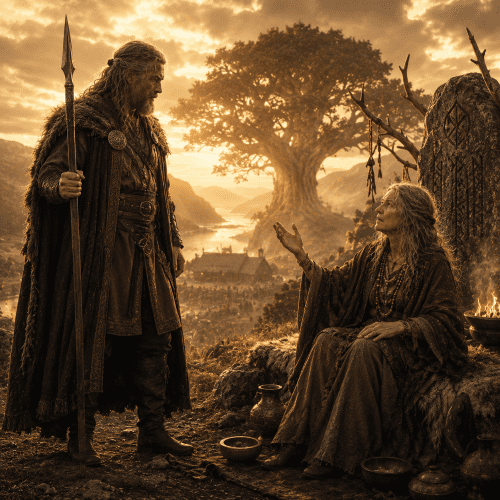
Modern artistic representations occasionally portray Apistotoke symbolically through radiant light, the open sky, or celestial imagery. These depictions are contemporary interpretations rather than descriptions preserved in traditional oral narratives. Within Blackfoot spirituality, the Creator is better understood through the order of creation itself than through any visual form.
Family
Apistotoke is not described as belonging to a family in the human sense. Instead, the Creator stands at the beginning of existence, bringing the first sacred beings into the universe through acts of creation rather than biological descent.
Among the earliest beings created are the Sspommitapiiksi, or Sky Beings. These include Naato’si, the Sun, and Ko’komiki’somm, the Moon, who together oversee the rhythms of day, night, and the changing seasons. The stars, including the important figure Aapisowaahs (Morning Star), also belong to this celestial order established by Apistotoke.
Another important figure connected to the Creator is Na’pi, often translated as Old Man. Although Na’pi is one of the most prominent characters in Blackfoot mythology, he is not considered Apistotoke’s son or equal. Instead, he functions as a sacred transformer who shapes landscapes, teaches customs, and prepares the world for humanity while operating within the cosmic order established by the Creator.
The Niitsitapi people themselves are also regarded as creations of Apistotoke. Rather than portraying humanity as rulers over nature, Blackfoot traditions emphasize that people were created to live in balance with animals, plants, rivers, and the land. This understanding reinforces the belief that all living beings share a common origin and therefore deserve mutual respect.
Other names
Because the Blackfoot language has been recorded using different writing systems over the past two centuries, Apistotoke appears under several spellings in historical and modern sources. The most common variations include Apistotoki, Apisstotoki, and Apistotoke, all referring to the same supreme creator. Another important sacred name is Ihtsipaitapiiyo’pa, which carries the meaning “Source of Life” or “the One who causes life.” Many contemporary Niitsitapi communities prefer this traditional term because it captures the Creator’s life-giving role more accurately than English translations.
Early missionaries and anthropologists often translated Apistotoke simply as the Great Spirit. While this helped English-speaking audiences understand the concept, it also blurred important distinctions between Blackfoot beliefs and those of other Indigenous nations. Likewise, some older publications incorrectly equated Apistotoke with the Algonquian concept of Manitou, even though these belong to different cultural and linguistic traditions. Today, many Indigenous educators encourage the use of the original Blackfoot names as part of ongoing language revitalization and cultural preservation efforts.
Powers and Abilities
Apistotoke’s greatest power is creation itself. According to Niitsitapi tradition, the Creator brought the universe into existence, establishing the heavens, the earth, the celestial beings, and the conditions necessary for all life to flourish. Rather than performing dramatic feats or engaging in battles with other gods, Apistotoke’s power is expressed through the creation of a stable and harmonious cosmos.
The Creator also established the natural laws that govern existence. The movement of the Sun and Moon, the changing seasons, and the interconnected relationships between humans, animals, and the environment all reflect the divine order established at the beginning of creation.
Unlike trickster figures or heroic gods found in many mythologies, Apistotoke rarely intervenes directly in human affairs. Instead, the Creator’s influence is continuous, sustaining the world through the balance built into creation itself. This makes Apistotoke less of an active ruler and more of the eternal foundation upon which all existence depends.
Blackfoot spiritual traditions also teach that sacred ceremonies, visions, and respectful relationships with nature allow individuals to recognize the Creator’s presence. Rather than granting supernatural powers to chosen individuals, Apistotoke serves as the ultimate source of spiritual life, wisdom, and harmony.
Modern Day Influence
Apistotoke continues to occupy a central place in modern Niitsitapi culture and spirituality. Creation teachings remain an essential part of community life, informing ceremonies, storytelling, and traditional education across Blackfoot communities in both Canada and the United States.
Language revitalization has become one of the most important ways of preserving the Creator’s teachings. As more community members learn the Blackfoot language, traditional names such as Apistotoke and Ihtsipaitapiiyo’pa are increasingly used instead of older English translations. This helps preserve not only vocabulary but also the deeper worldview embedded within the language itself.
The Creator’s emphasis on harmony with the natural world has also gained renewed significance in discussions surrounding environmental stewardship. Many Indigenous leaders point to traditional teachings about Apistotoke as evidence that caring for the land is a sacred responsibility rather than simply a practical necessity.
Outside Indigenous communities, Apistotoke appears in academic research, museum exhibitions, and educational resources focused on Native American mythology. While these works have increased public awareness, modern Niitsitapi scholars continue to encourage readers to engage with authentic Blackfoot perspectives instead of relying solely on older ethnographic interpretations.
Today, Apistotoke remains far more than a figure from ancient stories. The Creator continues to symbolize the enduring relationship between the Niitsitapi people, their ancestral lands, and the spiritual principles that have guided their communities for countless generations.
Related Images

Source
Blackfoot Confederacy. (2024, April 9). Our story. Blackfoot Confederacy. https://blackfootconfederacy.ca/our-story/
Boas, F. (1916). The Blackfoot stories. In Pluto Press (Ed.), Blackfoot folk-tales and religious beliefs
Native-languages.org. (n.d.). Apistotoke, the Blackfoot creator. Native-languages.org. http://www.native-languages.org/apistotoke.htm
“Blackfoot mythology” (Wikipedia). (n.d.). In Wikipedia. https://en.wikipedia.org/wiki/Blackfoot_mythology
American-History.net. (2022, February 11). Native American gods: Apistotoke. American-History.net. https://american-history.net/native-america/native-american-gods/
Curious Taxonomy. (2020, December 31). Blackfoot: Flood myth. CuriousTaxonomy. https://www.curioustaxonomy.net/home/FloodMyths/17NAPl/blackfoot.html
Grinnell, G. B. (1915). Blackfoot Lodge Tales: The Story of a Prairie People. New York: Charles Scribner’s Sons.
Wissler, C., & Duvall, D. C. (1908). Mythology of the Blackfoot Indians. New York: American Museum of Natural History.
Schultz, J. W. (1919). My Life as an Indian. Boston: Houghton Mifflin.
Frequently Asked Questions
What is Apistotoke in Niitsitapi mythology?
Apistotoke is the supreme creator deity in Niitsitapi (Blackfoot) mythology, responsible for creating the universe and establishing the natural and spiritual order.
Is Apistotoke the same as the Great Spirit?
Early writers translated Apistotoke as the “Great Spirit,” but many modern Niitsitapi scholars prefer the original Blackfoot names because they reflect distinct cultural beliefs.
Does Apistotoke have a physical form?
No. Traditional Blackfoot teachings describe Apistotoke as a formless creator who exists beyond human or animal appearance.
Who did Apistotoke create?
Apistotoke created the Sky Beings, including Naato’si (the Sun), Ko’komiki’somm (the Moon), the stars, and ultimately humanity and the natural world.
What is Apistotoke's role today?
Apistotoke continues to inspire Niitsitapi spirituality, language revitalization, cultural identity, and teachings about living in harmony with nature.


