
Hrungnir : The Stone Hearted Giant of Norse Legend
At a glance
| Description | |
|---|---|
| Origin | Norse Mythology |
| Classification | Hybrids |
| Family Members | N/A |
| Region | Norway, Sweden, Denmark, Iceland |
| Associated With | Strength, Stone, Resilience, Arrogance, |
The Mythlok Perspective
In Mythlok’s Perspective, Hrungnir represents the raw, unshaped force of nature that resists transformation. He is not evil in a moral sense but elemental, embodying the stubborn weight of stone against the dynamic energy of the storm. His defeat by Thor reflects a universal pattern where movement overcomes stillness. Similar archetypes appear in figures like Ullikummi in Hurrian tradition or even the Greek Giants opposing Zeus. Across cultures, the message remains consistent: unyielding strength alone cannot endure against adaptive power.
Hrungnir
Introduction
Hrungnir stands as one of the most formidable jötnar in Norse tradition, remembered not for a long lineage or complex mythology, but for a single, explosive confrontation that defines his legacy. His story survives primarily in the Skáldskaparmál section of Snorri Sturluson’s Prose Edda, with earlier confirmation in skaldic poetry like Haustlöng, showing that his legend predates medieval compilation.
He is introduced as the strongest of all giants, dwelling in a stony frontier region known as Grjótúnagarðar. His rise to mythic prominence begins with a reckless wager against Odin, testing the speed of their horses, Sleipnir and Gullfaxi. What begins as a contest quickly escalates into a matter of honor, leading to one of the most iconic duels in Norse lore: Hrungnir versus Thor. This encounter reflects a recurring tension in Norse narratives, where raw, untamed force confronts divine order.
Physical Traits
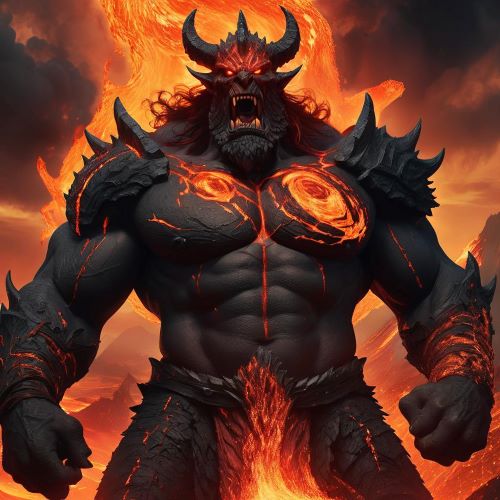
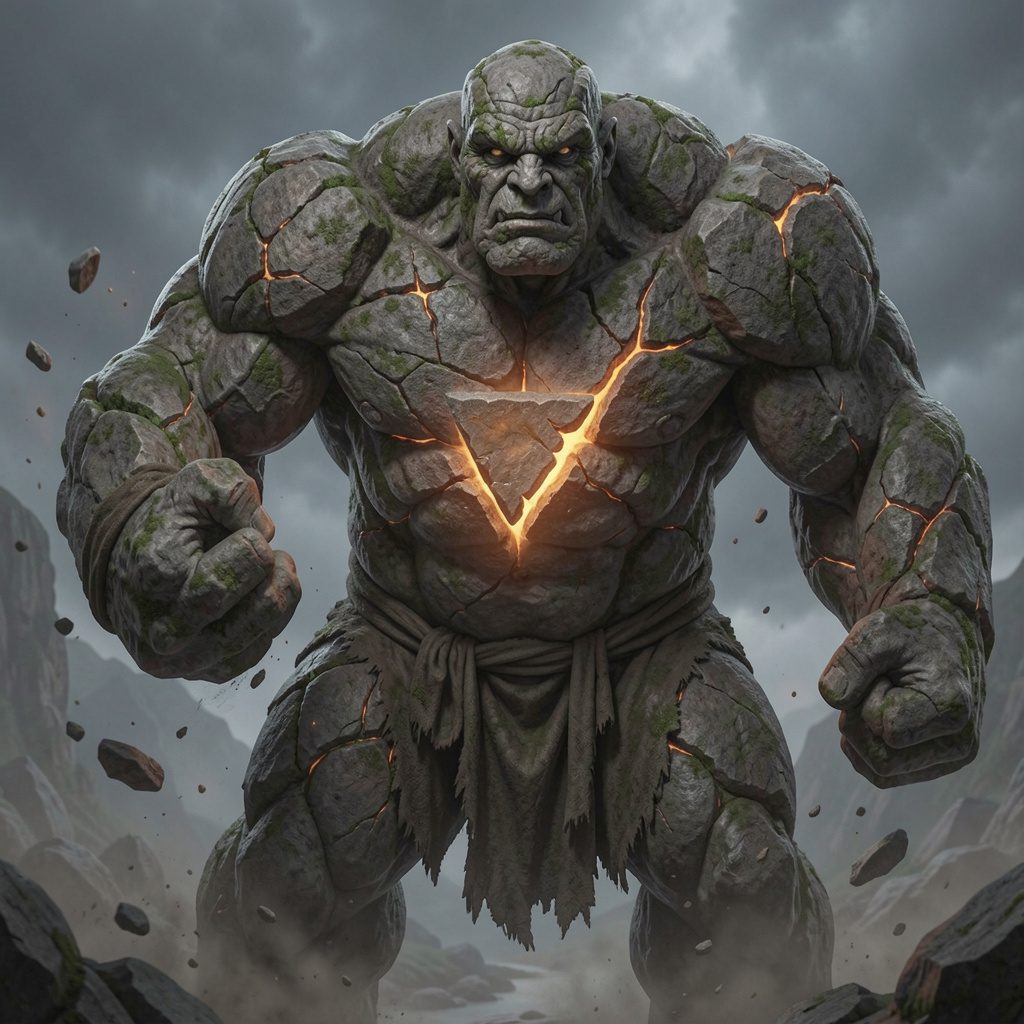
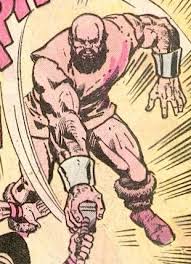
Hrungnir’s form is not merely gigantic but fundamentally elemental. Unlike other giants who retain humanoid traits, he is described as partially composed of stone, with a head and heart made entirely of rock. This detail transforms him from a simple warrior into a living extension of the earth itself.
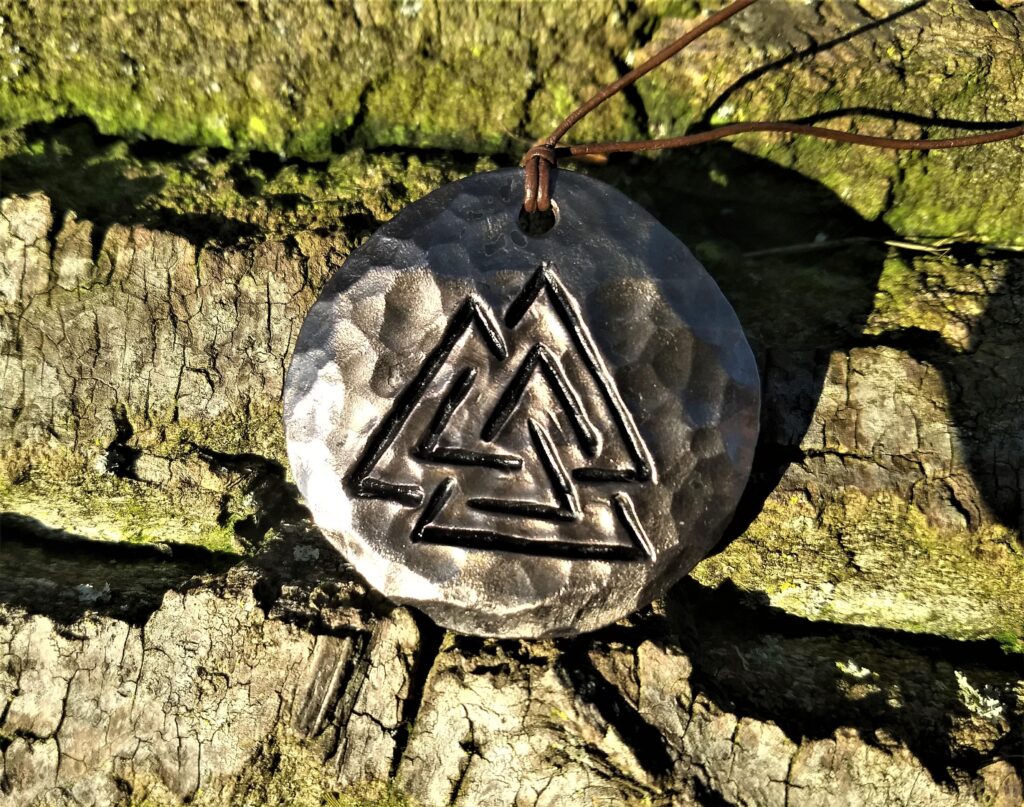
His stone heart is particularly significant, described as triangular and spiked, a rare and symbolic feature in Norse myth. Later interpretations connect this shape to carved symbols found in Norse culture, suggesting that Hrungnir’s anatomy carried meaning beyond physical description.
His equipment mirrors his body. He carries a massive stone shield and uses a whetstone as a weapon, reinforcing the idea that everything about him is rooted in the raw, unrefined material of the natural world. While later artistic depictions exaggerate his size and texture, describing him as resembling a walking cliff or a weathered boulder, these are expansions of the original imagery rather than primary sources.
Family
Unlike many figures in Norse mythology, Hrungnir is not defined by genealogy. The surviving texts do not name his parents, siblings, or descendants, leaving his place within the jötnar largely unstructured. This absence of lineage is notable, especially in a mythological system where ancestry often determines identity and power.
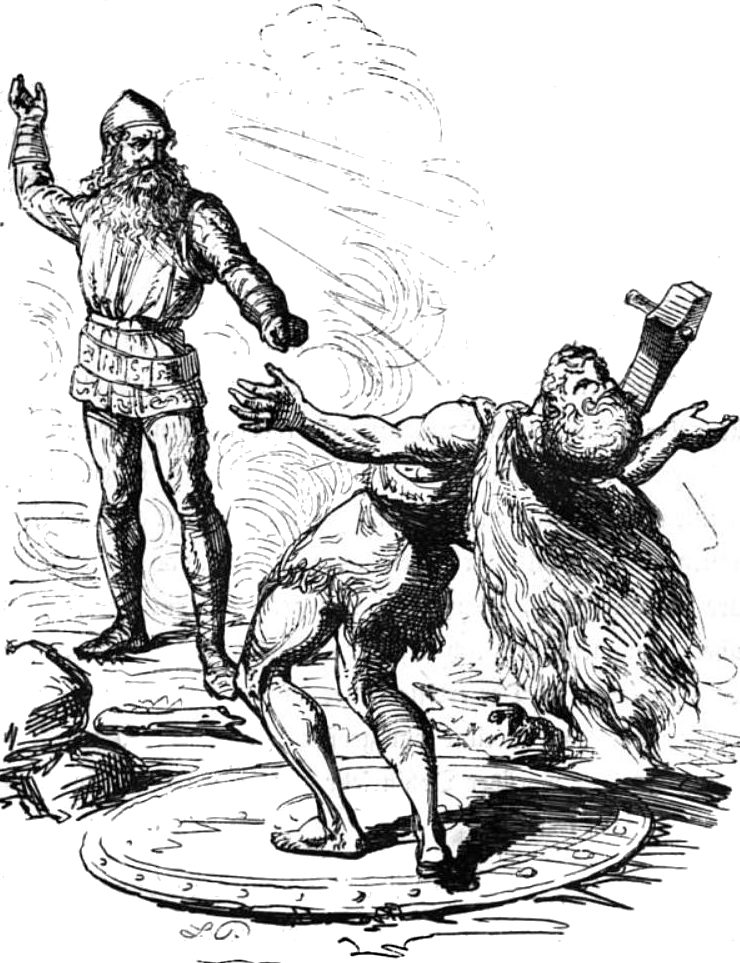
However, his story intersects indirectly with divine lineage through the aftermath of his duel. When Hrungnir falls, his massive leg traps Thor beneath it. The god is freed only by his young son Magni, born of the giantess Járnsaxa. This moment subtly reinforces the complex relationship between gods and giants, where opposition and kinship coexist. While Hrungnir himself remains isolated, his defeat becomes part of a larger narrative involving hybrid strength and inherited power.
Other names
Hrungnir’s name is generally understood to mean “the brawler” or “the fighter,” a straightforward reflection of his nature. Unlike many mythological beings, he is not known by multiple titles or aliases, which further emphasizes the simplicity of his character.
His name, however, appears frequently in skaldic poetry as part of kennings. Poets refer to Thor as the “slayer of Hrungnir” or “crusher of Hrungnir’s skull,” turning the giant’s name into a symbol of a great victory. In some poetic variations, the name appears as “Rungnir,” demonstrating the fluidity of oral tradition.
Powers and Abilities
Hrungnir’s defining trait is overwhelming physical strength. He is consistently described as the mightiest of all giants, capable of matching the gods in sheer force. Yet his power is not limited to strength alone; it is reinforced by his stone composition, which makes him extraordinarily resilient.
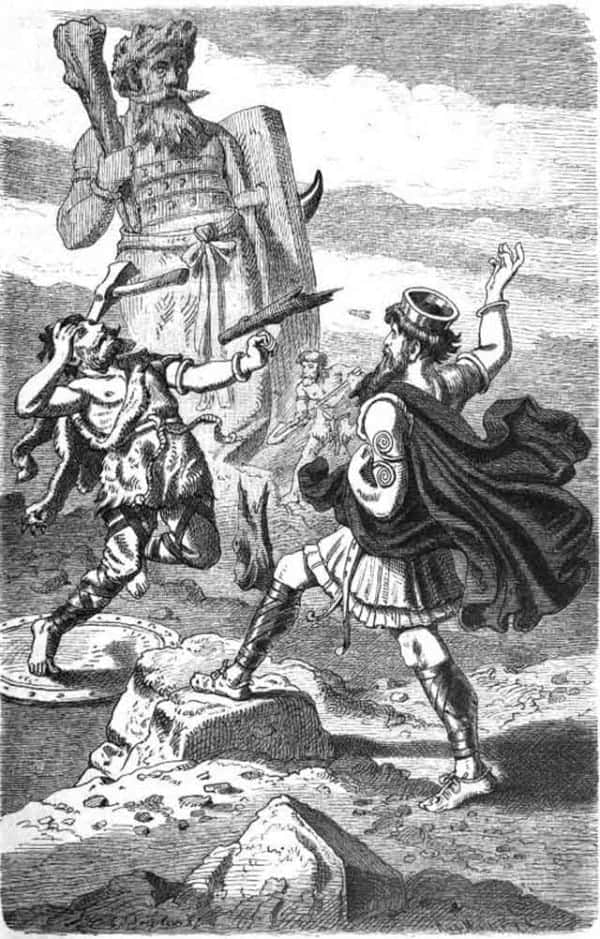
His primary weapon is a massive whetstone, which he hurls with lethal precision. During his duel with Thor, this whetstone collides with Mjölnir mid-air. The hammer shatters it, but a fragment lodges permanently in Thor’s forehead, leaving a lasting mark on the god. This detail underscores Hrungnir’s ability to inflict damage even in defeat.
Another crucial element of the myth is the presence of Mökkurkálfi, a giant constructed from clay by the other jötnar to support Hrungnir. Despite its immense size, the creature proves ineffective, highlighting the contrast between artificial strength and genuine power.
Even in death, Hrungnir remains imposing. His body collapses onto Thor, pinning him until Magni lifts the giant’s leg away. This final image reinforces the idea that Hrungnir’s strength is inseparable from his physical mass, making him as much a force of nature as a character.
Modern Day Influence
Hrungnir continues to appear in modern interpretations of Norse tradition, often as a symbol of brute force and arrogance. His story is frequently retold in books, podcasts, and digital media that explore mythological battles, keeping his duel with Thor alive in popular imagination.
In video games such as Smite, he is reimagined as a warrior embodying durability and taunting strength, reflecting his mythic personality. Similarly, Norse-inspired franchises and adaptations often portray him as a towering stone giant, emphasizing his connection to earth and resilience.
Beyond entertainment, Hrungnir attracts scholarly interest. Researchers analyze his duel with Thor as a structured challenge narrative, combining elements of ritual, honor, and violence. Comparative mythology also places him alongside other stone beings, such as Ullikummi from Hurrian tradition, revealing a broader pattern of storm gods defeating earth-bound giants.
Related Images
Urban Legends
Glorious Epics
Mythical Events
Source
Brink, B., & Price, N. (Eds.). (n.d.). The poetic Edda. Open Book Publishers. https://books.openbookpublishers.com/10.11647/obp.0308.pdf
Lindow, J. (n.d.). “Thor’s Duel with Hrungnir.” In G. Barnes, M. Clunies Ross, & J. Quinn (Eds.), Old Norse studies in the New World (pp. 117–130). https://zotero.org/groups/1314983/items/CSU6TUI9
Pantheon.org. (2006). Hrungnir (mythological giant). Pantheon.org – Facts, information, and mythology.
https://pantheon.org/articles/h/hrungnir.html
Timelessmyths.com. (2002). Hrungnir – Stone‑headed Norse giant who challenged Thor. Timeless Myths.
https://timelessmyths.com/norse/asgard/giants/hrungnir
Short, W. R. (n.d.). Thor and Hrungnir. Hurstwic Norse Mythology. http://www.hurstwic.com/history/articles/mythology/myths/text/hrungnir.htm
Gelmir.com. (2025). Hrungnir’s heart (valknut). Gelmir – Norse compendium. https://gelmir.com/compendium_item/hrungnirs-heart-valknut/
Norse‑Mythology.org. (2018). Thor’s duel with Hrungnir. Norse Mythology for Smart People.
https://norse-mythology.org/tales/thors-duel-with-hrungnir/
EBSCO. (2018). How Thor fought the giant Hrungnir. In Literature and writing – Research Starters. EBSCO Industries. https://www.ebsco.com/research-starters/literature-and-writing/how-thor-fought-giant-hrungnir
Frequently Asked Questions
Who was Hrungnir in Norse mythology?
Hrungnir was the strongest of the jötnar, known for his duel with Thor after a wager with Odin.
What was Hrungnir made of?
He had a stone head and a stone heart, symbolizing immense strength and durability.
How did Hrungnir die?
He was killed by Thor when Mjölnir shattered his skull during their duel.
What weapon did Hrungnir use?
He used a massive whetstone as a projectile weapon against Thor.
Why is Hrungnir important in Norse myths?
His story highlights the clash between chaotic natural forces and divine order, a central theme in Norse tradition.