


Zhuque : The Sacred Vermilion Bird of Chinese Tradition
At a glance
| Description | |
|---|---|
| Origin | Chinese Mythology |
| Classification | Animals |
| Family Members | N/A |
| Region | China |
| Associated With | South, Summer, Fire, Warmth, Light, Protection, Auspiciousness |
The Mythlok Perspective
In Mythlok’s Perspective, Zhuque represents something more interesting than the familiar image of a mythical firebird. Unlike the Fenghuang, which embodies virtue and auspicious harmony, Zhuque derives its identity from the organisation of the cosmos. Its significance lies in how ancient Chinese thinkers transformed observations of the night sky into a living system of protection, direction and balance. It is a reminder that mythology does not always begin with stories; sometimes, it begins with looking up.
Zhuque
Introduction
Zhuque (朱雀), widely known as the Vermilion Bird, is one of the four celestial guardians in traditional Chinese cosmology. Associated with the southern direction, this remarkable bird represents summer, fire, warmth and the brightness of the southern heavens. It belongs to a group known as the Four Symbols, alongside Qinglong (Azure Dragon), Baihu (White Tiger) and Xuanwu (Black Warrior). Together, these four beings represent the cardinal directions and form an important part of ancient Chinese astronomical and philosophical traditions.
Unlike many legendary creatures whose identities developed around individual stories, Zhuque emerged from the observation and interpretation of the night sky. Ancient Chinese astronomers divided the heavens into four celestial regions, each containing seven lunar mansions. The stars in the southern region were collectively visualised as a bird, eventually becoming associated with the Vermilion Bird.
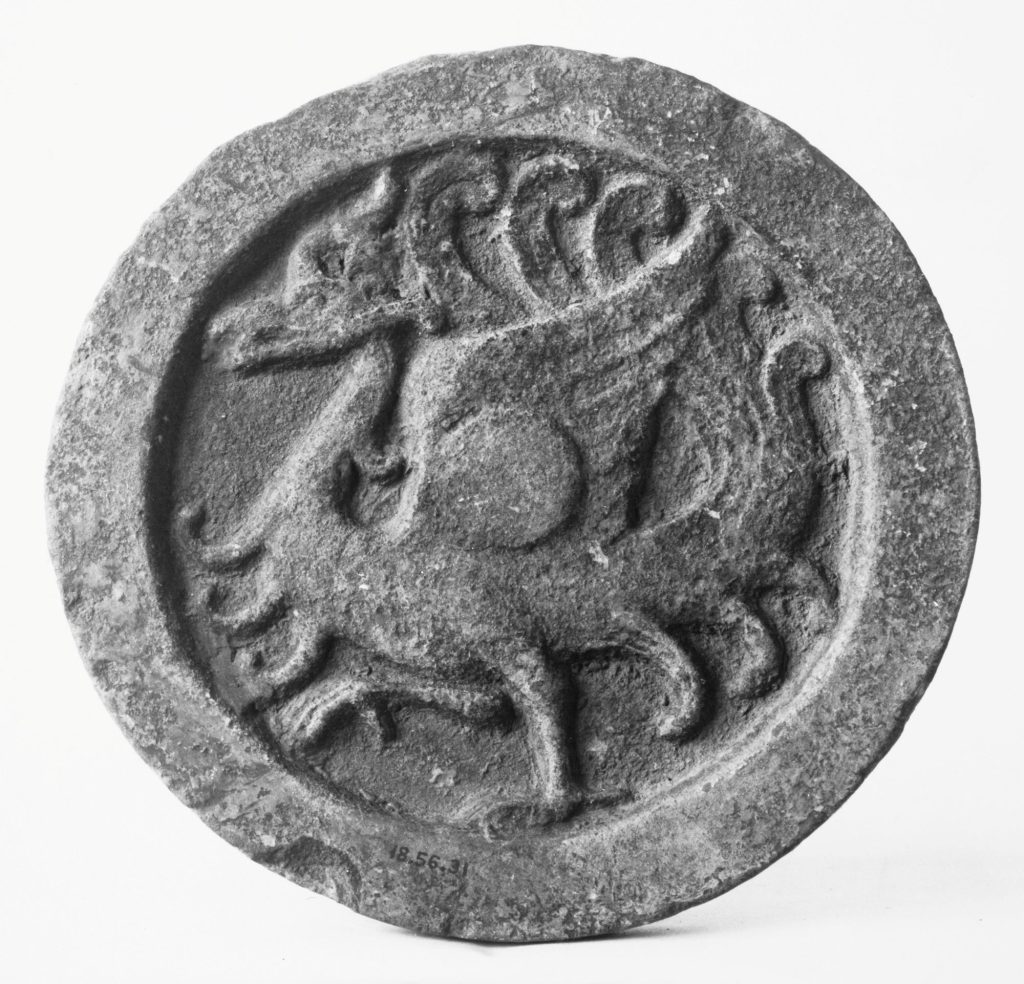
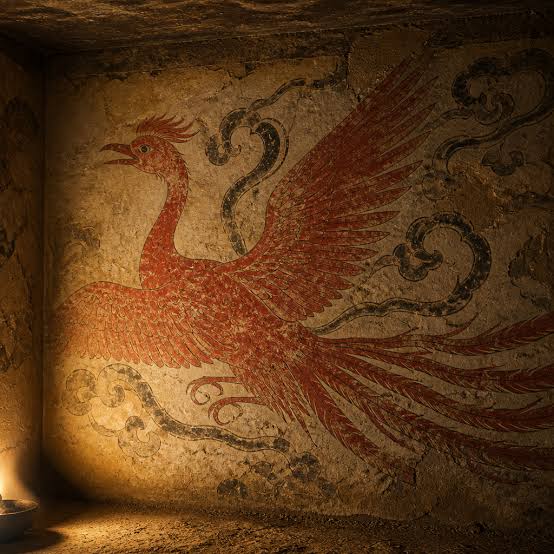
During the Han Dynasty (206 BCE–220 CE), the Four Symbols became increasingly integrated into Chinese cosmological thought, religious practices and funerary art. Their representations appeared on tomb walls, engraved bricks, architectural decorations and ceremonial objects. These images were more than artistic embellishments. They expressed the belief that the human world, the natural environment and the heavens operated within an interconnected cosmic order.
Zhuque consequently developed an identity that extended beyond astronomy. It became a guardian associated with protection, auspiciousness and the southern quarter of the universe. Although frequently compared with the Chinese phoenix, Fenghuang, the two are distinct figures with different traditional roles.
Physical Traits
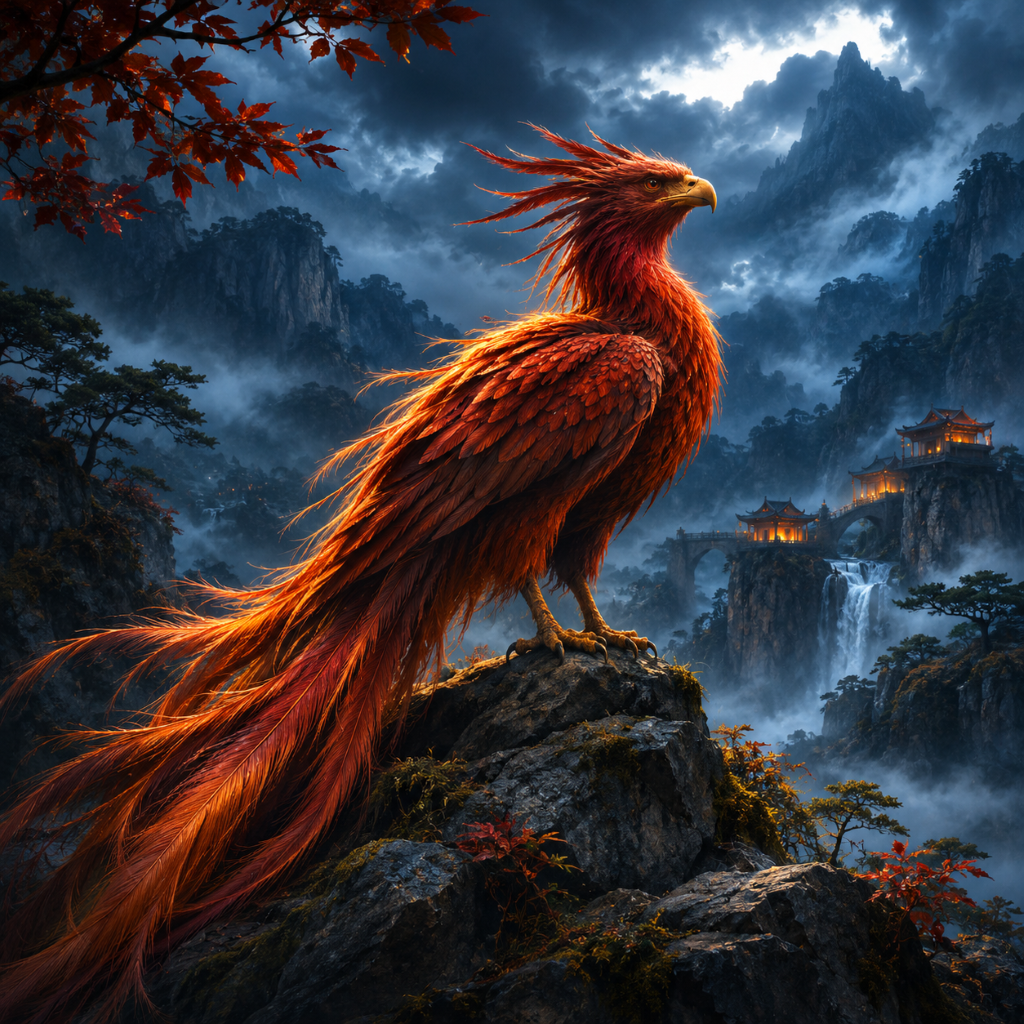
Zhuque is traditionally represented as a magnificent bird with predominantly red or vermilion plumage. Its colour reflects its association with the south, summer and the Fire phase in the Chinese Five Phases system. Red was an important symbolic colour in Chinese culture, connected with warmth, vitality, brightness and auspiciousness.
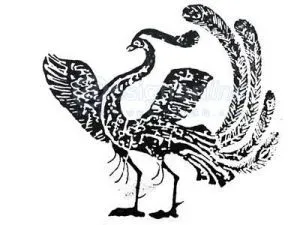
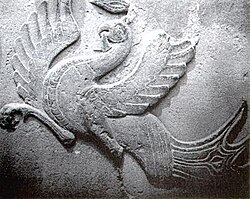
There is no single universally accepted anatomical description of Zhuque. Its appearance changes across historical artworks, religious representations and later interpretations. Han Dynasty architectural decorations frequently depict the bird with an elevated head, extended wings, curved feet and a flowing, fan-shaped tail. These compositions emphasise movement and celestial presence rather than realistic anatomical detail. Some artistic interpretations incorporate features associated with other auspicious birds, including elaborate crests and elongated tail feathers. Such variations reflect the evolving visual language surrounding China’s sacred birds rather than a definitive physical description.
Its appearance also creates an important distinction from Fenghuang, the Chinese phoenix. Although both creatures are represented as magnificent birds and can share visual characteristics, Zhuque primarily functions as a directional celestial guardian. Fenghuang has a separate place in Chinese traditions and is associated with virtue, harmony and auspicious rule. The absence of a fixed physical description is significant. Zhuque is better understood through its celestial identity and symbolic associations than through a rigid catalogue of physical characteristics.
Family
Zhuque does not have an established biological family in the surviving traditional accounts. Chinese cosmological traditions identify it through its relationship with the other three celestial guardians rather than through parentage, marriage or descendants. Its closest counterparts are Qinglong, Baihu and Xuanwu, collectively forming the Four Symbols. Each represents a cardinal direction and has corresponding associations with a season and one of the Five Phases.
Qinglong governs the east and is associated with spring and Wood. Zhuque represents the south, summer and Fire. Baihu watches over the west and corresponds to autumn and Metal, while Xuanwu guards the north and is associated with winter and Water. These four beings are not siblings in a conventional genealogical sense. Their relationship is based on their shared responsibility for maintaining the symbolic order of the universe.
The Four Symbols became particularly prominent during the Han Dynasty, when their imagery was incorporated into funerary and architectural traditions. Their presence in tombs helped establish a sacred arrangement of space, connecting the deceased with the larger structure of the cosmos. Later Daoist traditions further developed the religious identities of these celestial guardians. Zhuque became associated with divine protection and the spiritual geography of the southern heavens. However, these religious developments should not be confused with an original family genealogy.
Other names
Zhuque is written as 朱雀 in Chinese and romanised as Zhūquè using the Hanyu Pinyin system. The name is generally translated into English as Vermilion Bird, although Red Bird and Vermilion Sparrow also appear in translations and historical discussions. Another related designation is Zhuniao (朱鸟), meaning Vermilion Bird. Historical and scholarly texts sometimes use these terms in overlapping ways when discussing the celestial bird associated with the south.
The figure also has different names across East Asia. In Japanese traditions, Zhuque is known as Suzaku, while its Korean name is Jujak. These names reflect the historical transmission of Chinese astronomical and cosmological ideas into neighbouring cultures.
Zhuque is sometimes described as a Chinese fire phoenix in modern popular culture. However, this terminology can create confusion because it suggests that Zhuque and Fenghuang are interchangeable. They are not. Although their visual characteristics and symbolic associations occasionally overlap, their traditional identities developed separately. The English name Vermilion Bird remains the most useful translation for understanding the creature’s original Chinese identity.
Powers and Abilities
Zhuque’s abilities are best understood through its cosmological responsibilities rather than through individual heroic adventures. As the guardian of the south, it represents the celestial region associated with summer, warmth, brightness and the Fire phase. The connection with Fire forms an important part of the Five Phases system, known as Wuxing. This philosophical framework describes the relationships and transformations between Wood, Fire, Earth, Metal and Water. Zhuque occupies the southern position within this arrangement and symbolises the qualities associated with Fire.
Its association with light and heat also connects it with the yang principle, representing brightness, activity and warmth. These qualities distinguish the southern guardian from Xuanwu, whose northern associations include darkness, cold and Water. Protection is another important aspect of Zhuque’s traditional role. Images of the Four Symbols appeared in Han Dynasty tombs and other architectural settings, where they helped establish a protective and auspicious cosmic environment. Their presence reflected beliefs about the relationship between earthly spaces and the celestial order. Zhuque was also associated with good fortune and harmony. Its position within the Four Symbols made it part of a larger system intended to represent balance between the four directions.
Some later interpretations give Zhuque extraordinary fire-based abilities, including control over flames, flight through fire and resurrection from ashes. These characteristics are popular in contemporary fantasy, games and fictional adaptations. However, they should not be presented as universally established powers in early Chinese cosmological traditions. Its importance lies less in destructive supernatural abilities and more in its symbolic responsibility for the southern heavens.
Modern Day Influence
Zhuque continues to occupy an important place in the visual and cultural imagination of East Asia. Its distinctive appearance and association with fire have made it a popular subject in contemporary art, literature, animation, gaming and decorative design. The Four Symbols have experienced renewed interest through modern interpretations of traditional Chinese art. Their imagery appears in jewellery, architectural motifs, illustrations, cultural merchandise and digital artwork. Zhuque is particularly recognisable because its vermilion appearance provides a strong visual connection with fire, summer and the southern direction.
Its influence also survives through historical geography. One notable example is Zhuque Avenue in Chang’an, the ancient capital of several Chinese dynasties. The avenue’s name reflected the city’s traditional cosmological planning, in which directional symbolism influenced architecture and urban organisation. In contemporary entertainment, Zhuque frequently appears as a powerful celestial bird or guardian creature. Japanese popular culture often uses its name in the form of Suzaku, while Chinese games and fantasy literature draw on its association with the southern heavens and Fire.
The creature also appears in video games such as World of Warships, which features a Pan-Asian Tier VIII destroyer named Zhu Que. Such appearances demonstrate how an ancient celestial symbol can find new interpretations far removed from its original astronomical setting. Despite these modern adaptations, the historical significance of Zhuque remains rooted in Chinese cosmology. It represents a tradition in which celestial observation, philosophy, religious symbolism and artistic expression came together to explain the structure of the universe. Its continued presence demonstrates how ancient cultural symbols can survive by adapting to changing artistic and storytelling traditions.
Related Images


Source
Allan, S. (1991). The shape of the turtle: Myth, art, and cosmos in early China. State University of New York Press.
Birrell, A. (1993). Chinese mythology: An introduction. Johns Hopkins University Press.
China Culture Pro. (2026, August 23). Vermilion Bird meaning: Zhuque symbolism explained.
https://www.chinaculturepro.com/vermilion-bird-meaning/
China Culture Pro. (2026, August 23). Four Symbols of Chinese mythology: Meaning and origins.
https://www.chinaculturepro.com/four-symbols-chinese-mythology/
NihaoChina. (n.d.). Zhuque, the Vermilion Bird. https://nihaochina.com/en/mythology/creatures/zhuque
Visit Beijing. (2015, April 20). Four mythological creatures in China. https://english.visitbeijing.com.cn/article/47ONIK3WHho
Wikipedia. (2026). Vermilion Bird. https://en.wikipedia.org/wiki/Vermilion_Bird
Zhu, L. (2025). The application of Saussure’s “signifier/signified” theory in jewelry design: A case study of the Four Divine Symbols eave tile patterns of the Han Dynasty. Silpa Bhirasri: Journal of Fine Arts, 13(2), 43–84. https://doi.org/10.69598/sbjfa280251
Frequently Asked Questions
Who is Zhuque in Chinese mythology?
Zhuque is the Vermilion Bird of Chinese cosmology. It is one of the Four Symbols and represents the southern heavens, summer, Fire and celestial protection.
Is Zhuque the same as the Chinese phoenix?
No. Zhuque and Fenghuang are separate mythological birds. Zhuque represents the southern celestial region, while Fenghuang symbolises virtue, harmony and auspiciousness.
What are Zhuque's powers and abilities?
Zhuque is associated with fire, warmth, light, protection and good fortune. Its traditional role is primarily cosmological rather than based on individual supernatural abilities.
Who are the other three members of the Four Symbols?
The other guardians are Qinglong, the Azure Dragon of the East; Baihu, the White Tiger of the West; and Xuanwu, the Black Warrior of the North.
What is Zhuque called in Japanese mythology?
Zhuque is known as Suzaku in Japanese tradition. The name comes from the same Chinese characters, 朱雀, and represents the southern celestial guardian.


