


Xuanwu : The Chinese God of Protection and the Northern Heavens
At a glance
| Description | |
|---|---|
| Origin | Chinese Mythology |
| Classification | Gods |
| Family Members | N/A |
| Region | China |
| Associated With | Magic, North |
Mythlok Perspective
In Mythlok’s Perspective, Xuanwu represents something more powerful than physical strength: transformation through discipline. Like Garuda in Indian mythology, he connects animal symbolism with divine power, but Xuanwu’s journey from celestial guardian to Taoist warrior makes his evolution particularly striking. His tortoise and serpent are not merely symbols of the north, but reminders that mythology often gives new meaning to ancient images as cultures, beliefs, and human understanding evolve.
Xuanwu
Introduction
Xuanwu, often translated as the Black Tortoise or Dark Warrior, is one of the Four Symbols of Chinese cosmology and represents the northern direction. Traditionally depicted as a tortoise entwined with a snake, Xuanwu is associated with the north, winter, and the celestial region of the northern heavens. The other three members of the Four Symbols are the Azure Dragon of the east, the Vermilion Bird of the south, and the White Tiger of the west. These directional associations were established in Chinese cosmology by the late Warring States and early imperial periods.
Xuanwu occupies an unusual position in Chinese religious tradition because the figure developed from a celestial symbol into an anthropomorphic deity. The tortoise and snake originally represented the northern quarter of the heavens, but by the Northern Song period, this symbol had increasingly been given a human form. This deity became known as Zhenwu, or the True Warrior, and eventually developed into one of the most important protective deities in Taoism. The transformation illustrates how a cosmological symbol could gradually become the focus of an established religious cult.
As Zhenwu, Xuanwu became associated with protection, spiritual power, and the suppression of evil forces. His importance grew considerably during the Song and Ming dynasties, when imperial patronage helped establish him as a major deity. During the Ming dynasty in particular, Zhenwu was revered as a protector of the state and the imperial family.
Physical Traits
Xuanwu’s most distinctive physical feature is his composite form: a tortoise entwined with a snake. This image represents the northern quarter in the traditional system of Four Symbols and appears in Chinese art and objects dating back many centuries. An eleventh-century Northern Song porcelain model in the Metropolitan Museum of Art, for example, depicts precisely this tortoise-and-snake form as the symbol of the north.
The tortoise itself carries associations with endurance, longevity, and strength in Chinese symbolism, while the snake has connections with water and can carry both dangerous and protective associations depending on the tradition. The combination therefore creates an image that is considerably more complex than a simple hybrid creature. It represents a cosmological principle as much as a mythological being.
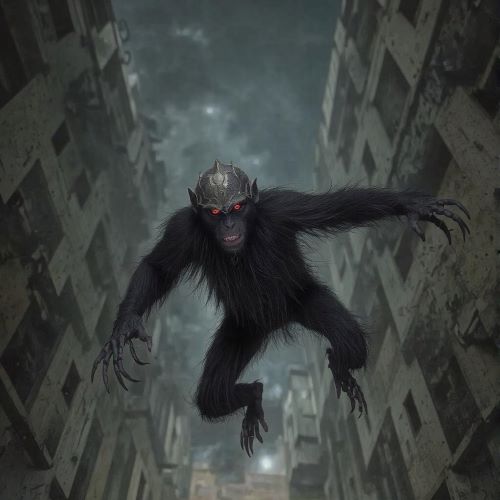
When Xuanwu developed into the anthropomorphic deity Zhenwu, his appearance changed considerably. Zhenwu is generally portrayed as a powerful warrior dressed in dark robes, often with a sword and other ritual attributes. In many representations, the tortoise and snake appear beneath his feet rather than forming his body. The animals therefore remain an essential visual reminder of his original identity as Xuanwu, even after the symbol had become a human-shaped deity.
Some later representations portray Zhenwu standing upon or subduing the tortoise and snake. Taoist traditions connected these creatures with the forces or demons that the Perfected Warrior conquered. In this form, the animals are not merely his physical features but also visual representations of forces brought under his control.
Family
Unlike many figures in Chinese mythology, Xuanwu does not have a single universally accepted family genealogy. This is partly because Xuanwu began as a celestial symbol rather than as a character with a conventional mythological biography. His later identity as Zhenwu developed through Taoist religious traditions, which introduced different accounts of his origins and spiritual transformation.
One important tradition presents Zhenwu as a royal prince who renounced worldly life and devoted himself to spiritual cultivation. His story emphasizes discipline, religious devotion, and the attainment of spiritual power rather than divine parentage. Other legends developed different accounts of his earthly origins and transformation, demonstrating the diversity of traditions surrounding the deity.
Zhenwu is also frequently accompanied by divine attendants and generals in religious art. Among these are figures known as Wan Gong and Wan Ma, who appear in some traditions associated with local forms of worship. Their presence reflects the development of Zhenwu from a celestial symbol into a fully developed religious deity surrounded by an expanded divine hierarchy.
Zhenwu’s mythology also includes stories involving other major religious figures. Some later traditions connect him with figures such as Guan Yin, although these stories represent narrative developments rather than evidence of a fixed family relationship. Consequently, Xuanwu’s mythology is better understood as a collection of evolving religious traditions than as a single family-centered mythology.
Other Names
Xuanwu is known by several names and titles reflecting his transformation from a cosmological symbol into a major Taoist deity. Xuanwu is commonly translated as Black Tortoise, Dark Warrior, or Mysterious Warrior. The first element of the name carries meanings associated with darkness, mystery, and profundity, while the second has associations with warfare and the warrior.
As the figure developed into an anthropomorphic deity, the name Zhenwu became increasingly prominent. Zhenwu can be translated as True Warrior or Truly Valiant. He is also known as Zhenwudadi, generally translated as True Martial Great Emperor, and Xuantian Shangdi, meaning the Supreme Emperor of the Dark or Profound Heaven. These titles reflect his elevated position within Taoist religious traditions.
In Japan, the same Chinese characters used for Xuanwu are pronounced Genbu. Genbu became one of the four directional guardian creatures in Japanese cosmological and religious traditions, representing the north and retaining the characteristic tortoise-and-snake imagery. The distinction between Xuanwu and Zhenwu is particularly important. Xuanwu refers primarily to the ancient northern celestial symbol, while Zhenwu represents its later personification as a Taoist deity. Over time, however, the two identities became closely intertwined and are commonly treated as different aspects of the same divine figure.
Powers and Abilities
Xuanwu’s earliest significance was cosmological rather than that of a supernatural hero with a defined list of powers. As the northern symbol, he represented one of the four major divisions of the heavens and was connected with the north and its associated seasonal and elemental concepts. His religious powers became more clearly defined as Xuanwu developed into Zhenwu.
As Zhenwu, he became a powerful warrior and protective deity. Religious traditions portray him as a conqueror of demons and malevolent forces, making him an important guardian figure. His martial identity is reflected in his name, his sword, his warrior-like appearance, and stories describing his battles against supernatural enemies.
His connection with the north also remained central to his religious identity. The tortoise and snake continued to appear beneath his feet in later representations, linking the anthropomorphic deity directly to the ancient celestial symbol. In some legends, Zhenwu defeats powerful demonic forces that take the form of these creatures, transforming the old cosmological imagery into part of his religious mythology.
Zhenwu’s protective role became particularly important under imperial patronage. During the Ming dynasty, he was revered as a guardian of the state and the imperial family. His association with protection, martial power, and the north helped establish him as a deity to whom rulers and devotees could turn for spiritual protection.
Modern Day Influence
Xuanwu’s legacy remains visible in Chinese religious culture, historical sites, art, and popular representations. His transformation from a celestial symbol into Zhenwu ensured that the ancient image of the tortoise and snake continued to have religious significance long after the original cosmological system had developed.
Zhenwu remains an important figure in Taoist worship, with temples and sacred sites dedicated to him. His connection with Wudang Mountain is particularly significant, where his worship became closely associated with one of China’s most important Taoist centers. His popularity also expanded considerably during the Ming dynasty, when imperial support strengthened his position within Chinese religious culture.
His imagery has also survived through Chinese painting, sculpture, ceramics, temple art, and religious objects. The distinctive tortoise and snake remain immediately recognizable symbols of the northern guardian, while representations of Zhenwu preserve the warrior form that developed during the Song and later periods.
The name Xuanwu also survives in the geography of China. Xuanwu Lake in Nanjing has carried the name Xuanwu since 446 CE, during the Liu Song period of the Southern Dynasties. The lake’s name was connected with the cosmological organization of the ancient capital and its association with the northern direction. The Xuanwu name also survives in modern administrative geography, including Xuanwu District in Nanjing. These surviving names demonstrate how the concept of Xuanwu moved beyond mythology and religion into the historical and cultural landscape of China.
From an ancient symbol of the northern heavens to the Taoist deity Zhenwu, Xuanwu represents one of the most interesting transformations in Chinese religious tradition. The tortoise and snake remain the foundation of his identity, while the later warrior deity adds a powerful narrative of spiritual discipline, protection, and the conquest of evil. His enduring presence in religious art, sacred sites, and Chinese cultural memory demonstrates how an ancient cosmological symbol can evolve into a living religious tradition.
Related Images



Sources
Wikipedia. (n.d.). Xuanwu (god). In Wikipedia. Retrieved from https://en.wikipedia.org/wiki/Xuanwu_%28god%29
Wisdomlib.org. (2025, August 28). Xuan wu, also known as Zhenwu: Significance and symbolism. Retrieved from https://www.wisdomlib.org/concept/xuan-wu
Godchecker. (2019, April 21). Xuan Wu – the Chinese fabulous creature. Retrieved from https://www.godchecker.com/chinese-mythology/XUAN-WU/
StoriesPub. (n.d.). Xuanwu: God of Water & North in Chinese Mythology. Retrieved from https://storiespub.com/xuanwu-god-of-north-and-water/
5. (2025). Devotion to Ong Bon (Xuan Tian Shang Di) of the Chinese … International Journal of Social Sciences, Humanities & Management Research, 4(1). Retrieved from https://ijsshmr.com/v4i1/Doc/9.pdf
Frequently Asked Questions
Who is Xuanwu in Chinese mythology?
Xuanwu is a powerful celestial deity known as the Black Tortoise of the North and a protector against evil. He rules over the element of water and the winter season.
What does Xuanwu look like?
He is commonly portrayed as a dark-armored warrior standing with a tortoise and serpent intertwined — symbolic guardians representing endurance and renewal.
What is Xuanwu’s role in Taoism?
In Taoism, Xuanwu is revered as a divine protector who purifies negative forces. He is believed to heal illnesses and defend against malevolent spirits.
Why are a tortoise and serpent associated with Xuanwu?
The tortoise represents stability and longevity, while the serpent signifies transformation. Together, they symbolize eternal balance and cosmic protection.
Where is Xuanwu worshipped today?
Xuanwu remains popular in temples across China and East Asia. Many believers pray to him for health, safety, and protection during challenging times.


