

Macunaíma (1969) : A Satirical Journey Through Brazilian Folklore and Chaos
| Description | |
|---|---|
| Country of Origin | Brazil |
| Language | Portuguese |
| Genre | Comedy |
| Cast | Paulo José, Grande Otelo, Dina Sfat |
| Directed by | Joaquim Pedro de Andrade |
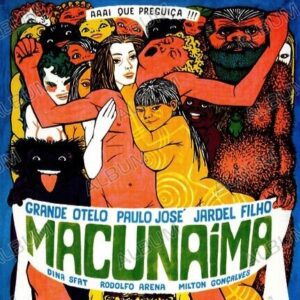
Macunaíma
Few films capture the chaotic spirit of folklore as boldly as Macunaíma. Released during one of Brazil’s most politically tense eras, the film transforms ancient myth into surreal satire, creating a bizarre but unforgettable cinematic experience. Directed by Joaquim Pedro de Andrade and based on the modernist novel by Mário de Andrade, the movie takes one of Brazil’s most important mythical figures and throws him into a rapidly modernizing society filled with greed, corruption, absurdity, and identity crises. What emerges is not simply a comedy or fantasy film, but a mythological critique of an entire nation.
At the center of Macunaíma is the legendary trickster hero himself, a figure deeply connected to Indigenous Brazilian folklore. In mythology, Macunaíma is often described as “the hero without any character,” a being who constantly changes forms, behaviors, and morals. The film embraces this instability completely. The protagonist shifts physically and emotionally throughout the narrative, representing a fractured national identity that cannot settle into a single definition. This mythological fluidity becomes the film’s greatest strength. Macunaíma is not meant to be heroic in the traditional sense. He is lazy, selfish, lustful, clever, foolish, and strangely adaptable all at once. Like many trickster figures found across global traditions, he exists to disrupt order rather than preserve it.
The mythological parallels become even more fascinating when viewed through a wider comparative lens. Macunaíma resembles figures such as Loki from Norse traditions, Anansi from West African stories, and Coyote from Native American traditions. Like them, he exposes the hypocrisies of society through chaos and humor. Yet unlike many Western heroes, Macunaíma never grows into a noble figure. His journey is cyclical and self-destructive, reflecting a worldview where survival matters more than morality. This makes the character feel ancient, primal, and deeply connected to oral storytelling traditions rather than structured heroic epics.
Visually, the film feels like mythology colliding with carnival madness. Bright tropical colors, exaggerated performances, and surreal imagery create a dreamlike atmosphere that constantly blurs reality and fantasy. The city itself becomes almost mythological, transforming urban Brazil into a symbolic underworld filled with grotesque elites, strange temptations, and spiritual decay. The film’s exaggerated tone may initially appear comedic, but beneath the absurdity lies an unsettling commentary about colonialism, racism, capitalism, and cultural erasure.
One of the most mythologically important elements of the story is the magical stone known as the muiraquitã. In Amazonian folklore, the muiraquitã is a sacred talisman associated with luck, fertility, and spiritual power. In the film, Macunaíma’s obsession with reclaiming this object drives much of the narrative. The talisman becomes more than a magical artifact. It represents lost cultural identity and spiritual disconnection in a rapidly industrializing world. Much like mythical quests found in ancient epics, the pursuit of the sacred object forces the protagonist to navigate corrupt societies and confront his own emptiness.
The film also explores transformation in deeply symbolic ways. Macunaíma’s physical changes throughout the story reflect Brazil’s racial and cultural tensions. These transformations are intentionally uncomfortable, forcing viewers to confront the country’s complicated history of colonialism and mixed identity. Mythologically, shapeshifting characters often symbolize liminality, beings who exist between worlds and categories. Macunaíma embodies this idea completely. He is never stable because the culture around him is never stable.
Despite being over five decades old, Macunaíma remains remarkably modern in its themes. The film predicts many contemporary anxieties about consumerism, loss of tradition, and the fragmentation of identity. It asks whether mythology can survive inside a mechanized and politically manipulated society. Instead of offering hope, the film presents mythology as something corrupted, commercialized, and distorted by modern power structures. Yet even within this cynicism, folklore refuses to disappear entirely. Macunaíma survives because tricksters always survive. They adapt, mutate, and continue mocking the systems around them.
What makes Macunaíma such an important mythological film is its refusal to simplify folklore into fantasy entertainment. The movie understands that myths are dangerous, political, and deeply tied to national consciousness. It uses absurd humor to hide sharp cultural criticism, forcing viewers to engage with uncomfortable truths beneath the laughter. The result is a film that feels chaotic by design, mirroring the unstable spirit of the trickster at its center.
For viewers interested in mythology, folklore, and symbolic cinema, Macunaíma is essential viewing. It may not be an easy film, but it is one of the most unique explorations of myth ever put on screen. Rather than presenting legends as distant stories from the past, the film shows mythology as a living force capable of exposing the contradictions of modern civilization itself.