


Wititj : The Powerful Serpent of Yolngu Ancestral Law
At a glance
| Description | |
|---|---|
| Origin | Yolngu Mythology |
| Classification | Spirits |
| Family Members | N/A |
| Region | Australia |
| Associated With | Freshwater, Waterholes, Rainbows, Monsoon, Thunder, Lightning, Fertility |
The Mythlok Perspective
In Mythlok’s Perspective, Wititj represents the inseparable relationship between nature, ancestral identity and cultural law. Like Ọ̀ṣùmàrè, the Yoruba rainbow deity associated with rainbows, water and continuity, Wititj connects natural phenomena with the preservation of life. However, while Ọ̀ṣùmàrè embodies cyclical renewal, Wititj also carries the authority of kinship and ceremonial law, making the serpent an expression of both ecological and social order.
Wititj
Introduction
Wititj is a powerful ancestral serpent in Yolŋu traditions of north-east Arnhem Land, in Australia’s Northern Territory. Identified with the olive python (Liasis olivaceus), Wititj is widely known in English as the Rainbow Serpent and is associated with freshwater, rainbows, monsoon storms and the ancestral laws governing relationships between people and country. The being holds particular significance for the Gälpu clan, which belongs to the Dhuwa moiety, one of the two principal social divisions of Yolŋu society.
Wititj occupies a central position in the Wägilak Sisters story, also written as Wagilag or Wäwilak. This important ancestral narrative describes the encounter between two sisters and the enormous python inhabiting a sacred waterhole. Their confrontation leads to the arrival of the first monsoon and establishes important connections between kinship, marriage regulations, ceremonial knowledge and transformation. The story remains significant to Yolŋu cultural identity and artistic traditions.
For the Yolŋu, ancestral beings are not simply characters belonging to a distant mythological past. Their journeys and actions remain connected with particular landscapes, waterways, ceremonies and community responsibilities. Wititj represents this continuing relationship between the natural environment and ancestral law, making the serpent an important presence in the cultural traditions of Arnhem Land.
Physical Traits
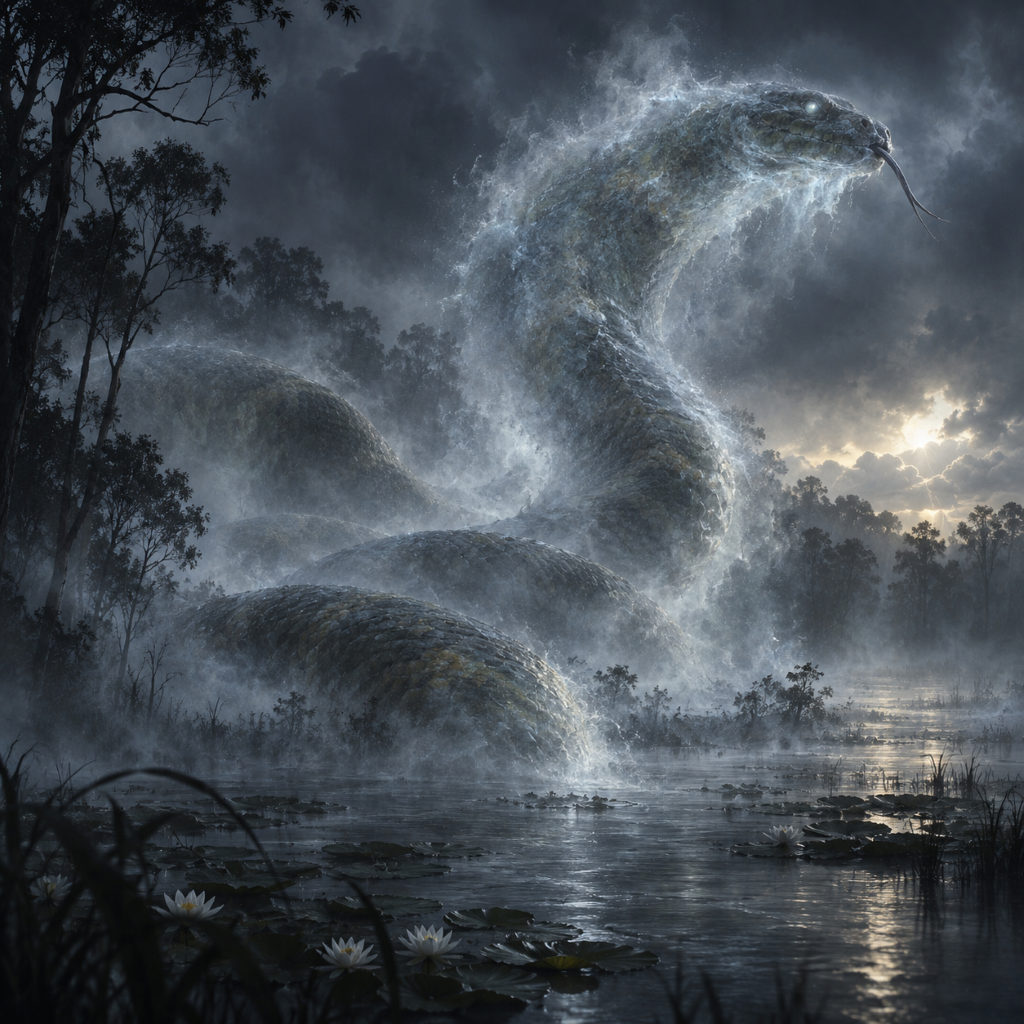
Wititj is traditionally identified as an olive python, a large, non-venomous snake native to northern Australia. Its physical form is central to its identity, although its ancestral significance extends far beyond the characteristics of an ordinary python. In Yolŋu artistic representations, Wititj frequently appears as an enormous serpent emerging from a freshwater pool, winding through the landscape or rising towards the sky.
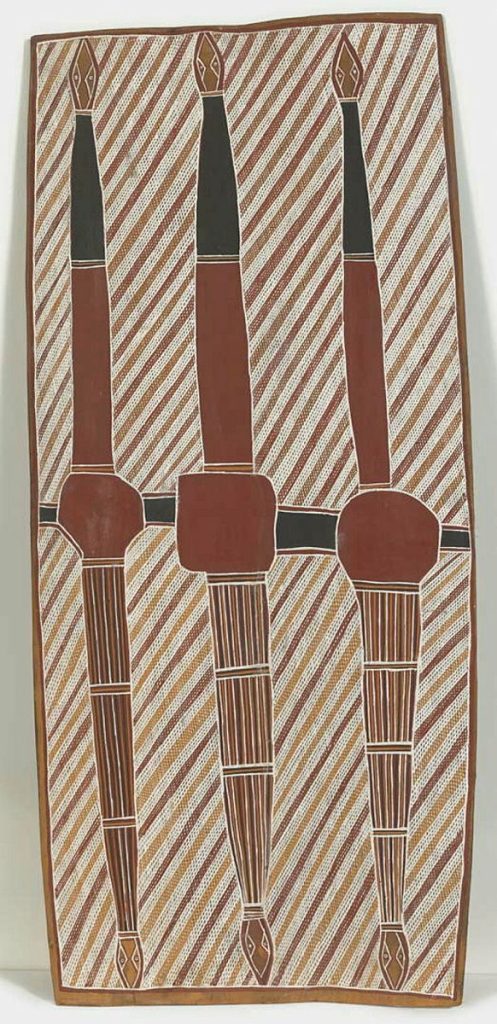
Bark paintings depicting the Wägilak Sisters often portray Wititj surrounding the sisters and their children. The enormous coils emphasise the serpent’s supernatural scale and its ability to dominate the surrounding environment. These representations also communicate its relationship with sacred waterholes and the seasonal forces associated with the arrival of the monsoon.
Water and light play an equally important role in Wititj’s appearance. Gälpu artistic traditions connect the serpent with waterlilies, freshwater ripples and the colourful reflections created when sunlight strikes its scales. These visual associations explain its connection with rainbows, which appear across the surface of water and become expressions of its ancestral presence.
Wititj is also represented through the dramatic imagery of thunderstorms. Its enormous body rising into the sky and its movements through the landscape are associated with lightning, thunderclouds and torrential monsoon rainfall. These features transform the image of an olive python into a powerful representation of the natural environment and its changing seasons.
Family
Wititj’s family relationships are best understood through Yolŋu ancestral associations and kinship structures rather than a conventional genealogy. Available cultural sources do not establish a definitive list of parents, offspring or a spouse. However, the serpent has important relationships with other ancestral beings and the communities connected with its stories.
One significant association is with Djaykung, also written as Djayku, a Javanese file snake. In Gälpu artistic traditions, Djaykung is described as Wititj’s companion and possibly an incarnation of the same ancestral presence. Both serpents are connected with freshwater environments and dhatam, the waterlilies that grow in sacred aquatic landscapes. Their movements are associated with ripples and rainbow-like reflections across the water.
Wititj also has a significant relationship with the Wägilak Sisters, although they should not automatically be described as its biological relatives. The sisters belong to the Dhuwa moiety, as does Wititj, and their encounter illustrates the importance of marriage regulations and prohibited relationships within Yolŋu society.
The National Museum of Australia also documents male and female Wititj figures in Gälpu traditions, emphasising the serpent’s association with fertility and reproduction. These representations demonstrate that Wititj is not necessarily understood through a single fixed gender or individual physical identity. Rather than having a conventional family tree, Wititj belongs to a broader network of ancestral relationships connecting serpents, clans, sacred places and ceremonial responsibilities.
Other names
Wititj is also written as Witij, a spelling variation found in descriptions of Yolŋu ancestral traditions. In English-language publications, the being is commonly identified as the Rainbow Serpent or the Olive Python. These descriptions refer to its ancestral identity and physical form rather than necessarily representing separate names used interchangeably in every community.
The names Yurlunggur, Yurlungur and Julunggul also appear in regional accounts of Rainbow Serpent traditions in Arnhem Land. However, their relationship with Wititj requires care. Older ethnographic accounts and contemporary clan-specific sources do not always use these names in precisely the same way. Yurlunggur, in particular, has a distinct presence in older Murngin ethnographic literature and should not automatically be treated as another universally accepted name for Wititj.
The broader expression Rainbow Serpent is used for several ancestral serpent traditions across Aboriginal Australia. Different communities have their own names, stories and cultural relationships with these beings. Consequently, Wititj is best identified through its specific connection with Yolŋu traditions, particularly those of the Gälpu clan and the Wägilak Sisters narrative.
Powers and Abilities
Wititj is associated with powerful natural and ancestral forces, particularly freshwater, rain, lightning and the transformation of the landscape. Its influence is most clearly expressed through the Wägilak Sisters story, which connects the serpent with the arrival of the first monsoon and the establishment of important ceremonial traditions.
One of Wititj’s most significant associations is with monsoon rainfall. In the Wägilak Sisters narrative, the serpent emerges from its sacred waterhole and creates a tremendous storm. Its movements bring thunder, lightning and flooding rain, transforming the surrounding landscape. This event connects the ancestral story with the seasonal changes that shape life in Arnhem Land.
Wititj is also associated with the creation of rainbows. Gälpu traditions describe how sunlight striking the serpent’s scales produces colourful reflections across freshwater surfaces. Its companion Djaykung shares this connection with water and rainbows, with the movements of both serpents creating ripples around the waterlilies.
Another defining expression of Wititj’s power appears in its encounter with the Wägilak Sisters. After the sisters’ actions disturb the sacred waterhole, the serpent emerges and eventually swallows them and their children. It subsequently regurgitates the sisters after recognising that they belong to the same Dhuwa moiety. This sequence represents transformation and carries important ceremonial significance, particularly through its association with initiation and the transition from childhood to adulthood.
Wititj’s actions also communicate the importance of Yolŋu kinship and marriage regulations. The serpent’s encounter with other ancestral beings reveals that it has violated an important social law by swallowing individuals belonging to its own moiety. Through this narrative, Wititj represents more than physical power. Its story establishes a relationship between natural forces, ancestral authority and the responsibilities that govern Yolŋu society.
Modern Day Influence
Wititj continues to influence contemporary Yolŋu cultural expression through bark painting, printmaking, ceremonial performance and the preservation of ancestral knowledge. Its imagery remains particularly important to Gälpu artistic traditions, where representations of the serpent communicate relationships between country, freshwater environments and ancestral authority.
Among the prominent artists associated with Wititj is Mithinarri Gurruwiwi, whose works explore the male and female Rainbow Serpents of the Gälpu clan. His paintings depict the serpent’s relationship with Mirarrmina and the Wägilak Sisters story, preserving important elements of ancestral knowledge through traditional artistic forms.
Dawidi Birritjama is another significant artist associated with the narrative. His bark paintings portray Wititj emerging from its waterhole and surrounding the sisters and their children. These works are particularly important because they communicate the story’s relationship with the Dhuwa moiety, the first monsoon and ceremonial transformation.
Contemporary artists such as Malaluba Gumana have also explored Wititj through representations of dhatam waterlilies and freshwater environments. Her works connect the serpent with Djaykung, showing how their movements create ripples and rainbow-like reflections across the water. These artistic traditions demonstrate how ancestral knowledge continues to inspire contemporary Aboriginal expression.
Major Australian cultural institutions have helped introduce Wititj to wider audiences. The National Museum of Australia features the serpent in its Old Masters exhibition, while the National Gallery of Victoria and other institutions document its importance through works by Yolŋu artists. These collections provide valuable insights into the relationship between ancestral stories, artistic expression and cultural identity.
Wititj’s influence also extends beyond paintings and museum collections. The Wägilak Sisters narrative remains connected with Yolŋu ceremonial traditions through songs, dances and designs that communicate ancestral relationships and cultural responsibilities. However, not all knowledge associated with these traditions is intended for public interpretation. Certain designs, stories and ceremonial practices remain governed by clan authority and cultural protocols. Wititj therefore remains a living presence within Yolŋu cultural life. Its story connects the changing seasons of Arnhem Land with the laws, relationships and responsibilities that continue to shape the identity of its people.
Related Images


Source
Art Gallery of New South Wales. (2008). Garrimala, 2007 by Malaluba Gumana. https://www.artgallery.nsw.gov.au/collection/works/361.2008/
Art Gallery of New South Wales. (2015). Garrimala, 2014 by Malaluba Gumana. https://www.artgallery.nsw.gov.au/collection/works/249.2015/
Art Gallery of New South Wales. (n.d.). Wagilak sisters story – Wititj (olive python), 1959 by Dawidi Birritjama. https://www.artgallery.nsw.gov.au/collection/works/IA44.1959/
Art Gallery of New South Wales. (n.d.). Wagilak sisters story – Wititj (olive python), 1961 by Dawidi Birritjama. https://www.artgallery.nsw.gov.au/collection/works/IA16.1961/
Marika, W., & Morphy, H. (2012). Silence as a way of knowing in Yolngu Indigenous Australian storytelling. In Telling stories: Indigenous history and memory in Australia and New Zealand (pp. 235–254). ANU Press. https://press-files.anu.edu.au/downloads/press/p35501/pdf/ch1212.pdf
Morphy, H. (2014, April 3). Meaning in Yolngu bark paintings [Lecture transcript]. National Museum of Australia. https://www.nma.gov.au/audio/old-masters-exhibition-lecture-series/transcripts/meaning-in-yolngu-bark-paint
National Gallery of Victoria. (n.d.). Daring artists. https://www.ngv.vic.gov.au/directors_message/daring-artists/
National Museum of Australia. (2023, August 15). Old Masters: Australia’s great bark artists. https://www.nma.gov.au/exhibitions/old-masters
Frequently Asked Questions
Who is Wititj in Yolŋu tradition?
Wititj is an ancestral olive python and Rainbow Serpent associated with freshwater, monsoon storms, rainbows and ceremonial laws in Yolŋu traditions.
What animal is Wititj?
Wititj is identified as the olive python (Liasis olivaceus), a large, non-venomous snake native to northern Australia.
What is Wititj's connection to the Wägilak Sisters?
Wititj swallows the Wägilak Sisters and their children before regurgitating them, an event associated with kinship, transformation and ancestral law.
What powers does Wititj possess?
Wititj is associated with monsoon rainfall, thunderstorms, lightning, rainbows and the transformation of ancestral landscapes.
Which Yolŋu clan is associated with Wititj?
Wititj is particularly important to the Gälpu clan, a Dhuwa-moiety group from north-east Arnhem Land, Australia.


