


uNgungi : The Zulu God Associated With Blacksmiths
At a glance
| Description | |
|---|---|
| Origin | Zulu Mythology |
| Classification | Gods |
| Family Members | N/A |
| Region | South Africa |
| Associated With | Blacksmiths, Metalworking and Craftsmanship |
The Mythlok Perspective
In Mythlok’s Perspective, uNgungi offers an interesting glimpse into how traditional Zulu beliefs recognised the importance of blacksmithing and craftsmanship. A comparable figure is Hephaestus from Greek mythology, whose divine identity was closely connected with fire, metallurgy and the creation of extraordinary objects. While Hephaestus has an extensive collection of surviving myths, uNgungi remains sparsely documented, with his association primarily linked to blacksmiths. This contrast demonstrates how different cultures gave spiritual significance to specialised human skills, even when the stories surrounding their divine figures survived in very different ways.
uNgungi
Introduction
uNgungi is a figure associated with blacksmiths in modern accounts of Zulu mythology and traditional religion. Often described as the deity of blacksmiths, uNgungi represents an interesting connection between spiritual belief and one of the most important traditional crafts: metalworking. Although the available information about this figure is limited, the association provides an opportunity to explore how specialised occupations and practical knowledge could acquire religious significance within African cultural traditions.
Blacksmithing played an important role in many precolonial African communities. The ability to transform raw metal into agricultural implements, weapons, household objects and specialised tools made skilled metalworkers valuable members of society. Their knowledge involved understanding heat, materials and techniques that required considerable experience. In this context, the identification of uNgungi with blacksmiths reflects the importance attributed to this occupation in accounts of Zulu spiritual traditions.
Unlike prominent figures such as uNkulunkulu and Nomkhubulwane, uNgungi does not have an extensively documented collection of myths, genealogies or religious narratives. The surviving references primarily identify the figure through an occupational association. Consequently, it is important to distinguish between this identification and additional supernatural attributes that have appeared in modern descriptions without clear historical evidence.
Physical Traits
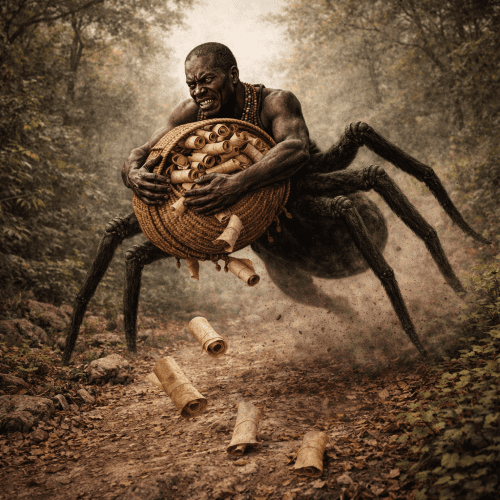
There is no established physical description of uNgungi in the available references. No reliable account specifies the figure’s appearance, clothing, age, facial characteristics or distinctive physical features. Similarly, there is no verified traditional illustration or iconographic representation that establishes how uNgungi was imagined.
This absence of visual information is particularly relevant when exploring lesser-known figures from African religious traditions. Unlike mythological characters supported by extensive literary or artistic traditions, some spiritual figures survive in modern references through brief descriptions of their functions and associations.
For uNgungi, the connection with blacksmiths is more firmly established in modern listings than any description of physical appearance. Although fire, iron and metalworking are natural subjects to explore when discussing the figure, they should not automatically become physical attributes or personal symbols.
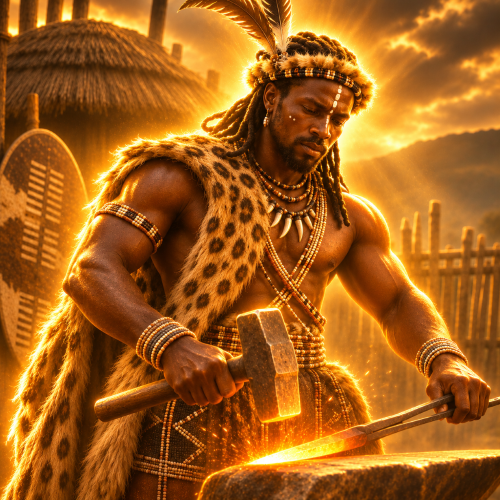
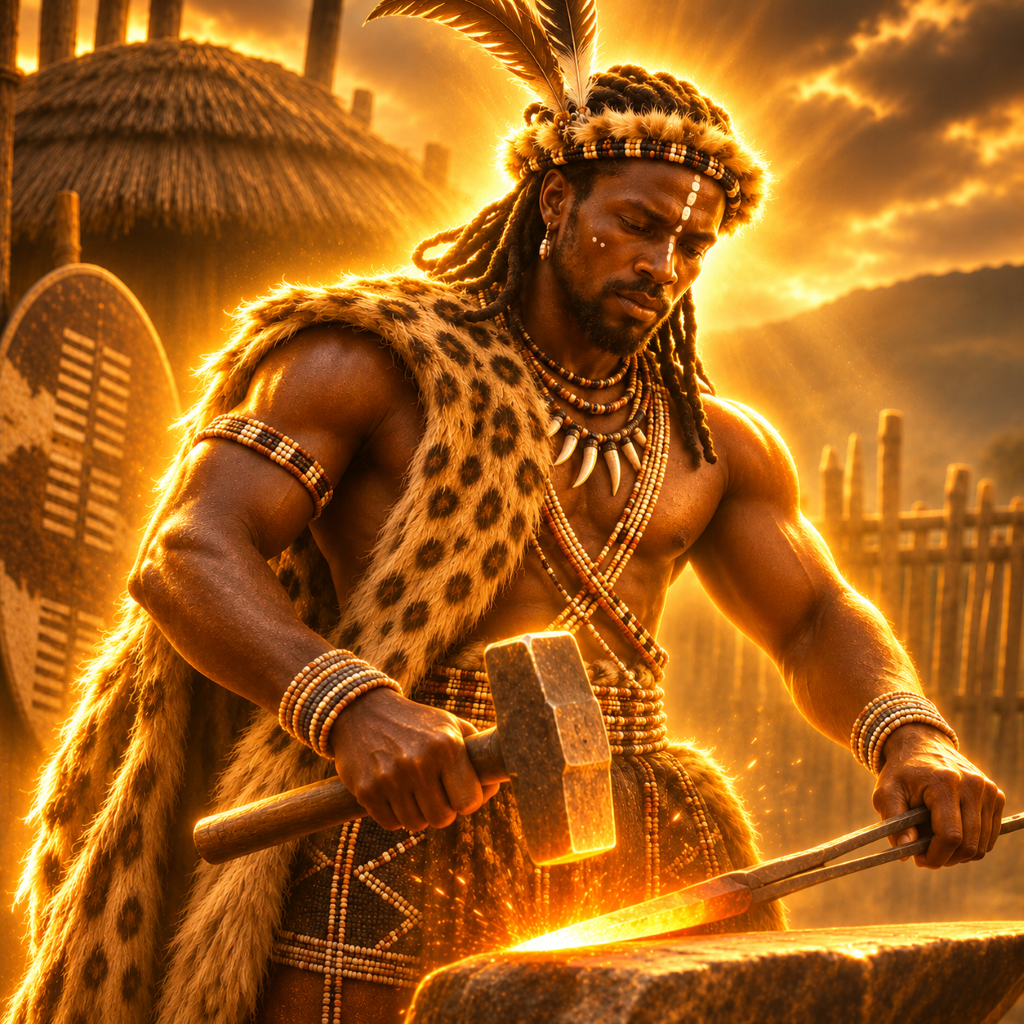
It would therefore be misleading to portray uNgungi as a muscular smith carrying a hammer, wearing armour or emerging from a furnace and claim that these characteristics come from traditional Zulu accounts. Such imagery may be suitable for creative interpretation, but it should not be presented as historically established mythology.
Family
The available references do not identify uNgungi’s parents, siblings, spouse or children. There is no reliably documented genealogy connecting the figure to other named Zulu spiritual beings. Zulu religious traditions contain different understandings of divine figures, ancestors and the origins of humanity. Figures such as uNkulunkulu occupy an important position in discussions of creation and ancestral traditions, while Nomkhubulwane is associated with fertility, agriculture and natural abundance. However, the available accounts identifying uNgungi as a deity of blacksmiths do not establish any familial connection with these figures.
It is also important not to confuse the absence of a recorded genealogy with proof that uNgungi had no family. Oral traditions can preserve different amounts of information about individual spiritual figures, and not every name appears in an elaborate family narrative. Until stronger historical or ethnographic evidence becomes available, uNgungi’s family relationships should remain classified as undocumented.
Other names
The principal name associated with this figure is uNgungi. Some modern English-language references use the spelling Ungungi, omitting the initial lowercase prefix. However, there is insufficient evidence to establish whether this represents a recognised regional variation, a difference in transliteration or simply a formatting choice. It should not automatically be interpreted as a separate mythological identity.
Descriptions such as the deity of blacksmiths or god of smiths are occupational titles rather than independently established personal names. Similarly, references to fire, metal and craftsmanship describe associated subjects rather than confirmed alternative names. No reliable information currently establishes additional praise names, indigenous epithets or alternative identities for uNgungi.
Powers and Abilities
The central association attributed to uNgungi is blacksmithing. Modern descriptions identify the figure as a deity connected with blacksmiths, placing metalworking and specialised craftsmanship at the centre of the available mythological identification. The significance of this association becomes clearer when considering the role of metalworkers in traditional societies. Blacksmiths possessed specialised knowledge that allowed them to transform metal into objects essential for everyday life. Agricultural tools supported cultivation, weapons served practical and defensive purposes, and metal implements contributed to numerous forms of skilled production.
The relationship between fire and metalworking is also worth considering. Heat is essential to traditional forging, allowing metal to be shaped through repeated heating and hammering. The craft therefore required an understanding of materials, temperature and physical transformation. Some modern descriptions extend uNgungi’s supposed abilities to controlling fire and metals or producing sacred weapons and objects. However, these claims are not supported by sufficiently reliable traditional narratives in the sources available for this article. There are also no established accounts describing specific miracles, supernatural battles or rituals through which uNgungi exercised divine authority.
The most responsible interpretation is therefore to associate uNgungi with blacksmiths and metalworking while acknowledging that the precise extent of the figure’s supernatural powers remains unknown.
Modern Day Influence
uNgungi has a relatively limited presence in contemporary discussions of Zulu mythology. Unlike better-known figures such as uNkulunkulu and Nomkhubulwane, the figure rarely receives detailed attention in popular books, educational material or broader discussions of African religious traditions. Most modern references identify uNgungi through the association with blacksmiths rather than through stories, religious ceremonies or cultural representations. There is currently insufficient evidence to establish a significant contemporary worship tradition, popular cultural following or documented artistic legacy specifically connected with this figure.
Nevertheless, uNgungi offers an interesting starting point for examining the relationship between traditional crafts and spiritual belief. Metalworking was not simply a technical occupation. It required specialised knowledge, experience and an understanding of materials that could transform ordinary resources into objects of considerable practical value.
The figure also highlights an important challenge in documenting African mythology. Many traditions were transmitted orally, and the written records available today reflect the perspectives and limitations of the people who collected them. Henry Callaway’s The Religious System of the Amazulu, published in the nineteenth century, remains an important historical source for understanding Zulu religious ideas, although the limited information available about uNgungi should not be mistaken for a comprehensive traditional account.
As interest in African cultural heritage continues to develop, lesser-known figures deserve careful documentation. uNgungi is one such name, particularly because the occupational association draws attention to the importance of specialised craftsmanship in traditional society. Although much about this figure remains uncertain, the association with blacksmiths provides a useful reminder that mythology is not exclusively concerned with creation, warfare or supernatural adventures. It can also reflect the occupations, knowledge systems and practical skills that helped communities function.
Related Images


Source
Berglund, A.-I. (1976). Zulu thought-patterns and symbolism. C. Hurst.
Callaway, H. (1884). The religious system of the Amazulu: Izinyanga zokubula; or, divination, as existing among the Amazulu, in their own words, with a translation into English, and notes. Trübner and Co.
Columbia University Libraries. (2016, December 19). Zulu language: Biography, history, nature, proverbs, religion, and society. https://guides.library.columbia.edu/zulu-language/bio-history-proverbs
Human Relations Area Files. (2026, October 14). The religious system of the Amazulu: Izinyanga zokubula. Yale University. https://ehrafworldcultures.yale.edu/cultures/fx20/documents/012
Lynch, P. A., & Roberts, J. (2010). African mythology, A to Z. Infobase Publishing.
Mafuta, W. L., & Kaunda, C. J. (2021). Recovering African religions as “world religions”: The case of the Zulu religion. Black Theology, 19(2), 122–134. https://doi.org/10.1080/14769948.2021.1955179
Mbiti, J. S. (1990). African religions and philosophy (2nd ed.). Heinemann. (Original work published 1969)
Thomas, D., & Alanamu, T. (Eds.). (2019). African religions: Beliefs and practices through history. ABC-CLIO.
Frequently Asked Questions
Who is uNgungi in Zulu mythology?
uNgungi is identified in modern references as a Zulu deity associated with blacksmiths and metalworking, although detailed traditional accounts about the figure remain limited.
What is uNgungi the god of?
uNgungi is described as the deity of blacksmiths. The association connects the figure with metalworking and craftsmanship, although specific supernatural powers are not established.
What powers does uNgungi possess?
uNgungi is associated with blacksmithing and metalworking. Claims about controlling fire or metals appear in modern descriptions but lack reliable traditional documentation.
Does uNgungi have a family in Zulu mythology?
No verified information identifies uNgungi’s parents, siblings, spouse or children. The available references do not establish a divine genealogy.
What does uNgungi look like?
There is no documented physical description of uNgungi. Available references identify the figure through the association with blacksmiths rather than appearance.


