


Capturing the Cattle of Geryon : The Three-Bodied Giant and His Crimson Herd
| Description | |
|---|---|
| Origin | Greek Mythology |
| Characters Involved | <a class="wpil_keyword_link" title="Heracles : The Greek Hero” href=”https://mythlok.com/heracles/” data-wpil-keyword-link=”linked” data-wpil-monitor-id=”1076585″>Heracles, Geryon, Eurystheus, Eurytion, Orthrus, Helios, Hera |
| Objective | Capture and bring back the prized cattle of Geryon |
| Type of Trial | Heroic Quest |
| Outcome | Success |
Mythlok Perspective
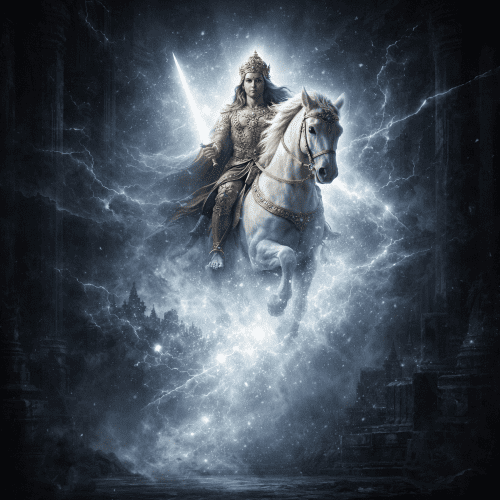
In Mythlok’s Perspective, the Capture of the Cattle of Geryon represents more than a heroic conquest. It explores the uncertain morality of victory, where the hero’s triumph becomes another being’s tragedy. Heracles sees an impossible labour completed, but Geryon is defending his home, family, and possessions against an invading force. This contrast echoes other mythological encounters, particularly the conflict between Rama and Ravana, where opposing ideas of duty, loyalty, and righteousness shape the meaning of victory. Geryon’s story reminds us that heroism often depends on whose perspective tells the tale.
Capturing the Cattle of Geryon
Introduction
The Capture of the Cattle of Geryon is the tenth of the Twelve Labours of Heracles, an extraordinary expedition that takes the Greek hero to the distant western boundaries of the known world. Ordered by King Eurystheus to retrieve a magnificent herd of red cattle, Heracles must travel to Erytheia, an island associated with the western Ocean, defeat its supernatural guardians, and bring the animals back to Greece. What appears to be a straightforward cattle raid becomes one of his most geographically ambitious adventures.
The cattle belong to Geryon, a formidable being traditionally described as having three heads or three bodies joined at the waist. His herd is protected by Orthrus, a two-headed hound, and Eurytion, a dedicated herdsman. Heracles must overcome these defenders before confronting Geryon himself. However, defeating the giant is only part of the challenge. Transporting the cattle across unfamiliar territories exposes the hero to further dangers, including hostile rulers, wandering animals, and divine interference.
The story has an important place in early Greek literature. Hesiod briefly mentions Geryon’s death in the Theogony, while the sixth-century BCE poet Stesichorus develops the encounter into an extensive narrative in his fragmentary Geryoneis. Together, these traditions transform the labour into a story about exploration, conquest, endurance, and the uncertain boundaries between the familiar and the unknown.
Characters Involved
Heracles is the central figure in this adventure. The son of Zeus and the mortal Alcmene, he undertakes the Twelve Labours under the authority of Eurystheus. His tenth assignment demands more than physical strength, requiring him to navigate distant territories, confront unfamiliar dangers, and maintain control of a valuable herd throughout a difficult return journey.
Geryon is the principal opponent. According to Hesiod, he is the three-headed offspring of Chrysaor and Callirrhoe, an Oceanid. Apollodorus offers a more unusual physical description, portraying him as three men whose bodies are joined at the waist but separate below. His distinctive appearance establishes him as one of the more unusual adversaries encountered by Heracles.
Orthrus, also called Orthus, is Geryon’s two-headed watchdog. Born to the monstrous Echidna and Typhon, he guards the cattle alongside Eurytion, the herdsman responsible for their care. Both become the first obstacles Heracles must overcome after reaching Erytheia.
Eurystheus is the king who commissions the labour and expects Heracles to return with the cattle. Helios, the sun god, also plays an important role by providing a golden vessel that allows the hero to cross Oceanus. Menoetes, a herdsman tending the cattle of Hades, informs Geryon about the intrusion. Hera, meanwhile, continues her hostility towards Heracles by creating difficulties during the return journey.
Source Texts
The earliest surviving literary account of the Capture of the Cattle of Geryon appears in Hesiod’s Theogony, generally dated to the late eighth or early seventh century BCE. In lines 287–294, Hesiod identifies Geryon as the three-headed son of Chrysaor and Callirrhoe. He briefly describes how Heracles kills the giant, defeats Orthrus and Eurytion, and drives the cattle towards Tiryns after crossing Oceanus. A considerably more detailed version appears in the Bibliotheca, traditionally attributed to Apollodorus. Book 2.5.10 describes the tenth labour, Geryon’s appearance, the guardians of his cattle, the golden vessel of Helios, and the difficulties Heracles encounters while returning with the herd. It remains one of the most useful surviving sources for reconstructing the complete adventure.
Another important contribution comes from Stesichorus’ Geryoneis, a sixth-century BCE lyric poem preserved through fragments, including material recovered from the Oxyrhynchus papyri. Its surviving passages offer a more developed portrayal of Geryon, including conversations with his mother Callirrhoe and his companion Menoetes. Rather than presenting the giant simply as a monster, Stesichorus gives him emotional depth and a tragic dimension. Diodorus Siculus also provides an extensive account in his Library of History, particularly Book 4.17–25. His narrative expands the geographical journey and connects Heracles with several regions and communities across the western Mediterranean.
Objective
The objective of Heracles’ tenth labour is to capture Geryon’s red cattle and deliver them to Eurystheus. Unlike assignments that require the hero to defeat a dangerous creature in a particular location, this task involves obtaining and transporting an entire herd from an exceptionally distant territory.
Erytheia, often associated with the region around ancient Gadeira, modern Cádiz in southwestern Spain, represents the far western world in Greek geographical imagination. Its distance makes the assignment particularly demanding. Heracles must reach the island, overcome its defenders, secure the animals, and ensure that they survive the journey home. The cattle are also significant because livestock represented considerable wealth and social status in the ancient Mediterranean. Their distinctive reddish appearance further separates them from ordinary animals, reinforcing the extraordinary nature of Eurystheus’ demand.
Challenges
The first challenge is reaching Erytheia. Heracles travels through Europe and Libya before approaching the western limits of the known world. Apollodorus associates this expedition with the establishment of the Pillars of Heracles, traditionally identified with the two sides of the Strait of Gibraltar. These landmarks later became powerful symbols of the boundary between the Mediterranean and the Atlantic.
During the journey, the heat of the Sun becomes unbearable. Heracles responds by threatening Helios with his bow. Impressed by the hero’s courage, the sun god provides him with a golden cup or vessel that allows him to cross Oceanus. This unusual episode demonstrates the extraordinary scale of the expedition and the divine assistance sometimes available to Heracles. Once he reaches Erytheia, Heracles encounters Orthrus, who attacks the intruder. The hero kills the two-headed hound with his club. Eurytion rushes to defend the cattle but suffers the same fate. Menoetes, who is tending the cattle of Hades nearby, witnesses the incident and informs Geryon.
The final confrontation takes place when Geryon approaches Heracles as he drives away the cattle. The giant attempts to defend his property, but Heracles kills him with an arrow. This encounter becomes particularly significant in Stesichorus’ Geryoneis, where the defender is presented with a more sympathetic characterisation than in shorter versions of the myth.
Securing the herd does not end the difficulties. Apollodorus describes how Hera sends a gadfly that scatters the cattle across the mountains of Thrace. Heracles must pursue the animals and gather as many as possible before continuing his journey. Other traditions, particularly the accounts of Diodorus, introduce additional encounters involving cattle thieves, an escaped bull, and Eryx, a Sicilian king who challenges Heracles to a wrestling contest.
Outcome
Heracles ultimately completes the tenth labour by bringing the cattle back and presenting them to Eurystheus. Despite the distance, supernatural guardians, hostile encounters, and Hera’s interference, he manages to fulfil the king’s command. The conclusion contains an element of irony. According to Apollodorus, Eurystheus sacrifices the cattle to Hera, the goddess whose hostility has repeatedly made Heracles’ life difficult. The animals that required such an extraordinary expedition therefore become an offering to the very deity responsible for much of the hero’s suffering. The achievement also strengthens Heracles’ reputation as a hero capable of travelling beyond familiar geographical boundaries. His association with the Pillars of Heracles and the western Mediterranean becomes an enduring part of ancient geographical imagination.
Symbolism
The Cattle of Geryon represent wealth, prosperity, and the acquisition of valuable resources from distant territories. In ancient Greek society, cattle were important indicators of economic strength and social standing. Capturing an extraordinary herd therefore represents an achievement extending beyond ordinary physical combat. Geryon’s unusual body symbolises the unfamiliar and potentially threatening nature of distant lands in Greek imagination. His three-headed or three-bodied appearance distinguishes him from ordinary opponents, making him an embodiment of the extraordinary dangers waiting beyond the known world.
The journey westwards also carries geographical and cultural significance. Erytheia, whose name is associated with redness, has traditionally been connected with the western horizon and sunset imagery. This association reinforces the cattle’s distinctive colour and their location at the distant edge of the world. Stesichorus introduces another interpretation by giving Geryon a more human and tragic dimension. His conversations with Callirrhoe reveal a character facing the prospect of death while defending his home and possessions. This creates an important contrast with the conventional heroic narrative, inviting readers to consider the cost of victory from the defeated opponent’s perspective.
Modern Influence
The Capture of the Cattle of Geryon continues to influence literature, classical scholarship, and modern interpretations of ancient monsters. One particularly interesting reinterpretation appears in Anne Carson’s Autobiography of Red, which draws inspiration from Stesichorus’ Geryoneis. Carson transforms Geryon into a contemporary character, exploring identity, vulnerability, memory, and personal experience rather than focusing exclusively on his defeat by Heracles.
Geryon also appears in Dante Alighieri’s Inferno, where the three-bodied monster is transformed into a symbol associated with fraud. Although Dante’s interpretation differs considerably from the Greek tradition, it demonstrates how ancient mythological figures can acquire new meanings across literary periods.
The Pillars of Heracles remain another lasting legacy of the story. Associated with the Strait of Gibraltar, they represent the geographical boundary that ancient Mediterranean traditions placed between familiar waters and the wider Atlantic world. Modern classical scholarship continues to examine the labour through its literary, geographical, and cultural dimensions. The different portrayals of Geryon, particularly the sympathetic treatment in Stesichorus, demonstrate that even an apparently straightforward story of heroic conquest can contain competing perspectives on violence, identity, and ownership.
Sources
Apollodorus. (1997). The library of Greek mythology (R. Hard, Trans.). Oxford University Press. (Original work ca. 2nd century CE)
Finglass, P. J. (2021). Labor X: The cattle of Geryon and the return from Tartessus. In D. Ogden (Ed.), The Oxford handbook of Heracles (pp. 135–152). Oxford University Press. https://doi.org/10.1093/oxfordhb/9780190650988.013.9
Hesiod. (2006). Theogony; Works and days; Testimonia (G. W. Most, Trans.). Harvard University Press. (Original work ca. 8th century BCE)
Davies, M., & Finglass, P. J. (Eds.). (2014). Stesichorus: The poems. Cambridge University Press.
Perseus Digital Library. (n.d.). Hercules’ tenth labor: The cattle of Geryon. Tufts University.
https://static.perseus.tufts.edu/Herakles/cattle.html
Theoi Project. (n.d.). Geryon. https://www.theoi.com/Gigante/GiganteGeryon.html
Pantheon.org. (1999, June 19). The cattle of Geryon. https://pantheon.org/articles/c/cattle_of_geryon.html
Mythopedia. (2023, March 22). Geryon. https://mythopedia.com/topics/geryon/
Frequently Asked Questions
What was the tenth labour of Heracles?
The tenth labour of Heracles was to capture the cattle of Geryon and bring them to King Eurystheus. The assignment required him to travel to Erytheia in the far west, defeat the giant Geryon and his guardians, and transport the cattle back to Greece.
Who was Geryon in Greek mythology?
Geryon was a powerful giant born to Chrysaor and Callirrhoe. Ancient Greek traditions describe him as having three heads or three bodies joined at the waist. He lived on Erytheia and owned a remarkable herd of red cattle.
Who guarded the cattle of Geryon?
The cattle were guarded by Orthrus, a two-headed hound, and Eurytion, Geryon’s herdsman. Both were killed by Heracles when he arrived on Erytheia to capture the herd.
How did Heracles reach the island of Erytheia?
According to Apollodorus, Heracles received a golden cup from Helios after threatening the sun god with his bow. He used this extraordinary vessel to cross Oceanus and reach Erytheia.
What happened to the cattle of Geryon after Heracles captured them?
Heracles eventually brought the cattle to Eurystheus, completing his tenth labour. According to Apollodorus, Eurystheus subsequently sacrificed the animals to Hera.


