
Ol Doinyo Lengai : Tanzania’s Sacred Mountain of God
At a glance
| Description | |
|---|---|
| Mythology | Maasai Mythology |
| Country | Tanzania |
| Closest airport | Kilimanjaro International Airport (JRO) |
| Type | Natural |
| Accessibility | 06/10 |
Mythlok Perspective
In Mythlok’s Perspective, Ol Doinyo Lengai represents one of the clearest examples of a sacred landscape where geology and spirituality become inseparable. The mountain is not simply believed to house a deity; its eruptions, sounds, and changing appearance are interpreted as the deity’s actions themselves. This creates a living relationship between people and place that continues to shape Maasai identity today. Comparable sacred mountains appear across many cultures. The ancient Greeks revered Mount Olympus as the home of the gods, while the Japanese regard Mount Fuji as a spiritual symbol connecting heaven and earth. Yet Ol Doinyo Lengai remains unique because it is still active, allowing worshippers to witness what they perceive as direct expressions of divine power.
Ol Doinyo Lengai
Introduction
Ol Doinyo Lengai is one of the most remarkable natural landmarks in Africa. Rising 2,962 meters (9,718 feet) above sea level in northern Tanzania, this active stratovolcano overlooks the dramatic landscapes of the East African Rift Valley near Lake Natron. Its name comes from the Maasai language and translates as “Mountain of God,” a title that reflects its deep spiritual importance.
While many volcanoes are known for fiery eruptions and molten rock, Ol Doinyo Lengai is famous for something far rarer. It is the only active volcano in the world that erupts natrocarbonatite lava, a unique type of lava unlike anything found elsewhere on Earth. This unusual volcanic activity gives the mountain an otherworldly appearance and has fascinated geologists for decades.
For the Maasai people, however, the mountain is much more than a geological wonder. It is the dwelling place of their supreme deity, Engai, and serves as one of the most sacred locations in their spiritual tradition. The combination of mythology, cultural importance, and natural beauty makes Ol Doinyo Lengai one of Tanzania’s most extraordinary destinations.
Connection with Mythology
The mythology surrounding Ol Doinyo Lengai is inseparable from the beliefs of the Maasai people, who have lived across Tanzania and Kenya for centuries. According to Maasai tradition, the mountain is the earthly home of Engai, the supreme creator deity responsible for rain, fertility, life, and prosperity.
Engai occupies a unique position within Maasai spirituality. The deity is closely associated with the sky and rainfall, both of which are essential for the survival of pastoral communities. In the Maasai language, the concepts of God, sky, and rain are deeply connected, reflecting a worldview in which nature and divinity are intertwined.
Because of this sacred connection, the volcano’s behavior is often interpreted as a form of divine communication. Rumbling sounds, ash emissions, and eruptions are viewed not simply as geological events but as manifestations of Engai’s presence. Periods of abundant rainfall may be regarded as signs of divine favor, while droughts can be interpreted as indications of spiritual imbalance or displeasure.
The mountain also plays a role in prayers concerning fertility, health, and community well-being. Pilgrimages to the slopes of Ol Doinyo Lengai remain part of Maasai spiritual life, reinforcing the belief that the mountain serves as a bridge between the human and divine worlds.
Ways to Get There
Most visitors begin their journey to Ol Doinyo Lengai from the city of Arusha, the main tourism hub of northern Tanzania. From Arusha, the route travels through the Great Rift Valley toward the remote Lake Natron region, a journey that typically takes five to six hours by road.
The village of Engaresero, located near Lake Natron, serves as the primary base for climbers. Due to the rugged terrain and remote location, four-wheel-drive vehicles are strongly recommended. Many travelers arrange transportation through tour operators who specialize in Lake Natron and Rift Valley expeditions.
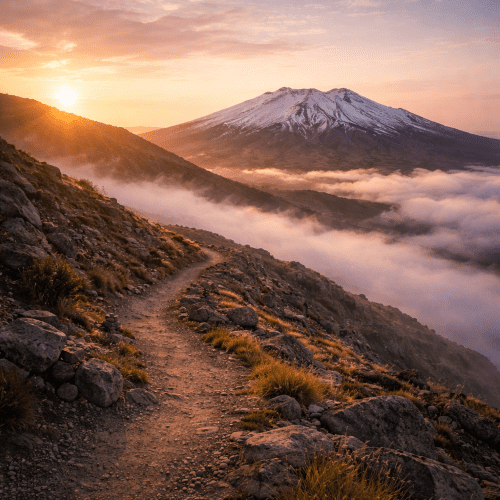
The climb itself is challenging and usually begins around midnight. Temperatures in the region can be extremely high during daylight hours, making a nighttime ascent the safest option. The trail is steep, loose, and physically demanding, requiring a reasonable level of fitness.
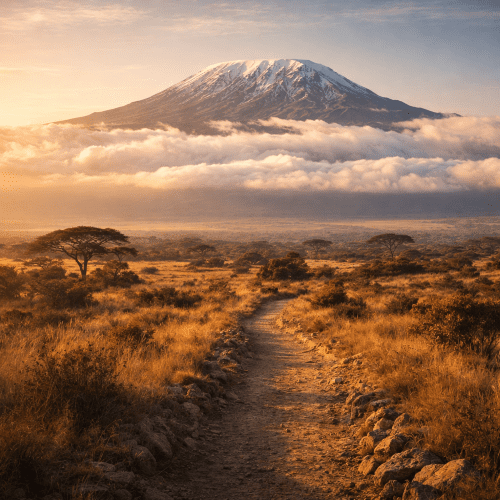
The reward for the effort comes at sunrise. Reaching the summit in the early morning provides spectacular views across Lake Natron, the Rift Valley escarpments, and, on exceptionally clear days, distant views toward Mount Kilimanjaro.
What to Look For
The most extraordinary feature of Ol Doinyo Lengai is undoubtedly its unique volcanic activity. Unlike conventional volcanoes that produce silica-rich lava, Ol Doinyo Lengai erupts natrocarbonatite lava, which contains large amounts of sodium and potassium carbonate minerals.
When freshly erupted, this lava appears dark brown or black and flows with an almost liquid-like consistency. Because it erupts at temperatures between approximately 500°C and 600°C, it is significantly cooler than typical basaltic lava. At night, active flows can display a subtle orange glow.
One of the mountain’s most fascinating characteristics occurs after the lava cools. Exposure to moisture and weather causes the dark material to transform rapidly into bright white rock. This process often gives parts of the summit a snow-covered appearance despite the region’s hot climate.
Visitors should also explore the surrounding landscapes. Lake Natron, known for its alkaline waters and flamingo populations, creates one of East Africa’s most striking environments. The contrast between the crimson lake, volcanic slopes, and Rift Valley scenery makes the entire region visually unforgettable. The summit itself contains active craters, volcanic vents, and constantly evolving formations shaped by ongoing eruptions, offering a rare opportunity to witness geological processes in action.
Importance in cultural history
Ol Doinyo Lengai has remained central to Maasai culture for generations. It is not merely a sacred landmark but a living part of the community’s identity, traditions, and worldview. Historically, Maasai elders have performed rituals on and around the mountain to seek blessings for cattle, rainfall, health, and social harmony. The volcano’s role in fertility traditions is particularly significant. Women hoping for children have traditionally visited the mountain to pray for divine assistance, reflecting its association with creation and life.
The mountain also serves as a symbol of moral order within Maasai society. Stories surrounding Engai emphasize the relationship between human behavior and divine favor, reinforcing communal values and spiritual responsibility.
Even as Christianity and other religions have become more widespread among Maasai communities, reverence for Ol Doinyo Lengai continues. Many people have integrated traditional beliefs into modern religious practices, allowing the mountain’s sacred status to endure in contemporary Maasai life. Today, the volcano stands as both a cultural monument and a reminder of one of Africa’s oldest living spiritual traditions.
Best time to travel
The best time to visit Ol Doinyo Lengai is during Tanzania’s dry seasons, when climbing conditions are safest and visibility is at its best. From June through October, stable weather and minimal rainfall create ideal trekking conditions. Trails are generally firmer, making the steep ascent more manageable.
Another excellent period runs from December through early March. During these months, visitors often enjoy clear skies and exceptional views across the Rift Valley. The main rainy season typically occurs between March and May. Heavy rains can make the volcanic slopes dangerously slippery and may render some access roads difficult or impossible to navigate. For safety reasons, most travelers avoid climbing during this period.
Birdwatchers may find the months between September and December particularly rewarding, as large numbers of flamingos gather around nearby Lake Natron. Regardless of season, most summit attempts begin after midnight to avoid daytime heat and maximize the chances of witnessing sunrise from the peak.



Source
Horizon Guides. (2025, February 17). Ol Doinyo Lengai hike – Tanzania’s volcano summit for adventurous trekkers. https://horizonguides.com/trips/tanzania-ol-doinyo-lengai
Exploring Africa. (n.d.). Ol Doinyo Lengai volcano. https://www.exploring-africa.com/en/tanzania/natron-lake/ol-doinyo-lengai-volcano
Joagro Safaris Tanzania. (2024, August 29). Ol Doinyo Lengai | Active volcanic mountain. https://www.joagrosafaris.com/ol-doinyo-lengai/
Native Planet. (2022, August 22). Ol Doinyo Lengai: Maasai and their sacred mountain. https://www.nativeplanet.com/travel-guide/ol-doinyo-lengai-locations-facts-history-maasai-people-tanzania-africa-007032.html
NASA Earth Observatory. (2009, September 19). Changes on Ol Doinyo Lengai. https://earthobservatory.nasa.gov/images/40217/changes-on-ol-doinyo-lengai
Savannah Explorers. (n.d.). Ol Doinyo Lengai. https://www.savannahexplorers.net/tanzania/ol-doinyo-lengai.html
Wikipedia. (2006, April 23). Maasai religion. https://en.wikipedia.org/wiki/Masai_mythology
Wikipedia. (2005, May 21). Ngai. https://en.wikipedia.org/wiki/Ngai
Wikipedia. (2005, July 22). Natrocarbonatite. https://en.wikipedia.org/wiki/Natrocarbonatite
Frequently Asked Questions
What is Taktsang famous for?
Taktsang is famous for its dramatic cliffside location and its association with Guru Padmasambhava, making it Bhutan’s most sacred and iconic monastery.
Why is Taktsang called the Tiger’s Nest?
The name comes from the legend that Padmasambhava flew to the site on the back of a tigress to meditate and subdue negative forces.
How difficult is the hike to Taktsang?
The hike is moderately challenging, involving a steady uphill climb that takes several hours, but it is manageable for most visitors with average fitness.
Is Taktsang still an active monastery?
Yes, Taktsang remains an active religious site where monks reside and perform rituals, and visitors are expected to observe respectful conduct.
When is the best season to visit Taktsang?
Spring and autumn are considered the best seasons due to clear weather, comfortable temperatures, and safer trail conditions.