


Tenjin : The Japanese Deity of Learning and Scholarship
At a glance
| Description | |
|---|---|
| Origin | Japanese Mythology |
| Classification | Gods |
| Family Members | Sugawara no Koreyoshi (Father), Sugawara no Kiyotomo (Grandfather) |
| Region | Japan |
| Associated With | Learning, Wisdom, Poetry, Calligraphy, Performing arts, Thunder, Agriculture, Justice |
The Mythlok Perspective
In Mythlok’s Perspective, Tenjin represents the transformation of injustice into enduring wisdom. His journey shares an interesting parallel with Imhotep from Egyptian mythology, another historical figure whose exceptional knowledge and achievements eventually elevated him to divine status. However, while Imhotep became associated with medicine, architecture and healing, Tenjin’s legacy emerged from scholarship, poetry and the injustice of political exile. Both demonstrate how societies can transform the memory of extraordinary individuals into divine guardians of human knowledge.
Tenjin
Introduction
Tenjin (天神) is one of the most distinctive deities in Japanese religious tradition because his origins can be traced to a real historical individual. Worshipped as the god of learning, scholarship, literature and the arts, Tenjin is the deified form of Sugawara no Michizane (845–903), a celebrated scholar, poet and government official who lived during Japan’s Heian period (794–1185).
Michizane was born into the Sugawara family, a scholarly lineage with a long history of serving the imperial court. His intellectual abilities earned him considerable recognition, and he eventually rose to become Minister of the Right under Emperor Daigo. However, political rivalry and accusations orchestrated by the influential Fujiwara no Tokihira resulted in his demotion and exile to Dazaifu in Kyushu in 901. He died there in 903, far from the imperial capital.
Following his death, a succession of misfortunes, including lightning strikes, fires and deaths among influential court officials, troubled Kyoto. People increasingly associated these events with Michizane’s angry spirit, believing that his unjust treatment had transformed him into a vengeful supernatural presence. The imperial court eventually restored his honours, and a sanctuary dedicated to him was established at Kitano in 947.
Over subsequent generations, the feared spirit became a benevolent kami (deity). Known as Tenman Tenjin, he gradually acquired an important religious identity as the protector of education, intellectual achievement and artistic expression. Today, Tenjin remains one of Japan’s most recognisable deities, particularly among students preparing for examinations and individuals pursuing academic or creative accomplishments.
Physical Traits
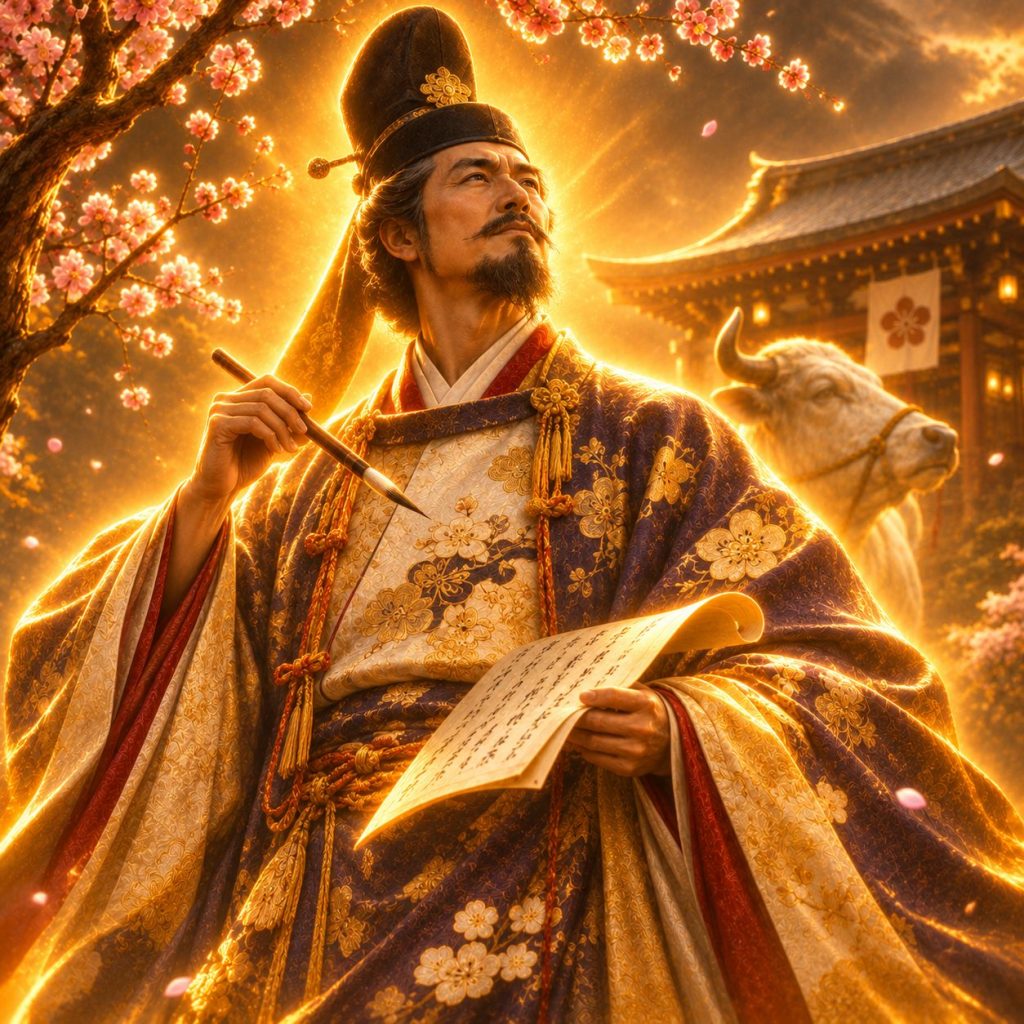
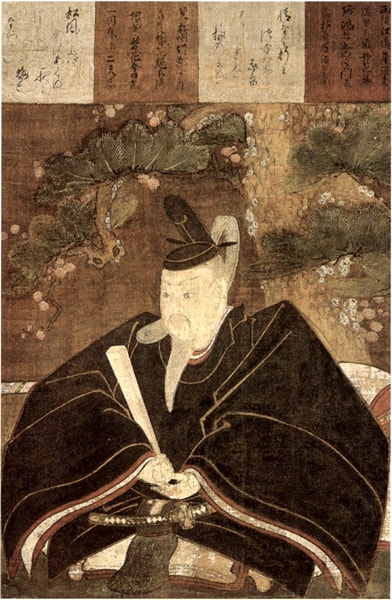
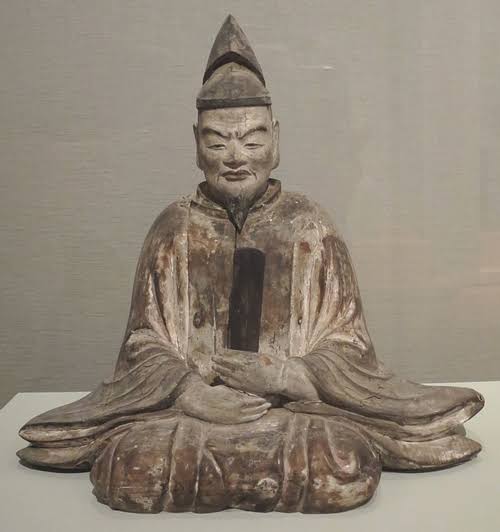
Tenjin does not possess a single supernatural appearance. His visual identity largely reflects Sugawara no Michizane’s historical existence, with religious artwork generally portraying him as an accomplished Heian-period court noble.
Traditional representations show him wearing elaborate court robes and ceremonial headgear appropriate to his former position within the imperial administration. Some images emphasise his scholarly character through writing implements, Chinese-style garments and references to classical poetry. Other religious representations highlight his association with thunder and divine authority, occasionally giving him a more imposing or martial appearance. Two symbols are particularly important in Tenjin’s iconography: the plum blossom and the ox.
The plum tree reflects Michizane’s well-known affection for its flowers. According to the legend of the Flying Plum Tree (Tobiume), a beloved plum tree from his residence in Kyoto flew to Dazaifu to follow him after his exile. The story has become an enduring part of Tenjin’s religious tradition. The ox is considered his sacred messenger. A popular shrine legend recounts how the ox pulling Michizane’s funeral carriage stopped and refused to move, indicating the place where he should be buried. This location eventually became associated with Dazaifu Tenmangu. Visitors can still find numerous ox statues, known as shingyū, throughout the shrine grounds.
Family
Tenjin’s family background is rooted in the Sugawara clan, a distinguished scholarly lineage that maintained close connections with the Japanese imperial court. His father, Sugawara no Koreyoshi (812–880), was an accomplished scholar and educator who established a private school to prepare students for government service and advanced literary studies. His grandfather, Sugawara no Kiyotomo, also served the imperial court and contributed to the family’s reputation for scholarship.
Michizane was the third son of Koreyoshi and inherited this intellectual tradition. He eventually surpassed many of his contemporaries through his knowledge of classical Chinese literature, poetry and government administration.
Unlike deities whose identities emerge from divine genealogies, Tenjin’s religious significance does not depend on supernatural family relationships. His worship centres on his historical life, scholarly accomplishments and transformation into a kami. Although historical accounts identify members of his family, the religious traditions surrounding Tenjin do not establish a separate divine family or mythology of divine descendants. Kyoto National Museum
Other names
Tenjin is recognised by several names that reflect his historical identity and religious development. Tenman Tenjin (天満天神) is one of his most familiar religious titles. It identifies Michizane as the deified heavenly figure worshipped at Tenmangū shrines. Tenman Daijizai Tenjin (天満大自在天神) is a more elaborate divine title associated with the development of his religious status and Buddhist-Shinto influences.
Tenjin-sama is a respectful expression commonly used by worshippers when addressing the deity. The suffix sama conveys reverence and respect. Sugawara no Michizane is his original historical name, while Kankō is another name associated with his literary identity. The word Tenjin originally referred more broadly to heavenly deities in Japanese religious vocabulary. Its association with Michizane became particularly prominent as his spirit was worshipped and eventually established as a major figure in Japanese religious life. Shrines dedicated to him are generally known as Tenmangū or Tenjin-sha.
Powers and Abilities
Tenjin’s powers reflect the different stages of his transformation from a historical scholar into a widely worshipped Japanese deity. His religious identity combines intellectual wisdom, protection, thunder-related traditions and the ability to bring justice to those who have suffered wrongdoing.
Tenjin is primarily revered as the protector of education and academic achievement. Students, teachers and scholars pray to him for intellectual development, examination success and greater understanding. His association with learning extends into literature and the arts, reflecting Michizane’s accomplishments in Chinese poetry and classical scholarship. He is consequently regarded as a patron of poets, writers, calligraphers and performing artists.
His earliest religious reputation was closely connected with destructive natural phenomena. Following Michizane’s death, lightning strikes, fires and other disasters in Kyoto were interpreted as manifestations of his resentful spirit. This association contributed to his identification with thunder and heavenly forces. As his religious identity evolved, these potentially destructive powers became associated with protection and divine authority.
Michizane’s exile following political accusations also shaped Tenjin’s reputation as a deity associated with honesty, sincerity and justice. Worshippers came to seek his protection against false accusations, unfair treatment and misfortune. His association with thunder and weather-related traditions also extended into agriculture, where he became connected with blessings for fertility and successful harvests. These abilities represent traditional Japanese religious beliefs rather than historically or scientifically established supernatural events.
Modern Day Influence
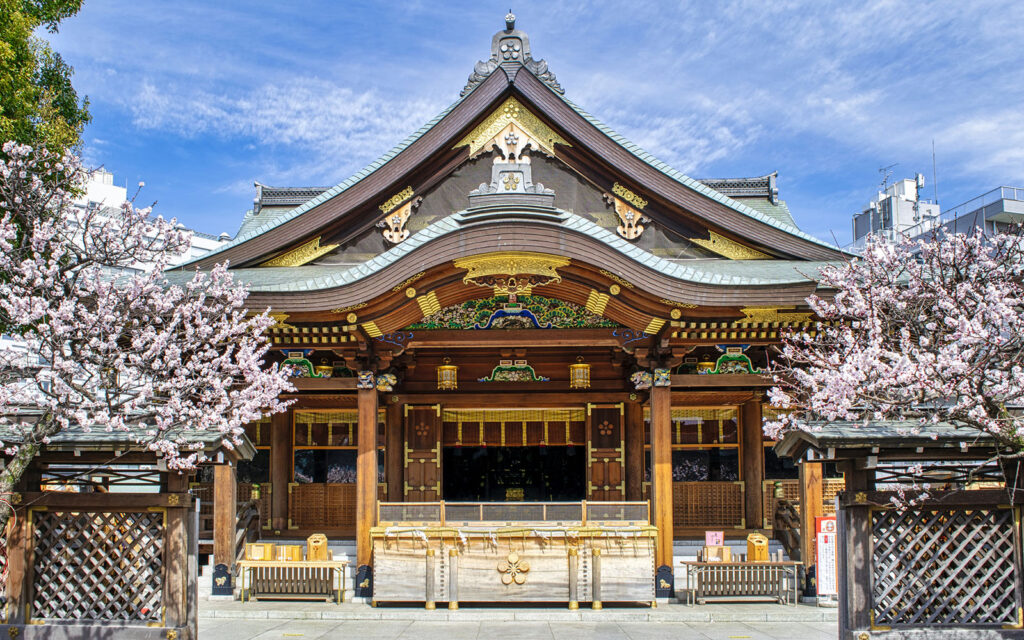
Tenjin continues to occupy an important position in contemporary Japanese religious and cultural life. His association with education remains particularly strong, with students and families visiting shrines before important school entrance examinations, university admissions and other academic milestones. Two major centres of worship are Kitano Tenmangū in Kyoto and Dazaifu Tenmangū in Fukuoka. The former is closely associated with the establishment of the Tenjin faith, while the latter stands at the location traditionally associated with Michizane’s burial.
Dazaifu Tenmangū is particularly famous for its plum trees. Approximately 6,000 plum trees grow across its grounds, preserving the connection between the deity and his celebrated literary affection for the blossoms. Its eleven sacred ox statues also remain important attractions for visitors. Another significant expression of Tenjin worship is the Tenjin Matsuri in Osaka. Dating back to 951, this annual festival honours Sugawara no Michizane through religious ceremonies, processions, traditional performances and spectacular river celebrations. It is regarded as one of Japan’s major festivals.
Beyond religious observances, Tenjin’s influence extends into Japanese education, literature and popular culture. His image represents the value of perseverance, intellectual discipline and the pursuit of knowledge. His continued popularity demonstrates how a historical individual can become an enduring religious figure whose significance evolves alongside society. For modern worshippers, Tenjin is not simply a reminder of Japan’s scholarly past but an enduring symbol of the relationship between knowledge, integrity and personal achievement. Japan Travel
Related Images





Source
Britannica. (2025, March 27). Sugawara Michizane. https://www.britannica.com/biography/Sugawara-Michizane
Japan Search. (n.d.). Sugawara no Michizane. https://jpsearch.go.jp/en/gallery/ndl-vEJojl9OGzz
Japan Heritage Database, Ministry of Land, Infrastructure, Transport and Tourism. (2022, November 1). Origins of Tenjin faith. https://www.mlit.go.jp/tagengo-db/zhTW/R1-01841.html
JAANUS. (2001). Tenjin 天神. https://www.aisf.or.jp/~jaanus/deta/t/tenjin.htm
Kitano Tenmangū. (2022, October 21). About the Kitano Tenmangu Shrine. https://kitanotenmangu.or.jp/en/
Dazaifu Tenmangū. (n.d.). Explore the grounds. https://www.dazaifutenmangu.or.jp/en/discover-dazaifu-tenmangu/shrine-grounds/
Ministry of Land, Infrastructure, Transport and Tourism. (n.d.). The plum and the ox: Symbols of legends [PDF]. https://www.mlit.go.jp/tagengo-db/common/001560008.pdf
Kyoto National Museum. (2026). Special exhibition: Kitano Tenjin—Legends of a Shinto god. https://www.kyohaku.go.jp/eng/exhibitions/special/2026_kitano/
Frequently Asked Questions
Who is Tenjin in Japanese mythology?
Tenjin is the Japanese deity of learning, scholarship and literature. He is the deified form of Sugawara no Michizane, a renowned Heian-period scholar and poet.
What is Tenjin the god of?
Tenjin is primarily the god of education, wisdom, scholarship, poetry and the arts. He is also associated with thunder, agriculture, honesty and justice.
Why is Tenjin associated with oxen?
Oxen are sacred to Tenjin because tradition says the ox pulling Michizane’s funeral carriage stopped at the location where he was eventually buried.
Where is Tenjin worshipped in Japan?
Tenjin is worshipped at thousands of Japanese shrines, particularly Kitano Tenmangū in Kyoto and Dazaifu Tenmangū in Fukuoka.
Why do Japanese students pray to Tenjin?
Students pray to Tenjin because he is regarded as the patron of learning and academic achievement. They seek his blessings before important examinations and educational milestones.


