

Pugot Mamu : The Terrifying Headless Monster of Pampanga
At a glance
| Description | |
|---|---|
| Origin | Philippine Mythology |
| Classification | Spirits |
| Family Members | N/A |
| Region | Philippines |
| Associated With | Fear, Child discipline, Nocturnal danger, |
The Mythlok Perspective
In Mythlok’s Perspective, Pugot Mamu represents a primal form of fear rooted in authority and survival rather than theology. It is less a supernatural being and more an embodiment of consequence, designed to enforce boundaries through terror. Unlike structured mythic figures, it exists outside divine order, making it unpredictable and raw. This places it closer to global boogeyman archetypes such as the Slavic Baba Yaga or the Western Bogeyman, both of which serve similar disciplinary roles. At the same time, its physical brutality echoes Southeast Asian creatures like the aswang, blending psychological fear with visceral horror.
Pugot Mamu
Introduction
Pugot Mamu stands as one of the most unsettling figures in Philippine folklore, especially within the Pampanga region. Unlike many mythical beings that blur the line between spirit and symbol, this entity is portrayed as something far more immediate and physical. It belongs to a category of fear rooted not just in imagination, but in lived cultural experience, where stories are used to shape behavior and enforce boundaries.
The term “Pugot” generally refers to a headless being, a concept found across several Filipino traditions. However, Pugot Mamu takes this idea further into something deeply predatory. While other headless figures in the region are often harmless or mischievous, this creature is defined by its hunger. It is not a ghost drifting through memory but a lurking danger that punishes disobedience.
In many households, Pugot Mamu was not simply a story but a warning. Children were told to stay quiet at night, avoid wandering outdoors, and obey their elders, or risk attracting its attention. This makes the creature less of a distant myth and more of a cultural tool, embedded in everyday life.
Physical Traits
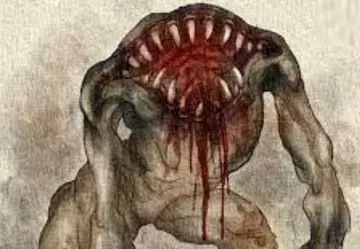
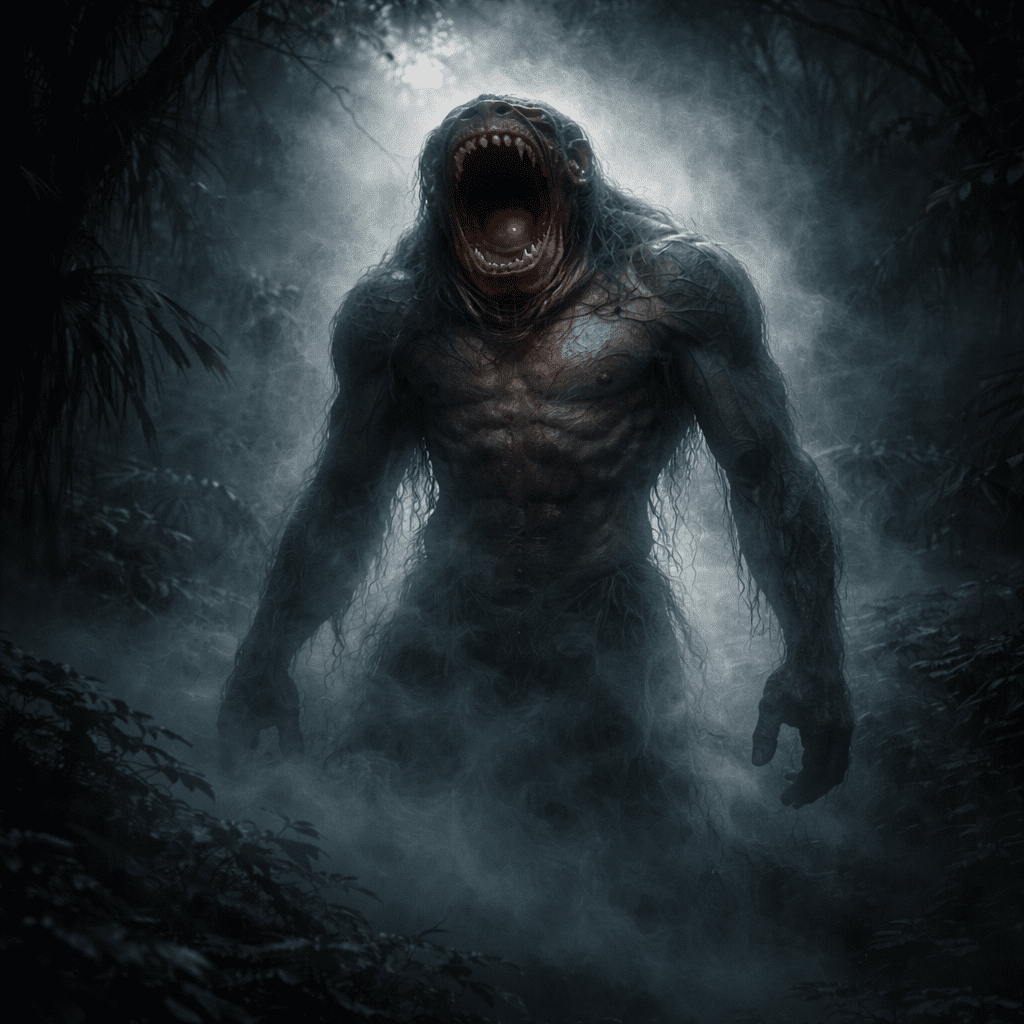
The most defining feature of Pugot Mamu is its headless form. Where a head should be, there is instead a horrifying opening at the top of its torso. This cavity functions as a massive mouth, lined with sharp, uneven teeth designed for tearing flesh. The imagery is visceral and deliberately unsettling, reinforcing its identity as a predator rather than a spirit.
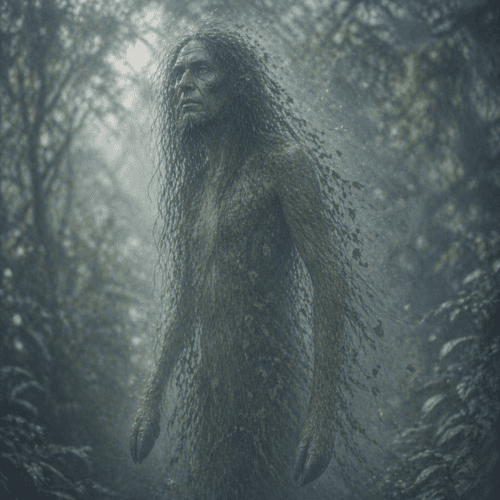
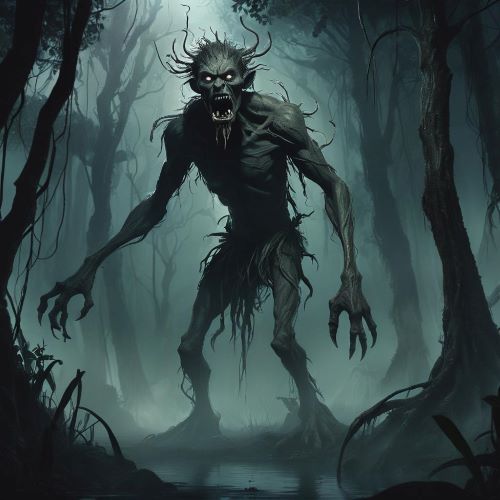
Descriptions often portray the creature as large and imposing, with a body that appears both human and monstrous. Its movements are said to be quiet despite its size, allowing it to approach unnoticed. Some variations suggest it can blend into its surroundings, particularly among trees, making it even more dangerous in rural settings.
Unlike spectral beings that fade in and out of existence, Pugot Mamu is consistently described as physical. It has weight, presence, and the ability to interact violently with the world. This tangible nature makes it far more frightening, especially in oral traditions where realism amplifies fear.
Family
Pugot Mamu does not belong to any known lineage or mythological family. It exists independently, without ties to gods, spirits, or ancestral beings. This lack of origin adds to its mystery, as it is not explained through creation stories or divine narratives.
There is, however, a loose connection to the broader concept of the Pugot found in other regions such as Ilocos. These beings are also headless, but they are typically less dangerous and sometimes even harmless. In contrast, Pugot Mamu represents a darker evolution of that idea, stripped of ambiguity and focused entirely on predation. Because it has no family or structured mythology, its identity remains singular. It is not part of a larger cosmology but rather a standalone embodiment of fear.
Other names
The name Pugot Mamu is specific to Pampanga and is the most widely recognized term for this creature. The word “Pugot” translates to “headless” or “decapitated,” reflecting its most obvious physical trait.
In a broader sense, it is sometimes associated with the term “Mumu,” a general word used across the Philippines to describe frightening supernatural beings. Depending on the region, “Mumu” can refer to ghosts, spirits, or monsters, often used by adults to scare children into obedience. Despite these connections, Pugot Mamu retains a distinct identity. It is not just another variation of a ghost story but a clearly defined creature with specific characteristics and purpose.
Powers and Abilities
The primary ability of Pugot Mamu is its capacity to hunt and consume children. Its neck cavity serves as a powerful feeding mechanism, capable of swallowing victims whole or tearing them apart. This single trait defines its role in folklore and sets it apart from other headless entities.
Some accounts suggest that it can move silently and detect even the smallest sounds, such as footsteps or whispers. This makes it particularly dangerous at night, when children are most likely to break rules or wander unsupervised.
There are also occasional references to shape-shifting or camouflage, allowing it to hide among trees or take on less noticeable forms. While not universally agreed upon, these abilities reinforce the idea that Pugot Mamu is not easily escaped once it begins its hunt.
Modern Day Influence
Even in the modern era, Pugot Mamu continues to exist within cultural memory. It appears in online discussions, folklore blogs, and storytelling platforms that aim to preserve Philippine traditions. While it may not be as globally recognized as other creatures like the aswang, its presence remains strong in regional narratives.
Parents still reference figures like Pugot Mamu, though often in a more symbolic way. The creature has transitioned from a literal threat to a cultural metaphor, representing the consequences of disobedience and the unknown dangers of the night.
Its influence can also be seen in digital storytelling, where creators reinterpret traditional myths for new audiences. In this way, Pugot Mamu evolves while retaining its core identity as a figure of fear and control.
Related Images

Source
Gaverza, K. (2016). PUGOT MAMU: The Other Philippine Boogeyman. The Aswang Project. https://www.aswangproject.com/pugot-mamu/
Clark, J. (2016). PUGOT: Evolution of the Headless Filipino Ghoul. The Aswang Project. https://www.aswangproject.com/pugot/
Ramos, M. D. (1990). Creatures of Philippine lower mythology. Kadena Kiad Gen. Pub.
Wikipedia contributors. (2024). Pugot. Wikipedia. https://en.wikipedia.org/wiki/Pugot
The Red Circle. (2019). 5 Filipino Creatures Scarier than Aswang. https://theredcircle.com.ph/5-filipino-creatures-scarier-than-aswang/
Wondering Monsters Podcast. (2025). The Boogeyman Explained: Origins, Variants & Cultural Role. https://wonderingmonsterspodcast.com/boogeyman-history-mythology-origin.php
Manilatown. (2024). Philippine mythology exhibition program. https://www.manilatown.org/philippine-mythology-program
Frequently Asked Questions
What is Pugot Mamu in Philippine folklore?
Pugot Mamu is a headless monster from Pampanga folklore known for devouring children and serving as a traditional boogeyman figure.
Is Pugot Mamu a ghost or a physical creature?
Unlike many Filipino spirits, Pugot Mamu is described as a physical, flesh-and-blood creature capable of direct harm.
What does the name Pugot Mamu mean?
“Pugot” means headless, while “Mamu” is linked to terms used for frightening supernatural beings or boogeymen.
How is Pugot Mamu different from Pugot?
The general Pugot is often harmless or mischievous, while Pugot Mamu is a dangerous predator that targets children.
Why was Pugot Mamu used in stories?
It was primarily used by parents as a cautionary tale to keep children obedient and prevent them from wandering at night.