Pilandok : The Clever Mouse-Deer Trickster of Philippine Folklore
At a glance
| Description | |
|---|---|
| Origin | Philippine Mythology |
| Classification | Animals |
| Family Members | N/A |
| Region | Philippines |
| Associated With | Cunning, Trickery, Survival, Intelligence |
The Mythlok Perspective
In Mythlok’s Perspective, Pilandok represents the universal triumph of intellect over dominance. Unlike divine tricksters who wield magic, he relies purely on awareness and timing, making him closer to human experience. His role mirrors figures like Anansi from West Africa and Br’er Rabbit from African American folklore, where smaller beings outmaneuver power structures. Across cultures, these tricksters reveal a shared truth that intelligence is often the most underestimated form of strength.
Pilandok
Introduction
Pilandok is one of the most recognizable trickster figures in Philippine folklore, especially within the traditions of Mindanao. Rooted in the oral storytelling of the Maranao and Magindanao people, Pilandok represents a clever mouse-deer who survives and thrives through intelligence rather than physical strength. His stories are widely known across southern Philippines and continue to be retold in literature and education today.
The character draws inspiration from a real animal species, Tragulus nigricans, commonly known as the Philippine mouse-deer or Balabac chevrotain. This connection grounds the folklore in ecological reality while elevating the animal into a symbolic cultural hero.
Pilandok’s tales often place him in direct conflict with powerful figures such as sultans, datus, wealthy nobles, or dangerous animals. Instead of confronting them with force, he uses wit, deception, and timing to escape danger or turn the situation in his favor. These narratives reflect deeper themes of social imbalance, where intelligence becomes the equalizer between the weak and the powerful. Across generations, Pilandok has come to represent more than just a trickster. He embodies the resilience of ordinary people, the ability to challenge authority, and the power of clever thinking in difficult situations.
Physical Traits
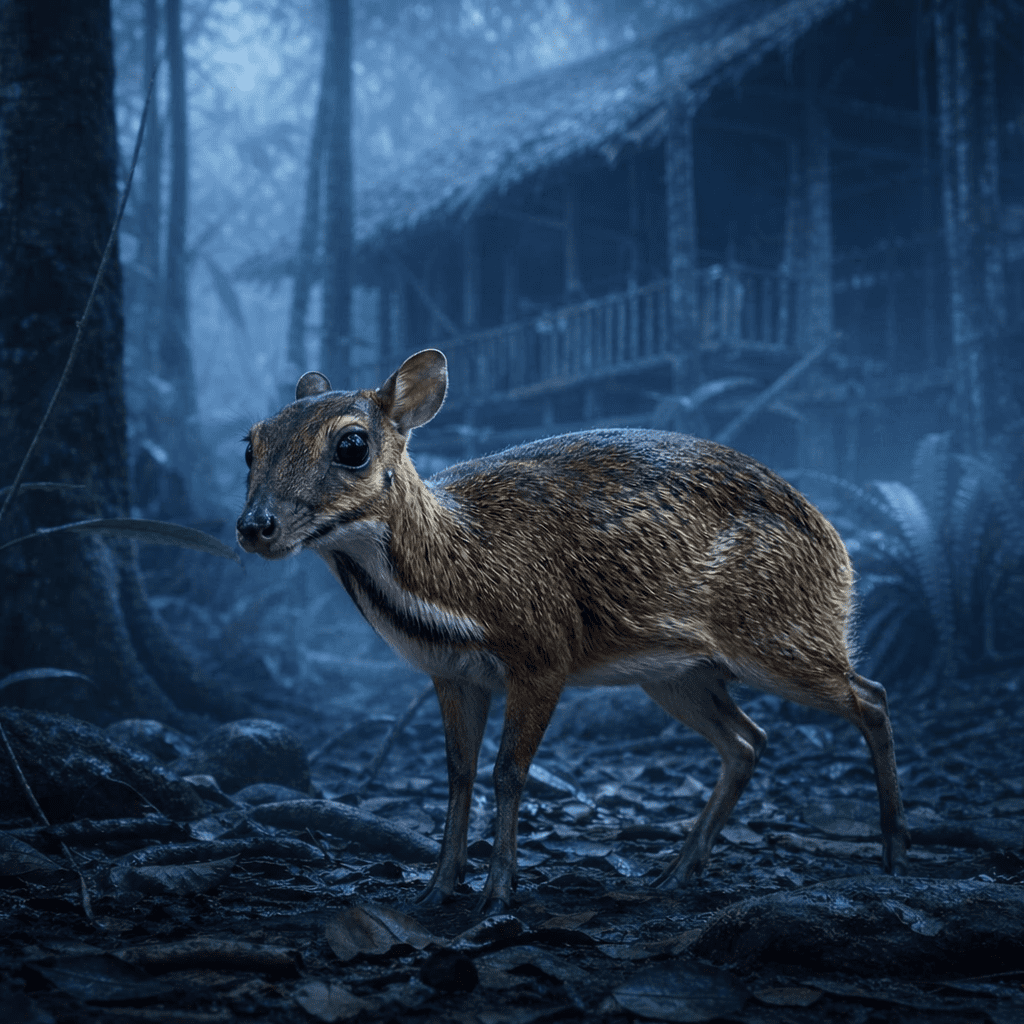
Pilandok’s physical form is directly based on the Philippine mouse-deer, a small and elusive animal native to the islands of Balabac and nearby regions in Palawan. This species is among the smallest hoofed mammals in the world, typically measuring around 30 to 40 centimeters in length and standing about 18 to 20 centimeters at the shoulder.
The animal has a compact body, slender legs, and a soft brown or gray coat that blends easily into forest environments. Its large, alert eyes and sensitive ears make it highly aware of its surroundings, reinforcing the symbolic connection to vigilance and intelligence in folklore.
Unlike true deer, the male mouse-deer does not possess antlers. Instead, it has elongated upper canine teeth that resemble small tusks, which are used in territorial disputes. This unique trait adds to the creature’s distinctive identity and subtly reinforces the idea that strength can take unconventional forms.
The mouse-deer is nocturnal and solitary, feeding mainly on leaves, fruits, and vegetation. Its quiet and cautious nature aligns perfectly with Pilandok’s personality in folklore, where survival depends on awareness and strategy rather than confrontation.
Family
Pilandok is not traditionally associated with a defined family lineage in folklore. Unlike epic heroes or divine figures, his stories rarely emphasize ancestry or heritage. Instead, he is portrayed as an independent character navigating the world on his own.
In some regional narratives, there are brief mentions of Pilandok coming from a humble or poor background, reinforcing his connection to ordinary people. One lesser-known variation references him as the son of a figure named Agosainog, but this is not a widely established or consistent element across all traditions.
The absence of a strong family structure is intentional in storytelling. It allows Pilandok to function as a universal figure, representing anyone who relies on intelligence to overcome challenges. His independence also mirrors the solitary nature of the real mouse-deer species.
Other names
Pilandok is known by several names depending on context, though most variations are tied to the animal itself rather than the folkloric character. The scientific name of the species is Tragulus nigricans, while it is commonly referred to as the Philippine mouse-deer or Balabac chevrotain in zoological terms. In some regional dialects, the name appears as “Pilanduk” or similar variations.
Across Southeast Asia, similar trickster figures exist based on related species, particularly the Malaysian pelandok. While not identical, these parallels suggest a shared cultural motif where small forest animals become symbols of intelligence and survival. Despite these variations, the name Pilandok remains strongly associated with Philippine storytelling, especially in Mindanao traditions.
Powers and Abilities
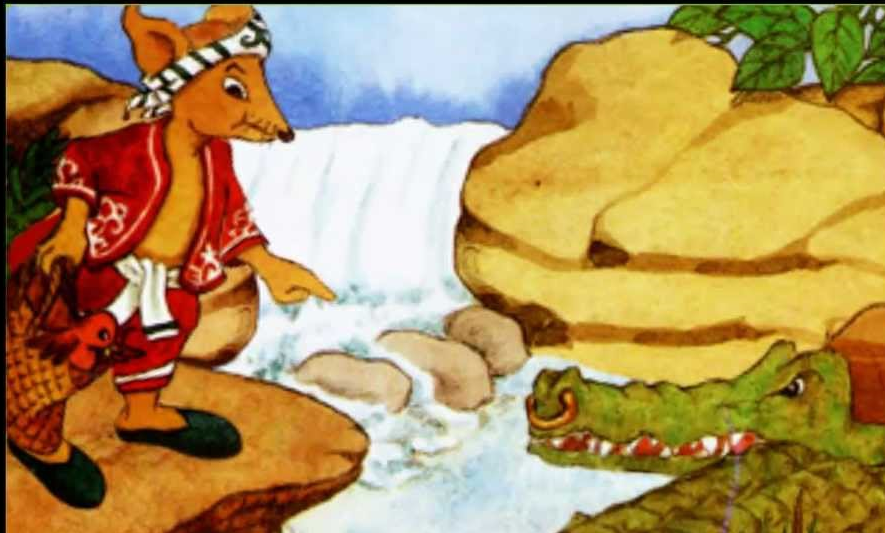
Pilandok does not possess supernatural powers in the traditional sense. His strength lies entirely in his intellect, making him one of the most grounded and relatable trickster figures in global folklore. His primary ability is cunning. Pilandok consistently outsmarts opponents far larger and more powerful than himself. In one well-known story, he convinces crocodiles to line up across a river by claiming they must be counted for a royal decree, then uses their backs as a bridge to cross safely. In another tale, he tricks a wealthy prince by pretending to guard a valuable object, manipulating the situation to his advantage.
Deception is another key skill. Pilandok uses language, timing, and psychological insight to mislead others. He understands how greed, pride, and authority can be exploited, turning these traits against his adversaries. Adaptability defines his survival. Whether facing hunger, danger, or social inequality, Pilandok always finds a way to shift the outcome in his favor. This ability reflects real-world struggles, making his stories both entertaining and meaningful.
In modern interpretations, Pilandok is sometimes portrayed as a protector of nature, using his cleverness to defend forests and wildlife. This evolution adds an environmental dimension to his character while staying true to his core identity.
Modern Day Influence
Pilandok continues to play an important role in contemporary Philippine culture. His stories have been preserved and adapted through books, theater, and digital media, ensuring that new generations remain connected to this folkloric tradition.
Writers such as Virgilio S. Almario have retold Pilandok’s adventures in children’s literature, presenting him as both an entertaining and educational figure. Works like “Si Pilandok at ang mga Buwaya” and “Si Pilandok, ang Bantay ng Kalikasan” reinterpret traditional tales with modern themes.
Similarly, Victoria Añonuevo contributed to preserving these narratives through books like “Pilandok and the Crocodiles,” making them accessible to younger audiences. Beyond literature, Pilandok has appeared in stage productions, educational animations, and storytelling programs. His character is often used to teach lessons about critical thinking, resilience, and social awareness. Scholars also view Pilandok as a symbol of resistance, particularly in postcolonial discussions. His ability to challenge authority through intelligence resonates with broader themes of cultural identity and empowerment.
Related Images





Source
Añonuevo, V. (1994). Pilandok and the crocodiles. Adarna House.
Almario, V. S. (1998). Si Pilandok, ang bantay ng kalikasan. Adarna House.
Animalia.bio. (n.d.). Philippine mouse-deer. https://animalia.bio/philippine-mouse-deer
Perpusnas. (2025). Pilandok: The clever mouse-deer of Philippine folklore. https://test.puthiyathalaimurai.com/press/1lgbhzh/perpusnas-pilandok-the-clever-mouse-deer-of-philippine-folklore-1764800013
Santiago, L. Q. (2012). The Pilandok narrative in Philippine history and society. University of Hawaii at Manoa. https://id.scribd.com/document/414522582/The-Pilandok-Narrative-in-Philippine-History-and-Society
The Aswang Project. (2022). Foolish and wise: Chronicles of folkloric tricksters. https://www.aswangproject.com/philippine-tricksters/
Wikipedia. (2007). Philippine mouse-deer. https://en.wikipedia.org/wiki/Philippine_mouse-deer
Secret Philippines. (n.d.). The fascinating and rare Philippine mouse-deer. https://secret-ph.com/the-fascinating-and-rare-philippine-mouse-deer-a-small-shy-mammal-of-the-philippines/
Frequently Asked Questions
Who is Pilandok in Philippine folklore?
Pilandok is a clever mouse-deer trickster from Mindanao stories known for outsmarting powerful rulers and animals.
Is Pilandok a real animal or a myth?
Pilandok is based on a real animal, the Philippine mouse-deer, but appears as a talking trickster in folklore.
What does Pilandok symbolize?
He symbolizes intelligence, survival, and the ability of the weak to challenge powerful authority.
Where do Pilandok stories originate?
They originate mainly from the Maranao and Magindanao traditions in Mindanao, Philippines.
Does Pilandok have powers?
Pilandok has no magical powers; his strength comes from wit, deception, and quick thinking.