
Mebere : The Sovereign Power of Beti-Pahuin Cosmology
Listen
At a glance
| Description | |
|---|---|
| Origin | Beti-Pahuin Mythology |
| Classification | Gods |
| Family Members | N/A |
| Region | Cameroon, Gabon, Equatorial Guinea |
| Associated With | Creation, Authority, Strength, Moral law |
The Mythlok Perspective
In Mythlok perspective, Mebere represents authority as a sacred responsibility rather than raw dominance. Creation and judgment exist together, reminding us that power without balance leads to collapse. The triune structure of the Beti-Pahuin divine concept feels strikingly advanced, presenting strength, harmony, and creation as inseparable forces. Cross-culturally, Mebere echoes the Egyptian Atum and the Yoruba Olodumare, both creator figures tied to cosmic order. Yet Mebere’s identity as an aspect within a unified divine force makes it uniquely fluid, less a personality and more a governing principle woven into reality itself.
Mebere
Introduction
Beti-Pahuin mythology preserves one of Central Africa’s most sophisticated creator traditions, centered on a supreme divine force often called Zamba or Nzame. Within this sacred framework stands Mebere, a foundational aspect of the creator deity. Rather than functioning as a separate god in all traditions, Mebere represents the force of strength, authority, and decisive power within the triune divine structure that also includes Nzame and Nkwa.
Among the Fang people, who form a major branch of the Beti-Pahuin cultural family in present-day Cameroon, Gabon, and Equatorial Guinea, Mebere is sometimes elevated as the supreme creative authority itself. Oral traditions describe Mebere as the shaper of the first human beings and the establisher of moral order. In these narratives, Mebere is not simply a distant creator but an active force who intervenes when balance is broken.
Physical Traits
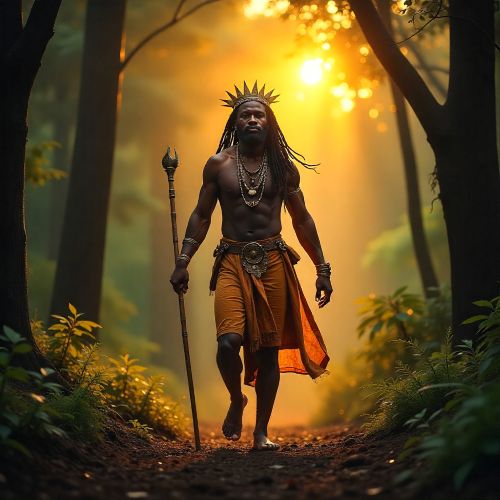
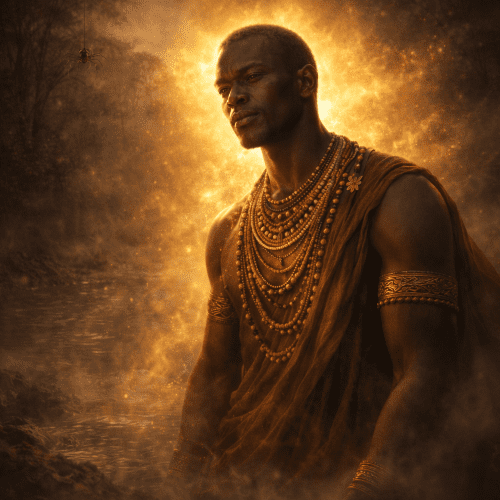
There are no consistent anthropomorphic descriptions of Mebere in recorded Beti-Pahuin oral traditions. Unlike the vividly imaged gods of Mediterranean or Norse cultures, Mebere exists primarily as a spiritual presence rather than a bodily figure.
This absence of fixed physical traits is deliberate within Fang and related traditions. Divinity is expressed through force, action, and sacred authority rather than through visual form. Mebere is understood as transcendent, beyond human limitations, and therefore not confined to a singular appearance.
However, spiritual concepts connected to Mebere are symbolically echoed in Fang sacred art, particularly in reliquary guardian figures known as bieri. These sculptures, with their enlarged heads and poised stillness, represent ancestral continuity and divine oversight. While they do not depict Mebere directly, they embody the idea that divine authority watches over lineage and morality.
Family
In Beti-Pahuin theology, Mebere functions within a triune divine structure. The supreme creator, often called Nzame or Zamba, manifests through three interrelated aspects: Nzame, associated with creation and existence; Mebere, embodying strength, command, and authority; and Nkwa, representing beauty, harmony, and balance. These are not separate competing gods, but unified expressions of a single cosmic force that governs the universe through complementary powers.
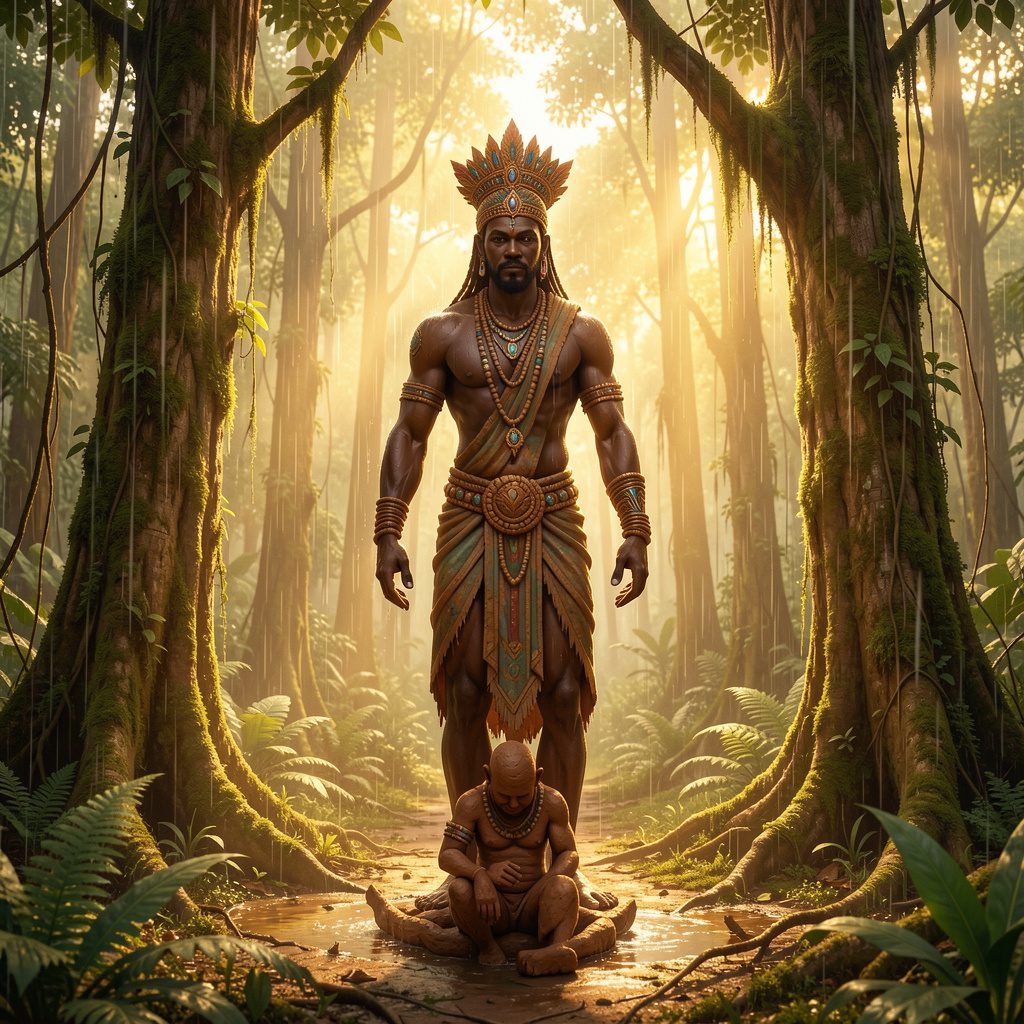
Certain Fang traditions expand Mebere’s creative role in vivid detail. In one widely told account, Mebere molded the first human from clay, shaping it initially as a lizard before transforming it into a man by breathing life into it. This first being, often named Fam, was granted authority but misused it, leading Mebere to withdraw divine favor and introduce mortality into human existence. Another version tells of Mebere creating a new ancestor, Sekume or Zambe, along with a woman named Mbongwe formed from a tree, establishing the first human lineage. Together, these narratives portray Mebere as both creator and regulator, showing that creation itself responds to moral conduct.
Other names
The name Mebere appears in variant forms across Beti-Pahuin-speaking regions. Among the Fang, it is sometimes rendered as Mebe’e or Mebege. In certain traditions, Mebere is identified directly with Nzame, while in others it is understood as a dominant attribute of the supreme being.
Linguistically, the name is connected to broader Bantu concepts of divine authority. Variations reflect dialect differences across Cameroon, Gabon, and Equatorial Guinea rather than theological contradiction.
Within the syncretic spiritual system of Bwiti, Mebere is sometimes equated with Zame ye Mebege and identified with God the Father in Christian theology. This adaptation demonstrates the fluidity and resilience of Fang religious thought, where indigenous cosmology integrates rather than disappears.
Powers and Abilities
Mebere’s defining attribute is sovereign authority. As an aspect of the supreme creator, Mebere possesses the power to create life, withdraw life, and determine cosmic law. Creation myths credit Mebere with shaping humanity from clay and breathing vitality into form. This motif parallels other global traditions but remains distinctly Central African in symbolism, emphasizing transformation and moral testing.
Mebere also exercises destructive power when moral order collapses. In the narrative involving Fam, divine judgment results in catastrophe, sparing only what aligns with sacred intention. Mortality itself becomes a consequence of imbalance. Beyond creation and destruction, Mebere establishes leadership. Authority among humans reflects divine authority. Kingship, clan hierarchy, and ancestral reverence all echo Mebere’s governing principle. Unlike warrior gods who dominate through force, Mebere’s power lies in moral sovereignty. Strength is inseparable from responsibility.
Modern Day Influence
Belief in Mebere continues to influence Beti-Pahuin-descended communities today. Even where Christianity is dominant, ancestral cosmology shapes ethical frameworks, ritual practices, and artistic expression. The epic mvet tradition preserves creation narratives and heroic journeys that trace authority back to divine origins. Through music and storytelling, performers recount the moral lessons associated with the creator’s will.
In Bwiti ceremonial contexts, sacred plant rituals are understood as pathways to encountering divine truth. Though syncretic, these practices retain the conceptual foundation of a supreme creator whose authority defines existence. Art, ritual masks, and reliquary guardians continue to reflect a worldview shaped by Mebere’s principle: that life is sacred, lineage is watched, and balance must be maintained.
Related Images

Source
101 Last Tribes. (n.d.). Fang people. https://www.101lasttribes.com/tribes/fang.html
Lebarty. (n.d.). Fang mythology. https://lebarty.com/fang-mythology/
Alexandre, P., & Binet, J. (1958). Le groupe beti du Cameroun: étude socio-économique. Centre national de la recherche scientifique.
Tessmann, H. (1913). Die Pangwe: Völkerkundliche Monographie eines westafrikanischen Negerstamms. Ernst Wasmuth A.-G.
Bunker, H. (2015). Fang art: Guardian figures. In African art in the cycle of life (pp. 45-67). University of California Press.
Fernandez, J. W. (1982). Bwiti: An ethnography of the religious imagination in Africa. Princeton University Press.
Mbiti, J. S. (1990). African Religions and Philosophy. Heinemann.
Neba, A. S. (1999). Modern Geography of Cameroon. Neba Publishers.
Nkwi, P. N., & Warnier, J.-P. (1982). Elements for a History of the Western Grassfields. University of Yaoundé Press.
Frequently Asked Questions
Who is Mebere in African mythology?
Mebere is a supreme creator figure in Beti-Pahuin and Fang traditions of Central Africa, associated with divine authority and the creation of humanity.
Is Mebere the same as Nzame?
In many traditions, Mebere is considered an aspect of the supreme being Nzame, representing strength and sovereign authority.
Did Mebere create humans?
Yes. Creation myths describe Mebere molding the first human from clay and establishing the first ancestral lineage.
What powers does Mebere have?
Mebere possesses the powers of creation, destruction, moral judgment, and cosmic governance.
Is Mebere still worshipped today?
While Christianity is widespread, Mebere remains influential in Fang traditions, Bwiti practices, and oral epic storytelling.