


Korkyt Ata : The Eternal Voice of the Kazhak Steppe
At a glance
| Description | |
|---|---|
| Origin | Kazakh Mythology |
| Classification | Mortals |
| Family Members | N/A |
| Region | Kazakhstan |
| Associated With | Music, Immortality, Wisdom, Prophecy, Shamanism, Wisdom |
The Mythlok Perspective
In Mythlok’s Perspective, Korkyt Ata represents one of the most profound mythological reflections on mortality in the Turkic world. Unlike heroic figures who seek immortality through battle or divine favor, Korkyt turns toward art and philosophy. His struggle feels deeply human because it acknowledges that death cannot truly be escaped. What survives instead is memory, music, and cultural influence. His legend shares similarities with figures like Orpheus from Greek tradition and Vainamoinen from Finnish folklore, both of whom used music as a bridge between worlds. Yet Korkyt Ata remains uniquely tied to the vast Kazakh steppe, where sound, wind, and landscape merge into spiritual symbolism. His mythology transforms music into a sacred force capable of preserving identity across centuries.
Korkyt Ata
Introduction
Korkyt Ata stands among the most influential cultural heroes in Turkic tradition. Revered across Kazakhstan and the wider Turkic world, he is remembered as a philosopher, shaman, storyteller, and master musician whose search for immortality became one of the defining legends of the Eurasian steppes. Often linked to the 9th century, Korkyt Ata is deeply associated with the Oghuz Turkic tribes and the lands surrounding the Syr Darya River in present-day Kazakhstan.
In Kazakh mythology, Korkyt Ata represents humanity’s struggle against mortality. Unlike warriors or kings who sought eternal life through conquest, Korkyt attempted to defeat death through wisdom, music, and spiritual understanding. His story became a philosophical reflection on the temporary nature of human existence and the lasting power of art.
According to legend, Korkyt received a prophetic dream at a young age revealing that he would die at forty. Disturbed by this vision, he traveled endlessly across the world on his camel named Zhelmaya in search of a land untouched by death. Yet everywhere he journeyed, he encountered people digging graves and preparing burial grounds. Each time he asked who the grave was for, the answer remained the same: it was meant for Korkyt.
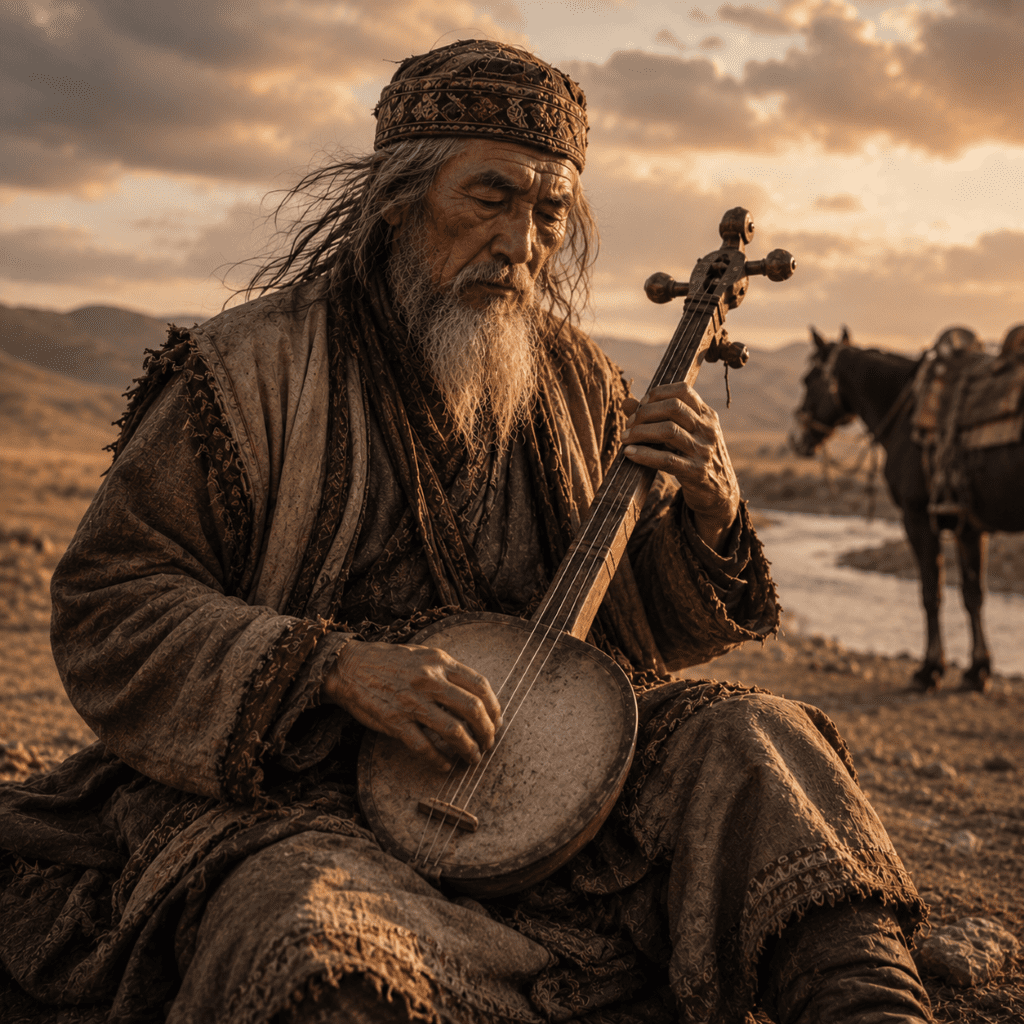
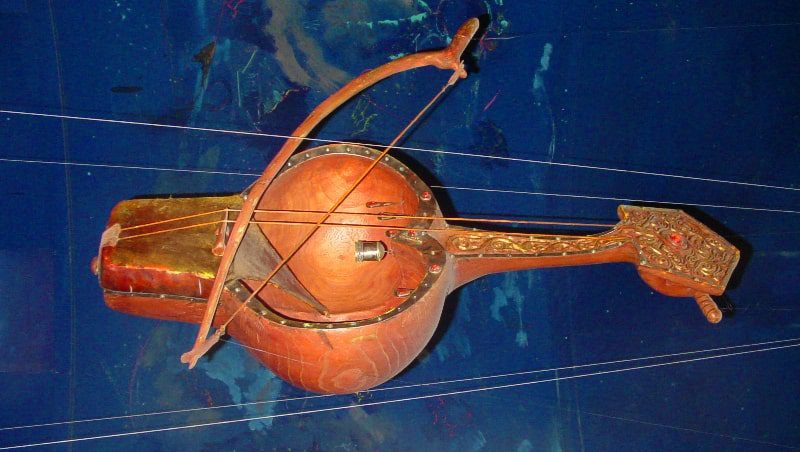
Realizing that no mortal could escape fate, he returned to the steppe and created the kobyz, a sacred two-stringed instrument crafted from wood, camel skin, and horsehair. The haunting melodies he played were said to stop the flow of rivers, silence the wind, and hold death itself at bay. Through music, Korkyt Ata achieved the immortality he could never attain physically. His songs and legends survived long after his death, turning him into an eternal symbol of spiritual endurance. Today, Korkyt Ata remains one of the most celebrated figures in Kazakh cultural identity, influencing literature, philosophy, music, and national heritage throughout Central Asia.
Physical Traits
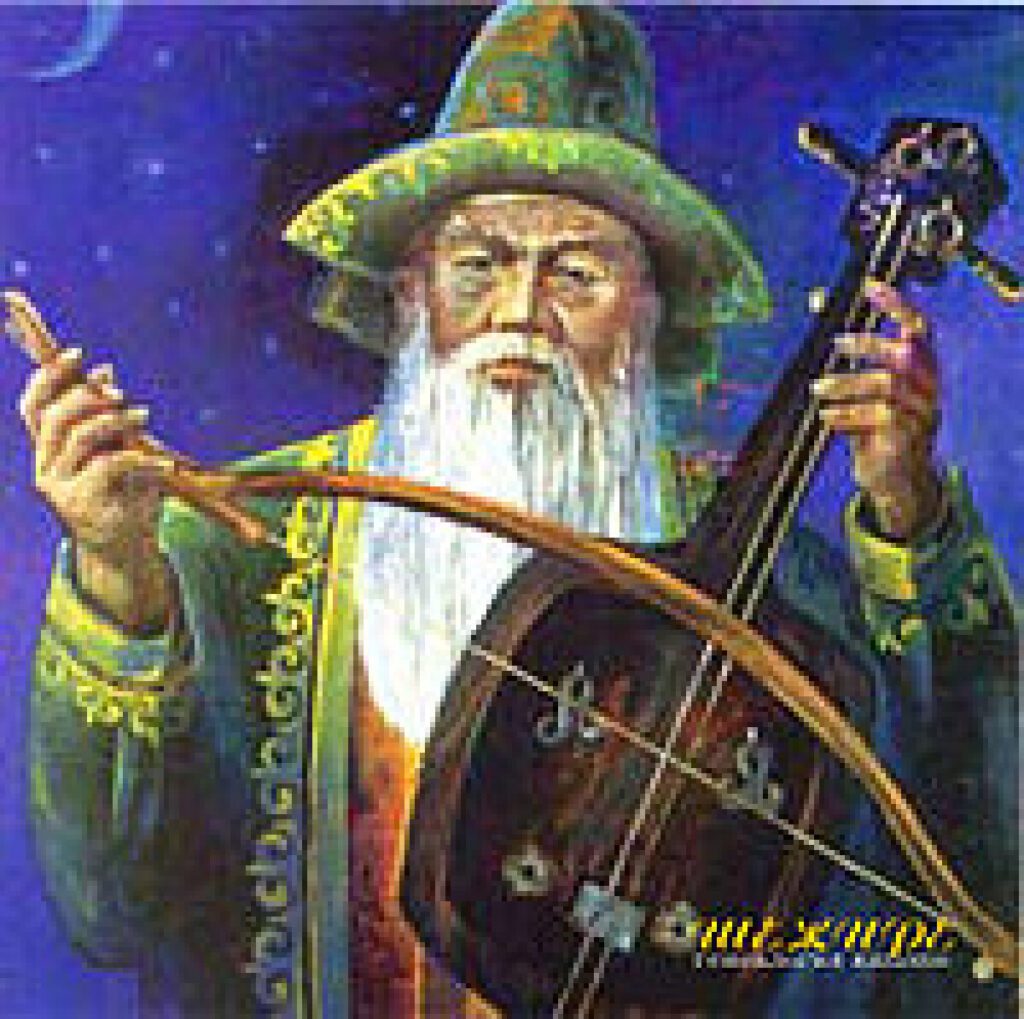
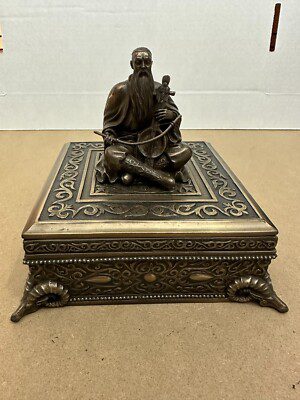
Korkyt Ata is traditionally portrayed as an elderly sage with a flowing beard, calm expression, and traditional Turkic robes. In paintings, statues, and monuments, he is almost always depicted seated with the kobyz resting in his hands, emphasizing the inseparable connection between the man and his music.
Legends surrounding his birth add a supernatural dimension to his appearance. His mother is said to have carried him for three years and nine days before giving birth during a violent storm filled with thunder, lightning, and powerful winds. The frightening atmosphere caused those nearby to panic, leading to the name “Korkyt,” which is often interpreted as “the frightening one” or “the one who inspires awe.”
As a child, Korkyt displayed extraordinary musical talent. Stories claim he mastered every known instrument before eventually creating the kobyz itself. The instrument was designed to imitate the sounds of nature, including the cries of animals, rushing water, and the rumble of storms. Because of this connection to natural forces, Korkyt’s physical image became closely tied to the spiritual landscape of the Kazakh steppe.
Unlike mythological heroes defined by physical strength, Korkyt Ata’s presence carried spiritual authority. His voice, music, and wisdom mattered more than martial power. In many depictions, his tired yet determined appearance reflects the burden of a man who spent his life searching for answers to existence itself.
Family
Very little concrete information survives regarding Korkyt Ata’s immediate family. Most legends focus on his spiritual mission rather than personal relationships, which reinforces his role as a wandering sage separated from ordinary life.
Traditions generally connect him to the Bayat tribe of the Oghuz Turks, placing him within the broader Turkic nomadic world. Some medieval genealogies and oral traditions identify him as a respected advisor to tribal rulers and khans. Rather than being remembered through descendants or bloodlines, Korkyt became a symbolic ancestor for Turkic storytellers, musicians, and shamans.
The title “Ata,” meaning “father” or “grandfather,” reflects this symbolic role. Across Turkic cultures, he is treated as a spiritual elder whose teachings belong to the collective memory of the people rather than to a single family lineage.
His solitary journey in search of immortality further separates him from domestic life. In many versions of the legend, Korkyt abandons ordinary social ties to pursue deeper spiritual truths. This reinforces the image of a philosopher whose connection to humanity came through wisdom and music instead of family legacy.
Other names
Korkyt Ata appears under several names throughout the Turkic world, reflecting the spread of his legend across different regions and languages. The most widely recognized variation is Dede Korkut, especially in Turkish and Azerbaijani traditions. “Dede” translates to “grandfather,” emphasizing his status as an elder sage and storyteller.
In Kazakhstan and Central Asia, he is most commonly called Korkyt Ata or Korkut Ata. Other regional variations include Dede Gorgud and Khorkhut. Despite the differences in pronunciation, these names all refer to the same legendary figure whose wisdom shaped Turkic oral tradition.
Korkyt Ata is also closely associated with the famous epic collection known as the Book of Dede Korkut. This literary work preserves heroic stories, moral lessons, and cultural traditions connected to the Oghuz Turks. Within these tales, Korkyt acts as a narrator, advisor, and spiritual guide who blesses warriors and resolves conflicts. The existence of multiple names highlights his importance beyond Kazakhstan alone. He is not simply a local legend but a shared cultural symbol across the Turkic-speaking world.
Powers and Abilities
Korkyt Ata’s abilities are deeply spiritual rather than physical. His greatest power came from music, which was believed to influence both nature and the supernatural world. According to legend, whenever he played the kobyz, death itself could not approach him. Rivers stopped flowing, animals became silent, and the winds calmed while his melodies echoed across the steppe.
As one of the earliest baqsi or shamans in Turkic folklore, Korkyt possessed prophetic wisdom and spiritual insight. He could foresee events, interpret omens, and guide tribal leaders through difficult decisions. In epic traditions, his words carried sacred authority, and his blessings were considered essential before major undertakings.
Healing also formed an important part of his mythology. The sound of the kobyz was believed to cleanse spiritual imbalance and communicate with ancestral spirits. This connection between music and healing remained influential in Central Asian shamanic traditions for centuries.
Another important aspect of Korkyt’s legend is his philosophical understanding of mortality. Rather than defeating death completely, he discovered that creative expression could outlive the human body. In this sense, his true power was transforming suffering into cultural memory.
His association with nature further strengthened his mystical reputation. Water, wind, and celestial symbolism frequently appear in stories about him, suggesting that he existed between the human and spiritual worlds.
Modern Day Influence
Korkyt Ata continues to hold enormous cultural importance in modern Kazakhstan and across the Turkic world. His influence can be seen in music, education, literature, tourism, and national identity.
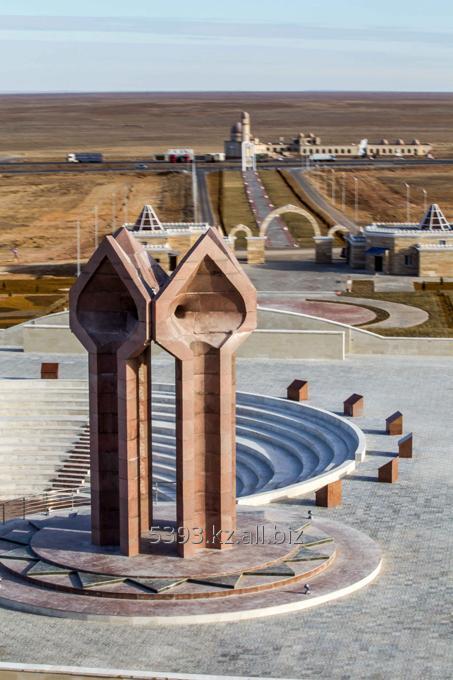
One of the most important landmarks associated with him is the Korkyt Ata Memorial Complex in the Kyzylorda region of Kazakhstan. The monument, designed in the shape of a kobyz, produces haunting sounds when wind passes through its structure, symbolizing the eternal music of Korkyt. The site has become a major cultural destination attracting visitors from across Central Asia.
In 2018, UNESCO added the Heritage of Dede Qorqud/Korkyt Ata to the Representative List of the Intangible Cultural Heritage of Humanity. This recognition acknowledged the importance of his epic stories, musical traditions, and oral heritage in preserving Turkic identity.
Modern musicians continue to perform compositions attributed to Korkyt Ata, while the kobyz remains one of the defining instruments of Kazakh music. Contemporary artists have even blended traditional kobyz melodies with jazz, rock, and experimental music, proving that his artistic legacy still evolves today.
Universities, cultural institutions, and festivals throughout Kazakhstan also bear his name. Events such as the “Korkyt and the Music of the Steppe” festival celebrate his contribution to Central Asian culture and ensure that new generations remain connected to their mythological roots.
Related Images



Source
Aibekova, G. S. (2024). The mythological image of Korkyt Ata: Spiritual mentor and hero in Kazakh and Turkic culture. Bulletin of Orientalism, KazNU. https://bulletin-orientalism.kaznu.kz/index.php/1-vostok/article/view/2017
Kazakhified. (2008). Korkyt-Ata. http://kazakhified.blogspot.com/2008/06/korkyt-ata.html
The Astana Times. (2019, June). Kobyz sounds, Korkyt Ata legends attract tourists to Kyzylorda region. https://astanatimes.com/2019/06/kobyz-sounds-korkyt-ata-legends-attract-tourists-to-kyzylorda-region/
Culturemap.kz. (n.d.). Korkyt Ata monument. https://culturemap.kz/en/object/pamyatnik-korkyt-ata
Citizen of World. (n.d.). Legend about Korkyt Ata. https://citizenofworld2017.wordpress.com/history/legend-about-korkyt-ata/
ILS. (2018). Korkyt-Ata. https://www.ilslaunch.com/korkyt-ata/
UNESCO Azerbaijan. (2018). “Dede Qorqud heritage” inscribed. https://unesco.az/index.php/en/articles/news/319
The Astana Times. (2014). Thousands still flock to Korkyt Ata mausoleum. https://astanatimes.com/2014/07/thousands-still-flock-korkyt-ata-mausoleum/
Margulan, A., Kelimbetov, N., & Konyratbaev, A. (1986). Kazakh translation of Kitabi Dede Korkut. Almaty: Kazakh SSR Academy of Sciences.
Köprülü, M. F. (2006). Early Mystics in Turkish Literature. Routledge.
Lewis, G. (1999). The Book of Dede Korkut. Penguin Classics.
Tekin, T. (1980). A Grammar of Orkhon Turkic. Indiana University Press.
Frequently Asked Questions
Who is Korkyt Ata?
Korkyt Ata is a legendary Kazakh and Turkic sage, musician, and shaman known for creating the kobyz and seeking immortality through music.
What is Korkyt Ata famous for?
He is famous for inventing the kobyz and for legends about his attempt to overcome death through spiritual music.
Is Korkyt Ata a real historical figure?
Many scholars believe Korkyt Ata was based on a real Turkic storyteller and philosopher from around the 9th century.
What does the kobyz symbolize in Korkyt Ata’s legend?
The kobyz symbolizes spiritual power, memory, healing, and humanity’s desire to transcend mortality.
Why is Korkyt Ata important in Kazakh culture?
Korkyt Ata represents wisdom, artistic heritage, and the preservation of Turkic identity through oral tradition and music.
