
Kawe-y Asinger : The Legendary Blacksmith of Kurdish Lore
At a glance
| Description | |
|---|---|
| Origin | Kurdish Mythology |
| Classification | Mortals |
| Family Members | N/A |
| Region | Iraq |
| Associated With | Resistance, Freedom, Rebellion, Blacksmithing, Justice |
The Mythlok Perspective
In Mythlok’s Perspective, Kawe-y Asinger occupies a role similar to figures such as Prometheus in Greek mythology or William Tell in Swiss folklore—heroes whose greatest power is defiance against unjust authority. What makes Kawe unique is that he is not remembered for divine ancestry or supernatural gifts but for transforming personal grief into collective action. His blacksmith’s hammer becomes a symbol of human agency rather than brute force. The enduring popularity of his story reminds us that the most powerful heroes are often ordinary people who refuse to accept oppression and inspire others to stand beside them.
Kawe-y Asinger
Introduction
Kawe-y Asinger, also known as Kawa the Blacksmith, is one of the most influential heroic figures in Kurdish mythology and cultural memory. His story is deeply connected to the struggle against tyranny, making him far more than a legendary character. For many Kurds, he represents the enduring belief that ordinary people can challenge injustice and change the course of history.
The name Kawe-y Asinger literally means “Kawa the Blacksmith” in Kurdish. He is closely related to the Iranian mythological figure Kaveh Ahangar, whose story appears in Ferdowsi’s Shahnameh. While the broader Iranian tradition portrays him as a hero who helps overthrow the tyrant Zahhak, Kurdish narratives place even greater emphasis on his role as a liberator and cultural ancestor. In several Kurdish versions of the legend, the people who escaped Zahhak’s oppression and fled into the mountains eventually became the ancestors of the Kurdish people.
Because of this connection, Kawe-y Asinger occupies a unique place in Kurdish identity. He is not worshipped as a god, nor is he remembered for supernatural powers. Instead, he survives as a symbol of resistance, freedom, and collective courage.
Physical Traits
Physical Traits
Unlike many mythological heroes whose appearances are described in vivid detail, Kawe-y Asinger is primarily defined by his profession and actions. Traditional Kurdish sources provide very little information about his physical features. Instead, they focus on what he represents and the role he plays in the struggle against Zahhak.
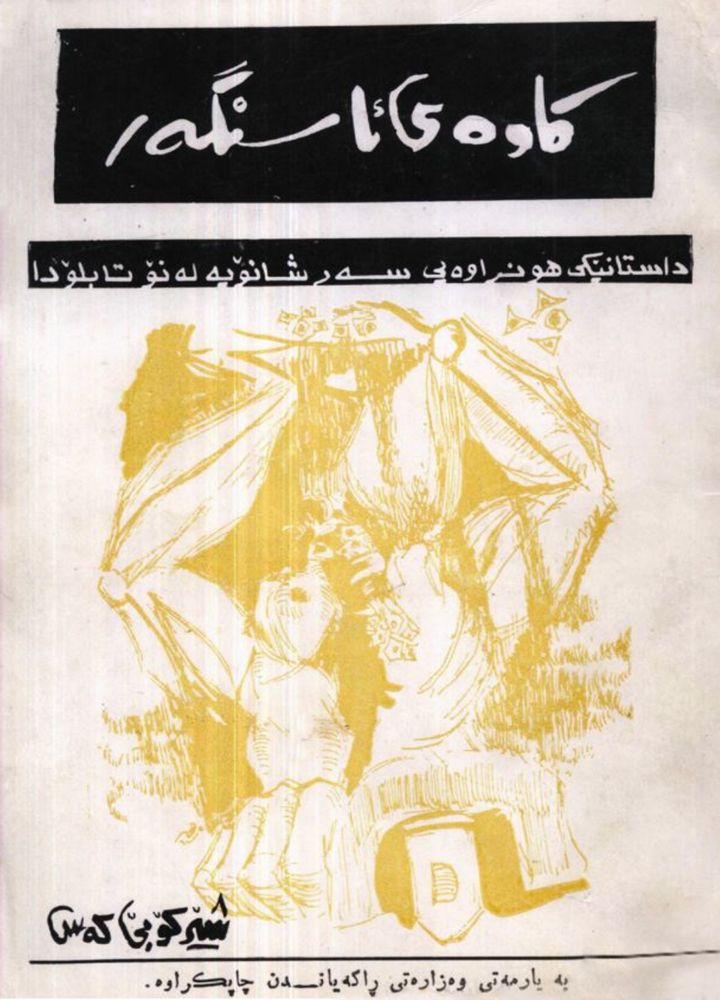
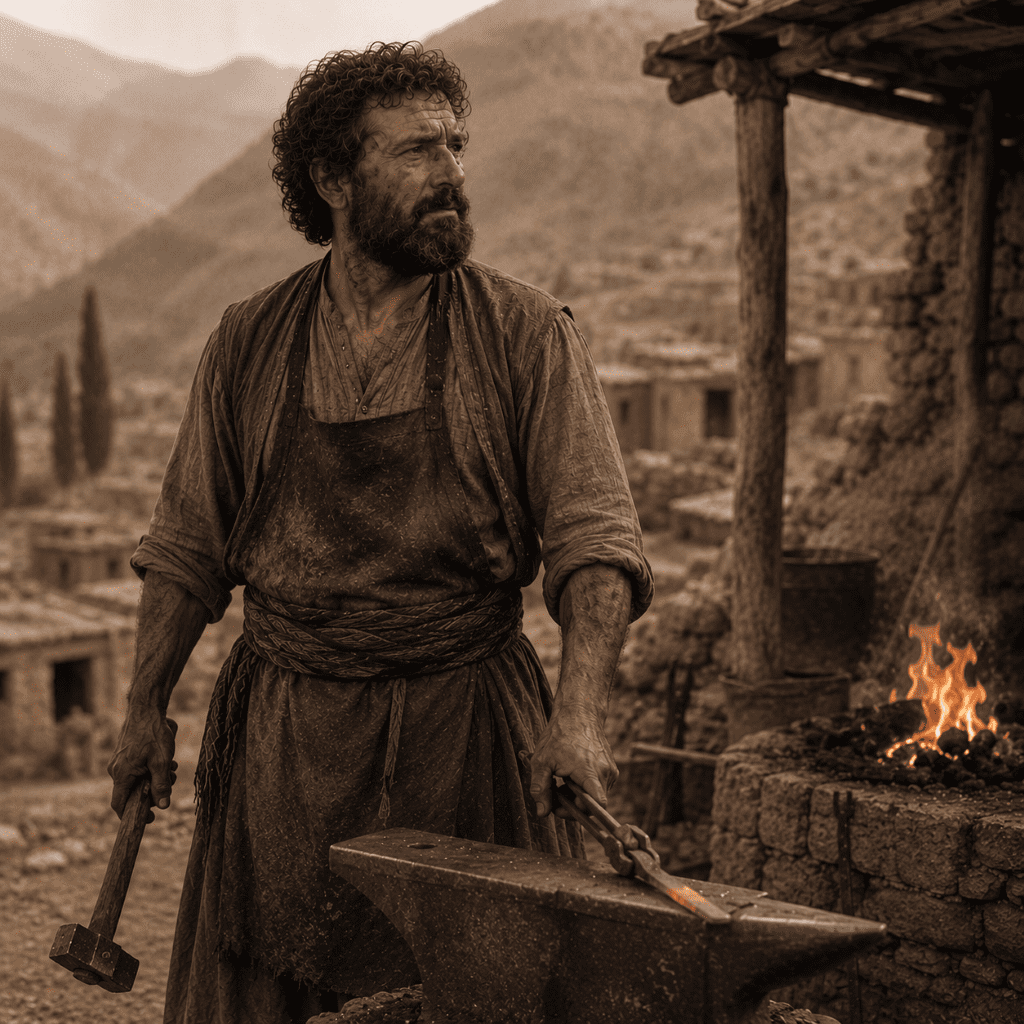
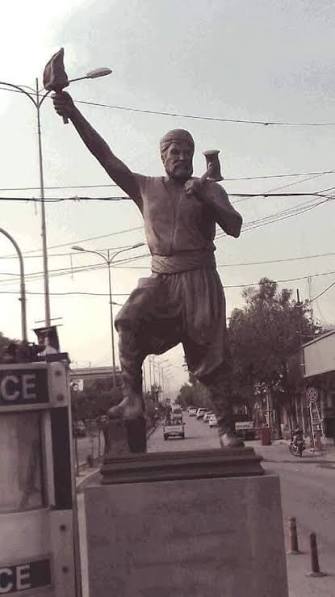
He is consistently portrayed as a blacksmith, a profession that carries powerful symbolism throughout many cultures. The blacksmith shapes raw metal through fire, patience, and strength, making him an ideal representation of resilience and transformation. In artistic depictions, Kawe is often shown carrying a heavy forge hammer, standing beside an anvil, or emerging from the glow of a forge.
His most famous possession is not a weapon but a leather apron. According to the legend, Kawe raised his blacksmith’s apron on a spear as a banner during the uprising against Zahhak. This simple act transformed a laborer’s tool into a revolutionary symbol. The banner later became known as the Derafsh Kaviani, one of the most famous emblems associated with freedom and legitimate rule in Iranian mythology.
Family
The family history of Kawe-y Asinger differs depending on the version of the legend being told. Kurdish references generally focus on his role as a cultural hero rather than providing a detailed genealogy. As a result, information about his parents, spouse, or descendants is largely absent from Kurdish sources.
What remains consistent across many retellings is the tragedy that motivates his rebellion. Zahhak’s monstrous rule required the sacrifice of young people, whose brains were fed to the serpents growing from the tyrant’s shoulders. In several versions of the story, Kawe loses many of his sons to this cruel practice. The exact number varies from source to source, but the loss of his children becomes the emotional catalyst that transforms him from a humble blacksmith into a revolutionary leader.
Rather than presenting Kawe as a heroic warrior from birth, the legend portrays him as a grieving father who refuses to accept injustice. This personal suffering gives the story much of its emotional power and explains why he became a symbol of ordinary people standing up to oppression.
Other names
Kawe-y Asinger is known by several names throughout the Kurdish and Iranian cultural world. The differences largely reflect language and regional tradition rather than separate characters. In Kurdish traditions, he is commonly called Kawe-y Asinger, Kaway Asngar, or simply Kawa. The title “Asinger” means “the Blacksmith,” emphasizing his profession and social status.
In Persian literature, especially in Ferdowsi’s Shahnameh, he appears as Kaveh Ahangar or Kāveh Āhangar. English-language sources usually refer to him as Kaveh the Blacksmith or Kawa the Blacksmith. Despite these variations, all of these names describe the same legendary hero who challenged Zahhak’s rule.
The persistence of these different names across centuries highlights the widespread influence of the legend throughout the Iranian cultural sphere while also demonstrating how Kurdish tradition has adapted the story into a powerful symbol of its own heritage.
Powers and Abilities
Kawe-y Asinger is unusual among mythological heroes because he possesses no magical powers. He does not command supernatural forces, wield enchanted weapons, or perform miracles. His strength comes entirely from human qualities.
His greatest ability is leadership. Faced with a ruler who seemed unstoppable, Kawe found the courage to challenge authority openly. His refusal to submit inspired others to overcome their fear and join the rebellion. In this way, his true power was the ability to unite people around a common cause.
As a master blacksmith, he also possessed exceptional craftsmanship. Many versions of the story describe him forging weapons for the resistance movement. His knowledge of metalworking enabled him to transform everyday tools into instruments of liberation.
Another important aspect of his character is symbolic vision. By raising his leather apron as a banner, Kawe turned a simple object into a rallying cry for freedom. The act demonstrated an understanding that symbols can be as powerful as weapons. The resulting Derafsh Kaviani became one of the most enduring emblems in Iranian mythological history.
Modern Day Influence
Few mythological figures remain as culturally significant to the Kurdish people as Kawe-y Asinger. His influence extends far beyond folklore and continues to shape cultural celebrations, political symbolism, and collective identity.
His strongest association today is with Newroz, the Kurdish New Year celebrated around the spring equinox. According to Kurdish tradition, the defeat of Zahhak marked the end of darkness and oppression. To announce victory, Kawe lit fires on the mountaintops. Those flames became the inspiration for the bonfires that remain a central part of Newroz celebrations today.
Throughout the modern era, Kawe has also served as a symbol of Kurdish resistance and self-determination. His image appears in artwork, literature, murals, festivals, and political discourse. For many Kurds, he embodies the belief that freedom is achieved through courage and unity rather than inherited power.
Related Images
Source
Davidson, O. M. (1985). Poet and hero in the Persian Book of Kings: Epics of the Shahnameh. Ithaca, NY: Cornell University Press.
Ferdowsi, A. (2006). Shahnameh: The Persian Book of Kings (D. Davis, Trans.). New York, NY: Penguin Classics. (Original work composed ca. 1000 C.E.)
Kreyenbroek, P. G. (1992). On the Kurdish calendar. Bulletin of the School of Oriental and African Studies, 55(2), 294–308.
Van Bruinessen, M. (1992). Agha, shaikh and state: The social and political structures of Kurdistan. London, UK: Zed Books.
Wikipedia contributors. (n.d.). Kurdish mythology. In Wikipedia, The Free Encyclopedia. Retrieved from https://en.wikipedia.org/wiki/Kurdish_mythology
Wikiwand. (n.d.). Kaveh the Blacksmith. In Wikiwand. Retrieved from https://www.wikiwand.com/en/articles/Kaveh_the_blacksmith
Yarshater, E. (1983). The Cambridge History of Iran, Vol. 3. Cambridge University Press.
Kreyenbroek, P. G. (1992). Kurdish Culture and Identity. Zed Books.
Frequently Asked Questions
Who is Kawe-y Asinger in Kurdish mythology?
Kawe-y Asinger is the Kurdish version of Kaveh the Blacksmith, a legendary hero who led a rebellion against the tyrant Zahhak and became a symbol of freedom and resistance.
Is Kawe-y Asinger a god?
No. Kawe-y Asinger is considered a mortal hero rather than a god or supernatural being. His importance comes from his leadership and courage.
What does the name Kawe-y Asinger mean?
The name means “Kawa the Blacksmith” in Kurdish, highlighting his profession as a master smith.
How is Kawe-y Asinger connected to Newroz?
According to Kurdish tradition, Kawe’s victory over Zahhak is commemorated during Newroz, the Kurdish New Year, with bonfires symbolizing freedom and renewal.
Why is Kawe-y Asinger important to Kurdish culture?
He represents resistance against oppression, cultural identity, and the belief that ordinary people can unite to overcome tyranny.
