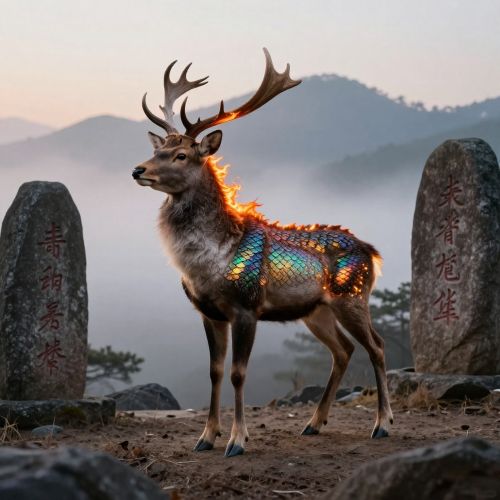
Inmyeonjo : The Human-Faced Bird of Korean Tradition
At a glance
| Description | |
|---|---|
| Origin | Korean Mythology |
| Classification | Hybrids |
| Family Members | N/A |
| Region | South Korea |
| Associated With | Longevity, Peace, Afterlife, Celestial guidance, Harmony |
The Mythlok Perspective
In Mythlok’s Perspective, Inmyeonjo stands out because it represents a quieter form of mythological power. Unlike dragons or war gods, its importance comes from symbolism, peace, and spiritual transcendence. The creature reflects how ancient Korea viewed death not as an ending, but as a journey between worlds guided by sacred beings. Its human face creates an unsettling yet fascinating contrast that symbolizes memory and identity surviving beyond mortality. In many ways, Inmyeonjo resembles the Egyptian Ba bird, which also combines human and avian traits to represent the soul. It also shares thematic similarities with the Indian Kalaviṅka and the Greek sirens, though Inmyeonjo remains far more serene and spiritual in character. The creature ultimately represents harmony between humanity, nature, and the divine cosmos.
Inmyeonjo
Introduction
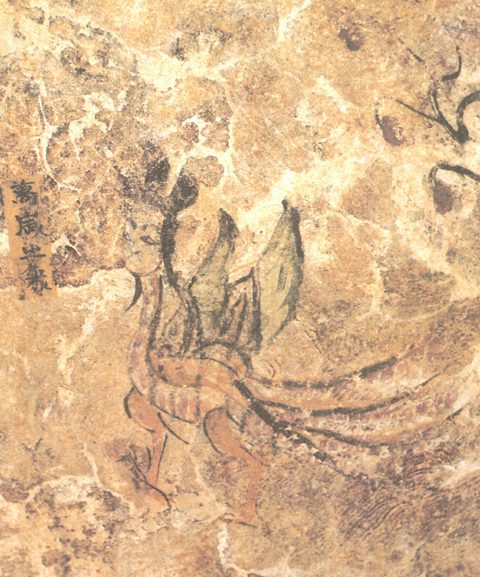
Inmyeonjo is one of the most unusual and visually striking creatures found in Korean tradition. Its name literally means “human-faced bird,” and the being is most famous for appearing in ancient Goguryeo tomb murals dating back to the Three Kingdoms period of Korea. Unlike monsters or malicious spirits commonly seen in folklore, Inmyeonjo was viewed as a sacred and auspicious figure connected to peace, immortality, and the spiritual world.
The creature occupies an important place in ancient Korean cosmology because it represents the connection between humanity and the heavens. Scholars often interpret its appearance in tombs as symbolic protection for the dead and guidance for souls entering the afterlife. Its presence within funerary art suggests that it was associated with divine harmony rather than fear.
Inmyeonjo also carries strong connections to Buddhist symbolism. Many historians compare it to the Kalaviṅka, a celestial bird from Buddhist tradition known for its beautiful voice and spiritual purity. Although the two are not identical, they share themes of transcendence, sacred music, and heavenly communication.
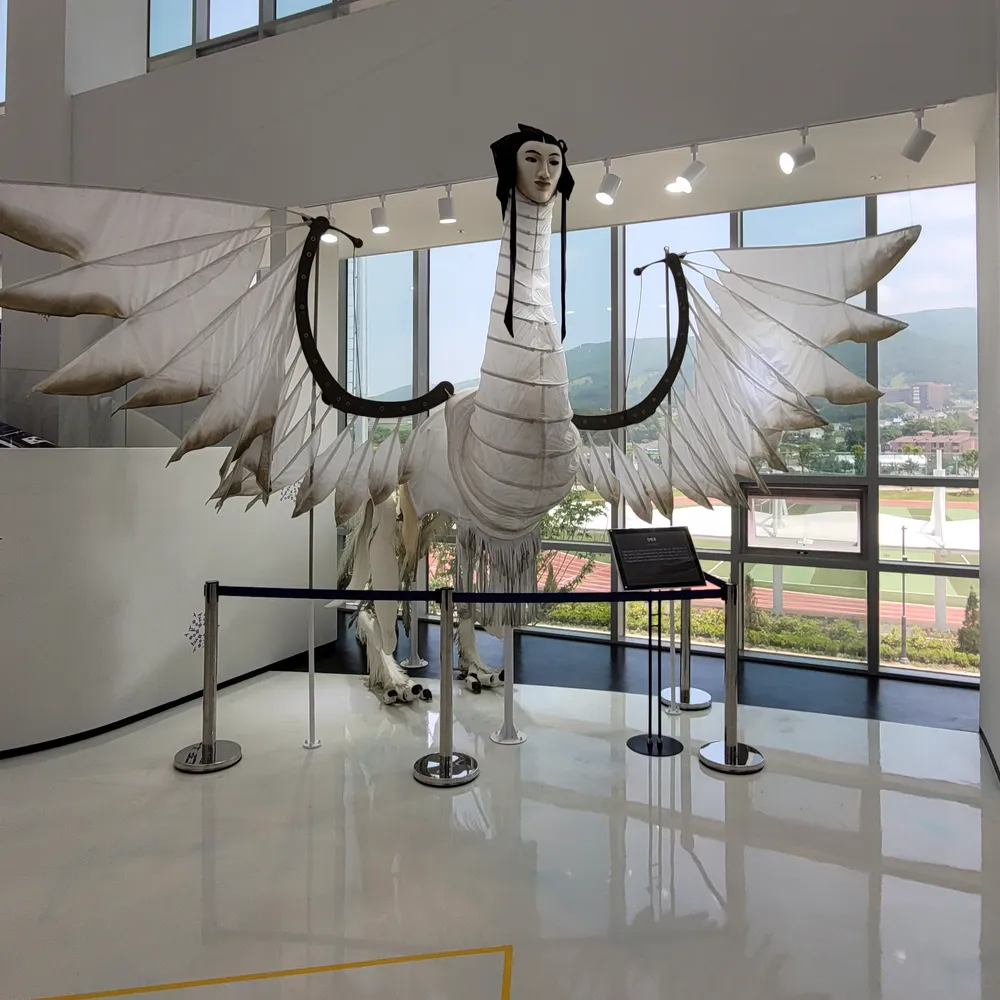
The figure gained international recognition during the opening ceremony of the 2018 Winter Olympics in PyeongChang, where a giant puppet based on Inmyeonjo appeared on stage. The performance introduced global audiences to this ancient Korean mythological being and transformed it into a modern internet phenomenon almost overnight.
Physical Traits
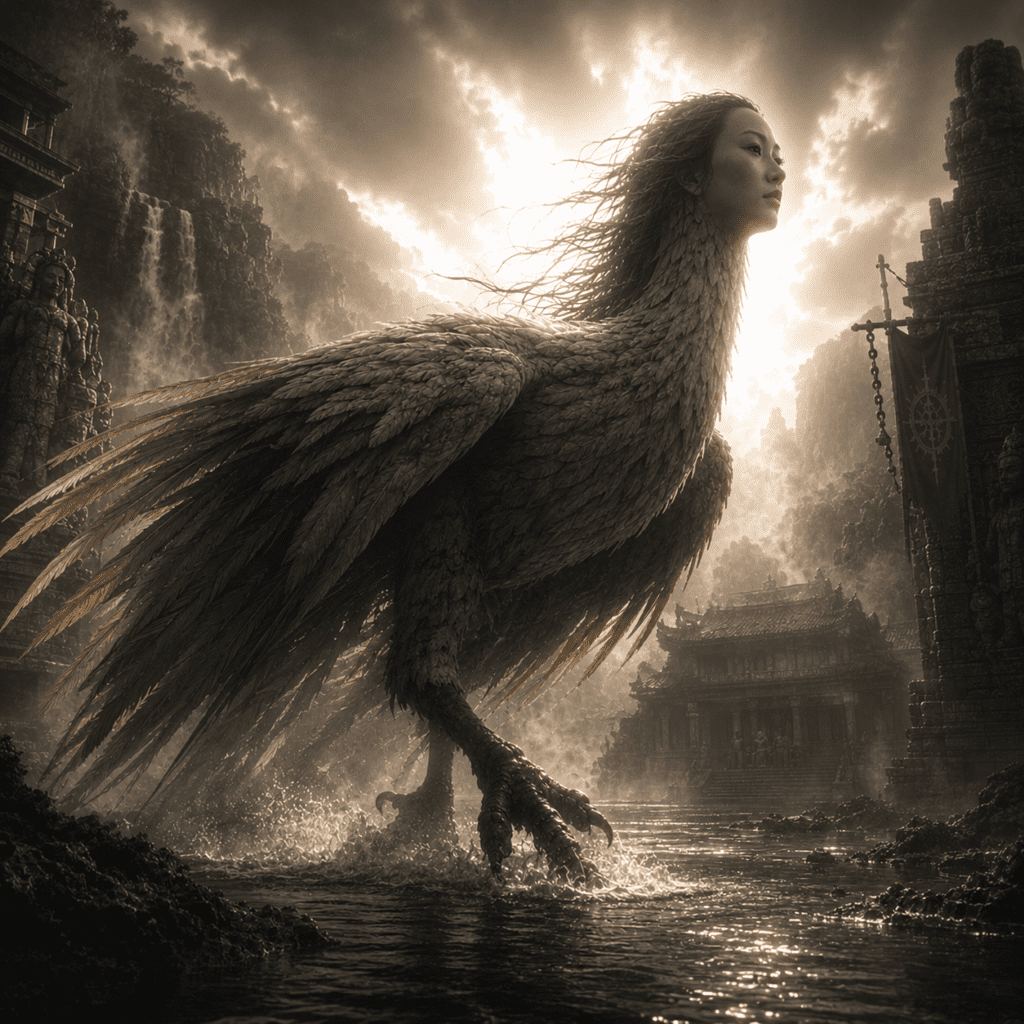
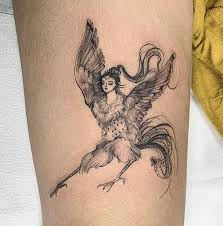
The defining feature of Inmyeonjo is its hybrid form. The creature possesses the body of a bird while retaining a distinctly human face. Ancient depictions usually portray the face as calm, elegant, and expressionless rather than frightening. This peaceful appearance reinforces its role as a divine or celestial being instead of a dangerous monster.
Most traditional artworks show Inmyeonjo with a long neck, broad wings, and flowing feathers. In several Goguryeo murals, the creature appears floating among clouds or celestial imagery, emphasizing its association with heaven and spiritual realms. Some representations depict the being with feminine facial features, though male versions also exist in historical art.
The bird’s body is often interpreted as resembling a crane or phoenix-like creature. In East Asian symbolism, birds frequently represent transcendence, spiritual freedom, and immortality. The human face adds another layer of meaning, suggesting consciousness, wisdom, and the preservation of identity after death.
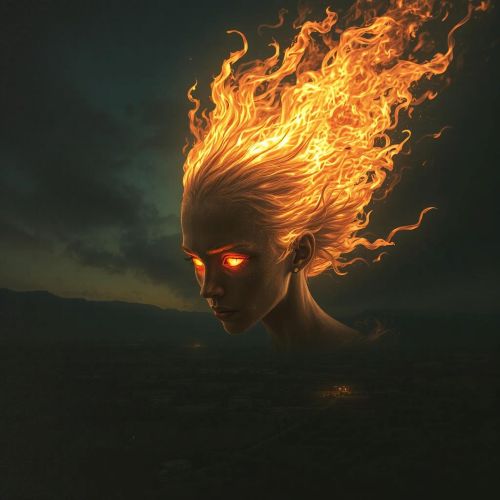
Modern adaptations sometimes portray Inmyeonjo as a white bird surrounded by golden light or mystical energy. These reinterpretations draw heavily from ancient imagery while adapting the creature for fantasy art, films, and digital media.
Family
Inmyeonjo does not possess a detailed family lineage like many gods or heroes found in world traditions. There are no myths describing its parents, offspring, or divine relatives. Instead, it exists as a symbolic spiritual being connected to ancient cosmology and funerary beliefs.
Its closest conceptual relatives appear in Buddhist and East Asian traditions. Scholars frequently compare Inmyeonjo with the Kalaviṅka, a sacred bird-human hybrid found in Buddhist texts and artwork across Asia. Similar comparisons are also made with celestial hybrid beings from Indian and Chinese traditions.
Within Goguryeo art, Inmyeonjo is commonly shown alongside other sacred creatures and heavenly symbols. These include divine birds, cosmic animals, and protective beings associated with peace and the afterlife. Rather than belonging to a family structure, the creature functions as part of a larger spiritual ecosystem representing cosmic balance.
Other names
The name Inmyeonjo is written as 인면조 in Korean and 人面鳥 in Hanja, both directly translating to “human-faced bird.” The straightforward meaning reflects the creature’s unmistakable appearance.
Some Goguryeo tomb murals identify similar beings with names such as Cheonchu and Mansei. These names carry meanings linked to eternal life and longevity. Cheonchu can be interpreted as “a thousand autumns,” while Mansei means “ten thousand years.” Both phrases symbolize immortality and enduring peace.
In religious discussions, Inmyeonjo is frequently associated with the Kalaviṅka of Buddhist tradition. While the two beings are not identical, their shared symbolism has led to comparisons in both academic and artistic studies.
Powers and Abilities
Inmyeonjo is primarily associated with spiritual and symbolic powers rather than physical combat abilities. Ancient beliefs describe the creature as a sacred messenger capable of connecting heaven and earth. This role made it an important figure in funerary art and spiritual symbolism.
One of its most important attributes is longevity. Traditional interpretations claim the creature lives for a thousand years and appears only during periods of peace and harmony. Because of this, Inmyeonjo became a symbol of stability and prosperity within ancient Korean culture.
The creature is also believed to guide souls through the afterlife. Its placement inside tomb murals suggests it served as a guardian or escort for the deceased, helping them safely transition into the celestial realm. The human face may symbolize the continuation of consciousness beyond death.
In Buddhist-influenced interpretations, Inmyeonjo is linked with divine sound and sacred wisdom. Similar to the Kalaviṅka, it is sometimes associated with heavenly music capable of bringing spiritual enlightenment and inner peace.
Modern retellings occasionally expand its powers further by associating the being with healing, blessings, and immortality. Although these additions are not always historically verified, they continue to shape how the creature is understood in contemporary fantasy culture.
Modern Day Influence
Inmyeonjo entered mainstream global culture during the 2018 PyeongChang Winter Olympics. A massive puppet inspired by the ancient creature appeared during the opening ceremony as a symbol of peace and unity. International audiences reacted strongly to its surreal appearance, and the creature quickly became a viral topic online.
Although many viewers initially found the design strange or unsettling, the performance sparked widespread curiosity about Korean history and mythology. Museums, historians, and cultural organizations used the sudden attention to educate people about Goguryeo tomb art and ancient Korean cosmology.
Today, Inmyeonjo appears regularly in digital art, fantasy illustrations, online memes, and video games. Artists often reinterpret the creature with dramatic lighting, elaborate feather patterns, and divine aesthetics inspired by East Asian mythology.
The creature’s popularity demonstrates how ancient mythological symbols can evolve in the modern world. What was once a sacred image painted inside ancient tombs has now become a recognizable cultural icon that connects traditional Korean heritage with global pop culture.
Related Images



Source
Choi, M. (2018, February 9). Human-faced bird becomes PyeongChang opening ceremony buzz word. The Korea Times. https://www.koreatimes.co.kr/pages/article.asp?newsIdx=243949
Dong-woo, C. (2018, February 10). Opening ceremony’s human-faced bird goes viral. Korea JoongAng Daily.
https://koreajoongangdaily.joins.com/2018/02/11/musicPerformance/Opening-ceremonys-humanfaced-bird-goes-viral/3044462.html
Inmyeonjo. (n.d.). Archives of Nethys: Pathfinder 2e.
https://2e.aonprd.com/Monsters.aspx?ID=1414&Weak=true&NoRedirect=1
Inmyeonjo. (n.d.). Mythos Journey Encyclopedia.
https://www.mythosjourney.com/encyclopedia/pages/inmyeonjo/
Inmyeonjo. (n.d.). Wikipedia.
https://en.wikipedia.org/wiki/Inmyeonjo
Korean Temple Guide. (2021, May 24). Gareungbinga and Gongmyeongjo – Kalavinka and Jivamjivaka. https://koreantempleguide.com/gareungbinga-and-gongmyeongjo-kalavinka-and-jivamjivaka-%EA%B0%80%EB%A6%89%EB%B9%88%EA%B0%80-%EA%B…
Yonhap News Agency. (2018, February 9). [Olympics] ‘Inmyeonjo’: PyeongChang opener’s human-faced bird goes viral. Yonhap News Agency.
https://en.yna.co.kr/view/AEN20180210005800315
Creatures and Beasts in World Mythology (publication metadata). (2025). ReferencePoint Press.
Frequently Asked Questions
What does Inmyeonjo mean?
Inmyeonjo literally means “human-faced bird” in Korean and refers to a sacred hybrid creature from ancient Korean tradition.
Is Inmyeonjo a god?
No, Inmyeonjo is generally considered a sacred spirit or celestial creature rather than a deity.
Why is Inmyeonjo associated with peace?
Ancient beliefs claimed the creature appeared only during times of harmony and prosperity, making it a symbol of peace.
Where was Inmyeonjo first depicted?
The earliest known depictions of Inmyeonjo appear in Goguryeo tomb murals from Korea’s Three Kingdoms period.
Why did Inmyeonjo become famous worldwide?
The creature gained global attention after appearing in the opening ceremony of the 2018 PyeongChang Winter Olympics.