Madayen (2016) : Jinn, Possession and Middle Eastern Folklore
| Description | |
|---|---|
| Country of Origin | Saudi Arabia |
| Language | Arabic |
| Genre | Horror |
| Cast | Hakeem Jomah, Abdullah Kurashi, Nadia Malaika, Khaled Yeslam |
| Directed by | Ayman Tamano |
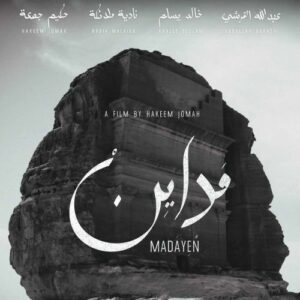
Madayen
Madayen (2016), directed by Abdulelah Alqurashi, draws heavily from the mythology of jinn and the supernatural traditions of the Arabian world. The film places its narrative within the cultural belief that unseen beings coexist with humans in deserts, ruins, and abandoned settlements. While the story follows a group of characters investigating mysterious events in an isolated location, the mythological framework of the film is shaped by centuries-old beliefs about the nature of jinn and their influence on the human world.
In Middle Eastern folklore, jinn are supernatural beings created from smokeless fire, a concept referenced in Islamic tradition and widely present in regional storytelling. Unlike simple ghosts or demons, jinn are believed to possess intelligence, free will, and complex societies of their own. They can exist unseen among humans, inhabit abandoned structures, or dwell in desolate environments such as deserts and ruins. The film reflects this traditional worldview by placing the supernatural events within a remote desert settlement where the boundary between human space and the domain of jinn becomes uncertain.
A major mythological idea explored in the film is the belief that certain places become spiritually dangerous when they are abandoned or disturbed. In many Middle Eastern traditions, ruins are considered possible dwelling places of jinn because they lie outside the protection of human activity. The setting of the film echoes this belief by presenting the desert landscape not just as an empty environment but as a space where ancient presences remain hidden. The name “Madayen” itself evokes imagery of forgotten settlements, reinforcing the idea that history and supernatural forces are intertwined.
Another recurring mythological theme in the film is spirit possession. Across Arabian folklore, jinn are often believed to interact with humans by influencing their thoughts, emotions, or physical bodies. In traditional narratives, such encounters may occur when individuals unknowingly trespass into a place inhabited by jinn or violate unseen boundaries. The film interprets these beliefs through characters who begin to experience disturbing psychological and supernatural changes, suggesting the influence of unseen entities.
The portrayal of jinn in the film reflects the ambiguity that surrounds them in traditional folklore. They are not always depicted purely as evil creatures. Instead, they represent forces that can be unpredictable, sometimes harmful but sometimes merely territorial. Many traditional stories warn that disturbing their space, mocking them, or entering forbidden places at night can provoke their anger. This idea appears throughout the narrative, where curiosity and intrusion lead characters deeper into supernatural danger.
The desert itself plays an important mythological role in the story. In many Middle Eastern legends, deserts are viewed as liminal spaces where the human world meets the unseen. Travelers historically told stories of voices in the wind, shadowy figures, or abandoned settlements inhabited by spirits. These landscapes become symbolic of isolation, where natural silence allows the supernatural to emerge more clearly.
The film also reflects cultural beliefs about the vulnerability of humans when confronted with forces beyond their understanding. Unlike heroes in mythological epics who actively battle supernatural beings, the characters in Madayen encounter the spirit world through fear, confusion, and psychological tension. This portrayal aligns with many folkloric stories in which the best defense against jinn is caution and respect rather than confrontation.
Another subtle mythological element lies in the emphasis on belief and skepticism. Throughout Middle Eastern folklore, encounters with jinn are often dismissed by outsiders but accepted within local storytelling traditions. The film mirrors this cultural tension by presenting characters who struggle to reconcile modern rational explanations with the possibility that the events they witness belong to an older supernatural reality.
From a mythological perspective, Madayen functions as a modern reinterpretation of long-standing Arabian supernatural beliefs. Rather than relying on invented monsters, the film draws from cultural traditions that portray the world as inhabited by invisible beings with their own domains and rules. The presence of jinn, the dangers of abandoned places, and the possibility of possession all reflect themes deeply rooted in Middle Eastern folklore.
By grounding its supernatural elements in these traditions, the film highlights how ancient beliefs about the unseen world continue to influence modern storytelling. The mythological ideas surrounding jinn remain among the most enduring supernatural concepts in Arabian culture, shaping narratives that explore the fragile boundary between the visible world and the hidden realm that lies beyond human perception.