Korean Mythology
Korean mythology encompasses a diverse collection of creation stories, foundation legends, shamanic narratives, folktales, ancestral traditions, and supernatural beliefs that developed across the Korean Peninsula. Rather than forming a single religious system, these traditions were shaped by indigenous beliefs as well as Buddhism, Confucianism, and regional folk practices. Shamanic traditions remain particularly important to Korean mythology, preserving stories about gods, spirits, ancestors, heroes, and the supernatural forces believed to influence human life.
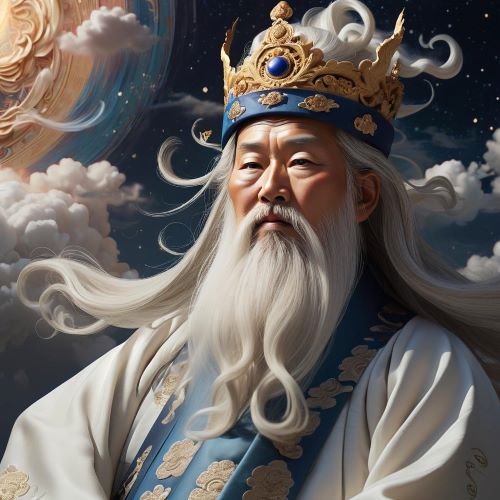
One of Korea’s best-known foundation stories is the legend of Dangun, traditionally regarded as the founder of Gojoseon, an early Korean kingdom. According to the Samguk Yusa, Dangun was born to Hwanung, a heavenly figure who descended to the human world, and a woman who had been transformed from a bear. The story of the bear and tiger who seek to become human is an important part of the legend, emphasizing transformation, endurance, and the relationship between the human and supernatural worlds. Dangun’s story has played an important role in later understandings of Korean cultural origins, although its historical interpretation remains distinct from its mythological significance.
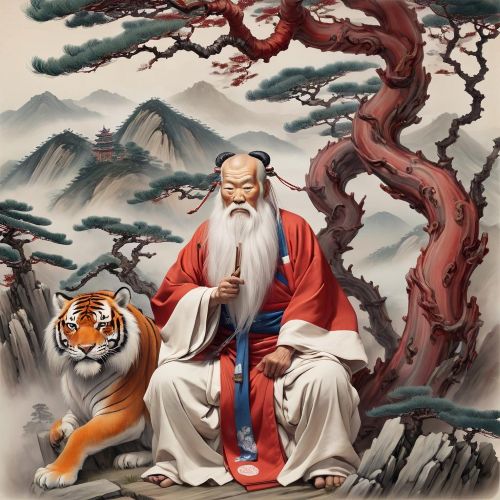
Korean folk religion traditionally recognizes a wide variety of spiritual beings and local deities. Mountains, rivers, trees, villages, and households could be associated with protective or supernatural powers. Sanshin, or mountain spirits, are particularly prominent in Korean religious traditions, often depicted alongside tigers. Household deities were also associated with important parts of domestic life. These traditions demonstrate how the sacred could be encountered not only in temples and formal religious institutions but also in landscapes and ordinary homes.
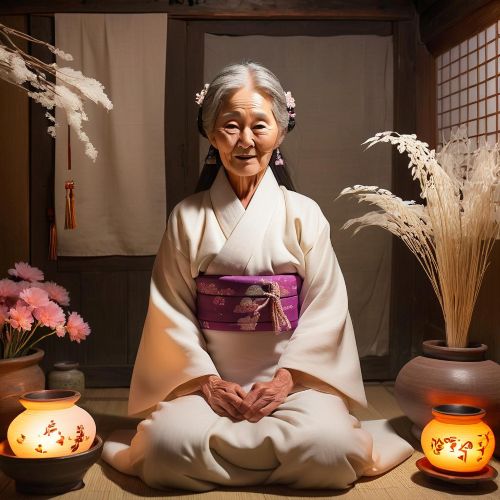
Korean shamanism, traditionally practiced by specialists known as mudang, provides an important setting for these beliefs. Shamans perform rituals known as gut, in which spirits and deities are invoked through music, dance, offerings, prayer, and ritual performance. Depending on the purpose, a gut may seek healing, protection, good fortune, reconciliation with the dead, or relief from spiritual disturbances. Mudang historically served as intermediaries between human communities and the spirit world, although Korean shamanism has never functioned as a centralized religion with a single official doctrine.
Korean mythology also contains powerful regional traditions. On Jeju Island, for example, extensive collections of shamanic myths known as bonpuri recount the origins and activities of deities. Stories such as the Igong Bonpuri connect gods, humans, death, the underworld, and the responsibilities of supernatural beings. These narratives differ considerably from the better-known foundation myths of mainland Korea and demonstrate the regional diversity of Korean mythology.
Heroes and legendary rulers occupy another important place in Korean tradition. Jumong, the legendary founder of Goguryeo, appears in accounts that combine heroic mythology with traditions surrounding an early Korean kingdom. His story includes divine ancestry, extraordinary abilities, exile, conflict, and the founding of a kingdom. Such narratives helped connect political origins with ideas of extraordinary ancestry and leadership.
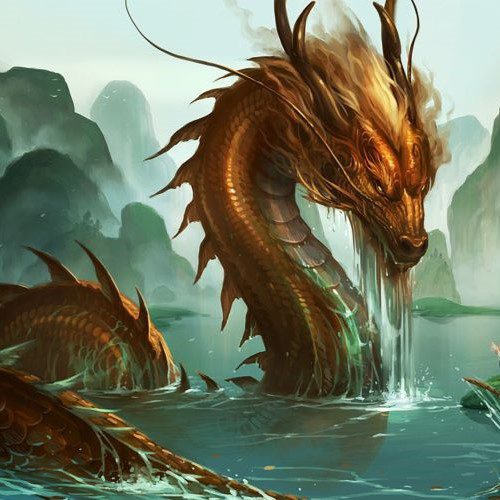
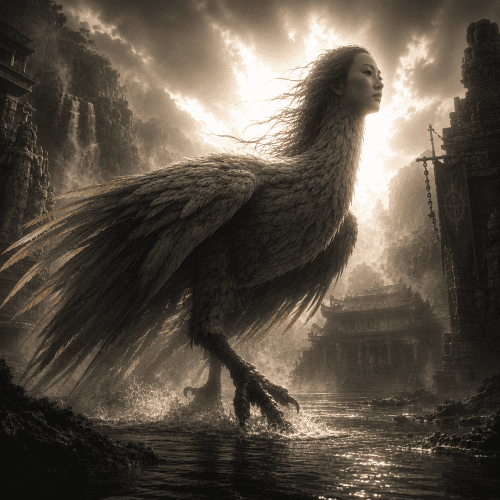
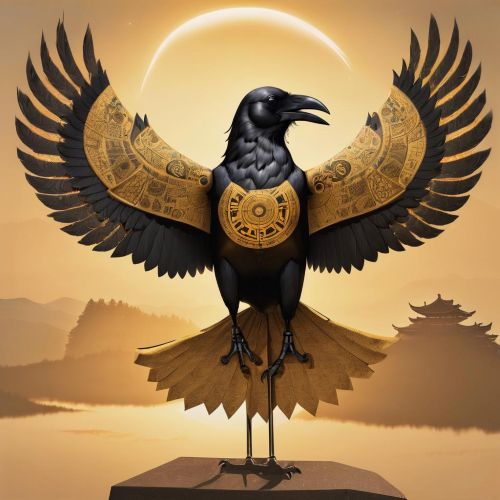
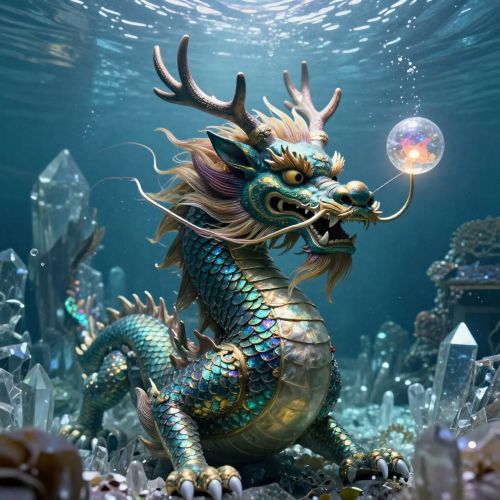
Animals are also prominent throughout Korean mythology and folklore. The tiger is particularly significant, appearing both as a feared creature and as a symbolic guardian associated with mountains. Dragons, snakes, birds, and other animals likewise appear in stories concerning power, protection, transformation, and supernatural forces.
Korean mythology has continued to evolve alongside the country’s religious and cultural history. Buddhism became an important force on the peninsula from the fourth century onward, while Confucianism became especially influential during the Joseon dynasty, profoundly shaping ancestor rituals and social values. Shamanic and folk traditions nevertheless continued alongside these traditions.
Today, Korean mythology survives through rituals, oral traditions, literature, museums, television, film, comics, games, and contemporary art. Its enduring richness comes from the coexistence of regional stories and multiple religious traditions, preserving a cultural landscape in which gods, ancestors, spirits, heroes, animals, and humans remain deeply interconnected.