

Sigurd’s Dragon Blood Boon : The Blessing That Shaped a Norse Hero
Listen
At a glance
| Description | |
|---|---|
| Mythology | Norse Mythology |
| Bestowed Upon | Sigurd |
| Granted By | Contact with the blood of the dragon Fafnir after slaying him |
| Primary Effect | Ability to understand the speech of birds and gain supernatural insight into hidden intentions |
| Conditions Attached | The knowledge reveals Regin’s planned betrayal and binds Sigurd to the cursed treasure of Fafnir, |
Mythlok Perspective
From the Mythlok perspective, Sigurd’s Dragon Blood Boon is not a blessing freely bestowed but a dangerous threshold crossed. By tasting the blood of Fafnir, Sigurd gains insight, foresight, and the ability to understand the language of birds, yet this knowledge carries isolation and inevitability. Wisdom here is sharpened by violence and paid for with innocence. Across cultures, this mirrors figures like Gilgamesh gaining knowledge through loss or the Irish hero Fionn mac Cumhaill burning his thumb on the Salmon of Knowledge. In each case, enlightenment is accidental, irreversible, and burdensome, marking the hero as forever set apart from ordinary humanity.
Blessing of Dragon Blood Wisdom
Introduction
In Norse heroic tradition, power is rarely granted as a divine reward. Instead, it emerges through ordeal, courage, and the unpredictable workings of fate. Sigurd’s encounter with the dragon Fafnir represents one of the most powerful transformations in Norse legend, not because it grants him invincibility, but because it awakens a deeper form of knowledge. Through contact with the dragon’s blood, Sigurd gains supernatural insight and prophetic awareness that elevate him beyond ordinary warriors.
Sigurd (Old Norse: Sigurðr) stands as the greatest dragon slayer of the Volsung saga, a hero whose life is shaped by destiny long before he confronts the dragon. His encounter with Fafnir is not simply a victory over a monster. It is a moment of transformation where a mortal hero briefly touches the hidden knowledge of the mythic world. In Norse cosmology, such power is never freely given. It must be earned through confrontation with chaos, and it inevitably carries consequences.
Mythological Background
The story of Sigurd’s transformation appears primarily in the Völsunga Saga and related poems of the Poetic Edda, which preserve ancient Scandinavian heroic traditions. Sigurd belongs to the Volsung lineage, a family deeply entangled with divine influence and tragic destiny. The saga traces this lineage back to Odin, whose actions shape the fate of Sigurd’s ancestors.
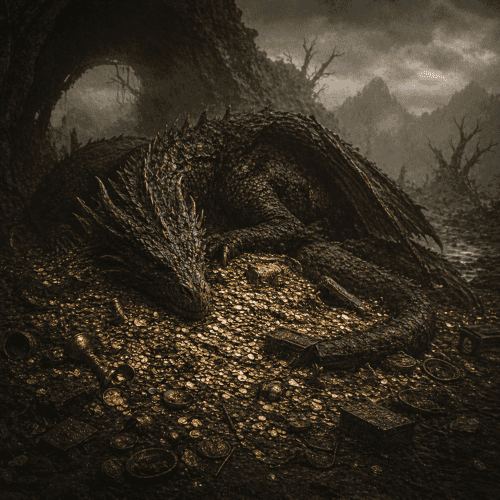
The dragon Fafnir was not originally a dragon. He was once a dwarf who became consumed by greed after acquiring a cursed hoard of gold that included the ring Andvaranaut. The curse attached to the treasure twisted his nature and transformed him into a monstrous serpent-like dragon that guarded the gold on the desolate plain of Gnitaheath.
Sigurd is raised by the smith Regin, who secretly seeks revenge against his brother Fafnir. Regin reforges the sword Gram from the broken blade once carried by Sigurd’s father Sigmund and convinces the young hero to confront the dragon.
Sigurd digs a pit along the dragon’s path and waits beneath the earth. When Fafnir crawls across the ground above him, Sigurd thrusts the sword upward and pierces the dragon’s heart. As the creature dies, it warns Sigurd that the cursed treasure will ultimately bring him betrayal and death. This prophecy reflects a central theme of Norse myth: victory and doom often arrive together.
Granting of the Boon/Blessing
Sigurd’s transformation begins after the dragon’s death. Regin instructs him to cook the dragon’s heart as a reward. While roasting the heart over a fire, Sigurd burns his finger on the hot flesh and instinctively places it in his mouth. At that moment, the dragon’s blood touches his tongue and triggers a supernatural change. Sigurd suddenly understands the language of birds. The birds perched nearby begin speaking about Regin’s hidden intentions, revealing that the smith plans to kill Sigurd and take the treasure for himself.
This unexpected knowledge allows Sigurd to act before the betrayal occurs. He kills Regin and claims the treasure hoard for himself. Unlike later European versions of the story, the Norse tradition emphasizes knowledge rather than physical invulnerability. The dragon’s blood does not turn Sigurd’s body into armor. Instead, it grants him a brief connection to hidden truths and the prophetic voices of the natural world.
Nature of the Boon/Blessing
The boon granted by the dragon’s blood manifests primarily as supernatural perception. Through this gift, Sigurd gains the ability to hear and understand birds, creatures that often function as messengers of hidden knowledge in Norse mythology. This ability gives Sigurd insight into deception and betrayal. The birds reveal Regin’s treachery, allowing the hero to escape a deadly trap.
In symbolic terms, the dragon’s blood temporarily lifts the veil between the human world and the deeper cosmic order. Sigurd becomes a figure who briefly accesses the wisdom that normally belongs to gods and prophetic beings. However, this insight does not free him from fate. Even though Sigurd learns of Regin’s betrayal, he cannot escape the larger destiny that awaits him later in the saga.
Recipients and Key Figures
Sigurd is the primary recipient of the dragon blood’s transformative power, but several figures shape the event and its consequences. Fafnir serves as the unwilling source of the boon. His transformation into a dragon embodies the corrupting influence of greed, and his death releases the power contained within his blood. Regin, who intended to manipulate Sigurd into killing Fafnir, becomes the first victim of the knowledge gained through the dragon’s blood.
Brynhild, the valkyrie whom Sigurd later awakens from magical sleep, becomes another central figure in his destiny. Their relationship ultimately becomes entangled in deception and betrayal. Gudrun and her royal family later play a decisive role in the tragedy that leads to Sigurd’s death, showing that even heroes touched by supernatural insight cannot escape the forces of fate.
Effects and Consequences
The immediate result of Sigurd’s transformation is wisdom rather than physical power. His understanding of birds allows him to see hidden dangers and avoid immediate betrayal. However, the deeper consequences of the dragon’s blood lie in its connection to the cursed treasure. By claiming Fafnir’s hoard, Sigurd becomes entangled in the curse attached to the gold. This curse eventually contributes to the conflicts and betrayals that lead to his death. In Norse storytelling, such outcomes reinforce the belief that fate cannot be avoided, even by the greatest heroes.
Symbolism and Spiritual Meaning
Sigurd’s encounter with dragon blood symbolizes transformation through confrontation with chaos. Dragons in Norse mythology often represent greed, destruction, and corrupted power. By defeating Fafnir, Sigurd overcomes these forces and briefly gains access to hidden wisdom.
The ability to understand birds reflects communication with the unseen order of the world. Birds often appear in Norse myth as carriers of prophetic knowledge, linking the human realm with deeper cosmic truths. Yet the episode also reinforces the Norse belief that no knowledge or power can overturn destiny. Sigurd’s transformation elevates him, but it also draws him deeper into the tragic path foretold by prophecy.
Cultural Impact and Legacy
Sigurd’s encounter with dragon blood became one of the most influential moments in Norse heroic literature. The story spread widely across the Viking world and appeared in visual art, including runestones and carvings that depict the dragon-slaying episode. Over time, the story traveled beyond Scandinavia and evolved into new forms. In continental Europe, the hero appeared as Siegfried in the medieval German epic Nibelungenlied, where the dragon blood episode took on a different interpretation.
Even today, the motif of gaining wisdom or transformation through dragon slaying continues to influence fantasy literature, games, and modern storytelling. Sigurd’s story endures because it reflects a central truth of Norse myth: victory over chaos may bring glory, but it never frees a hero from fate.


Source
Wikipedia contributors. (2025). Sigurd. In Wikipedia. Retrieved from https://en.wikipedia.org/wiki/Sigurd
Woods, C. (2025, August 1). Sigurd Hero of Norse Mythology: 6 Key Facts. Mythology.Guru. Retrieved from https://mythology.guru/sigurd-hero-of-norse-mythology-6-key-facts/
Byock, J. (1990). The Saga of the Volsungs: The Norse Epic of Sigurd the Dragon Slayer. University of California Press.
Larrington, C. (2014). The Poetic Edda. Oxford University Press.
Orchard, A. (1997). Dictionary of Norse Myth and Legend. Cassell.
Simek, R. (2007). Dictionary of Northern Mythology. D.S. Brewer.
Ghosh, S. (2019). Myth and Heroism in Norse Literature. Routledge.
Frequently Asked Questions
What happened to Fafnir’s treasure after Sigurd killed the dragon?
After killing Fafnir, Sigurd claimed the dragon’s treasure hoard, which included the cursed ring Andvaranaut. The treasure carried a powerful curse that eventually led to betrayal, tragedy, and Sigurd’s death later in the Volsung saga.
Who granted Sigurd the Dragon Blood Boon?
The boon is granted through fate and ordeal, activated by Sigurd’s contact with Fafnir’s blood rather than a god’s direct intervention.
What powers did Sigurd gain from the Dragon Blood Boon?
After tasting the blood of the dragon Fafnir, Sigurd gains the supernatural ability to understand the speech of birds, who warn him of the smith Regin’s plan to betray and kill him. This gift also grants him insight into hidden dangers and treachery, allowing him to act before the betrayal occurs.
Why did Sigurd kill Regin after slaying Fafnir?
After tasting the dragon’s blood, Sigurd understood the speech of nearby birds. The birds warned him that Regin planned to kill him and steal the dragon’s treasure, prompting Sigurd to kill Regin before the betrayal could occur.
Why did Sigurd taste the dragon’s blood?
Sigurd accidentally tasted the dragon’s blood while roasting Fafnir’s heart for the smith Regin. He burned his finger while checking if the heart was cooked and instinctively placed it in his mouth, which allowed the dragon’s blood to grant him the ability to understand birds.