


Beydo : The Zapotec God of Seeds, Wind and Abundance
At a glance
| Description | |
|---|---|
| Origin | Zapotec Mythology |
| Classification | Gods |
| Family Members | N/A |
| Region | Mexico |
| Associated With | Seeds, Wind, Nature, Seed distribution, Fertility |
The Mythlok Perspective
In Mythlok’s Perspective, Beydo represents an interesting intersection between nature and prosperity in Zapotec religious thought. His association with seeds and wind finds a parallel in Vayu, the Indian deity of wind, although their domains differ considerably. While Vayu embodies the movement and power of air, Beydo is associated with the natural processes through which seeds spread and life regenerates. His additional connection with riches and well-being makes his identity particularly intriguing. Both traditions demonstrate how natural forces could acquire divine significance, but Beydo reminds us that abundance often begins with something as small as a seed carried by the wind.
Beydo
Introduction
Beydo is a deity associated with Zapotec religious traditions of Oaxaca, Mexico. He is commonly described in modern mythology references as a god of seeds and wind, with a particular connection to the natural processes that allow plant life to spread and regenerate. Also known as Mbeydo, Beydo represents the relationship between natural forces, fertility and the continuation of life.
The Zapotec civilization developed in the Valley of Oaxaca, with major urban and ceremonial centres such as Monte Albán and Mitla. Its religious traditions reflected a close relationship with the natural environment, particularly the forces that influenced agriculture, rainfall, fertility and the availability of food. Deities were not simply distant supernatural figures; they represented powers that communities believed could influence their survival and prosperity.
Beydo’s identity, however, requires some historical qualification. Popular accounts associate him with seed distribution and wind, while research into regional Zapotec calendars identifies a deity named Beydo with riches and well-being. These descriptions may reflect different regional traditions or historical interpretations rather than a single universally established identity.
Unlike prominent Zapotec deities such as Cocijo, associated with rain and lightning, Beydo has relatively little surviving narrative material. His importance is therefore best understood through the natural and agricultural associations attributed to him, while recognising the limitations of the historical evidence.
Physical Traits
There is no reliably established physical description of Beydo in the available historical and scholarly material. No consistent account identifies his facial features, clothing, bodily appearance, animal form or distinctive divine attributes.
This absence is not particularly unusual in the study of ancient Zapotec religion. Michael Lind’s research, Ancient Zapotec Religion: An Ethnohistorical and Archaeological Perspective, explains that much of what researchers know about Zapotec deities comes from colonial documents and archaeological evidence. Unlike some other Mesoamerican traditions, there is no comprehensive surviving visual catalogue that establishes the appearance of every Zapotec deity.
Beydo is consequently understood more through his attributed functions than through an established physical identity. Modern descriptions connect him with seeds, wind and the regenerative forces of nature. These associations suggest a deity whose significance lies in natural processes rather than a recognisable human or animal form.
Family
Beydo’s divine genealogy remains uncertain. The available references do not establish a universally accepted account of his parents, spouse, siblings or children. The wider Zapotec religious tradition includes deities with more clearly recorded associations and relationships. Cocijo, for example, occupies an important position in traditions concerning rain and lightning, while Pitao Cozobi is associated with maize and agricultural abundance. However, no dependable evidence establishes a direct family relationship between these deities and Beydo.
Some regional Zapotec traditions preserve complex relationships between natural spirits and ancestral or divine figures. These accounts demonstrate that Zapotec religious beliefs were not necessarily uniform across different communities. Nevertheless, similarities in their natural associations should not be mistaken for proof of shared divine ancestry.
Other names
Beydo is also identified as Mbeydo in modern references to Zapotec religious traditions. Both Godchecker and the Spanish-language reference Dioses y Diosas use Mbeydo as an alternative name for the deity. The precise historical relationship between these spellings is not firmly established. Zapotec languages contain substantial regional and linguistic variation, and the recording of Indigenous names in colonial and later sources often introduced differences in spelling and pronunciation.
It is therefore reasonable to recognise Mbeydo as an alternative name used in modern accounts, while avoiding unsupported claims about its exact linguistic origin. The name Beydo is the more commonly encountered form in English-language references, particularly those describing the deity’s associations with nature, seeds and wind.
Powers and Abilities
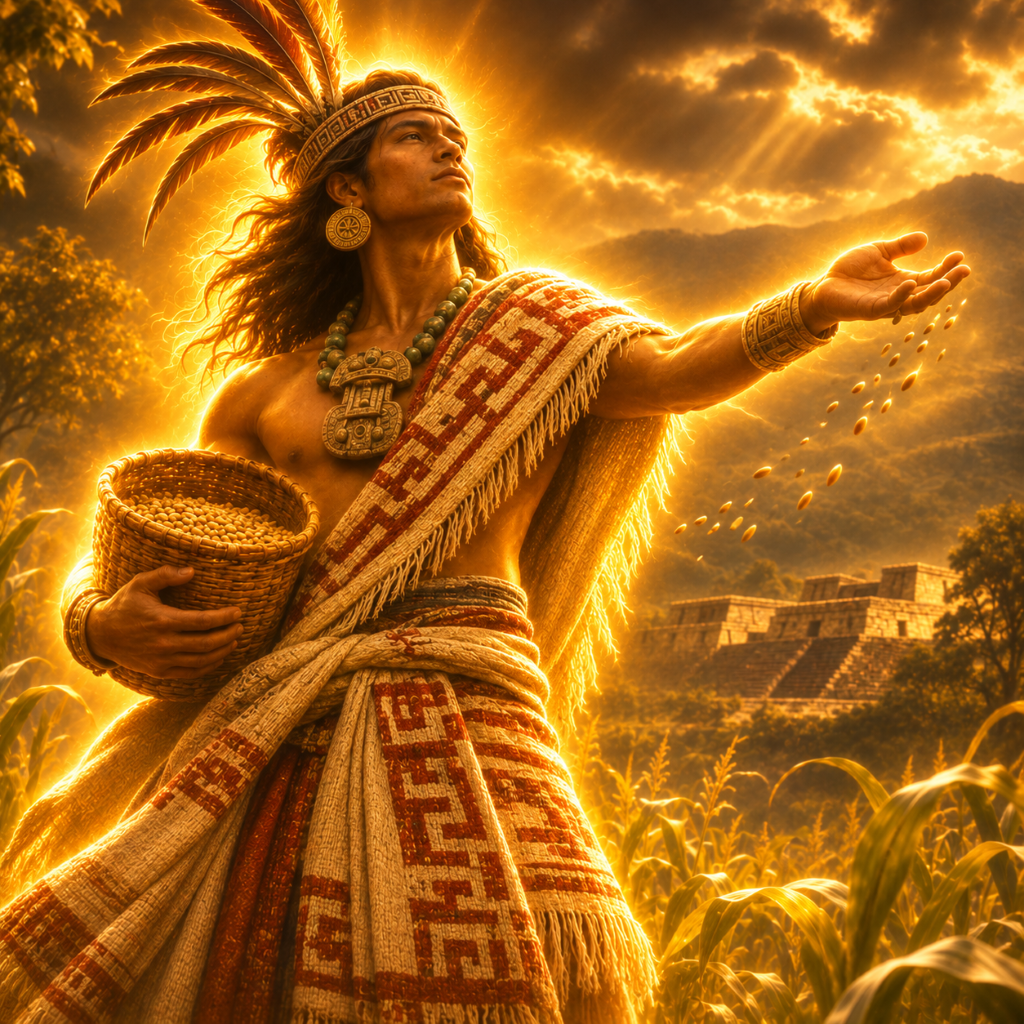
Beydo’s attributed powers centre on the natural processes that sustain vegetation, fertility and the continuation of life. Modern descriptions particularly associate him with seeds and wind, although the precise extent of these powers is not established through surviving narrative accounts. One of his most frequently mentioned associations is seed distribution. Seeds represent the potential for future growth, while their movement across different landscapes allows vegetation to spread beyond its original location. In this interpretation, Beydo represents the natural forces that carry life into new environments.
His association with wind complements this role. Wind can transport seeds, influence vegetation and contribute to the movement of natural elements across the landscape. Although this connection makes symbolic sense, the available evidence does not establish a detailed ancient myth explaining how Beydo exercised such powers. Beydo is also associated with fertility and regeneration in modern accounts. These interpretations connect him with the recurring processes through which vegetation grows, decays and returns. Rather than representing creation as a single event, he symbolises the continuing renewal of the natural world.
An additional dimension emerges from David Tavárez’s research into Zapotec ritual traditions. His comparative study of regional deities identifies Beydo in the Loxicha calendar as a deity of riches and well-being, associated with Pitao Paa, a Zapotec deity connected with wealth. This provides an important alternative perspective on Beydo’s religious identity. The association suggests that his significance may have extended beyond vegetation and seed distribution. However, the relationship between the different descriptions should not be treated as fully resolved.
Some modern references also associate Beydo with the fourth position in a nine-day ritual cycle. This claim requires caution, as the commonly cited reference for it confusingly identifies the cycle as Maya rather than Zapotec. It should not be presented as an established fact about Beydo without stronger supporting evidence.
Modern Day Influence
Beydo’s presence in contemporary culture is primarily educational and historical. He appears in modern reference works discussing Zapotec religious traditions, where his associations with seeds, wind and nature introduce readers to the wider relationship between Indigenous spirituality and the natural environment. His significance also benefits from continuing academic research into Zapotec religious history. Studies by Michael Lind and David Tavárez have helped demonstrate the complexity of Zapotec cosmology, including its regional variations, ritual calendars and relationships between different sacred beings.
These studies are particularly important because the Zapotec religious tradition cannot be reduced to a single uniform pantheon. Beliefs differed between communities, and historical records frequently contain variations in divine names and descriptions. Beydo’s differing associations illustrate why these regional distinctions matter. For modern audiences, Beydo can also provide an interesting starting point for understanding Indigenous perspectives on ecological relationships. His commonly described connection with seeds and wind offers a symbolic reminder of how natural processes sustain plant life and agricultural landscapes.
However, there is limited evidence that Beydo is currently the focus of widespread public festivals, organised worship or major popular cultural representations. His contemporary recognition remains largely connected to educational discussions of Zapotec history and mythology. Beydo’s place in the Zapotec religious tradition ultimately reflects the importance of studying lesser-known deities without forcing them into categories that the surviving evidence cannot support. His associations with nature, seeds, wind and abundance offer a glimpse into a religious worldview in which the forces sustaining everyday life could also hold sacred significance.
Related Images



Source
Almere Read, K. (2002). Mesoamerican mythology. Oxford University Press.
Cartwright, M. (2013, October 28). Zapotec civilization. World History Encyclopedia. https://www.worldhistory.org/Zapotec_Civilization/
Dioses y Diosas. (n.d.). Beydo, dios de la naturaleza zapoteca. https://diosesydiosas.com/mitologia-zapoteca/beydo
Godchecker. (n.d.). Beydo: Zapotec god of nature. https://www.godchecker.com/zapotec-mythology/explore/
Historic Mysteries. (2022, August 13). Zapotec: The first urban Mesoamericans https://www.historicmysteries.com/archaeology/zapotec/26242/
Markman, P. T. (1971). The calendar of the Loxicha villages [Master’s thesis, University of North Carolina at Chapel Hill]. https://archaeology.sites.unc.edu/wp-content/uploads/sites/187/2020/09/Markman-1971-MA-RLA.pdf
Miller, M. E. (2012). The art of Mesoamerica: From Olmec to Aztec (5th ed.). Thames & Hudson.
Study.com. (n.d.). Zapotec people, civilization & culture. https://study.com/academy/lesson/zapotec-people-civilization.html
Frequently Asked Questions
Who is Beydo in Zapotec mythology?
Beydo is a Zapotec deity associated with seeds, wind and natural forces. Some scholarly research also identifies him with riches and well-being in regional traditions.
What is Beydo the god of?
Beydo is commonly described as the god of seeds, wind and nature, symbolising seed distribution and the natural processes that sustain plant life.
Is Beydo also known as Mbeydo?
Yes. Mbeydo is an alternative name associated with Beydo in modern references to Zapotec religious traditions.
What are Beydo's powers and abilities?
Beydo is associated with seed distribution, wind, natural fertility and regeneration. Regional research also connects him with wealth and well-being.
Where does Beydo originate from?
Beydo belongs to Zapotec religious traditions originating in Oaxaca, a region in southern Mexico known for its ancient Indigenous civilizations.


