


Mantiyanak : The Vengeful Spirits of Philippine Folklore
| Description | |
|---|---|
| Origin | Philippine Mythology |
| Nature | Malevolent |
| Notable Members | N/A |
| Symbolism | Maternal mortality, Grief, Interrupted motherhood, Abandonment, Vengeance |
| Epics | Oral Folklore |
Mythlok Perspective
From the Mythlok lens, Mantiyanak reflects the deep-rooted anxieties surrounding maternal death, abandonment and unresolved grief in Philippine folklore. Much like the Pontianak of Malay mythology, she emerges from traditions surrounding women who die during childbirth, transforming maternal tragedy into supernatural vengeance. However, Mantiyanak’s regional interpretations, particularly her hostility towards men, give her a distinct identity. Together, these spirits reveal how neighbouring Southeast Asian cultures transformed similar experiences into different supernatural narratives.
Mantiyanak
Introduction
Mantiyanak is a class of female supernatural spirits found in Philippine folklore, particularly in the traditions of Mindanao. Associated with death during pregnancy and childbirth, these beings occupy a disturbing place in the supernatural beliefs of communities such as the Bagobo and Mandaya. Their stories revolve around maternal death, unresolved grief and vengeance, with different communities describing their appearance and behaviour in distinct ways.
The Mantiyanak is particularly feared for its hostility towards men. In several accounts, the spirit holds a husband or the wider male population responsible for the woman’s death during childbirth. Some later Mindanaoan descriptions portray Mantiyanak as a terrifying female apparition with an opening in her abdomen, where an unborn child remains visible. Other accounts describe a spirit with unusual physical characteristics, long claws and a haunting cry. These variations make Mantiyanak an important example of how beliefs surrounding childbirth, death and the supernatural developed within Philippine oral traditions.
Physical Description
The physical appearance of Mantiyanak differs across regional traditions. One of the earliest detailed descriptions appears in Laura Watson Benedict’s 1916 ethnographic study, A Study of Bagobo Ceremonial, Magic and Myth. In the Bagobo tradition, Mantiyanak is described as a female spirit with a breast that has been torn open and unusually long claws. Her presence is associated with eerie cries heard during the night, resembling the sounds of a distressed animal.
A different description appears in contemporary accounts of Mindanaoan folklore. Here, Mantiyanak is depicted with a deep opening across her abdomen, within which her unborn child remains. This disturbing physical feature reflects the circumstances surrounding her supernatural existence and connects her appearance directly to childbirth and maternal death.
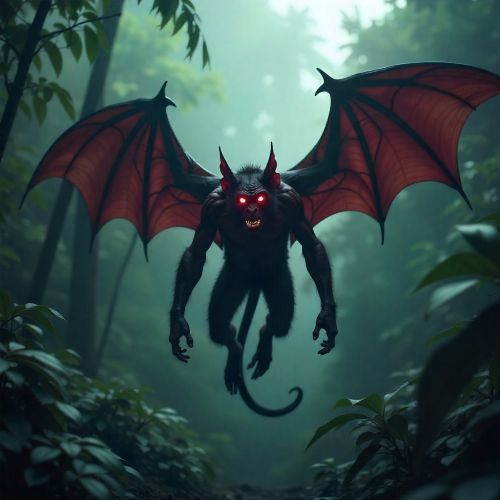
Some modern interpretations also portray Mantiyanak as a flying head accompanied by exposed internal organs. These descriptions resemble other supernatural traditions found across Southeast Asia, although they should not be treated as universal characteristics of every Mantiyanak.
Mythological Context
Mantiyanak belongs to a wider tradition of supernatural beliefs surrounding women who die during pregnancy or childbirth. In societies where childbirth carried considerable risks, maternal death could leave behind profound grief and questions about responsibility. Folklore transformed these experiences into supernatural narratives that explained the continued presence of the dead among the living.
Among the Bagobo, Mantiyanak is associated with the buso, a category of spirits that can interfere with human affairs. Her anger is directed particularly towards her husband, whom she blames for her death. The Mandaya tradition also associates Mantiyanak with a spirit known as mamang.
In later Mindanaoan accounts, the spirit’s hostility becomes more explicitly directed towards men. She is described as attacking male victims, sometimes mutilating their genitals as an act of vengeance. These accounts demonstrate how different communities developed related but distinct explanations of the Mantiyanak phenomenon.
Origins
The origins of Mantiyanak are closely connected to childbirth-related death in the folklore of southern Philippines. According to the Bagobo tradition documented by Benedict, a woman who dies while giving birth may become a Mantiyanak. Her spirit does not find peace and instead becomes hostile towards her husband, whom she holds responsible for her fate. The Mandaya also preserve a related belief in which a woman who dies during childbirth becomes a supernatural presence. Although the details differ, both traditions connect the spirit’s transformation with the death of a mother and the unresolved circumstances surrounding childbirth.
The name Mantiyanak also has an interesting linguistic connection to the wider Malay world. Benedict associates it with the Malay elements mati, meaning death, and anak, meaning child. Related names include Matianak and Pontianak, which appear in supernatural traditions elsewhere in Southeast Asia. This linguistic relationship suggests a broader cultural connection rather than an isolated Philippine invention.
Notable Members
Mantiyanak does not have a recognised collection of individually named members. It is better understood as a category of supernatural beings whose identities emerge through regional folklore rather than a pantheon organised around individual personalities. The Bagobo Mantiyanak represents the spirit of a woman who dies during childbirth and becomes hostile towards her husband. The Mandaya interpretation similarly connects the being with maternal death and supernatural vengeance.
Other Mindanaoan accounts describe Mantiyanak with an unborn child visible through an opening in her abdomen. These descriptions represent variations of the same broader supernatural tradition rather than separately established individuals. Consequently, the different regional manifestations are more useful for understanding Mantiyanak than attempting to identify individual members.
Relationship with Other Beings
Mantiyanak has an important relationship with the buso of Bagobo spiritual belief. Benedict describes the Mantiyanak as a type of buso, placing her within a wider category of spirits capable of affecting human life. The Mandaya tradition associates the being with mamang, another term for a spirit. These connections demonstrate that Mantiyanak is not necessarily understood as an entirely separate supernatural species. Instead, her identity is shaped by the spiritual classifications used within individual communities.
Her connection with the unborn child is equally significant. In descriptions where the child remains within her body, the relationship between mother and child becomes central to her supernatural identity. The child is not necessarily presented as an independent spirit but as part of the imagery surrounding Mantiyanak.
Similar Beings
Mantiyanak shares characteristics with several supernatural beings found across Southeast Asia. The Pontianak, particularly in Malay folklore, is a female spirit associated with death during childbirth. The similarities extend to the name, supernatural transformation and association with maternal death. The Matianak is another related figure found in Malay supernatural traditions. The linguistic connection between Mantiyanak and Matianak is particularly noteworthy because both names are associated with death and children.
The Penanggalan, found in Malay folklore, is a supernatural female being whose detached head travels with its internal organs hanging beneath it. Some Mindanaoan descriptions of Mantiyanak as a flying head resemble this imagery. However, the two should not be treated as identical beings. These similarities reflect the shared supernatural vocabulary of Southeast Asian folklore, where beliefs and motifs developed across neighbouring communities.
Symbolism and Interpretations
Mantiyanak represents the intersection of motherhood, death, grief and vengeance. Her existence is inseparable from the dangers associated with childbirth and the emotional consequences of losing a mother during what should have been a moment of new life. Her hostility towards men also introduces questions about responsibility, abandonment and gender relations. In traditions where she blames her husband for her death, Mantiyanak becomes a supernatural expression of unresolved suffering. Her attacks against men transform personal resentment into supernatural retribution.
The unborn child visible in some descriptions adds another dimension to this symbolism. It represents interrupted motherhood and the tragedy of two lives connected through an unfinished birth. Rather than simply functioning as a frightening creature, Mantiyanak reflects cultural anxieties surrounding maternal mortality and the vulnerability of women during childbirth.
Modern Influence
Mantiyanak continues to attract interest through contemporary discussions of Philippine supernatural folklore and regional horror traditions. Her unusual appearance and association with childbirth distinguish her from more widely recognised Philippine supernatural beings.
Modern interpretations have also expanded her physical characteristics, sometimes depicting her as a flying head or a female apparition with a visibly exposed unborn child. These portrayals have helped introduce Mantiyanak to newer audiences while demonstrating how oral traditions can evolve through literature, illustrations and digital storytelling.
Academic discussions have further explored her significance beyond supernatural horror. A 2025 study published in Malay examines Mantiyanak alongside other Philippine folk narratives, considering how representations of the human body, gender and sexuality reflect cultural ideas. Such interpretations demonstrate that Mantiyanak remains relevant not only as a figure of fear but also as a subject through which regional beliefs and social attitudes can be examined.


Sources
Gaverza, K. (2018, March 31). The vengeful Mantiyanak from Mindanaoan folklore. The Aswang Project. https://www.aswangproject.com/mantiyanak/
University of Santo Tomas Miguel de Benavides Library. (n.d.). A study of Bagobo ceremonial, magic and myth. Digital Collections. https://digilib.ust.edu.ph/digital/collection/section5/id/250292/
Biodiversity Heritage Library. (n.d.). The wild tribes of Davao district, Mindanao. https://field.biodiversitylibrary.org/bibliography/2699
Benedict, L. W. (1916). A study of Bagobo ceremonial, magic and myth. E. J. Brill.
Cole, F.-C. (1913). The wild tribes of Davao district, Mindanao. Field Museum of Natural History.
Garvan, J. M. (1931). The Manobos of Mindanao. United States Government Printing Office.
Tugano, A. C. J. (2025). The dialectics of phallus and vagina in folk narratives: A “Kabanwahan” analysis of native consciousness on gender and sexuality. Malay, 37(2), 50–73. https://philarchive.org/archive/TUGPNB
Frequently Asked Questions
What is Mantiyanak in Philippine mythology?
Mantiyanak is a class of female spirits in Philippine folklore, particularly Mindanao, associated with women who die during pregnancy or childbirth.
Is Mantiyanak a character or a class of spirits?
Mantiyanak is a class of supernatural beings rather than an individual character, with different regional interpretations among Mindanao’s indigenous communities.
What does Mantiyanak look like?
Mantiyanak is described as a frightening female spirit, sometimes depicted with an opening in her abdomen containing her unborn child and long, claw-like nails.
Why does Mantiyanak attack men?
In several Philippine traditions, Mantiyanak blames men, particularly the husband, for her death during childbirth and seeks revenge through supernatural attacks.
Is Mantiyanak related to the Pontianak?
Yes. Mantiyanak shares similarities with the Pontianak of Malay folklore, as both are female spirits associated with childbirth-related death and supernatural vengeance.


