

Dhampir : The Half Vampire Hunters of Albanian Folklore
| Description | |
|---|---|
| Origin | Albanian Mythology |
| Nature | Neutral to Benevolent |
| Notable Members | No individually named Damphirs |
| Symbolism | Symbolize protection against vampiric forces |
| Epics | N/A |
Mythlok Perspective
In Mythlok’s Perspective, the Dhampir is not a singular anomaly but a culturally grounded population that reflects how societies negotiate fear. Rather than portraying them as heroic outliers, Balkan traditions position Dhampirs as a quiet, functional class—beings who exist within the same world as humans, yet perceive what others cannot. This places them alongside similar boundary-walkers across cultures. In Japanese folklore, certain rural entities operate subtly between perception and reality, while in Indian traditions, specific practitioners exist between the physical and unseen realms without spectacle or transformation. The Dhampir belongs to this lineage of restrained intermediaries—never dominant, never mythical in display, but essential in maintaining balance between worlds.
Dhampir
Introduction
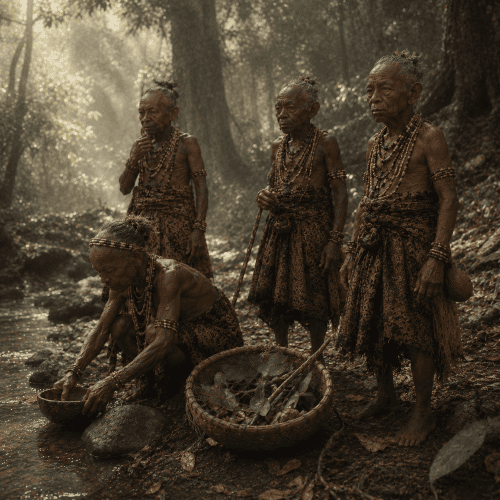
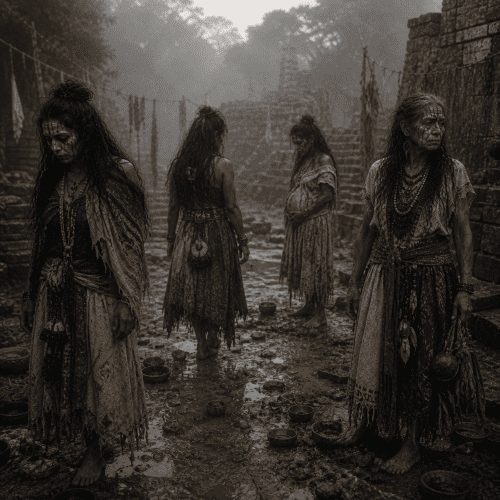
The Dhampir is not a singular figure but a distinct class of beings found across Albanian and broader Balkan folklore. Defined as the offspring of a vampire and a human, the Dhampir represents a hybrid population that exists between the living and the undead. Unlike vampires, which are feared and often blamed for misfortune, the Dhampir occupies a more complex role within traditional belief systems.
In many rural communities, the Dhampir was not treated as a monster but as a necessary presence. These beings were believed to possess the rare ability to perceive and confront vampires, making them an essential part of the cultural response to supernatural threats. Their existence reflects a society that did not merely fear the unknown but attempted to manage it through balance.
Physical Description
A Dhampir is typically described as human in appearance, with only subtle traits distinguishing it from ordinary individuals. This near-human form allows the Dhampir to exist within society without immediate recognition, reinforcing its role as an observer rather than an outsider.
Common features include slightly sharper facial structures, intense or watchful expressions, and a generally hardened physical presence. Some regional traditions mention unusual anatomical details such as softer body composition or minor physical irregularities, though these descriptions vary and are not universal.
Importantly, the Dhampir lacks the defining characteristics of a vampire. It does not avoid sunlight, does not depend on blood for survival, and does not display overtly monstrous features. Its physicality reflects restraint and integration rather than transformation.
Mythological Context
The Dhampir emerges from a cultural environment where belief in vampires was widespread and deeply embedded in daily life. Across the Balkans, particularly in Albania, Serbia, and Bulgaria, vampires were thought to be real entities capable of causing illness, death, and social disruption.
Within this context, the Dhampir served a practical function. It was believed that vampires could not always be seen or easily identified, making them difficult to confront. The Dhampir, however, was said to possess the ability to detect these hidden beings, even when they remained invisible or concealed.
This role positioned the Dhampir as a specialist within folklore—a being whose existence was tied directly to maintaining order in a world where the supernatural was considered an active force.
Origins
The origin of the Dhampir is rooted in Balkan beliefs about the behavior of vampires after death. It was commonly believed that male vampires retained physical desires and could return to interact with the living, particularly women they had known in life.
These encounters were thought to result in the birth of Dhampirs. In some historical accounts, unexplained pregnancies were attributed to deceased husbands believed to have become vampires. This reflects how folklore often intersected with real social and psychological concerns.
As a result, the Dhampir inherits traits from both lineages. From its human parent, it gains mortality and the ability to live within society. From its vampire lineage, it gains heightened perception and a connection to the unseen. This dual origin defines the Dhampir as a race rather than an isolated phenomenon.
Notable Members
Traditional folklore does not focus on individual Dhampirs as named characters. Instead, they are understood collectively as a recurring class of beings. This reinforces the idea that the Dhampir is not a hero or villain but a functional presence within society.
However, individuals believed to be Dhampirs were sometimes recognized within communities. These individuals often took on the role of vampire hunters or specialists, using their perceived abilities to locate and eliminate threats.
In modern storytelling, the concept of the Dhampir has been adapted into individual characters. Figures such as Blade or Alucard reflect this archetype, though these portrayals expand significantly on the original folklore.
Relationship with Other Beings
The Dhampir’s primary relationship is with vampires, against whom it acts as a natural counterforce. This relationship defines its role within folklore, as it exists specifically to detect and confront these entities. With humans, the Dhampir occupies a more ambiguous position. While often accepted due to its usefulness, it is also viewed with caution because of its origins. This dual perception reflects its position between two worlds—trusted but never fully belonging. There is little evidence of Dhampirs interacting extensively with other types of supernatural beings in traditional folklore. Their role remains highly specialized and focused.
Similar Beings
The concept of a Dhampir is not entirely unique, as many cultures feature beings that exist between human and supernatural states. In modern Western fiction, the “half-vampire” or “daywalker” closely mirrors the Dhampir’s traits.
In Japanese folklore, certain entities operate subtly between perception and reality, while in Indian traditions, there are practitioners who move between the physical and spiritual realms without dramatic transformation. These parallels highlight a shared human fascination with liminal existence. What distinguishes the Dhampir is its grounded role. It is not defined by power or spectacle but by function and balance.
Symbolism and Interpretations
The Dhampir symbolizes control over fear. In a cultural landscape where vampires represented chaos, death, and the unknown, the Dhampir provided a means of restoring order. It embodies the idea that understanding and confronting darkness requires proximity to it.
It also represents duality. As a being born from both life and death, the Dhampir reflects the coexistence of opposing forces. This dual nature can be interpreted as a metaphor for balance, adaptability, and the necessity of navigating complexity rather than avoiding it. From a sociocultural perspective, the Dhampir may also represent attempts to explain the unexplainable, particularly in relation to illness, death, and social uncertainty.
Modern Influence
In modern media, the Dhampir has evolved into a widely recognized archetype. It appears in films, novels, and video games, often portrayed as a powerful hybrid with enhanced abilities and internal conflict.
These interpretations expand on the original folklore, emphasizing personal struggle and identity. While traditional Dhampirs were seen as functional members of society, modern versions often focus on individuality and moral conflict. Despite these changes, the core concept remains consistent. The Dhampir continues to represent the space between worlds—a being that exists not in opposition, but in balance.

Sources
Durham, M. E. (1909). High Albania. Edward Arnold. https://kuscholarworks.ku.edu/server/api/core/bitstreams/623c9c1c-17c4-4b8c-a118-cb131cc492c5/content
Elsie, R. (2001). A dictionary of Albanian religion, mythology, and folk culture. C. Hurst & Co.
Meshkov, A. (2024). The vampires in the Albanian folklore. Albanologjia, 21-22, 21-24.
https://eprints.unite.edu.mk/1866/1/ALBANOLOGJIA%2021-22%202024-21-24.pdf
Peterson, M. B. (2021, March 11). Dhampir. Mark Bere Peterson. https://markberepeterson.com/2021/03/11/dhampir/
Trbojević, D. (2025). Balkan vampires: Society, politics, representation. Routledge.
https://www.booktopia.com.au/balkan-vampires-danilo-trbojevi-/ebook/9781040687123.html
Wikipedia contributors. (2026). Dhampir. Wikipedia. https://en.wikipedia.org/wiki/Dhampir
Mythus Fandom. (n.d.). Dhampir. Myth and Folklore Wiki. https://mythus.fandom.com/wiki/Dhampir
Frequently Asked Questions
What is a Dhampir?
A Dhampir is a vampire-human hybrid from Balkan folklore, believed to be the offspring of a vampire and a human. Unlike vampires, Dhampirs are living beings who can walk in daylight and live among humans.
What powers does a Dhampir have?
A Dhampir is traditionally believed to have heightened senses, the ability to detect vampires, and physical resilience beyond normal humans. Their primary role in folklore is identifying and hunting vampires.
Are Dhampirs immortal like vampires?
No, a Dhampir is not immortal. Unlike vampires, Dhampirs are mortal beings who age and live human-like lives, though some legends suggest they may have longer lifespans.
Can a Dhampir walk in sunlight?
Yes, a Dhampir can walk in sunlight. This is one of the key differences between Dhampirs and vampires, as Dhampirs are not affected by typical vampire weaknesses.
Where does the Dhampir come from?
The Dhampir originates from Albanian and Balkan folklore, particularly in regions like Albania, Serbia, and Bulgaria, where vampire beliefs were deeply rooted in local culture.