
Aun : The Norse King Who Bargained with Odin
Listen
At a glance
| Description | |
|---|---|
| Origin | Norse Mythology |
| Classification | Mortals |
| Family Members | Jorund (Father), Egil Vendelcrow (Son) |
| Region | Sweden |
| Associated With | Longevity, Sacrifice, Royal ritual |
The Mythlok Perspective
In Mythlok’s Perspective, Aun represents the elemental fear of mortality rather than heroic ambition. Unlike warriors who sought glory in battle, Aun sought duration. His story reflects a cultural tension between fate and defiance. When compared to figures like Tithonus in Greek tradition, who was granted endless life but not youth, Aun embodies the same warning. Immortality without renewal becomes a burden rather than a blessing.
Aun
Introduction
Aun, often called Aun the Old or Aunn inn gamli, is one of the most haunting royal figures preserved in Norse legendary tradition. His story appears in the Ynglinga saga section of Heimskringla, written by the Icelandic historian Snorri Sturluson in the thirteenth century. Through this saga, Aun becomes a symbol of obsession with longevity, royal devotion to the gods, and the fragile boundary between wisdom and fear of death.
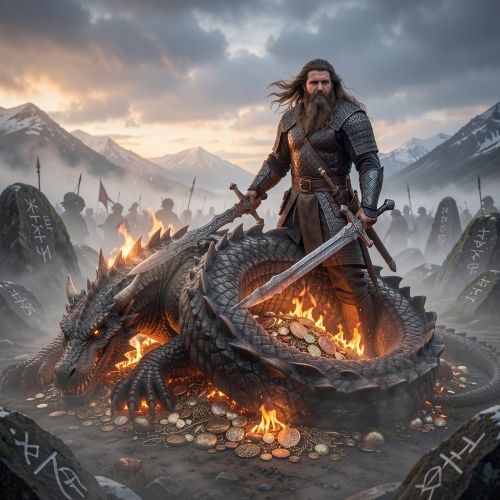
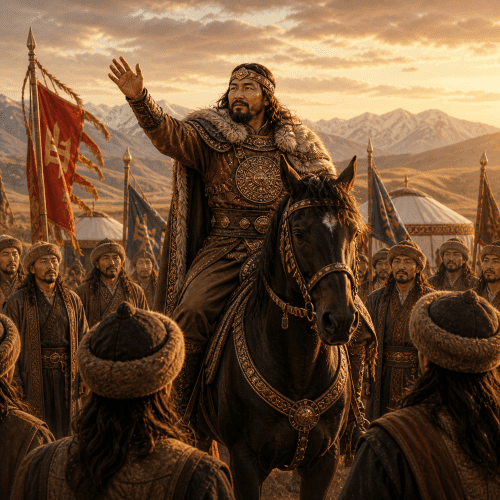
Aun belonged to the Yngling dynasty, a semi-legendary Swedish royal house that traced its ancestry back to the god Freyr. He ruled from Old Uppsala and was remembered not for conquest or military glory, but for something far stranger. According to the saga, Aun repeatedly sacrificed his own sons to Odin in exchange for extended life. Each sacrifice granted him additional years. Over time, this bargain turned him into a king who outlived nearly all his heirs, stretching the limits of mortality in pursuit of survival.
Physical Traits
The surviving Norse sources do not describe Aun’s youthful appearance. There are no details about his height, build, or features. Instead, the sagas focus almost entirely on his progressive physical decline.
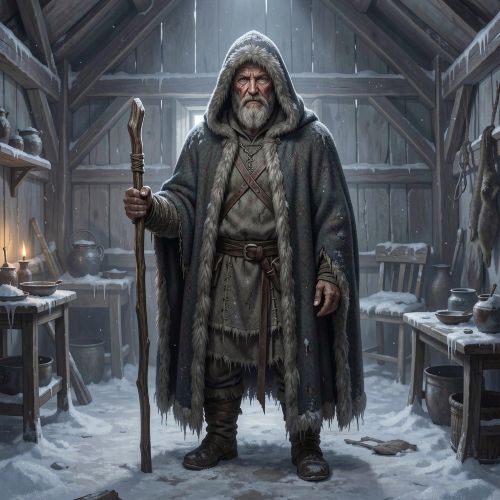
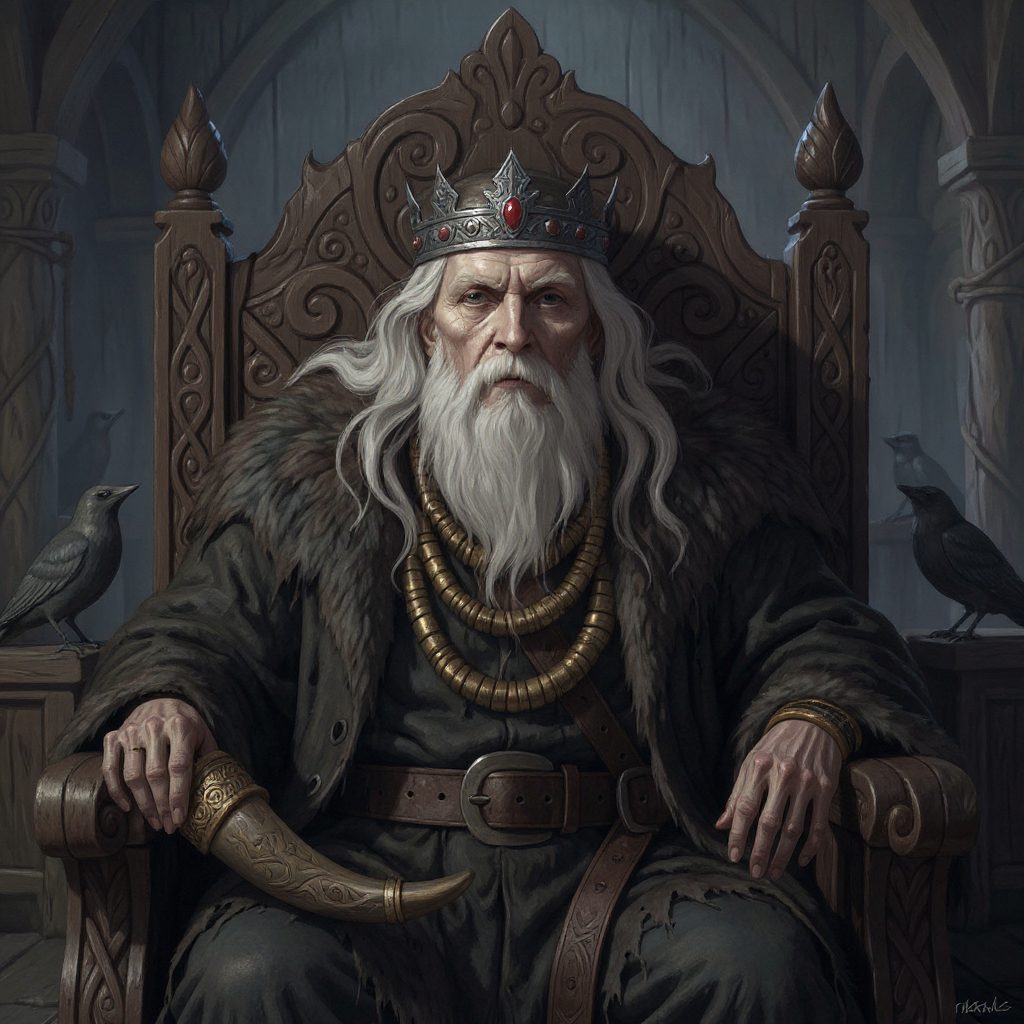
After sacrificing several sons, Aun began to weaken. By the time he had made his seventh offering to Odin, he was so old that he could no longer walk and had to be carried in a chair. After the eighth sacrifice, he became bedridden. Following the ninth, his condition was described in striking terms: he was said to suckle milk from a horn like an infant because he had lost the strength to feed himself normally.
This reversal of life stages is deliberate and symbolic. Aun, in his extreme age, returned to a state resembling infancy. The saga emphasizes that although he gained years, he did not regain vitality. His body deteriorated even as his lifespan stretched unnaturally long. In Norse storytelling, this physical decline reinforces the moral undertone of his legend. Aun gained time, but not youth.
Family
Aun was the son of Jorund, continuing the Yngling line of Swedish kings. The dynasty itself claimed descent from Freyr, embedding royal authority within divine ancestry. This connection between kings and gods makes Aun’s sacrifices even more significant. His offerings were not symbolic gestures but royal acts of religious devotion meant to preserve his rule and life.
According to the Ynglinga saga, Aun had ten sons. One by one, he sacrificed nine of them to Odin. Each time he did so, Odin granted him extended years. The saga suggests that these sacrifices occurred at intervals of ten years, reinforcing the idea of a structured ritual bargain.
His final surviving son was Egil Vendelcrow, known in Old Norse as Egill Vendilkráka. When Aun prepared to sacrifice this last heir, the people of Sweden intervened. They refused to allow the extinction of the royal line. Prevented from completing the tenth sacrifice, Aun soon died of old age. Egil succeeded him on the throne.
The family dimension of Aun’s story is crucial. His desire to live cost him nearly all his descendants. In preserving himself, he nearly erased his legacy.
Other names
Aun is most commonly known as Aun the Old, or Aunn inn gamli in Old Norse. The epithet “the Old” is not a casual descriptor. It defines him entirely. His identity in the sagas is inseparable from his unnatural longevity.
In Latinized medieval texts, such as Historia Norwegiæ, his name appears in adapted forms such as Auchun or Aukun. Linguistic reconstruction has linked his name to the Proto-Norse form Audawiniʀ. Some scholars note parallels with the Anglo-Saxon name Edwin, though this reflects linguistic evolution rather than direct identity. Despite these variations, Aun the Old remains the dominant and enduring form of his name in Norse tradition.
Powers and Abilities
Aun was not described as a god, sorcerer, or warrior with supernatural strength. He possessed no magical weapons or divine transformations. His defining “ability” was his ritual relationship with Odin.
Through sacrificial rites, Aun secured repeated extensions of life. Odin promised him additional years in exchange for offerings. In early Scandinavian belief, sacrifice was a serious and sacred act known as blót. Kings were expected to perform such rituals to ensure prosperity and divine favor. Aun’s case represents an extreme version of this tradition.
He is also portrayed as a ruler who preferred peace over war. During his reign, he faced attacks from rival kings such as Halfdan and Ale the Strong. Rather than die in battle, Aun fled and later returned to reclaim authority. This avoidance of violent death aligns with his obsession with survival. Unlike many Norse figures who sought glory in combat, Aun sought endurance.
His life ultimately ended not in battle, but in bed. The expression “Aun’s sickness” became a phrase associated with dying peacefully of old age. In a culture that often celebrated heroic death, this was unusual and deeply symbolic.
Modern Day Influence
Aun does not appear as frequently in modern films or games as Odin or Thor, yet his story remains important in academic and literary studies of Norse tradition. Scholars examining the Ynglinga saga often discuss Aun as an example of legendary kingship blending myth and proto-history.
His tale contributes to discussions about royal sacrifice, divine bargains, and the psychology of mortality in ancient Scandinavia. The extreme image of a king sacrificing his sons for extended life resonates as a cautionary narrative about fear of death and the cost of obsession.
In genealogical traditions, Aun appears as part of the mythic ancestry of Scandinavian royal lines. His story bridges the gap between divine myth and early legendary history, illustrating how rulers were imagined as standing between humanity and the gods. Today, the legend of Aun survives not through spectacle, but through its stark moral tension. He represents a king who achieved the impossible yet lost nearly everything in the process.
Related Images
Source
Snorri Sturluson. (1220s). Heimskringla: Ynglinga saga. (S. A. Watts, Trans.). Sacred Texts. https://sacred-texts.com/neu/heim/01yngl.htm
Sturluson, S. (c. 1220). Heimskringla. In Wikipedia: Heimskringla. https://en.wikipedia.org/wiki/Heimskringla
Thjodolf of Hvinir. (9th century). Ynglingatal. Referenced in Wikipedia: Aun. https://en.wikipedia.org/wiki/Aun
Nerman, B. (1925). Det svenska rikets uppkomst. Stockholm.
Hollander, L. M. (1964). Heimskringla: History of the kings of Norway. University of Texas Press.
Homs, G. (2012). Aun “den gamle” Jörundsson. Genealogy Online.
https://www.genealogieonline.nl/en/stamboom-homs/I5620730465330062045.php
Faulkes, A. (Ed.). (1982). Snorri Sturluson: Edda. Oxford: Clarendon Press.
Byock, J. (2001). Viking Age Iceland. London: Penguin Books.
Simek, R. (1993). Dictionary of Northern Mythology (A. Hall, Trans.). Cambridge: D. S. Brewer.
Lindow, J. (2001). Norse Mythology: A Guide to the Gods, Heroes, Rituals, and Beliefs. Oxford University Press.
Frequently Asked Questions
Who was Aun in Norse legend?
Aun was a legendary Swedish king of the Yngling dynasty who sacrificed nine of his sons to Odin to prolong his life.
Why did Aun sacrifice his sons?
Aun sacrificed his sons as offerings to Odin in exchange for extended years of life.
How did Aun die?
Aun died of extreme old age after his people prevented him from sacrificing his final son.
What is “Aun’s sickness”?
“Aun’s sickness” refers to dying peacefully in bed from old age, named after Aun’s unusually prolonged life.
Was Aun a real historical king?
Aun is considered a legendary or semi-historical figure recorded in Norse sagas rather than confirmed historical records.