Indonesian Mythology
Indonesian mythology encompasses a vast collection of creation stories, ancestral traditions, heroic legends, sacred narratives, and supernatural beliefs preserved across the Indonesian archipelago. With thousands of inhabited and uninhabited islands and hundreds of ethnic communities, Indonesia does not possess a single unified mythology. Instead, its mythological landscape is formed by diverse traditions from Java, Bali, Sumatra, Sulawesi, Kalimantan, Papua, the Lesser Sunda Islands, and many other regions. Indigenous beliefs and ancestor traditions have interacted over centuries with Hinduism, Buddhism, Islam, and regional literary traditions, creating a remarkably varied world of gods, heroes, spirits, animals, and supernatural beings.
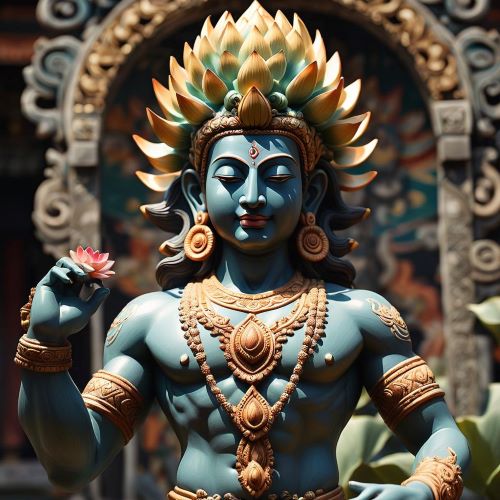
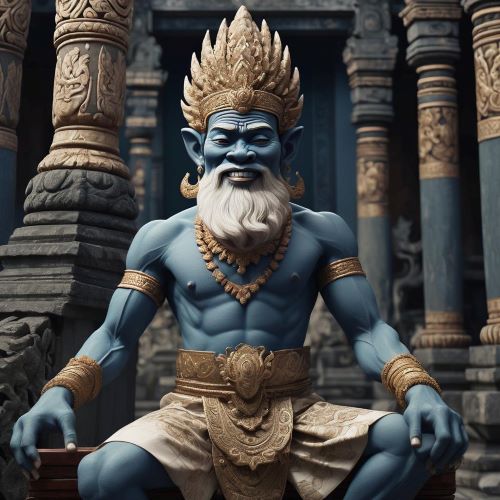
Javanese mythology demonstrates the complex interaction between indigenous beliefs and the religious traditions that reached the island through South and Southeast Asia. Figures such as Batara Guru appear within Javanese versions of Hindu-influenced cosmology, while legendary characters such as Semar and the Punakawan occupy a distinctive place in Javanese storytelling. Semar, in particular, is portrayed as a seemingly humble and humorous figure whose wisdom frequently surpasses that of kings and warriors. These characters became central to wayang kulit, the traditional shadow-puppet theatre in which epic narratives, moral conflicts, supernatural encounters, and questions of kingship are brought together.
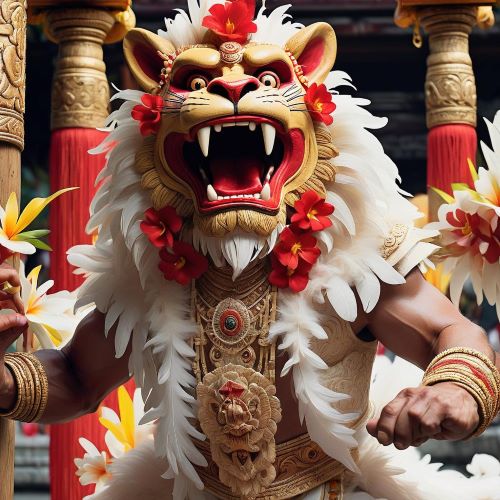
Balinese mythology developed along a different path, preserving a highly ritualized cosmology in which opposing forces must be maintained in balance. One of its most recognizable narratives is the confrontation between Barong, a powerful protective being, and Rangda, a terrifying supernatural figure associated with destructive forces. Their conflict is not simply a straightforward battle between good and evil. Balinese religious thought often emphasizes the continuing tension between opposing forces and the need to maintain cosmic and social equilibrium. Temple ceremonies, dance performances, offerings, and ritual traditions keep these narratives closely connected to everyday religious life.
Beyond Java and Bali, Indonesia contains numerous Indigenous mythological traditions with their own cosmologies and sacred figures. In Sulawesi, Bugis and Toraja traditions preserve stories involving heavenly beings, ancestral founders, sacred landscapes, and journeys between different realms of existence. Among Dayak communities of Kalimantan, oral traditions describe relationships between humans, ancestors, animals, spirits, and supernatural forces connected to forests and rivers. In eastern Indonesia and Papua, diverse Indigenous communities maintain their own creation narratives and traditions concerning ancestors, nature, spirits, and sacred places. These traditions should be understood individually rather than treated as variations of a single Indonesian mythology.
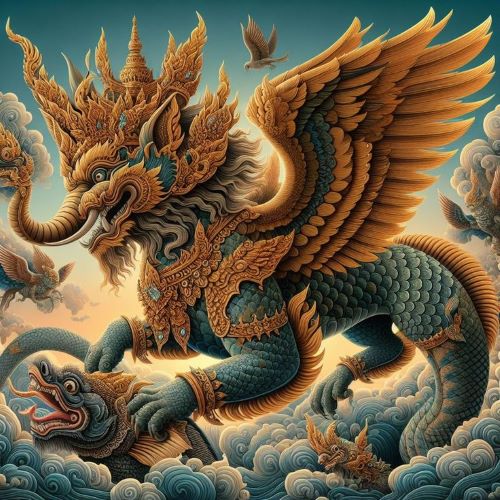
The natural environment is one of the strongest recurring elements across these traditions. Mountains, volcanoes, forests, rivers, caves, and seas frequently appear as spiritually significant places. Naga serpents and other supernatural creatures appear in several regional traditions, while stories of forest beings, ancestral spirits, water entities, and protective guardians reflect the importance of the environment in traditional belief systems. Such narratives often establish relationships between communities and the landscapes on which their lives depend.
Indonesian mythology has also been shaped by centuries of cultural exchange. Hindu and Buddhist traditions profoundly influenced the religious and literary cultures of Java, Bali, and other parts of the archipelago, leaving their mark on temples, epics, royal traditions, and sacred literature. Stories connected with the Ramayana and Mahabharata were adapted into local forms rather than simply reproduced unchanged. The spread of Islam later transformed the cultural landscape of much of the archipelago, with Islamic beliefs becoming deeply integrated into local societies while older legends and folklore continued in different forms. In Java especially, older traditions became intertwined with Islamic practice, court culture, literature, and local spiritual traditions.
Mythological storytelling remains an important part of Indonesian cultural life. Wayang performances, Balinese dance dramas, traditional ceremonies, oral narratives, temple traditions, literature, and contemporary films continue to reinterpret stories inherited from earlier generations. Legendary heroes and supernatural figures also appear in popular culture, allowing regional traditions to reach audiences far beyond the communities in which they originated.
Indonesian mythology is therefore best understood as a vast network of regional mythologies rather than a single tradition. Javanese wayang, Balinese sacred narratives, Dayak traditions, Bugis cosmology, Torajan ancestral beliefs, Papuan creation stories, and countless other local traditions each preserve their own characters, histories, and relationships with the supernatural. Together, they reveal the extraordinary cultural diversity of the Indonesian archipelago and a recurring understanding of existence in which humans, ancestors, nature, and the unseen world remain deeply interconnected.