

Manunubo : The Gentle Power of the Philippine Seas
At a glance
| Description | |
|---|---|
| Origin | Philippine Mythology |
| Classification | Spirits |
| Family Members | N/A |
| Region | Philippines |
| Associated With | Sea, Protection, Safe voyages, Fishing |
The Mythlok Perspective
In Mythlok’s Perspective, Manunubo represents a quieter form of divinity, one that does not demand worship but encourages respect. It reflects a worldview where nature is not conquered but negotiated with. This makes it deeply relevant in a time of environmental imbalance. Comparable figures can be seen in other cultures, such as the Japanese sea kami or Celtic water spirits, yet Manunubo stands apart in its purely benevolent role. It embodies harmony rather than fear, offering a model of coexistence rather than control.
Manunubo
Introduction
The Philippines carries one of the richest bodies of indigenous belief systems in Southeast Asia, shaped by its many islands and seafaring cultures. Within this tradition, Manunubo emerges as a significant figure among the Hiligaynon and Aklanon peoples of the Visayas, particularly in Panay, Guimaras, Negros, and Aklan. Known as a benevolent sea spirit, Manunubo reflects the deep connection between coastal communities and the ocean that sustains them.
Unlike the fearsome water entities found in other parts of Philippine folklore, Manunubo represents balance and protection. The spirit is not associated with chaos or destruction but with calm waters, safe journeys, and abundance. This distinction is important, as many maritime cultures often portray the sea as unpredictable and dangerous. In contrast, Manunubo embodies the idea that the sea can also be nurturing when respected.
In the wider framework of Philippine animistic belief systems, spirits like Manunubo function as intermediaries between humans and nature. They are not distant gods but active presences in daily life, guiding fishermen, protecting travelers, and reinforcing the idea that survival depends on harmony with the environment.
Physical Traits
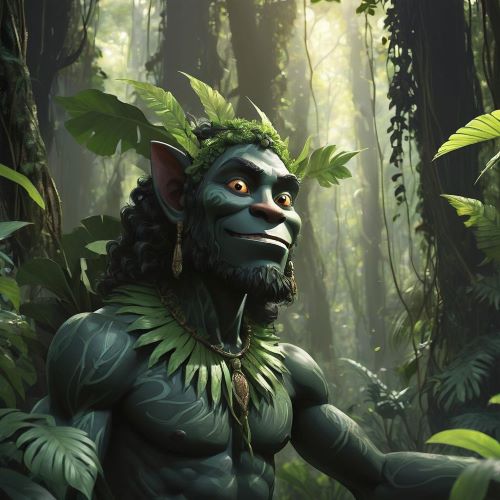
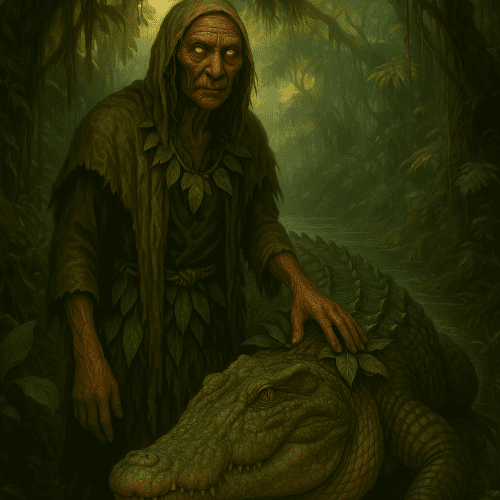
One of the defining characteristics of Manunubo is the absence of a fixed physical form. Unlike anthropomorphic deities found in many mythologies, Manunubo is not described with human features, clothing, or identifiable attributes. This lack of visual description is consistent with many animistic traditions in the Philippines, where spirits are experienced rather than seen.
Instead of a body, Manunubo is understood through natural signs. Calm seas, gentle waves, and successful fishing trips are interpreted as manifestations of the spirit’s presence. This symbolic form allows the spirit to exist everywhere within its domain, rather than being confined to a single image or shape.
This approach reflects a worldview in which nature itself becomes the “body” of the spirit. The ocean is not just water but a living entity infused with intention and awareness. In this sense, Manunubo is less a figure to be visualized and more a force to be respected and acknowledged.
Family
There are no recorded familial ties associated with Manunubo in available folklore. The spirit exists independently, without parents, siblings, or offspring. This is not unusual within Philippine mythology, where many nature spirits are defined by their function rather than lineage.
However, Manunubo is part of a broader spiritual system that includes other mediating entities. Spirits such as Bangutbanwa, associated with harvests, Mangindalon, linked to health, and Soliran or Solian, connected to marriage, all serve specific roles within the community. Together, they form a network of forces that govern different aspects of life.
Rather than a family structure, this system operates more like a balance of responsibilities. Each spirit maintains harmony within its domain, ensuring that human life remains aligned with the natural world.
Other names
Manunubo is consistently referred to by this name in Hiligaynon and Aklanon traditions. There are no widely recognized alternate names or titles associated with the spirit. A rare variation, “Manunubon,” appears in some references, but it is likely a linguistic or transcriptional difference rather than a distinct identity.
This consistency in naming reinforces the clarity of Manunubo’s role. Unlike other mythological figures that evolve across regions with multiple identities, Manunubo remains stable and specific, tied closely to its maritime function.
It is also important to distinguish this figure from similarly named entities in other parts of the Philippines, particularly those associated with the Manobo peoples of Mindanao. Despite the phonetic similarity, they belong to entirely different cultural and mythological contexts.
Powers and Abilities
Manunubo’s powers are rooted in its role as a benevolent sea spirit. Rather than dramatic displays of supernatural force, its abilities are subtle and deeply connected to everyday life along the coast. The spirit is believed to protect seafarers, guiding them safely across waters and shielding them from unseen dangers. Fishermen, in particular, associate their success with the favor of Manunubo. A plentiful catch is not seen as mere luck but as a sign of harmony between humans and the sea.
Manunubo is also linked to the calming of waters. While not explicitly described as controlling storms, the spirit’s presence is associated with stability and peace. This reflects a broader belief that respect for nature leads to balance, while disregard invites danger.
Above all, Manunubo acts as a mediator. It bridges the gap between human needs and natural forces, ensuring that both can coexist without conflict. This role highlights the ethical dimension of Philippine animism, where survival depends not on dominance over nature but on cooperation with it.
Modern Day Influence
Today, Manunubo does not occupy a prominent place in mainstream Philippine culture. The spread of Christianity and modernization has significantly reduced direct engagement with indigenous spirits. However, the essence of Manunubo continues to survive in subtle ways.
In coastal communities, traditional respect for the sea remains strong. Fishermen still observe practices that echo older beliefs, such as offering silent gratitude or avoiding actions that might “offend” the waters. While these practices may no longer explicitly invoke Manunubo, they reflect the same underlying philosophy.
Anthropologists and cultural historians have also contributed to preserving knowledge of the spirit. Documentation of Visayan folklore ensures that figures like Manunubo are not lost, even if they are no longer actively worshipped.
In recent years, there has been a growing interest in reclaiming indigenous heritage. This revival has brought attention back to lesser-known spirits, positioning Manunubo as a symbol of ecological balance and cultural identity in the Philippines.
Related Images

Blogs & Opinions

Glorious Epics
Mythical Events

Mythology Movies
Source
Aswang Project. (2022, October 13). Visayan deities in Philippine mythology. https://www.aswangproject.com/visayan-deities-in-philippine-mythology/
Dream Jungle Tattoo. (2024, June 25). 65 water deities and spirits in Philippine mythology. https://www.dreamjungletattoo.com/the-travelling-tattoo/65-water-deities
Our Islands Our People. (2018, November 17). Aklanon. https://ourislandsourpeople.wordpress.com/aklanon/
Scribd. (2026, March 11). Indigenous groups of Western Visayas [PDF]. https://www.scribd.com/document/799656853/regionb-5-in-IP
California State University East Bay. (2021, August 31). Aklanon. https://www.csueastbay.edu/museum/virtual-museum/the-philippines/peoples/aklanon.html
Aswang Project. (2022, June 2). The MANÓBOS of Agusan: Classification of deities & spirits. https://www.aswangproject.com/manobos-deities-spirits-2/
Alcina, F. I. (2002). History of the Bisayan People in the Philippine Islands: Part One, Book One. Translated by C. Kobak & L. Gutierrez. University of San Carlos Press.
Eugenio, D. L. (1993). Philippine Folk Literature: The Myths. Quezon City: University of the Philippines Press.
Jocano, F. L. (1969). Philippine Mythology. Quezon City: Capitol Publishing House.
Manuel, E. A. (1973). Philippine Folklore. Quezon City: University of the Philippines Press.
Frequently Asked Questions
Who is Manunubo in Philippine folklore?
Manunubo is a benevolent sea spirit in Visayan folklore, known for protecting fishermen and ensuring safe journeys across the ocean.
Does Manunubo have a physical form?
Manunubo has no fixed form and is experienced through calm seas and natural signs rather than a visible body.
What powers does Manunubo have?
Manunubo protects seafarers, promotes abundant fishing, and maintains balance between humans and the sea.
Is Manunubo still worshipped today?
Direct worship is rare today, but respect for the sea in coastal traditions reflects its enduring influence.
Where is Manunubo worshipped or known?
Manunubo is known among the Hiligaynon and Aklanon peoples in the Visayan regions of the Philippines.