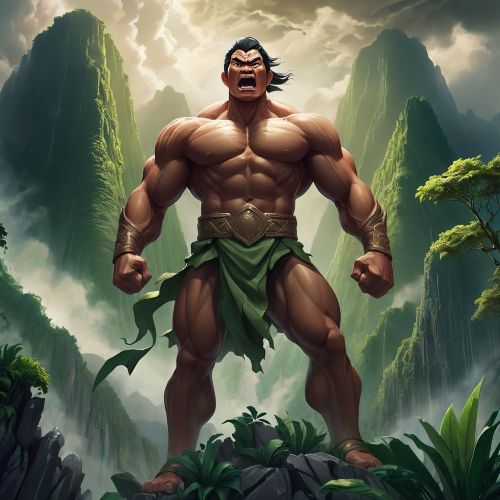


Saragnayan : The Dark Deity of the Hinilawod Epic
At a glance
| Description | |
|---|---|
| Origin | Philippine Mythology |
| Classification | Demigods |
| Family Members | Nagmalitong Yawa Sinagmaling Diwata (Wife) |
| Region | Philippines |
| Associated With | Darkness, Chaos, Immortality |
The Mythlok Perspective
In Mythlok’s Perspective, Saragnayan is not simply a force of evil but a necessary embodiment of resistance within the cosmic order. He represents the idea that darkness is not separate from existence but intertwined with it. His near immortality reflects how chaos cannot be permanently destroyed, only understood and contained. This archetype finds parallels across cultures. Saragnayan shares similarities with figures like Surtr from Norse tradition, who embodies destructive fire, and Ravana from Indian epics, who stands as a powerful but complex adversary. In each case, the antagonist is not merely an obstacle but a mirror to the hero, revealing deeper truths about power, balance, and destiny.
Saragnayan
Introduction
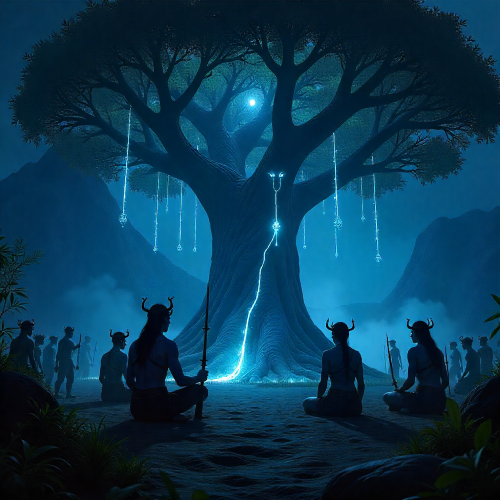
Saragnayan stands as one of the most formidable figures in pre-colonial Visayan tradition, particularly within the epic Hinilawod of the Sulodnon people of Panay in the Philippines. Often described as the lord of darkness, he rules over Gadlum, a shadowy realm associated with fear, mystery, and supernatural power. Unlike many deities who embody creation or protection, Saragnayan represents resistance, chaos, and the necessary counterforce to heroism.
His story is most closely tied to the legendary hero Labaw Donggon, whose attempt to claim Saragnayan’s wife sparks one of the most intense conflicts in the epic. This clash is not just a tale of rivalry but a deeper reflection of balance. Saragnayan is not merely a villain. He is the obstacle that defines the hero’s journey, the darkness that gives meaning to light.
Physical Traits
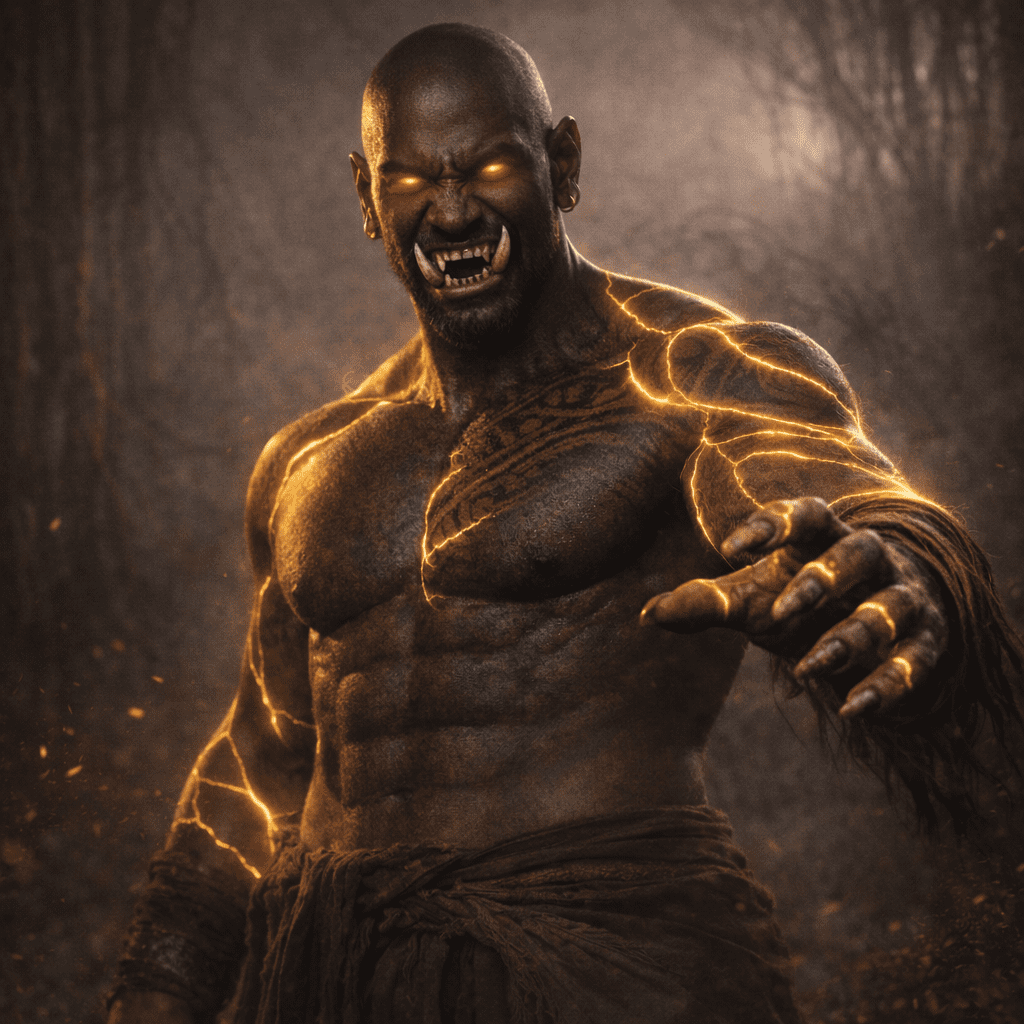
Descriptions of Saragnayan vary across oral traditions, but all portray him as an imposing and terrifying presence. He is often envisioned as a towering figure with coal-dark skin that seems to absorb light itself. His bald head, glowing red eyes, and sharp, animal-like teeth contribute to his fearsome appearance, while his long nails emphasize his predatory nature.
Some versions describe him as heavily tattooed, his body covered in dark ink patterns that merge into a near-total blackness. This variation suggests a more human-like warrior form, yet still rooted in something supernatural and unsettling.
These physical traits are not just for intimidation. They symbolise his connection to darkness, both literal and metaphysical. In contrast to the radiant heroes of the epic, Saragnayan embodies the unknown, the feared, and the uncontrollable forces of existence.
Family
Saragnayan’s origins place him between worlds. He is said to be born from primordial chaos and a human woman, giving him both divine and mortal dimensions. This dual nature helps explain his immense power as well as his deep connection to human emotions such as possessiveness and pride.
He resides in Gadlum with his wife, Nagmalitong Yawa Sinagmaling Diwata, a figure of extraordinary beauty. She becomes the center of conflict when Labaw Donggon seeks to claim her, triggering a prolonged and brutal confrontation.
In the epic’s later developments, Saragnayan also becomes entangled with the next generation of heroes. Labaw Donggon’s sons, particularly Buyung Baranugon, play a crucial role in ultimately defeating him. This continuation of conflict across generations reinforces the idea that Saragnayan is not just an individual adversary, but a lasting force that must be confronted repeatedly.
Other names
Saragnayan’s name remains relatively consistent across Visayan traditions, though slight variations such as Saraganayan appear due to the oral nature of the epic. He is sometimes referred to as the Lord of Darkness, a title that captures his essence more than serving as a formal alternate name.
It is important to distinguish Saragnayan from similarly named figures like Sarangay, a completely different creature in Philippine folklore. Such overlaps are common in oral traditions but do not indicate shared identity.
Powers and Abilities
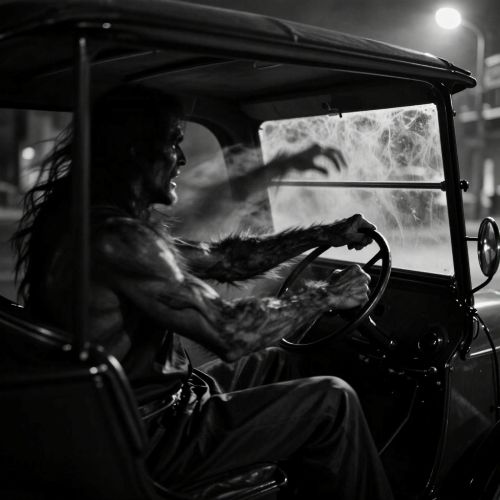
Saragnayan’s power lies not only in strength but in his near invincibility. He commands darkness itself, along with malevolent forces that thrive within it. His influence extends beyond physical combat into the realm of manipulation, where he can incite chaos, disrupt communities, and influence human behaviour toward destructive ends.
One of the most defining aspects of Saragnayan’s myth is the separation of his life force from his body. In the Hinilawod, his life is hidden within a wild boar located in a distant, enchanted forest. This makes him impossible to kill through conventional means, allowing him to withstand prolonged battles against Labaw Donggon.
Even when overpowered physically, Saragnayan survives due to this hidden vulnerability. It is only when the secret of his life force is discovered and destroyed by the hero’s descendants that he can finally be defeated. This motif reflects a broader mythological theme found across cultures, where true power lies not in strength alone, but in hidden knowledge.
Modern Day Influence
Saragnayan continues to live on through cultural preservation and modern reinterpretations of the Hinilawod epic. Oral chanting traditions among the Panay Bukidnon still keep his story alive, maintaining one of the longest recorded epics in Southeast Asia.
In recent years, there has been renewed interest in indigenous Filipino narratives. Stage productions, academic studies, and local festivals have brought characters like Saragnayan back into public consciousness. His role is often re-examined not just as an antagonist, but as a symbol of balance, representing the darker aspects of existence that cannot be ignored. The epic itself has gained international recognition, with recorded chants being included in global heritage initiatives, reinforcing the cultural importance of figures like Saragnayan.
Related Images

Source
Jocano, F. L. (2000). Hinilawod: Adventures of Humadapnon. Punlad Research House.
Visayan myths blogger. (2013, September 29). Saragnayan. https://vizayanmyths.blogspot.com/2013/09/saragnayan.html
Wikipedia contributors. (2026). Hinilawod. Wikipedia. https://en.wikipedia.org/wiki/Hinilawod
Aswang Project. (2022, October 13). Visayan deities in Philippine mythology. https://www.aswangproject.com/visayan-deities-in-philippine-mythology/
Nightskylie blogger. (2016, August 19). Saragnayan. http://nightskylie.blogspot.com/2016/08/saragnayan.html
Precolonial Philippines myths blogger. (2016, January 27). Saragnayan. http://precolonailphilippinesmyths.blogspot.com/2016/01/saragnayan.html
Juan Dela Cruz Wiki. (2026, January 8). Anito ng Saragnayan. https://juan-dela-cruz-tv.fandom.com/wiki/Anito_ng_Saragnayan
Contratto, G. S. (2025). Babaylan’s betrayal [Scholarly work]. ScholarSpace, University of Hawai’i at Mānoa. https://scholarspace.manoa.hawaii.edu/bitstreams/e5980052-97a1-4f25-b631-0471ee675999/download
Frequently Asked Questions
Who is Saragnayan in Philippine mythology?
Saragnayan is a powerful figure from the Visayan epic Hinilawod, known as the lord of darkness and ruler of the shadowy realm of Gadlum.
Is Saragnayan a god or a demon?
He is generally considered a demigod or supernatural being, born from primordial chaos and a human mother.
Why couldn’t Saragnayan be killed?
His life force was hidden outside his body, specifically inside a wild boar, making him nearly impossible to defeat in battle.
Who defeated Saragnayan?
He was ultimately defeated by Buyung Baranugon, the son of Labaw Donggon, after discovering the secret of his life force.
What does Saragnayan represent?
He represents darkness, chaos, and the opposing force necessary for balance in mythological narratives.