

Talanganay : The Creator God of Northern Luzon
At a glance
| Description | |
|---|---|
| Origin | Philippine Mythology |
| Classification | Gods |
| Family Members | N/A |
| Region | Philippines |
| Associated With | Creation of humanity, Agriculture, Sacrifice, Healing, Cultural knowledge |
The Mythlok Perspective
In Mythlok’s Perspective, Talanganay represents a rare archetype where creation is inseparable from sacrifice and sustainability. His story frames life not as a gift freely given, but as something earned through balance with nature. Unlike creator figures who dominate or rule, Talanganay teaches and withdraws, allowing humanity to shape its own destiny. This mirrors figures like the Norse Ymir, whose body becomes the world, and the Chinese Pangu, whose sacrifice forms creation, yet Talanganay remains uniquely grounded in agriculture and daily survival, making him deeply human in purpose despite his divine origin.
Talanganay
Introduction
Talanganay stands as one of the most intriguing creator figures in Philippine mythology, particularly among the Gaddang, Kalinga, and Buaya traditions of Northern Luzon. He is remembered not as a distant, abstract god, but as a craftsman of life—an artisan who shaped humanity directly from the earth. The keyword Talanganay is deeply tied to origin stories that explain both human existence and the agricultural foundations of early communities.
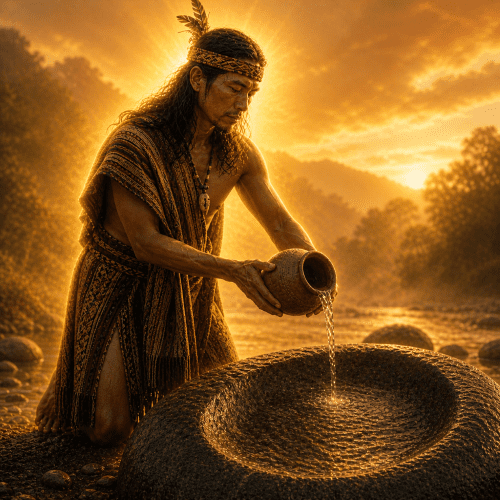
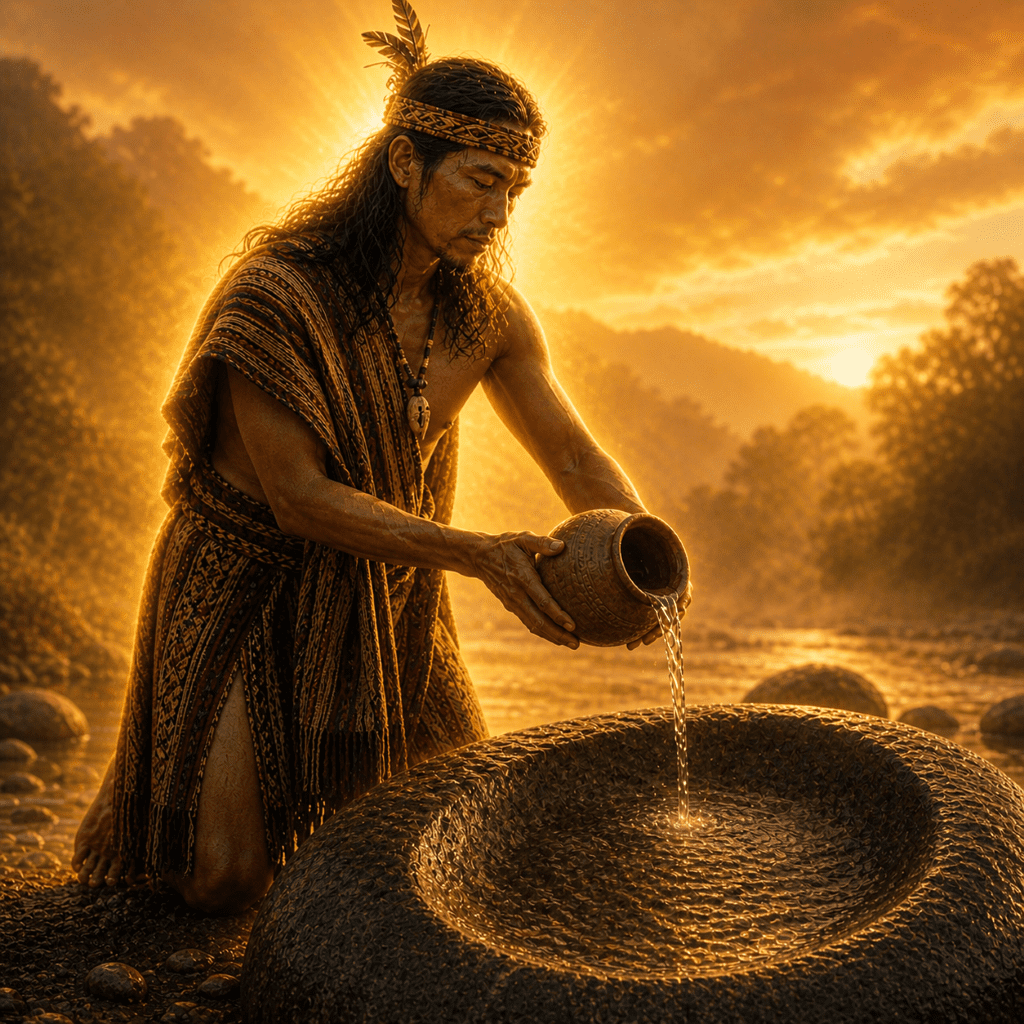
In these narratives, Talanganay resides within a sacred stone associated with Bontoc (often spelled Buntuk in older records), a place believed to hold his household, tools, and even traces of his daily life. Across the river lies the annayugan rock, where he created the first humans. Unlike many creator deities who form life through command or breath, Talanganay physically fashioned human beings and brought them to life through water and herbs, a detail that reflects the importance of natural elements in indigenous Filipino belief systems.
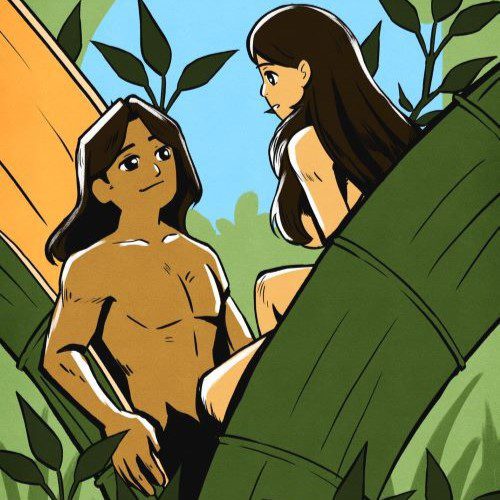
A defining part of the Talanganay myth is his controversial act of sacrifice. After creating three humans, he killed one and transformed its body into essential crops such as coconut, banana, sugarcane, and root vegetables. This act is not framed as cruelty but as necessity, linking human survival to sacrifice and ecological balance. Over time, Talanganay becomes an otiose deity—one who withdraws from active involvement in the world after recognizing human moral shortcomings.
Physical Traits
Talanganay’s physical form is notably absent from most recorded accounts, which is consistent with many indigenous Philippine deities whose identities are tied more to place and action than to appearance. Instead of a detailed bodily description, Talanganay is associated with sacred geography. The annayugan rock, where he is said to have created humanity, serves as a physical marker of his presence.
Some traditions describe footprints embedded in stone, believed to be left by Talanganay as he moved across the landscape. These marks are not decorative myths but are treated as evidence of divine activity within the natural world. In another episode, he spears a kadduwas grasshopper, cracking a stone in the process—an event interpreted as an omen tied to imbalance or disruption.
In ritual contexts, Talanganay can manifest through a medium or healer, entering the body during trance states. In these moments, he is not seen but experienced, reinforcing the idea that his power is internal and spiritual rather than visual. This lack of a fixed form makes Talanganay less of a figure to be seen and more of a force to be understood through environment, action, and tradition.
Family
Talanganay’s relationships are less about lineage and more about interaction with other spiritual entities. In some versions of the myth, he is linked with figures such as Patubog, who may act as a rival or opposing force, and Kabunyan, a more widely recognized high deity in Northern Luzon traditions. These connections suggest that Talanganay exists within a broader spiritual framework, even if he is not part of a structured pantheon.
He is also described as having a “household,” though this term should not be interpreted in a strictly familial sense. Members of this household include figures like Ginipa-an, who appears in stories where Talanganay attempts to bring her to the heavens using a stone ladder. Other figures, such as Dongngayan, appear in episodic roles, interacting with Talanganay during key mythological moments.
Interestingly, objects and animals associated with his household—such as pigs or cooking tools—are said to have turned into stone after his departure. These transformed items remain embedded in the landscape, serving as reminders of his once-active presence. Rather than a family tree, Talanganay’s “family” is better understood as a network of relationships that connect him to both divine and earthly realms.
Other names
Unlike many deities whose identities shift across regions and languages, Talanganay is consistently referred to by the same name in most documented traditions. However, his role and identity are sometimes expressed through descriptive phrases rather than alternative names.
One such term is “bosa’n Talanganay,” which translates roughly to “the creation of Talanganay,” emphasizing his role as a maker rather than a ruler. The first humans he created are called sinayug, meaning “watered to life,” a phrase that highlights the central role of water in his creative process.
In academic and ethnographic discussions, Talanganay may also be described as a “Gaddang god-spirit” or a “high god,” though these are classifications rather than true alternate names. The consistency of his name across regions reinforces his importance as a distinct and recognizable figure within Philippine mythology.
Powers and Abilities
Talanganay’s powers revolve around creation, transformation, and cultural instruction. His most significant ability is the creation of human life. He shaped the first people from a stone concavity and brought them to life using water mixed with herbs, a process that reflects both craftsmanship and ritual knowledge.
His transformative power is equally important. By sacrificing one of the first humans and turning its body into crops, Talanganay establishes a mythological explanation for agriculture. Coconut trees, bananas, sugarcane, and root crops are all said to originate from this act, linking human survival directly to divine intervention.
Talanganay is also credited with teaching practical knowledge. He instructed early humans on farming techniques, such as measuring land using a siwak reed, and advised on efficient cooking methods to prevent waste. These teachings position him not just as a creator but as a الثق cultural guide who ensures the sustainability of human life.
Another remarkable ability is his construction of a massive stone ladder connecting earth to the heavens. This structure, known in some accounts as adan or bitu-u, allowed access to resources like rice from the sky world. Though the ladder eventually collapsed, scattered stones across the landscape are said to be its remains.
In addition to these feats, Talanganay possesses healing abilities. He can enter the body of a healer during trance states, offering guidance on curing illnesses. This role connects him to ongoing spiritual practices, where his presence is invoked for restoration and balance.
Modern Day Influence
The legacy of Talanganay continues to shape cultural identity and local traditions in Northern Luzon. Many physical landmarks, such as specific stones, caves, and rock formations, are directly linked to his myth. These sites are not merely symbolic; they are treated as living connections to ancestral history.
Oral traditions remain the primary way Talanganay’s story is preserved. Elders pass down his narrative through storytelling, songs, and rituals, ensuring that each generation understands its origins. Musical traditions, including instruments like the paldong flute and kullitong harp, are sometimes associated with him, reflecting his role in teaching not just survival skills but also cultural expression.
In modern contexts, Talanganay has become a subject of academic study, particularly in anthropology and ethnography. Researchers examine his myths to better understand indigenous belief systems and their resilience despite centuries of colonial influence. There are also emerging efforts to incorporate figures like Talanganay into literature, visual media, and educational content, helping to reintroduce these stories to a wider audience.
While he may not be as widely recognized as creatures like the aswang or manananggal, Talanganay remains a foundational figure in Philippine mythology. His story bridges the gap between creation, culture, and environment, offering a worldview where humanity is inseparable from the land that sustains it.
Related Images
Source
Scott, W. H. (1971). The Buntuk origin myth: Explorations in Buaya mythology. The Cordillera Review, II(1), 28-48. https://thecordillerareview.upb.edu.ph/wp-content/uploads/2021/05/3-chapter-29-48.html
Scott, W. H. (1971). Syncretic myth [Chapter]. The Cordillera Review, II(1). https://thecordillerareview.upb.edu.ph/wp-content/uploads/2021/05/4-TCR-II-1-chapter-3-syncretic-myth.pdf
List of Philippine mythological figures. (n.d.). In Wikipedia. Retrieved May 1, 2026, from https://en.wikipedia.org/wiki/List_of_Philippine_mythological_figures
Deities of Philippine mythology. (n.d.). Nina.az. Retrieved May 1, 2026, from https://www.dl1.en-us.nina.az/Deities_of_Philippine_mythology.html
Ramos, M. D. (1990). Creatures of Philippine lower mythology. University of the Philippines Press.
The Cordillera Review. (2021). Buaya mythology explorations. University of the Philippines Baguio. https://thecordillerareview.upb.edu.ph/abstract/the-buntuk-origin-myth-explorations-in-buaya-mythology/
Fanbulen, R. (2009). Philippine mythology blog. Retrieved from http://philippinemytholgy.blogspot.com
Gaddang Tribe culture. (2022). Yodisphere. https://www.yodisphere.com/2022/08/Gaddang-Tribe-Culture.html
Jocano, F. L. (1969). Philippine Mythology and Folklore. Quezon City: Punlad Research House.
Demetrio, F. R. (1992). The Soul Book: Philippine Psychology and Religion. Quezon City: GCF Books.
Eugenio, D. L. (1993). Philippine Folk Literature: The Myths. Quezon City: University of the Philippines Press.
Scott, W. H. (1994). Barangay: Sixteenth-Century Philippine Culture and Society. Quezon City: Ateneo de Manila University Press.
Frequently Asked Questions
Who is Talanganay in Philippine mythology?
Talanganay is a creator deity from Northern Luzon who shaped the first humans and introduced agriculture through mythic sacrifice.
What did Talanganay create?
Talanganay created the first humans and transformed a sacrificed body into crops like coconut, banana, and sugarcane.
Where is Talanganay worshipped?
He is associated with the Gaddang, Kalinga, and Buaya peoples of Northern Luzon in the Philippines.
Does Talanganay have a physical form?
No clear form exists; he is linked to sacred stones, landscapes, and spiritual presence rather than a defined body.
Why is Talanganay important today?
He represents indigenous knowledge, ecological balance, and cultural identity preserved through oral traditions.