Sisilim : The Goddess of Dusk in Philippine Tradition
At a glance
| Description | |
|---|---|
| Origin | Philippine Mythology |
| Classification | Gods |
| Family Members | Apûng Malyari (Father) |
| Region | Philippines |
| Associated With | Dusk, Transition, Natural cycles, Twilight |
The Mythlok Perspective
In Mythlok’s Perspective, Sisilim represents a rare kind of deity, one defined not by power or personality but by timing itself. She exists in the same conceptual space as twilight figures across cultures, such as the Greek Hesperides or the Japanese Yūgure spirits, yet remains uniquely grounded in Kapampangan ecology. Unlike more anthropomorphic dusk deities, Sisilim feels closer to a natural law than a character, emphasizing how Philippine traditions often prioritize environmental harmony over divine dramatization.
Sisilim
Introduction
Sisilim is a lesser-known yet culturally meaningful figure in Philippine mythology, particularly within the Kapampangan tradition of Luzon. Her name comes directly from the Kapampangan word for “dusk” or “early evening,” and she represents the quiet transition between day and night. Rather than being a deity of dramatic action or mythic battles, Sisilim embodies a moment in time, a liminal phase where light softens and the world prepares for darkness.
In Kapampangan cosmology, time itself is often personified through deities who govern different parts of the day. Sisilim fits into this system as the presence that signals the end of daylight. Her arrival is traditionally associated with natural cues, especially the sound of cicadas beginning their evening chorus. This connection reflects a broader feature of indigenous Philippine belief systems, where divine beings are closely tied to observable environmental rhythms. Sisilim’s role complements other time-associated figures, reinforcing the cyclical balance between light and darkness that defines the natural world.
Physical Traits
Unlike many deities in global mythologies who are described in vivid physical detail, Sisilim does not have a fixed or widely agreed-upon appearance. There are no canonical descriptions of her clothing, form, or features in traditional accounts. Instead, her identity is conveyed through atmosphere rather than anatomy.
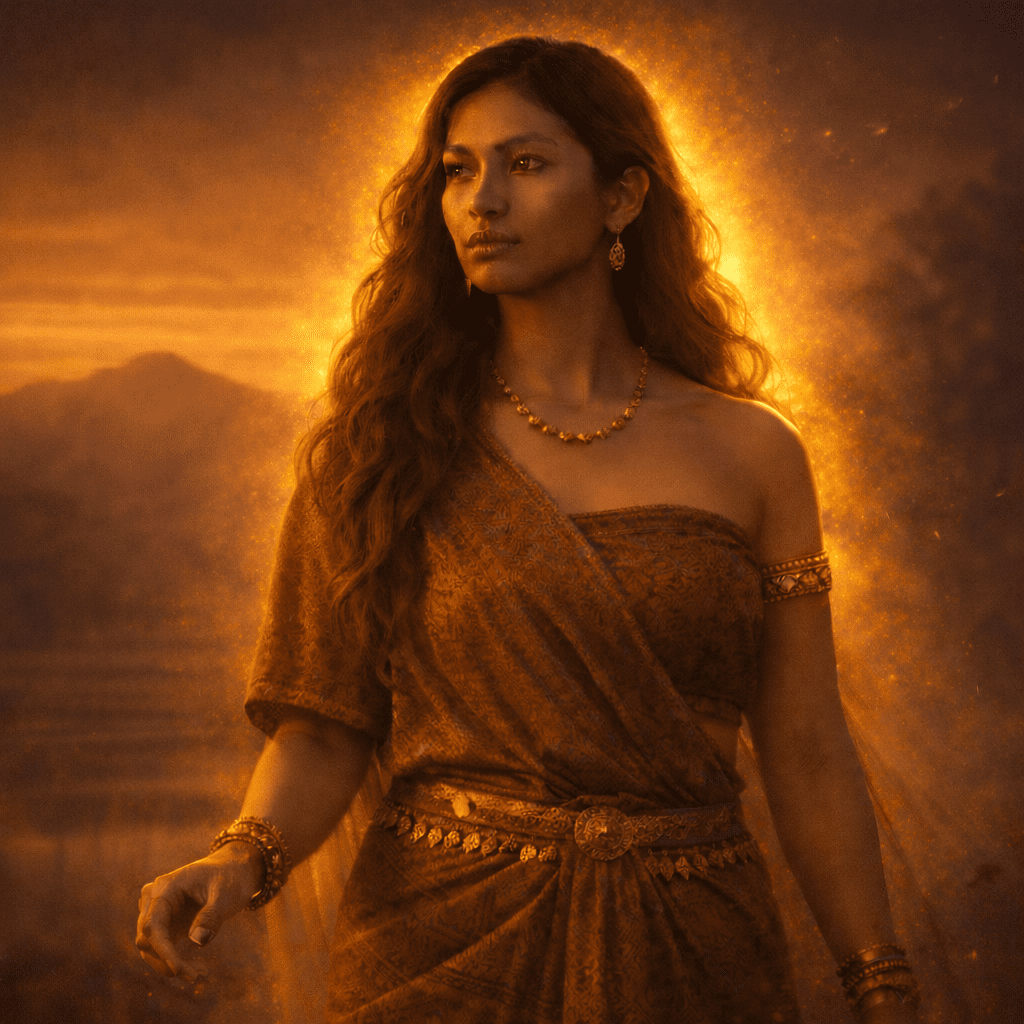
She is best understood as an embodiment of twilight itself. The fading gold of sunlight, the emergence of deep blues and purples, and the gradual dimming of the sky serve as her “form.” This abstraction is consistent with many indigenous Philippine deities, who are defined more by their domains than by human-like characteristics.
Some later interpretations, influenced by artistic imagination or parallels with other lunar deities, depict her as serene and radiant, echoing the calm beauty of dusk. However, these are modern visualizations rather than historically grounded descriptions. At her core, Sisilim remains a presence felt rather than seen, reinforcing her identity as a transitional force rather than a physical being.
Family
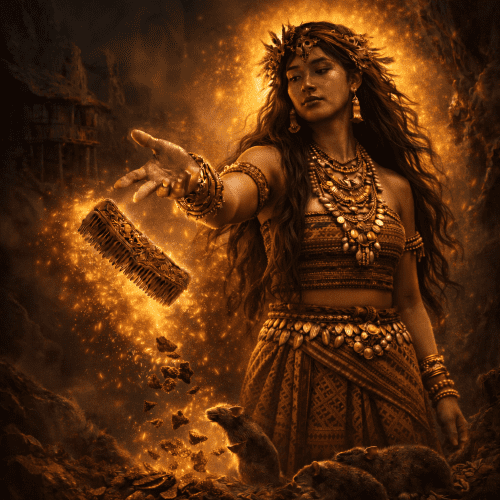
Sisilim is traditionally described as the child of Apûng Malyari, a powerful lunar deity associated with Mount Pinatubo. Apûng Malyari plays a central role in Kapampangan belief systems, often linked to the moon, natural forces, and regional identity.
This lineage places Sisilim within a celestial framework that governs cycles of time and nature. While some traditions portray Apûng Malyari as a moon goddess and others as a moon god, the connection consistently emphasizes lunar influence, which aligns naturally with Sisilim’s association with the onset of night.
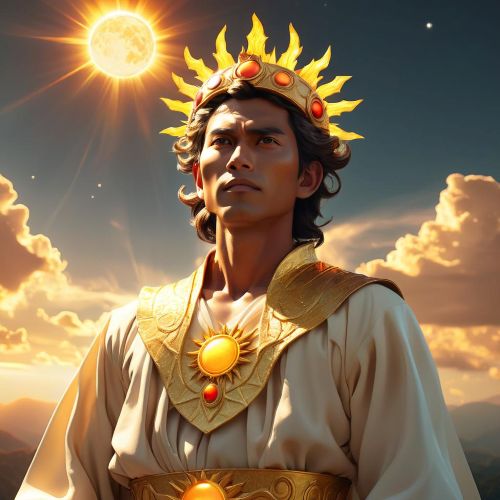
There are no clearly documented siblings directly tied to Sisilim in primary sources. However, Kapampangan mythology includes other deities associated with different times of day, such as Aring Sinukuan, who represents solar power and daylight. Together, these figures form a broader symbolic system that explains the passage of time through divine presence.
Other names
Sisilim is known almost exclusively by this single name. It directly reflects her role, as it is derived from the Kapampangan term for dusk. Unlike major deities who often have multiple titles, regional variations, or honorifics, Sisilim’s identity remains linguistically and culturally consistent.
This lack of alternate names highlights her specificity within Kapampangan tradition. She is not a widely syncretized or pan-regional figure but rather a localized embodiment of a universal experience. While similar concepts of dusk exist across Philippine cultures, Sisilim as a named entity is primarily rooted in Kapampangan belief.
Powers and Abilities
Sisilim’s power lies not in overt supernatural feats but in her symbolic authority over transition. She governs the moment when day gives way to night, a shift that carries both physical and spiritual significance in many indigenous traditions.
Her arrival is traditionally marked by the sound of cicadas, a detail that reinforces her connection to natural cycles. This auditory signal acts almost like a divine announcement, blending ecological observation with mythological meaning.
There are no recorded myths describing Sisilim engaging in battles, granting blessings, or directly intervening in human affairs. Instead, her influence is subtle and constant. She represents change, balance, and the inevitability of cycles. In this sense, her “power” is existential rather than active. She ensures continuity in the rhythm of time.
Given her lineage from Apûng Malyari, it is possible to interpret her as part of a broader system of celestial influence, though this remains speculative rather than explicitly documented. Her role is best understood as symbolic governance rather than narrative action.
Modern Day Influence
Sisilim does not have the same level of modern visibility as more prominent figures in Philippine mythology. She rarely appears in mainstream films, television, or popular literature. However, her presence persists in cultural studies, folklore compilations, and efforts to revive indigenous narratives.
In recent years, there has been growing interest in pre-colonial Philippine belief systems. Projects focused on preserving folklore, such as digital archives and cultural platforms, have helped document figures like Sisilim and reintroduce them to contemporary audiences.
Artists and writers occasionally reinterpret her as a poetic symbol of twilight, using her identity to explore themes of transition, mystery, and calm. In this way, Sisilim has found a quiet resurgence not as a mainstream icon, but as a conceptual and aesthetic inspiration. Her continued relevance lies in her simplicity. She represents a universal experience, the end of day, interpreted through a distinctly Kapampangan lens.
Related Images




Source
Aswang Project. (2022). Formation of the world: Kapampangan mythology. https://www.aswangproject.com/kapampangan-mythology/
Philippine mythology – Kapampangan deities. (2018). Wattpad. https://www.wattpad.com/585835333-philippine-mythology-kapampangan-deities
Kapampangan gods and goddesses [PDF]. (n.d.). Scribd. https://www.scribd.com/document/724912920/Kapampangan-gods-and-goddesses
Tantingco, R. P. (n.d.). King Sinukwan mythology and the Kapampangan psyche [PDF]. RACO. https://www.raco.cat/index.php/coolabah/article/download/327855/418377/469257
Vidal, L. H. (n.d.). Maikling kuwentong Kapampangan at Pangasinan. Goodreads.
Zapanta Manlapaz, E. (n.d.). Kapampangan literature: A historical survey and anthology. Goodreads.
Chronicle Press. (n.d.). Philippine goddess: The divine legacy of Kapampangan. WeLib.org (via Scribd). https://www.scribd.com/document/868920833/Philippine-Goddess-The-Divine-Legacy-of-Kapampangan-Press-Chronicle-WeLib-org
Frequently Asked Questions
Who is Sisilim in Philippine mythology?
Sisilim is the Kapampangan goddess of dusk, representing the transition from day to night in Philippine mythology.
What does the name Sisilim mean?
The name Sisilim comes from the Kapampangan word for dusk or early evening.
Who are Sisilim’s parents?
She is considered the child of Apûng Malyari, a major Kapampangan moon deity.
What powers does Sisilim have?
She symbolizes dusk and the transition of time rather than having active supernatural powers.
Is Sisilim worshipped today?
She is not widely worshipped but appears in folklore studies and modern cultural revivals.