
Rudra : The Powerful Vedic God Behind Shiva’s Origins
At a glance
| Description | |
|---|---|
| Origin | Indian Mythology |
| Classification | Gods |
| Family Members | Maruts (Sons) |
| Region | India |
| Associated With | Storms, Healing, Disease, Wilderness, Archery |
The Mythlok Perspective
In Mythlok’s Perspective, Rudra is one of mythology’s most fascinating examples of how a god can embody opposites without contradiction. Like the Norse god Odin or the Greek god Apollo—who could both heal and harm—Rudra exists in the space between fear and salvation. What makes him unique is that his destructive nature was never portrayed as evil. Instead, it was seen as a force that maintained balance within the universe. His evolution into Shiva also reveals how religions transform over time, preserving ancient ideas while giving them new meaning. Rudra reminds us that growth often begins where comfort ends, and that renewal frequently emerges from disruption.
Rudra
Introduction
Rudra is one of the oldest and most intriguing deities in Indian mythology. First appearing in the Rigveda, the earliest sacred text of Hinduism, he is portrayed as a powerful and unpredictable god whose presence inspires both fear and reverence. His name is commonly translated as “the Howler” or “the Roarer,” reflecting his connection to storms, wild nature, and untamed forces.
Unlike many deities who are clearly defined as benevolent or destructive, Rudra embodies both qualities simultaneously. Vedic hymns often portray him as a divine archer whose arrows can bring disease, death, and suffering. Yet those same hymns also praise him as a healer capable of curing illnesses and protecting humanity from harm.
Over centuries, Rudra’s role expanded far beyond that of a storm deity. As Hindu thought evolved, many of his characteristics merged with those of Shiva, one of the most important gods in Hinduism. While scholars distinguish between the Vedic Rudra and the later Puranic Shiva, there is little doubt that Rudra laid the foundation for the development of Shiva’s complex personality. Through this transformation, Rudra became associated not only with destruction but also with renewal, asceticism, cosmic balance, and spiritual power.
Physical Traits
Ancient Vedic texts describe Rudra as a striking and awe-inspiring figure. The Rigveda portrays him as strong, youthful, and radiant, possessing a formidable presence that commands respect. His appearance reflects the dual nature of his character: both beautiful and terrifying.
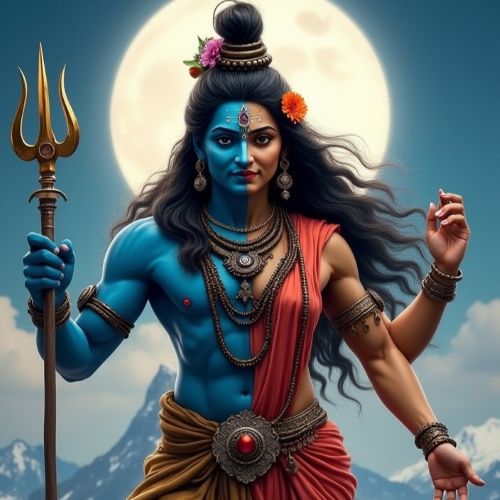
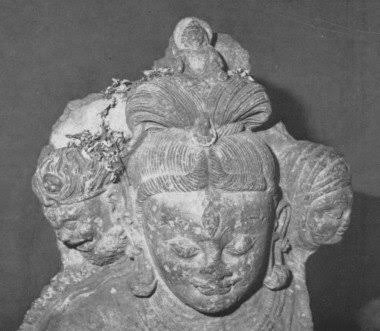
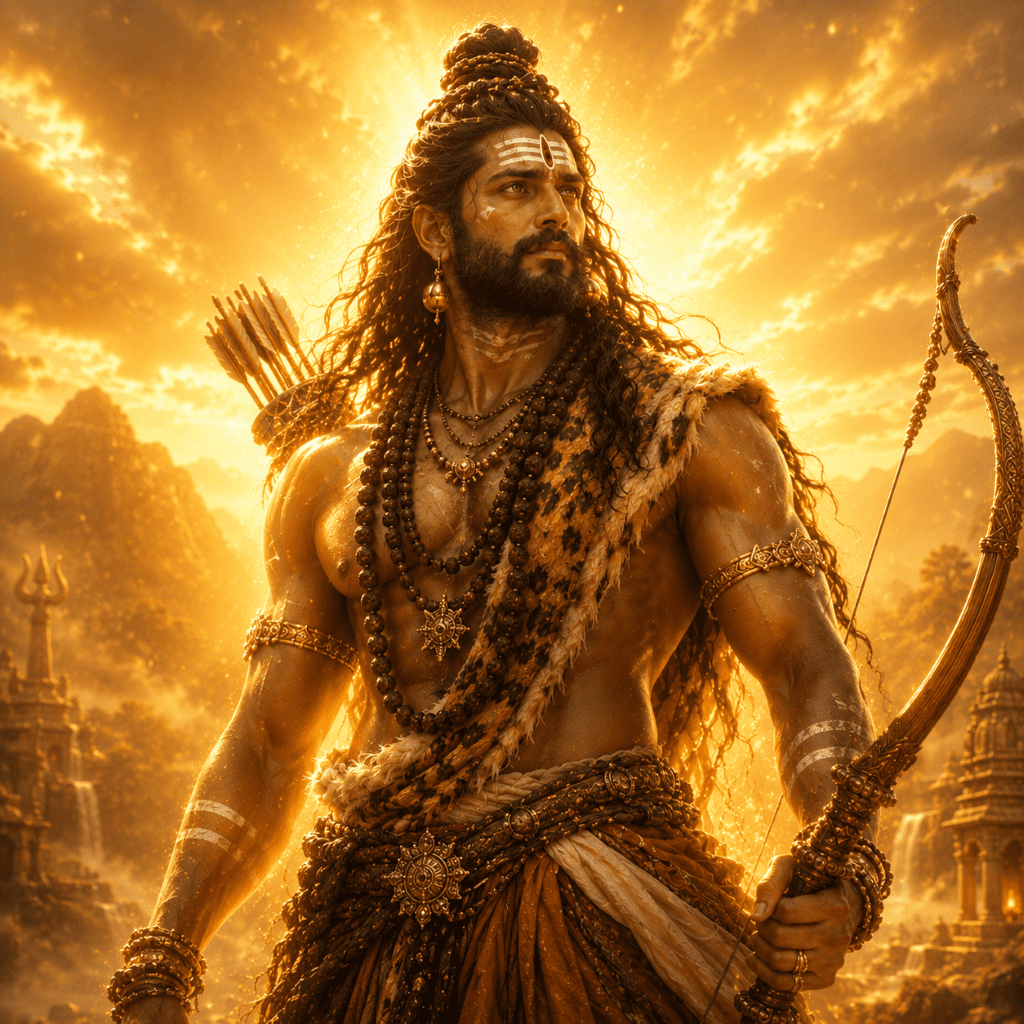
Several hymns describe Rudra as having a reddish-brown or copper-colored complexion, while other passages refer to him as shining or brilliant in appearance. He is frequently adorned with golden ornaments, emphasizing his divine status. One of his most distinctive features is his braided or matted hair, earning him the title Kapardin, meaning “the one with braided locks.” This characteristic later became strongly associated with Shiva.
The Yajurveda adds further details to his appearance. Rudra is called Hiranyabahu, meaning “golden-armed,” and Harikesha, referring to his unusual hair color, which has been interpreted as green, reddish, or bluish depending on the tradition. He is also described as Nilagriva (“blue-necked”) and Sitikanta (“white-throated”), titles that foreshadow Shiva’s famous blue throat.
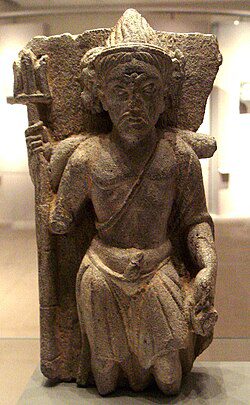
Unlike many celestial gods who are depicted in royal garments, Rudra often appears as a warrior of the wilderness. Texts mention him wearing animal skins, armor, protective coverings, and carrying powerful weapons. These features create the image of a deity who exists at the boundary between civilization and the untamed natural world.
Family
In the earliest Vedic sources, Rudra’s most clearly defined family relationship is his role as the father of the Maruts. The Maruts are a group of storm deities associated with thunder, wind, and atmospheric disturbances. Their energetic and sometimes violent nature reflects the characteristics of their divine father.
Several Rigvedic hymns directly identify the Maruts as Rudra’s sons. In some passages, they are even collectively referred to as “Rudras,” highlighting their shared connection to storms and cosmic power. Together, Rudra and the Maruts represent the immense forces of nature that can both sustain and threaten human life.
As Hindu mythology evolved, Rudra gradually became identified with Shiva. Through this process, he became associated with Shiva’s extensive divine family, including Parvati, Ganesha, and Kartikeya. However, these relationships belong primarily to later traditions rather than the earliest Vedic accounts.
Because of the blending of Vedic and Puranic traditions, Rudra’s genealogy can vary depending on the source. Nevertheless, his status as the father of the Maruts remains the most consistent and historically significant family connection found in ancient texts.
Other names
Rudra is known by many names and epithets, each emphasizing a different aspect of his personality and power. His primary name likely derives from a Sanskrit root associated with roaring, crying, or howling, a fitting description for a deity connected to storms and fierce natural forces.
Among his most famous titles is Kapardin, referring to his braided hair. He is also called Nilagriva and Sitikanta, names that highlight the distinctive coloring of his throat and neck. Other epithets emphasize his brilliance, strength, and martial nature.
As the connection between Rudra and Shiva became stronger, many titles associated with Shiva were also linked to Rudra. This overlap eventually led to the widespread understanding of Rudra as an early form or manifestation of Shiva.
The term “Rudras” also appears in Hindu literature, sometimes referring to a group of deities associated with him and sometimes to multiple manifestations of his divine power. The exact meaning depends on the text and historical period being considered.
Powers and Abilities
Rudra’s powers are among the most paradoxical in Indian mythology. He is simultaneously feared as a destroyer and revered as a healer, embodying both the danger and restorative potential of nature. In the Vedas, Rudra is primarily known as a divine archer. His arrows can bring disease, misfortune, and death, and many hymns plead with him to spare humans and livestock from his wrath. This fearsome aspect reflects the unpredictable forces of storms, epidemics, and natural disasters that ancient communities struggled to understand.
Yet Rudra is not merely a god of destruction. The same texts describe him as possessing countless remedies and healing powers. Worshippers pray to him for protection, good health, and relief from suffering. This dual role as both sender and remover of disease makes him one of the most complex deities in the Vedic pantheon.
Rudra is also closely associated with storms, wind, wild animals, mountains, and remote wilderness. He represents forces that exist beyond human control, reminding people of nature’s immense power.
In later Hindu philosophy, Rudra’s destructive nature came to be viewed as an essential part of cosmic renewal. Destruction was not seen as an end but as a necessary step toward transformation and rebirth. This idea would later become central to Shiva’s role within Hindu theology.
Modern Day Influence
Although Rudra originated in the ancient Vedic period, his influence continues to shape Hindu spirituality and culture today. His greatest legacy is undoubtedly his connection to Shiva. Many characteristics associated with Shiva—including his fierce nature, ascetic lifestyle, healing abilities, and association with destruction and renewal—can be traced back to Rudra.
The famous Sri Rudram hymn from the Yajurveda remains one of the most important devotional chants in Hindu worship. It is recited by millions of devotees seeking protection, purification, health, and spiritual blessings. Rituals such as Rudrabhishekam continue to honor the divine power represented by Rudra and Shiva.
Beyond religion, Rudra’s name remains a powerful symbol in modern India. Military technologies, literature, films, and popular culture frequently draw upon his image as a force of strength, transformation, and divine energy.
Scholars also continue to study Rudra as a key figure in understanding the evolution of Hindu mythology. His journey from a feared Vedic storm god to one of the foundational influences behind Shiva illustrates how religious traditions adapt and develop over time. Even after thousands of years, Rudra remains one of the most fascinating and enduring figures in Indian mythology.
Related Images

Source
Britannica. (1998). Rudra. In Encyclopedia Britannica. Retrieved June 23, 2026, from https://www.britannica.com/topic/Rudra
Gonda, J. (1974). Rudra and Śiva: A study in the origins of a god. Leiden, Netherlands: E. J. Brill.
Jamison, S. W., & Brereton, J. P. (2014). The Rigveda: The earliest religious poetry of India (2 vols.). New York, NY: Oxford University Press.
Kaelber, W. O. (2022). 1. Ṛgveda (a): Physical appearance of Rudra. In Rudra-Śiva: A concept study. Retrieved June 23, 2026, from https://www.wisdomlib.org/hinduism/essay/rudra-shiva-concept-study/d/doc1146597.html
Kaelber, W. O. (2022). 2. Vājasaneyi-saṃhitā (a): Physical appearance of Rudra. In Rudra-Śiva: A concept study. Retrieved June 23, 2026, from https://www.wisdomlib.org/hinduism/essay/rudra-shiva-concept-study/d/doc1146605.html
Kulkarni, A. R. (n.d.). Rudra from the Vedas to the Mahābhārata. Pune, India: Tilak Maharashtra Vidyapeeth. Retrieved June 23, 2026, from https://telibrary.com/wp-content/uploads/2022/09/Rudra-from-the-vedas-to-the-mahabharata.pdf
“Rudra.” (2002). In Wikipedia. Retrieved June 23, 2026, from https://en.wikipedia.org/wiki/Rudra
Unknown author. (2026, January 21). Rudra — Hindu god of storms. Mythologies.wiki. Retrieved June 23, 2026, from https://mythologies.wiki/mythology/hindu/entry/rudra/
Sharma, R. K. (1999). The Shiva Sahasranama: A Critical Edition. Motilal Banarsidass.
Mallory, J. P., & Adams, D. Q. (1997). Encyclopedia of Indo-European Culture. Fitzroy Dearborn.
Flood, G. (1996). An Introduction to Hinduism. Cambridge University Press.
Doniger, W. (2009). The Hindus: An Alternative History. Penguin.
Frequently Asked Questions
Who is Rudra in Hindu mythology?
Rudra is an ancient Vedic deity associated with storms, healing, disease, wilderness, and divine power. He is widely regarded as the precursor to the Hindu god Shiva.
Is Rudra the same as Shiva?
Not exactly. Rudra and Shiva originated as distinct figures, but over time many of Rudra’s characteristics merged with Shiva, leading to their close identification in later Hindu traditions.
What are Rudra's powers?
Rudra possesses the power to bring disease, storms, and destruction, but he is also a divine healer capable of curing illnesses and protecting devotees.
Who are the Maruts in relation to Rudra?
The Maruts are storm deities described in the Rigveda as the sons of Rudra. They accompany atmospheric phenomena such as thunder, wind, and rain.
Why is Rudra called the Howler?
The name Rudra is often linked to a Sanskrit root meaning “to howl” or “to roar,” reflecting his association with storms, wild nature, and powerful cosmic forces.