

Raktabija : The Blood-Seed Demon of Indian Mythology
At a glance
The Mythlok Perspective
In Mythlok’s Perspective, Raktabija is one of mythology’s most powerful symbols of problems that grow when confronted incorrectly. Much like the Hydra of Greek mythology, defeating him through force alone only creates more enemies. What makes Raktabija unique is that his power comes from replication itself—every wound becomes a new threat. His story reminds us that some challenges cannot be solved by working harder or fighting longer; they require a completely different approach. The defeat of Raktabija teaches that wisdom often succeeds where strength fails, and that lasting victory comes from addressing the source of a problem rather than its symptoms.
Raktabija
Introduction
Among the many formidable enemies faced by the Goddess in Hindu mythology, few are as terrifying as Raktabija. His story appears in the Devi Mahatmya, a revered section of the Markandeya Purana, where he serves as one of the most dangerous champions of the Asura kings Shumbha and Nishumbha. Unlike other demons who relied on brute strength or magical weapons, Raktabija possessed an extraordinary ability that made him nearly impossible to defeat.
His name comes from the Sanskrit words rakta (blood) and bija (seed), meaning “Blood-Seed.” The name perfectly describes his supernatural power. Every drop of blood that fell from his body onto the ground instantly produced another Raktabija identical to the original in strength, appearance, and combat ability. What began as a single warrior could quickly become an unstoppable army.
The tale of Raktabija is one of the most dramatic episodes in Hindu mythology because it demonstrates that some threats cannot be overcome through conventional means. His defeat required not only divine power but also divine strategy, making the story a timeless lesson about confronting problems that multiply when attacked directly.
Physical Traits
Ancient texts focus primarily on Raktabija’s terrifying power rather than providing a detailed physical description. Nevertheless, he is consistently portrayed as a mighty Asura warrior whose appearance reflected his immense strength and fearsome nature.
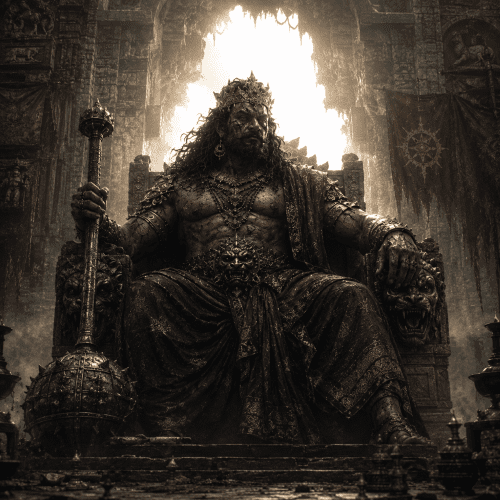
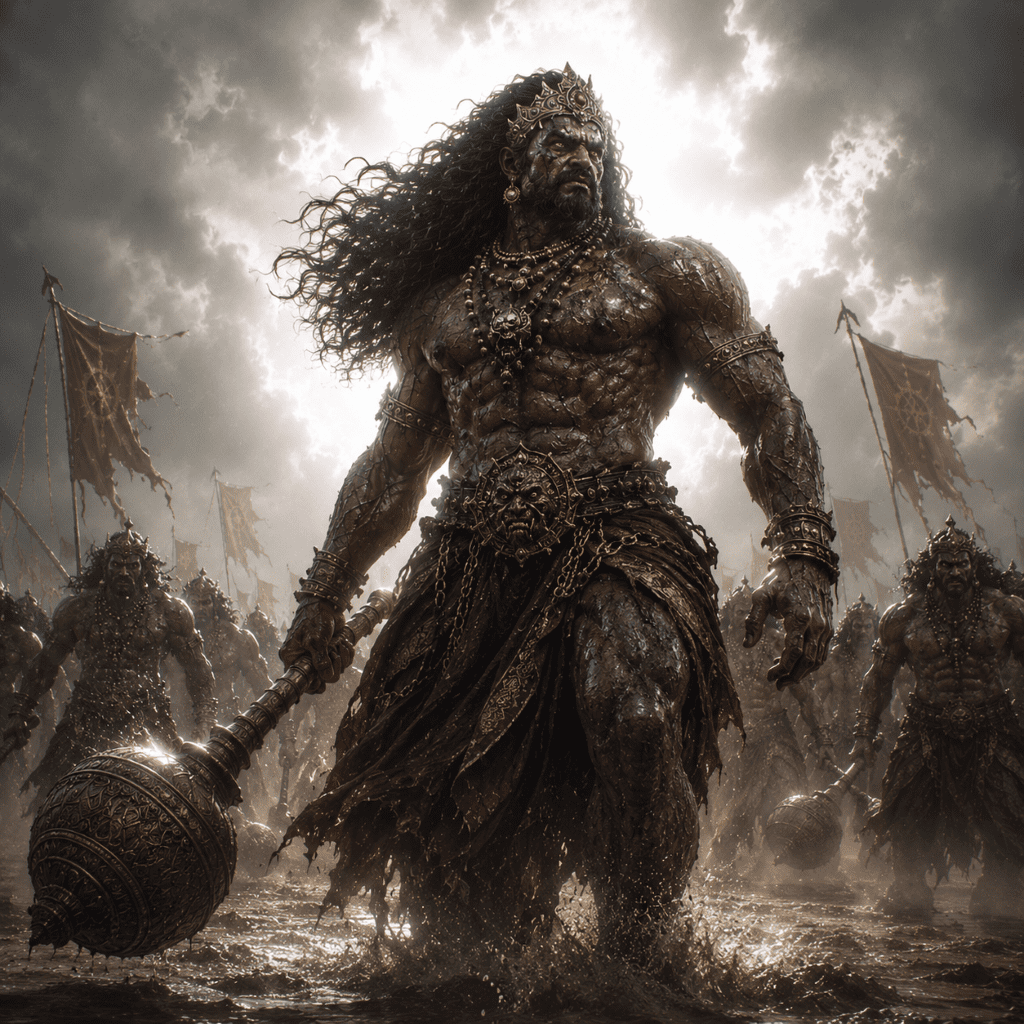
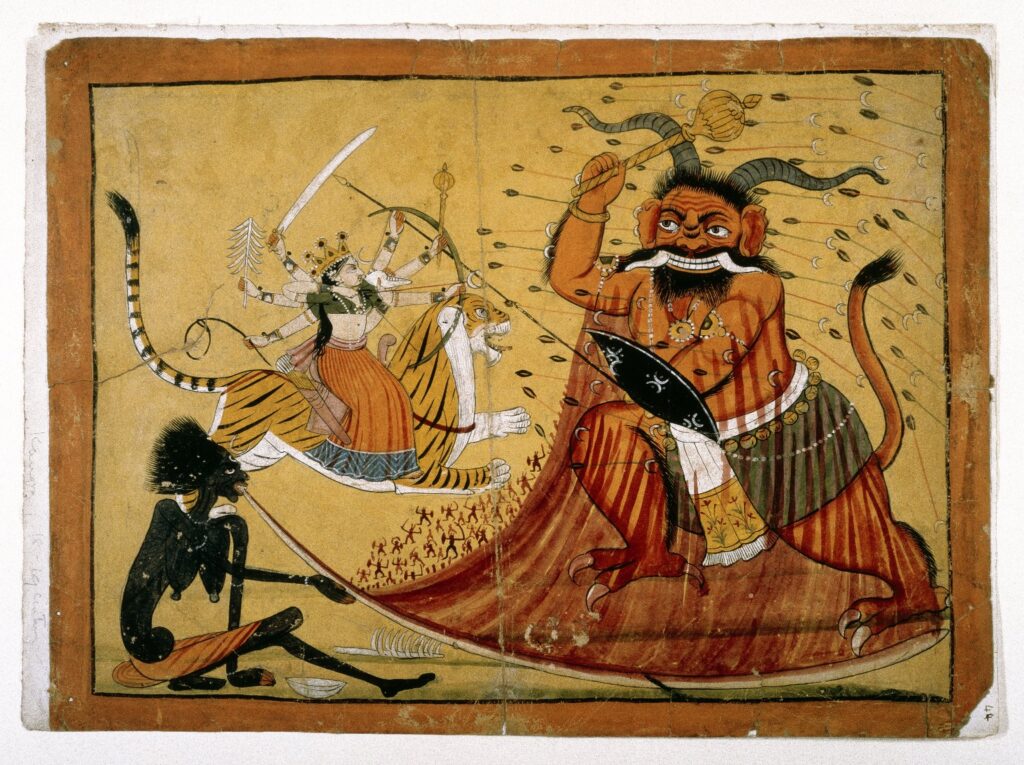
Traditional artwork and later retellings often depict him as a large, muscular demon with a dark or blood-red complexion. He is usually shown wearing elaborate armor and carrying powerful weapons into battle. His imposing presence symbolizes the overwhelming challenge he posed to the gods and the Goddess herself.
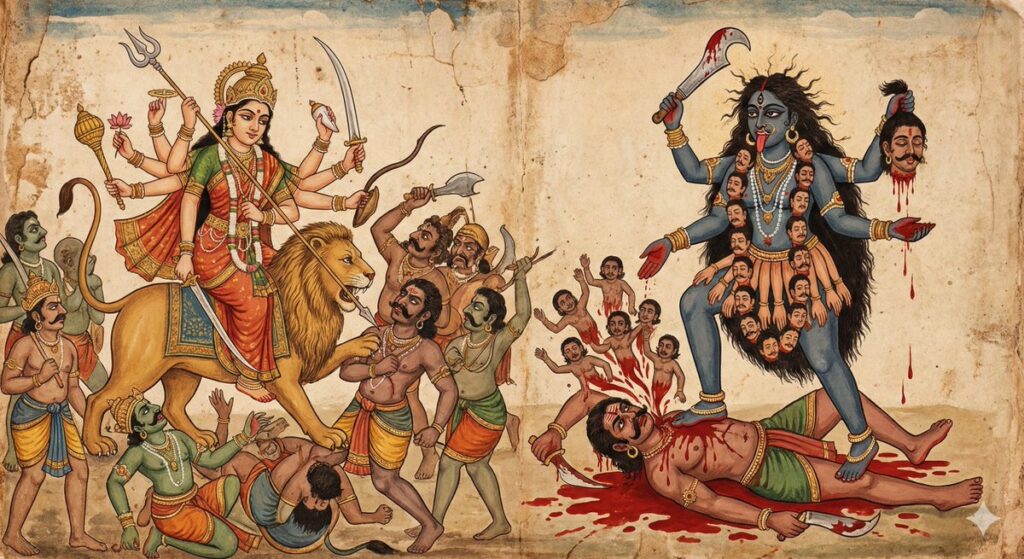
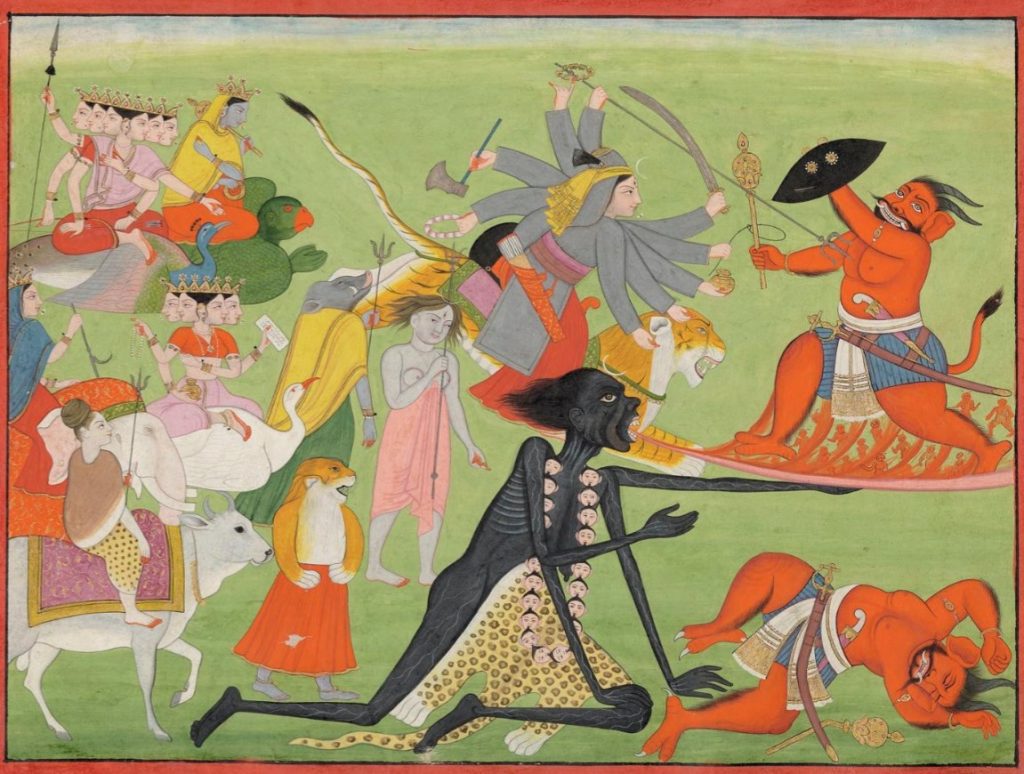
One of the most striking visual elements associated with Raktabija is the image of countless copies of himself emerging from spilled blood. In artistic depictions of the battle, the battlefield becomes crowded with duplicate demons, each created from a single drop. This imagery emphasizes the scale of the threat he represented and explains why ordinary attacks only made the situation worse.
Unlike many mythological monsters known for unusual physical features, Raktabija’s true terror lay in what happened when he was wounded. His body was not remarkable because of its appearance but because it served as the source of endless multiplication.
Family
The mythology surrounding Raktabija provides very little information about his personal family connections. Unlike many figures in Hindu mythology whose lineage plays a major role in their identity, Raktabija is defined primarily by his role as a warrior in the army of the Asuras.
He is most closely associated with the demon kings Shumbha and Nishumbha, serving as one of their most powerful commanders. These brothers sought to challenge the authority of the gods and seize control of the cosmos, and Raktabija became one of their greatest weapons in that campaign.
Some later traditions broadly place him among the Daityas or Asuras descended from the ancient enemies of the Devas. However, no widely accepted source provides detailed accounts of his parents, spouse, or children. Instead, the narrative focuses entirely on his participation in the cosmic battle between divine and demonic forces.
This lack of genealogical detail highlights an important aspect of his character. Raktabija is remembered not for where he came from but for the extraordinary challenge he presented to the forces of good.
Other names
Raktabija is almost universally known by this single name across Hindu mythological traditions. Unlike many gods, demons, and heroes who possess dozens of titles and epithets, his identity remains closely tied to the unique power embedded within his name. The name itself functions as both a title and a description. “Blood-Seed” directly refers to the supernatural ability that defined his existence and made him famous throughout Hindu mythology.
Modern writers and scholars occasionally describe him using phrases such as “the Blood-Seed Demon” or “the Demon of Infinite Replication” when explaining his story to contemporary audiences. These descriptions help clarify his role but are not traditional names found in classical texts.
The enduring use of a single name reflects how inseparable Raktabija is from his defining ability. The moment his name is mentioned, the image of blood transforming into countless new warriors immediately comes to mind.
Powers and Abilities
Raktabija’s legendary status comes from a boon that granted him one of the most unusual powers in world mythology. According to the Devi Mahatmya, every drop of blood that fell from his body onto the earth generated a new demon identical to him. These duplicates possessed the same strength, weapons, and abilities as the original.
This power created a terrifying battlefield dynamic. Every strike against him increased the number of enemies. As the Goddess and her divine manifestations attacked, thousands of new Raktabijas emerged from the blood spilled during combat. Instead of weakening him, conventional warfare caused his forces to expand exponentially.
The gods soon realized that victory would be impossible through ordinary means. Every wound inflicted upon him strengthened his position. His opponents faced a growing army that seemed capable of reproducing without limit.
To overcome this challenge, the Goddess assumed a fierce form associated with Kali. As Durga fought Raktabija, Kali spread her tongue across the battlefield and drank every drop of blood before it could touch the ground. By preventing the blood from reaching the earth, she stopped the creation of new copies.
Once his ability to multiply was neutralized, Raktabija could finally be defeated. This victory remains one of the most celebrated moments in the Devi Mahatmya, showcasing not only divine strength but also divine intelligence.
Symbolically, Raktabija represents problems that grow larger when addressed superficially. His story suggests that some challenges must be confronted at their source rather than through repeated attacks on their symptoms.
Modern Day Influence
The story of Raktabija continues to influence Hindu religious practice, popular culture, and philosophical interpretation. His battle against Durga and Kali remains a central episode during recitations of the Durga Saptashati and other devotional texts dedicated to the Goddess.
During festivals such as Navaratri and Durga Puja, the victory over Raktabija is often remembered as an example of divine triumph over seemingly impossible odds. The narrative reinforces the belief that wisdom and determination can overcome even the most overwhelming threats.
In modern discussions, Raktabija is frequently used as a metaphor for problems that multiply when handled incorrectly. Social issues, harmful habits, recurring negative thoughts, and even computer viruses have all been compared to the Blood-Seed Demon. The analogy resonates because it captures the frustration of dealing with challenges that appear to grow stronger when confronted in the wrong way.
His story has also inspired appearances in comics, television adaptations, animated series, and video games that draw upon Hindu mythology. These modern interpretations often emphasize his replication ability, presenting him as one of the most unique and memorable Asuras in Indian mythological tradition. More than a simple villain, Raktabija remains a powerful symbol of unchecked growth, recurring obstacles, and the necessity of addressing problems at their root cause.
Related Images


Source
Devi Mahatmya. (n.d.). In Mārkaṇḍeya Purāṇa (Durga Saptashati).
Raktabīja. (n.d.). (2006, January 9). In Wikipedia. Retrieved June 19, 2026, from https://en.wikipedia.org/wiki/Raktab%C4%ABja
Sameedh. (2024, February 14). Raktabija story. Sameedh.com. Retrieved June 19, 2026, from https://sameedh.com/raktabija-story/
The Indian Blog. (2024, July 22). Who was Raktabīja? Retrieved June 19, 2026, from https://indianblog.co.in/who-was-raktabija/
Wisdomlib. (2025, July 27). Raktabija: Significance and symbolism. Wisdomlib.org. Retrieved June 19, 2026, from https://www.wisdomlib.org/concept/raktabij
Bhattacharyya, N. N. (1996). History of the Sakta Religion. Munshiram Manoharlal Publishers.
Coburn, T. B. (1991). Encountering the Goddess: A Translation of the Devi-Mahatmya and a Study of Its Interpretation. SUNY Press.
Kinsley, D. (1988). Hindu Goddesses: Vision of the Divine Feminine in the Hindu Religious Traditions. University of California Press.
Frequently Asked Questions
Who was Raktabija in Hindu mythology?
Raktabija was a powerful Asura featured in the Devi Mahatmya. He fought for Shumbha and Nishumbha and possessed the ability to create identical copies of himself from every drop of blood spilled.
What does the name Raktabija mean?
The name Raktabija means “Blood-Seed,” derived from the Sanskrit words rakta (blood) and bija (seed).
How was Raktabija defeated?
Raktabija was defeated when Kali drank every drop of his blood before it touched the ground, preventing new clones from being created while Durga continued the attack.
What boon made Raktabija so powerful?
He possessed a boon that caused each drop of his blood to generate a new Raktabija identical in strength and abilities to the original.
What does Raktabija symbolize?
Raktabija symbolizes problems that multiply when addressed superficially, representing recurring obstacles, unchecked chaos, and challenges that require root-cause solutions.