


Narakasura : The Indian Asura King Defeated by Krishna
At a glance
| Description | |
|---|---|
| Origin | Indian Mythology |
| Classification | Hybrids |
| Family Members | Bhumi (Mother), Varaha/Vishnu (Father), Bhagadatta (Son) |
| Region | India |
| Associated With | Power, Conquest, Pride, Tyranny, Pragjyotisha, Warfare |
The Mythlok Perspective
In Mythlok’s Perspective, Narakasura is not merely a demon king but a cautionary symbol of corrupted potential. Unlike many villains who begin as embodiments of evil, he starts life with divine ancestry, noble opportunities, and immense blessings. His downfall illustrates a recurring mythological theme: power without humility becomes self-destructive. Similar patterns can be found in figures such as the Greek king-fool archetypes who challenge the gods and the Norse giant kings whose ambition disrupts cosmic balance. Across cultures, these stories remind us that greatness is not determined by birth or power alone, but by the wisdom with which those gifts are used.
Narakasura
Introduction
Narakasura, also known as Bhaumasura, is one of the most famous asura kings in Indian mythology. Remembered as a ruler whose ambition eventually led to his downfall, he occupies an important place in Puranic literature and regional traditions, particularly in Assam. His story is preserved in texts such as the Bhagavata Purana, Vishnu Purana, Harivamsa, and later regional narratives.
According to tradition, Narakasura ruled the kingdom of Pragjyotisha, often identified with parts of present-day Assam. Unlike many mythological villains who begin as evil figures, Narakasura’s story is more complex. He was born with divine ancestry and was initially expected to become a righteous ruler. Blessed with immense power and royal authority, he was entrusted with protecting his kingdom and its people.
Over time, however, pride and unchecked ambition transformed him. As his power increased, so did his arrogance. He challenged celestial beings, conquered territories, and eventually turned against the very principles that had once guided him. His actions brought suffering to gods, sages, and mortals alike, making him one of the most feared rulers in Indian mythology.
His eventual defeat by Krishna became a symbolic victory of dharma over adharma. This event is commemorated through Naraka Chaturdashi, an important observance associated with the Diwali festival. As a result, Narakasura remains a lasting symbol of how power without wisdom can lead to destruction.
Physical Traits
Ancient texts provide only limited details regarding Narakasura’s physical appearance. Like many asuras described in Indian mythology, he is primarily remembered through his actions, strength, and influence rather than through a detailed visual description.
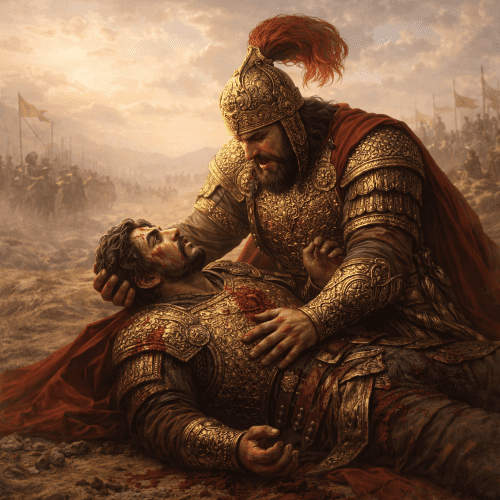
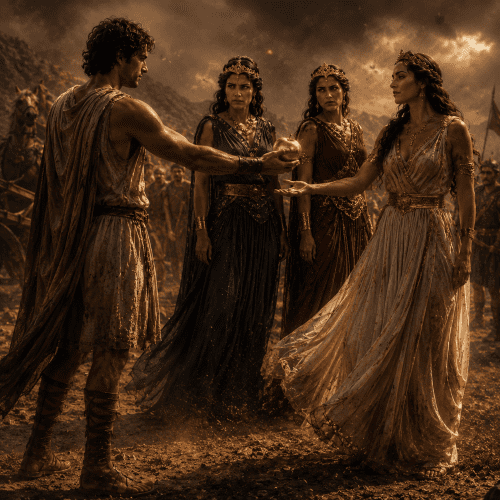
He is generally portrayed as a formidable warrior king possessing extraordinary physical power and a commanding presence. His status as both a royal ruler and an asura contributed to later depictions that emphasize his intimidating stature, fierce expression, and martial appearance. Traditional artwork often presents him wearing elaborate armor, royal ornaments, and carrying powerful weapons suited to a conqueror.
Unlike many gods who possess standardized iconography, Narakasura’s appearance varies across regional traditions. In theatrical performances, paintings, and festival representations, he is frequently shown as a powerful monarch with demonic characteristics that reflect his descent into tyranny.
His reputation as a nearly invincible warrior reinforced his image as a fearsome adversary capable of challenging even the gods. These portrayals focus less on physical beauty and more on strength, authority, and overwhelming power.
Family
Narakasura’s lineage is among the most significant aspects of his mythology. Most traditions identify him as the son of Bhudevi, the Earth Goddess, and Vishnu in his Varaha incarnation. Because of this divine parentage, Narakasura was not born as an inherently evil being. Instead, he began life with immense potential and divine blessings.
His connection to Bhudevi earned him the name Bhaumasura, meaning “the son of Bhumi.” Some legends state that he was raised by King Janaka of Mithila, providing him with a noble upbringing that further emphasizes the tragedy of his later corruption.
Narakasura eventually became the founder of a royal lineage associated with Pragjyotisha and Kamarupa. His most famous descendant is Bhagadatta, a respected king who appears in the Mahabharata and fights on the side of the Kauravas during the Kurukshetra War.
Through these connections, Narakasura occupies a unique position in mythology. He is simultaneously remembered as a divine offspring, a legendary king, and the ancestor of important dynastic traditions in northeastern India.
Other names
Narakasura is known by several names across different texts and regional traditions. The name Naraka is the most commonly used form and appears frequently in Puranic literature. Although the word is often associated with suffering or hell, the character’s name primarily serves as a personal identifier within the mythological narrative.
He is also widely called Bhaumasura, meaning “Asura born of Bhumi.” This title directly references his mother, Bhudevi, and highlights his divine origin. In many regional traditions, particularly in modern retellings, the name Narakasur is commonly used. Variations such as Bhauma and Naraka Bhauma may also appear depending on the source and language. These names collectively reflect both his noble lineage and his eventual reputation as one of mythology’s most infamous tyrants.
Powers and Abilities
Narakasura possessed extraordinary powers that made him one of the most dangerous asura rulers in Indian mythology. His divine ancestry granted him immense physical strength, while various blessings and boons made him exceptionally difficult to defeat.
Many traditions state that he received protection through powerful blessings connected to his birth. These advantages allowed him to dominate neighboring kingdoms and challenge celestial powers. His military capabilities were equally impressive, enabling him to build a vast empire and command formidable armies.
As his confidence grew, Narakasura launched campaigns against the heavens. He defeated numerous opponents and seized sacred treasures belonging to the gods. Among his most famous acts were the theft of Aditi’s divine earrings, the seizure of Indra’s royal umbrella, and the capture of other celestial treasures.
His tyranny extended beyond conquest. Later traditions describe him imprisoning 16,100 women within his palace, an act that became one of the primary reasons for divine intervention. During his final confrontation with Krishna and Satyabhama, Narakasura fought fiercely and employed powerful weapons, including the sataghni. Despite his strength, he was ultimately defeated, bringing an end to his reign of terror.
Modern Day Influence
Narakasura’s influence remains visible throughout modern Indian culture, especially during the annual Diwali celebrations. His defeat forms the foundation of Naraka Chaturdashi, observed across many regions as a celebration of the triumph of light over darkness and virtue over evil.
In Goa, the legend has developed into a unique cultural tradition. Communities construct giant effigies of Narakasura and ceremonially burn them before Diwali. These celebrations transform an ancient myth into a public reminder of the consequences of arrogance and wrongdoing.
In Assam, Narakasura occupies a more complex role. Beyond being a mythological villain, he is also associated with the ancient history and legendary dynasties of Kamarupa. Various locations, including Narakasura Hill near Guwahati, preserve connections to his legend and regional heritage.
The story continues to appear in books, television series, comics, digital media, and educational discussions. Modern interpretations often focus on his transformation from a blessed ruler into a tyrant, making him a powerful example of how greed, pride, and unchecked authority can corrupt even those with noble beginnings. Today, Narakasura remains one of the most enduring figures in Indian mythology, embodying both the dangers of power and the inevitable victory of dharma.
Related Images


Source
Dark Temples. (2024, November 18). Narakasura: The mythical demon king of Hindu mythology. DarkTemples. https://darktemples.com/narakasura-the-mythical-demon-king-of-hindu-mythology/
Glorious Hinduism. (2016, November 18). Narakasura. Glorious Hinduism. https://glorioushinduism.com/2016/11/19/narakasura/
Harshananda, S. (2023, April 6). Narakāsura. Hindupedia. https://www.hindupedia.com/en/Narak%C4%81sura
Poojn.in. (2025, April 16). Narakasura’s family and kingdom: Explained. Poojn. https://www.poojn.in/post/26581/narakasuras-family-and-kingdom-explained
Wisdom Library. (2020, February 24). Narakasura, Narakāsura: 2 definitions. WisdomLib. https://www.wisdomlib.org/definition/narakasura
Chinna Jeeyar Trust. (2025, April 19). Did Satyabhama kill Narakasura? Find out what Bhagavatham says. Chinnajeeyar.org. https://chinnajeeyar.org/satyabhama-kill-narakasura-find-bhagavatham-says/
Fables n Tales. (2026, May 20). The battle against Narakasura and Satyabhama’s destiny. FablesnTales. https://fablesntales.in/narakasura-battle-krishna-satyabhama-story/
Frequently Asked Questions
Who was Narakasura?
Why is Narakasura called Bhaumasura?
He is called Bhaumasura because he was the son of Bhumi or Bhudevi, the Earth Goddess.
Who killed Narakasura?
Narakasura was slain by Krishna, with Satyabhama playing a significant role in the battle according to many traditions.
What is the connection between Narakasura and Diwali?
Was Narakasura related to the Mahabharata?
Yes. His son Bhagadatta appears in the Mahabharata as a king who fought on the side of the Kauravas.


