

Tristan and Isolde : A Love Story That Defied Duty and Destiny
| Description | |
|---|---|
| Origin | Arthurian Mythology |
| Story Title | Tristan and Isolde |
| Main Characters | Tristan, Isolde |
| Type of Ending | Tragic |
| Symbolism | Courtly love, Loyalty vs passion |
Mythlok Perspective
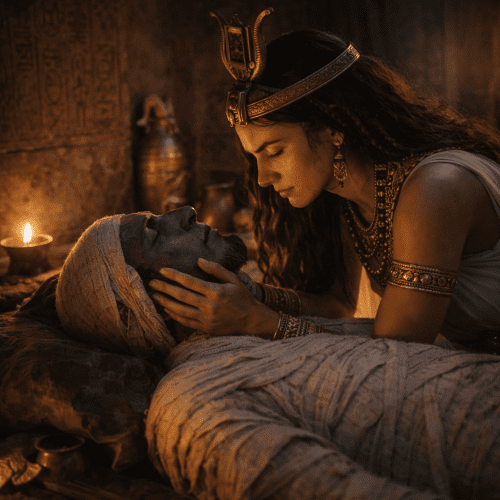
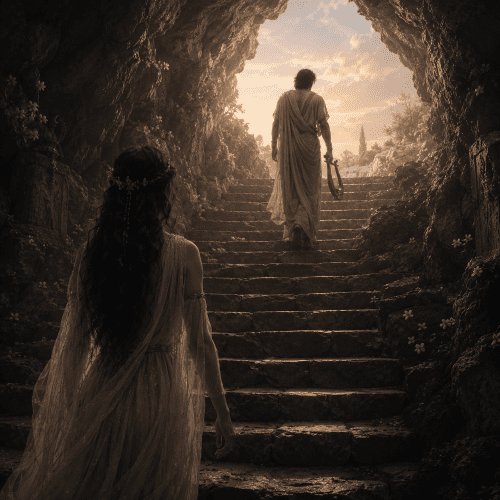
In Mythlok’s Perspective, the story of Tristan and Isolde is less about forbidden love and more about the impossible choices between the heart and duty. The lovers are not portrayed as heroes because they defy society, but because they remain trapped between genuine affection and the obligations they cannot escape. Their tragedy lies in the fact that every choice they make carries a personal cost, reminding us that love alone cannot erase loyalty, honor, or responsibility. A similar tension appears in the Persian romance of Layla and Majnun, where devotion endures despite separation and social barriers. It also resonates with the Greek myth of Orpheus and Eurydice, where love is ultimately undone by fate and a single irreversible moment. Across cultures, these stories suggest that the greatest romances are remembered not because love conquers all, but because it reveals what people are willing to sacrifice when the heart and destiny refuse to walk the same path.
Tristan and Isolde
Introduction
The story of Tristan and Isolde is one of the greatest tragic romances ever told. Emerging from Celtic tradition and later flourishing in medieval French, German, and English literature, the legend explores what happens when love collides with loyalty, honor, and destiny. Although the tale is often associated with Ireland because of Isolde’s origins, the surviving versions belong to the medieval romance tradition rather than a single preserved Irish myth.
For centuries, audiences have been captivated by the relationship between the Cornish knight Tristan and the Irish princess Isolde. Their love is neither simple nor celebrated. Instead, it is shaped by impossible choices, political alliances, and a magical love potion that binds them together despite the consequences. Their story became one of the foundations of courtly romance, influencing countless works of literature, music, theatre, and art across Europe.
Unlike many romantic tales that end in triumph, Tristan and Isolde reminds us that love can be both beautiful and devastating. It asks whether true love is worth pursuing when it comes at the cost of duty, reputation, and even life itself.
Characters Involved
At the heart of the legend is Tristan, the nephew of King Mark of Cornwall. Celebrated as one of the greatest knights of his age, Tristan is admired for his courage, loyalty, musical talent, and noble character. His greatest conflict is not fought on the battlefield but within himself, as he struggles between his devotion to his king and his overwhelming love for Isolde.
Isolde, also known as Iseult or Yseult in different traditions, is the princess of Ireland. She is renowned not only for her extraordinary beauty but also for her knowledge of healing. Although she is destined to marry King Mark as part of a political alliance, fate binds her heart to Tristan instead.
King Mark is both Tristan’s uncle and Cornwall’s ruler. In most medieval versions, he is portrayed as a fundamentally decent king whose trust is betrayed by the two people closest to him. His role adds emotional complexity to the story, as the conflict is not between heroes and villains but between love and obligation.
Several versions also include Brangien, Isolde’s loyal maidservant, whose mistake leads to the lovers drinking the enchanted potion. Another important figure is Isolde of the White Hands, whom Tristan later marries during his exile. Although she becomes his wife, Tristan’s heart never truly leaves his first love, creating another layer of tragedy.
Story Summary
The legend begins after Tristan defeats the Irish champion Morholt, though he is seriously wounded during the battle. He eventually reaches Ireland, where Isolde heals him without realizing he was responsible for Morholt’s death. Later, Tristan returns to Ireland on behalf of King Mark to escort Princess Isolde to Cornwall, where she is to become the king’s bride.
During the voyage, Tristan and Isolde accidentally drink a magical love potion that had been prepared for Isolde and King Mark. The potion creates an irresistible bond between them, transforming what should have been a political marriage into one of literature’s greatest forbidden romances.
Despite Isolde’s marriage to King Mark, the lovers cannot resist their feelings. Their secret relationship forces them into a life of deception, suspicion, and repeated separation. They flee into forests, survive dangerous trials, and repeatedly attempt to honor their duties while being drawn back together by their uncontrollable love.
Eventually, Tristan leaves Cornwall and settles in Brittany, where he marries Isolde of the White Hands. Yet the marriage remains emotionally empty because his love for the Irish princess never fades.
The tragedy reaches its climax when Tristan receives a fatal wound. Believing that only Isolde can save him, he sends for her. According to the most famous version, the returning ship is instructed to fly white sails if Isolde is aboard and black sails if she is not. Out of jealousy, Isolde of the White Hands falsely tells Tristan that the approaching ship carries black sails. Convinced his beloved has abandoned him, Tristan dies of despair. When Isolde finally arrives and discovers his death, she collapses beside him and dies of grief. Many medieval retellings conclude with intertwined plants growing from their graves, symbolizing a love that even death cannot separate.
Epics & Poems
No original version of the Tristan and Isolde legend survives, but scholars believe it originated in oral Celtic storytelling before being adapted into medieval romances. The earliest surviving literary versions were written during the 12th century by Béroul and Thomas of Britain. Béroul’s version presents a more adventurous and earthy narrative, while Thomas places greater emphasis on the emotional and psychological struggles of the lovers.
Around 1210, Gottfried von Strassburg produced what is widely regarded as the finest literary retelling of the story. His unfinished German romance transformed Tristan and Isolde into one of medieval Europe’s greatest love stories.
The legend later became part of the wider Arthurian tradition through the Prose Tristan and was incorporated into Sir Thomas Malory’s Le Morte d’Arthur, where Tristan appears as one of King Arthur’s greatest knights. Perhaps the most influential modern adaptation is Richard Wagner’s nineteenth-century opera Tristan und Isolde, whose revolutionary music permanently shaped Western classical music and cemented the lovers’ place in popular culture.
Symbolism
The central symbol of the legend is the love potion, representing emotions that cannot be controlled by reason or social expectations. While some versions portray the potion as the true cause of the romance, others suggest it merely reveals feelings that already existed between Tristan and Isolde.
The white and black sails symbolize hope and despair, showing how misunderstanding and deception can alter the course of fate in a single moment. The lovers’ repeated journeys into forests highlight a world beyond royal courts, where love exists outside the restrictions imposed by society and politics. These natural settings contrast sharply with the responsibilities and expectations waiting for them in Cornwall.
Perhaps the most enduring symbol is the pair of intertwined trees or vines that grow from their graves. This image represents eternal love, suggesting that although Tristan and Isolde could never remain together in life, death could not divide them.
Cultural Variations
The legend evolved across Europe, producing several distinct traditions while preserving its central romance. Its earliest roots are generally linked to Celtic traditions from Britain and Ireland, with scholars drawing parallels to Welsh legends surrounding Drystan and Essyllt. Although similarities exist between Tristan and Isolde and the Irish story of Diarmuid and Gráinne, they remain separate narratives rather than different versions of the same myth.
French romances emphasized the ideals of courtly love, presenting the lovers as noble figures caught between personal desire and feudal duty. German writers explored the psychological depth of the relationship, especially in Gottfried’s influential version.
English adaptations integrated Tristan into Arthurian legend, expanding his reputation as one of the greatest knights of the Round Table. Modern retellings often move beyond medieval morality, focusing instead on universal themes of forbidden love, emotional sacrifice, and the consequences of impossible choices.
Associated Practices
Unlike many ancient myths, the legend of Tristan and Isolde was never connected to religious rituals or formal worship. Instead, its importance lay in its role within medieval aristocratic culture. The story became a model for discussions of courtly love, a literary ideal that explored romance outside conventional marriage while emphasizing devotion, secrecy, and emotional refinement. Medieval audiences used the legend to debate questions of loyalty, honor, and personal responsibility.
Artists across Europe illustrated scenes from the romance in illuminated manuscripts, sculptures, tapestries, ivory carvings, and decorative objects. As the centuries passed, the story continued to inspire operas, novels, stage productions, paintings, and films, ensuring its place as one of Europe’s defining love stories.
Modern Influence
The influence of Tristan and Isolde extends far beyond medieval literature. Richard Wagner’s opera Tristan und Isolde, first performed in 1865, transformed the legend into one of the greatest achievements of Western music. Its famous “Tristan chord” challenged traditional musical harmony and became a landmark in classical composition.
The romance has also inspired countless novels, theatrical productions, films, and television adaptations. Modern storytellers often reinterpret the lovers as symbols of passion that refuses to yield to political power, family expectations, or social convention.
Even today, the legend continues to resonate because its central conflict remains timeless. The struggle between love and responsibility, desire and duty, speaks to audiences across cultures and generations. More than eight centuries after its earliest surviving manuscripts, Tristan and Isolde remains one of history’s most powerful portrayals of love that could never truly exist, yet could never truly die.



Sources
Britannica. (2026, March 8). Tristan and Isolde | Medieval romance, legend & mythology. https://www.britannica.com/topic/Tristan-and-Isolde
Pitt, T. (n.d.). Tristan and Isolde. University of Pittsburgh. https://sites.pitt.edu/~dash/tristan.html
Tearle, O. (2025, April 8). A summary and analysis of the Tristan and Isolde myth. Interesting Literature. https://interestingliterature.com/2021/05/tristan-and-isolde-myth-summary-analysis/
Bédier, J. (1949). The romance of Tristan and Iseult (H. Belloc, Trans.). Oxford University Press.
Gottfried von Strassburg. (1960). Tristan (A. T. Hatto, Trans.). Penguin Books.
Lacy, N. J. (Ed.). (2001). The new Arthurian encyclopedia. Garland Publishing.
Hanning, R. W. (1972). Tristan and Isolde: The development of a legend. Speculum, 47(3), 447–469.
Frequently Asked Questions
What is the story of Tristan and Isolde?
Tristan and Isolde tells the tragic tale of a Cornish knight and an Irish princess whose forbidden love leads to betrayal, heartbreak, and death.
Why did Tristan and Isolde fall in love?
In most medieval versions, they accidentally drink a magical love potion intended for Isolde and King Mark, creating an irresistible bond.
Is Tristan and Isolde part of Arthurian legend?
Yes. Although it originated as an independent Celtic romance, later medieval writers incorporated Tristan into the Arthurian cycle.
Did Tristan and Isolde really exist?
There is no historical evidence that they were real people. They are legendary figures whose story developed from Celtic traditions and medieval romances.
What does the love potion symbolize in Tristan and Isolde?
The potion symbolizes overwhelming passion, fate, and the conflict between personal desire and social duty, making it one of literature’s most famous symbols of forbidden love.