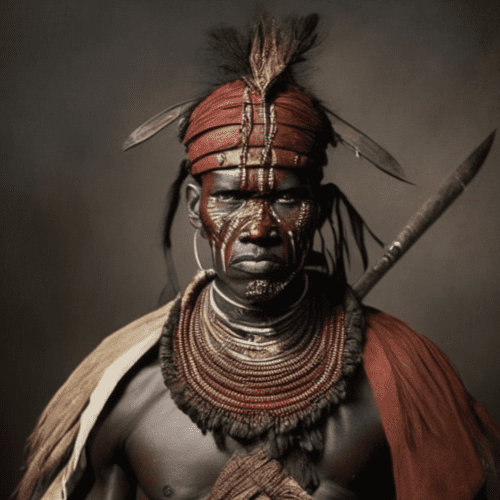
Leeyio : The Maasai Ancestor Behind the Origin of Death
At a glance
| Description | |
|---|---|
| Origin | Maasai Mythology |
| Classification | Mortals |
| Family Members | N/A |
| Region | Kenya, Tanzania |
| Associated With | Creation myths, Mortality, Ancestry, |
The Mythlok Perspective
In Mythlok’s Perspective, Leeyio is one of the most fascinating ancestral figures in African tradition because his story places the fate of humanity in the hands of an ordinary person rather than a powerful god. His mistake is not an act of rebellion but a moment of human fallibility, making the myth deeply relatable. The tale reflects a belief that words carry creative power and that responsibility accompanies knowledge. Similar themes appear in other cultures, such as the failed messenger myths of Central and Southern Africa and the story of Pandora in Greek tradition, where a single action permanently changes the human condition. Leeyio reminds us that even small choices can shape the destiny of generations.
Leeyio
Introduction
Leeyio occupies a unique place in Maasai tradition as one of the earliest human figures in their sacred stories. Often described as the first man created by the creator deity Naiteru-kop, he serves as a bridge between the divine world and humanity. His story is not one of heroic battles or supernatural feats, but of responsibility, choice, and the consequences that follow a single mistake.
Among the Maasai people of Kenya and Tanzania, Leeyio is remembered primarily through a powerful origin myth that explains why human beings experience permanent death while the moon continually disappears and returns. Through this narrative, Leeyio becomes more than an ancestral figure. He represents humanity itself, capable of receiving divine guidance yet vulnerable to error. His tale remains one of the most important explanations of mortality in Maasai oral tradition and continues to be passed down through generations.
Physical Traits
Unlike many legendary ancestors found in world mythology, Leeyio is not remembered for a distinctive appearance. Traditional Maasai stories focus on his actions and his relationship with the creator rather than his physical form. As a result, there are no detailed descriptions of his height, clothing, facial features, or other defining characteristics.
This absence of physical detail is significant because it allows Leeyio to function as a symbolic ancestor rather than a larger-than-life hero. He represents the first human being and the shared origins of mankind. In many retellings, he is portrayed simply as a man living among his people, entrusted with a sacred responsibility by the divine. His importance comes from what he did rather than how he looked. Through his story, Maasai tradition emphasizes wisdom, obedience, and accountability over physical strength or beauty.
Family
Leeyio is associated with the ancestral origins of different peoples through a well-known Maasai tradition involving his two sons. According to the story, each son was given the opportunity to ask for an inheritance.
The elder son requested a share of everything found in the world. In response, he received livestock including sheep, goats, and cattle. He later became associated with neighboring agricultural and pastoral communities, often identified in traditional narratives as ancestors of Bantu-speaking peoples.
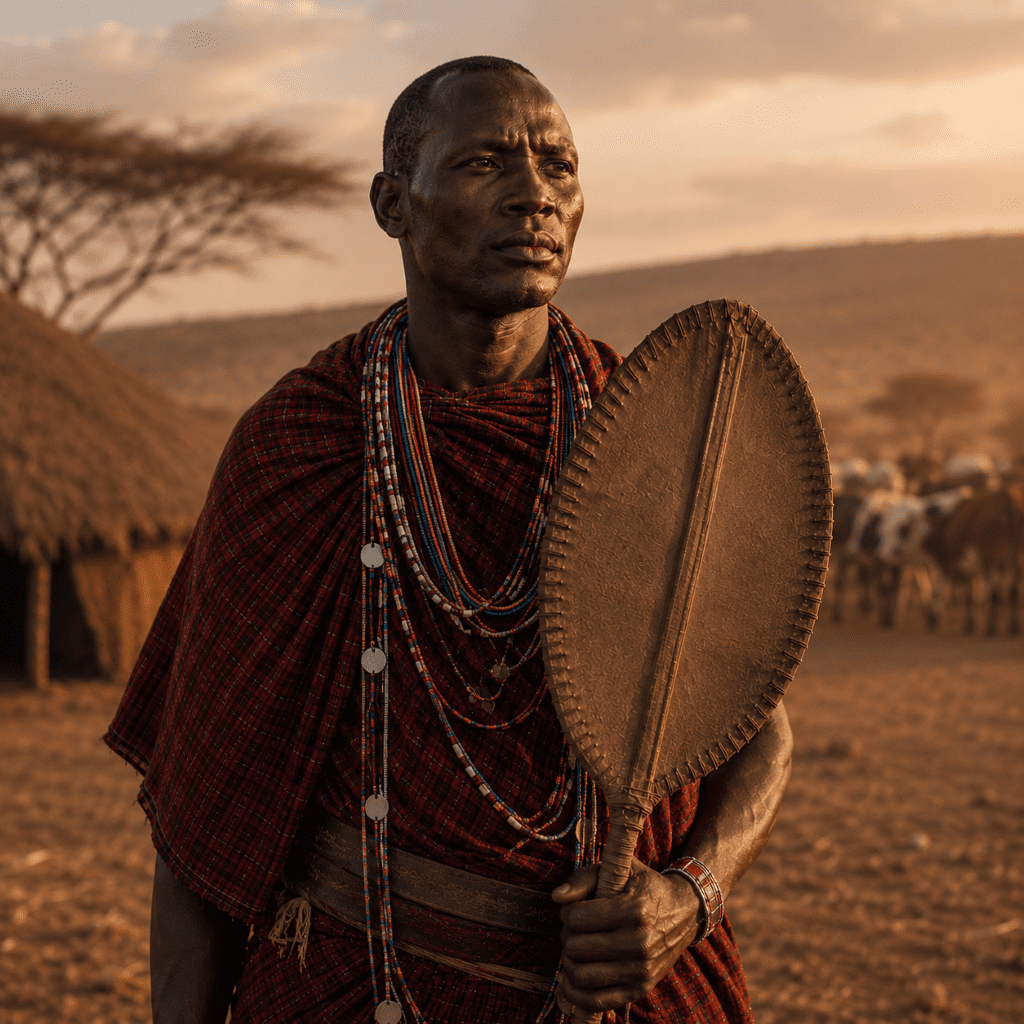
Leeyio’s younger son made a very different request. Rather than asking for material wealth, he asked for his father’s fan, a symbol of authority and leadership. Because of this choice, he was destined for greatness and became the ancestor of the Maasai people. This story remains important because it reinforces Maasai cultural identity and explains the special relationship between the Maasai and cattle, which continue to play a central role in their society and traditions.
Other names
The name Leeyio appears in several forms across written sources. The most common alternative spelling is Le-eyo, while some records use slight variations depending on how Maasai oral traditions were transliterated into English.
These differences are not indications of separate figures but rather reflect the challenges of recording oral traditions in written form. Since Maasai myths were passed down orally for generations before being documented by scholars and ethnographers, variations in spelling naturally emerged. Regardless of the spelling used, the stories consistently refer to the same ancestral figure whose actions shaped the destiny of humanity and established key aspects of Maasai identity.
Powers and Abilities
Leeyio is not portrayed as a god, spirit, or supernatural warrior. Instead, his significance comes from a sacred responsibility entrusted to him by Naiteru-kop. This responsibility involved the use of ritual speech, which in Maasai belief carried immense power.
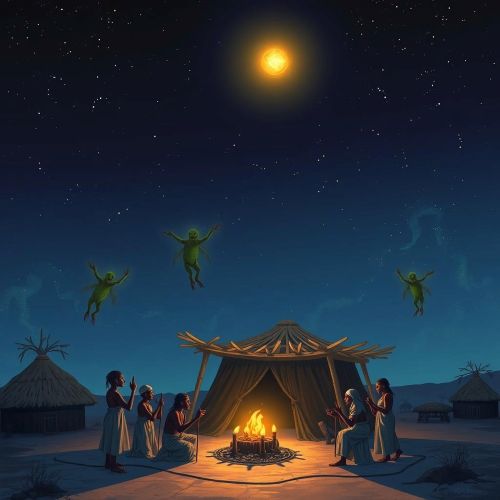
According to the myth, the creator instructed Leeyio to recite a specific formula whenever a person died. The words were intended to ensure that humans would return to life, while the moon would disappear permanently. If spoken correctly, people would have shared in a cycle of renewal similar to the phases of the moon.
However, when a neighbor’s child died, Leeyio mistakenly reversed the divine instruction. Instead of granting renewal to humanity, his words assigned rebirth to the moon and permanence to human death. The moon would continue to vanish and return, while human beings would die and remain gone.
Later, when his own child died, Leeyio realized his mistake and attempted to correct it. By then, however, the creator declared that the original words had already established the order of the world and could not be undone.
This story highlights the extraordinary power of speech within Maasai tradition. Leeyio’s influence did not come from magical abilities but from his role as a guardian of sacred knowledge. His failure transformed the fate of every human being and became the explanation for mortality itself.
Modern Day Influence
Although Leeyio is not worshipped as a deity today, his story remains an important part of Maasai cultural heritage. The myth continues to be told as an explanation for one of humanity’s oldest questions: why do people die? The narrative also serves as a reminder of the importance of listening carefully, respecting sacred responsibilities, and understanding the lasting consequences of one’s actions. These themes remain relevant within Maasai communities and beyond.
Anthropologists and scholars frequently reference Leeyio when studying African origin myths and explanations for death. His story is often compared with similar traditions found throughout Africa, where a misunderstanding, delayed message, or mistake by an ancestral figure introduces mortality into the world.
Today, Leeyio survives through oral storytelling, academic research, cultural education programs, and publications documenting Maasai traditions. While many ancient myths have faded over time, his story continues to offer insight into Maasai beliefs about creation, destiny, and the relationship between humanity and the divine.
Related Images

Source
Bluegecko. (n.d.). Maasai fables and legends: The origin of death. Traditional Music and Cultures of Kenya. http://www.bluegecko.org/kenya/tribes/maasai/stories-death.htm
Godchecker. (2023, June 15). Le-eyo (Maasai mythology). In Godchecker: African mythology. https://www.godchecker.com/african-mythology/LE-EYO/
Le-eyo. (n.d.). In Wikipedia. Retrieved June 9, 2026, from https://en.wikipedia.org/wiki/Le-eyo
Maasai people. (n.d.). In Chinese Wikipedia (马赛人). Retrieved June 9, 2026, from https://zh.wikipedia.org/wiki/%E9%A6%AC%E8%B3%BD%E4%BA%BA
Sankan, S. S. (1971). The Maasai. Nairobi: East African Literature Bureau.
Spear, T. (1993). Being Maasai: Ethnicity and identity in East Africa. London: James Currey.
Waller, R. (1976). The Maasai and the lake: Myth, ritual and politics in Maasailand. Journal of African History, 17(4), 529–553.
Hastings, J. (2003). Encyclopedia of Religion and Ethics, Part 16. Kessinger Publishing.
Hollis, A. C. (2003). Masai Myths, Tales and Riddles. Courier Dover Publications.
Kipury, N. (1983). Oral Literature of the Maasai. East African Educational Publishers.
Frequently Asked Questions
Who is Leeyio in Maasai tradition?
Leeyio is the first man and ancestral figure in Maasai tradition, best known for his role in the myth explaining the origin of human mortality.
What is Leeyio famous for?
He is famous for mistakenly reversing a sacred ritual phrase, causing humans to experience permanent death while the moon continues to return.
Is Leeyio a god?
No. Leeyio is generally regarded as a mortal ancestral figure rather than a deity.
Who created Leeyio?
According to Maasai tradition, Leeyio was created by Naiteru-kop, a creator deity associated with the beginning of the earth.
Why is Leeyio important in Maasai culture?
Leeyio’s story explains the origin of death, reinforces Maasai ancestry traditions, and remains an important part of Maasai oral heritage.