

Karkotaka : The Indian Naga King of Transformation and Destiny
At a glance
| Description | |
|---|---|
| Origin | Indian Mythology |
| Classification | Hybrids |
| Family Members | Sage Kashyapa (Father), Kadru (Mother), Ananta (Shesha), Vasuki, Takshaka, Padma, Mahapadma, Kulika (Siblings) |
| Region | India |
| Associated With | Transformation, Protection, Serpent, Poison |
The Mythlok Perspective
In Mythlok’s Perspective, Karkotaka is one of the most fascinating serpent figures in Indian mythology because he overturns the common image of the serpent as a purely dangerous being. His bite does not destroy; it protects. His poison does not weaken; it transforms. Through the story of Nala, Karkotaka becomes a symbol of hidden grace operating beneath apparent suffering. This role closely mirrors other transformative serpent figures around the world. Like the feathered serpent Quetzalcoatl of Mesoamerica or the wise dragons of East Asian traditions, Karkotaka embodies knowledge, change, and renewal rather than simple destruction. His legend reminds us that some of life’s most difficult experiences may ultimately become the source of our greatest strength.
Karkotaka
Introduction
Karkotaka is one of the most renowned serpent kings in Indian mythology and occupies a significant place among the Ashtanagas, the Eight Great Naga Kings revered in Hindu tradition. Born to the sage Kashyapa and Kadru, the mother of the serpent race, Karkotaka belongs to a powerful lineage of semi-divine beings who inhabit both earthly and subterranean realms.
Although many Nagas appear throughout Indian epics and Puranic literature, Karkotaka is especially remembered for his role in the story of Nala and Damayanti found in the Mahabharata. Unlike many mythical serpents who serve as adversaries, Karkotaka acts as an unlikely protector. His intervention changes the course of King Nala’s life and ultimately helps the fallen monarch regain his kingdom and destiny.
The story of Karkotaka illustrates a recurring theme in Indian mythology: what appears to be a curse may actually conceal a blessing. Through deception, suffering, and transformation, Karkotaka becomes a symbol of hidden protection and spiritual growth. His legend continues to be remembered in religious traditions, temple worship, and cultural storytelling across India.
Physical Traits
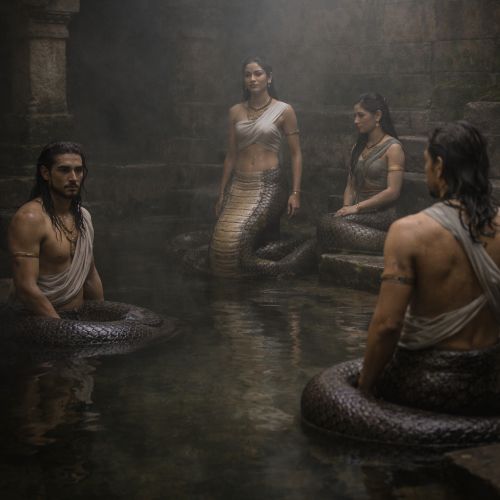
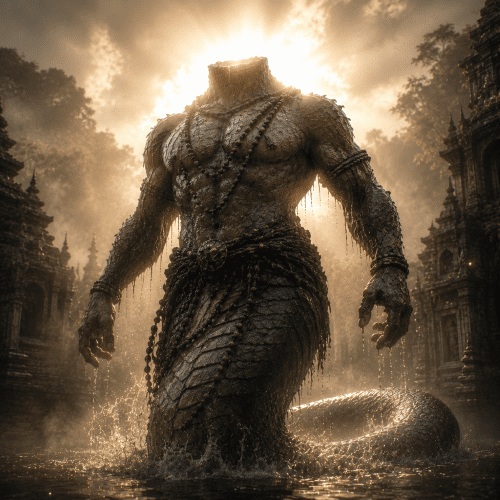
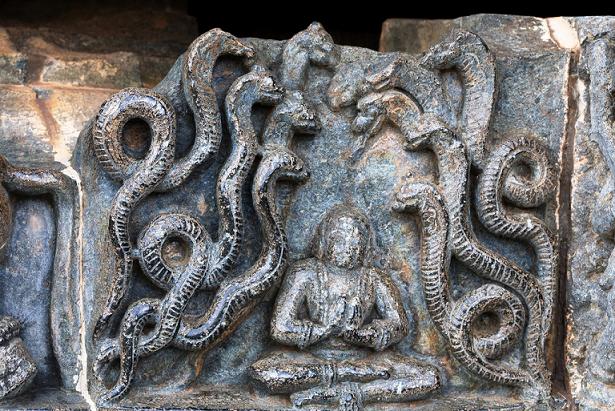
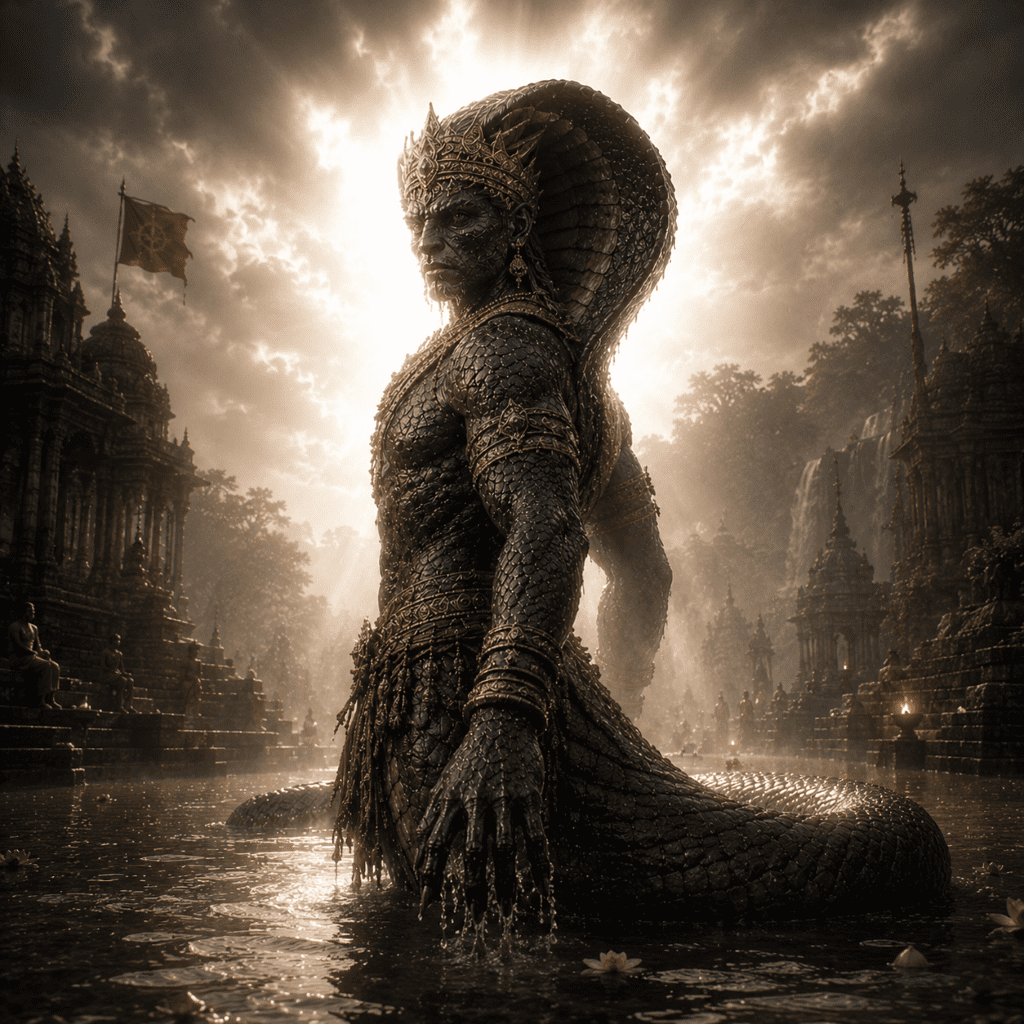
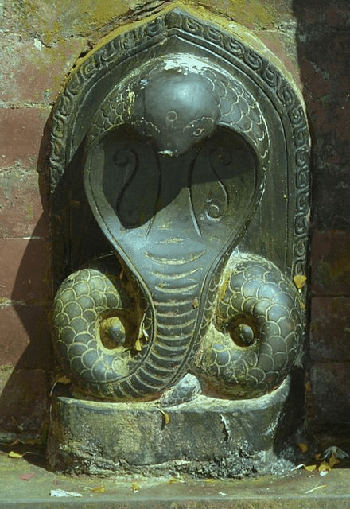
Karkotaka is generally portrayed as a powerful Naga possessing both human and serpentine characteristics. Traditional depictions often show him with a human upper body and a serpent’s lower form, reflecting the appearance commonly associated with divine Nagas in Indian art and literature.
Ancient texts describe him as a fearsome and majestic serpent king whose presence commands respect. Some traditions depict him as dark or black in colour, emphasizing his mysterious and formidable nature. In contrast, certain Tibetan Buddhist sources describe Karkotaka as white, demonstrating how his image evolved across different cultural traditions.
One of Karkotaka’s most remarkable attributes is his ability to alter his form. During the famous encounter with King Nala, he reduced himself to a tiny size while trapped within a forest fire. This ability to change shape is characteristic of powerful Nagas and highlights their supernatural nature.
Karkotaka is also associated with an unusually potent venom. Unlike ordinary poison, his venom possesses transformative properties. Rather than simply causing harm, it can alter appearances, conceal identities, and serve divine purposes. This unique characteristic makes him one of the most distinctive serpent beings in Indian mythology.
Family
Karkotaka belongs to one of the most important families in Indian cosmology. His father, the sage Kashyapa, is regarded as one of the progenitors of numerous divine and semi-divine races. Through Kashyapa, Karkotaka shares ancestry with gods, demons, birds, and many other mythical beings.
His mother, Kadru, is celebrated as the matriarch of the Naga race. According to traditional accounts, Kadru gave birth to thousands of serpent offspring who became rulers and guardians of various realms. Through her lineage, Karkotaka inherited the wisdom, power, and mystical abilities associated with the Nagas.
Among his famous brothers are Ananta (also known as Shesha), the cosmic serpent upon whom Lord Vishnu rests; Vasuki, the serpent king used as the churning rope during the Samudra Manthana; and Takshaka, another influential Naga who appears prominently in the Mahabharata.
As one of the chief Nagas, Karkotaka occupies a respected position within this divine serpent lineage. His inclusion among the Ashtanagas underscores his importance and status within Indian mythological traditions.
Other names
The most commonly used name for this serpent king is Karkotaka or Karkoṭaka, the Sanskrit form found in ancient scriptures. Over centuries, regional pronunciations and linguistic traditions have produced minor variations of the name while preserving its essential identity.
In Tibetan Buddhist traditions, Karkotaka is known by the name Tobgyu. This demonstrates how his legend spread beyond India and became incorporated into broader South Asian religious traditions.
Several sacred locations have also preserved his name. Karkotaka Hill in Maharashtra is associated with his penance and worship, while temples dedicated to him often refer to him through titles such as Karkoteshvara or Nag Karkotaka Maharaj. His inclusion among the revered serpent deities worshipped during Nag Panchami has further ensured that his name remains familiar to devotees across different regions of India.
Powers and Abilities
Karkotaka’s most famous power is transformation. This ability is dramatically illustrated in the Mahabharata when he encounters King Nala. After being rescued from a forest fire, Karkotaka bites Nala and alters his appearance completely. The once handsome king becomes unrecognizable, allowing him to escape detection during a difficult period of exile.
This act is often misunderstood as punishment, but it was actually intended as protection. At the time, Nala was under the influence of Kali, a malevolent force that had brought misfortune upon him. Karkotaka’s venom weakened Kali’s hold and helped shield Nala from further harm.
Another extraordinary ability attributed to Karkotaka is shape-shifting. Like many powerful Nagas, he can alter his size and form according to circumstances. This power reflects the fluid nature of serpent beings in Indian mythology, who often move between physical and spiritual realms.
His venom is also unique because it possesses magical rather than purely destructive properties. It can transform, protect, and even grant resistance to harmful influences. Some traditions further describe Karkotaka as possessing a gaze capable of emitting poisonous energy, enhancing his fearsome reputation.
Symbolically, Karkotaka represents the ability to transform adversity into strength. His story demonstrates that temporary hardship can ultimately serve a greater purpose, making him an enduring symbol of resilience and hidden blessings.
Modern Day Influence
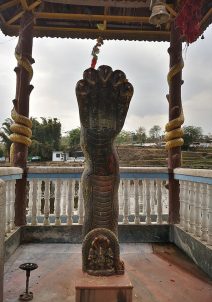
Karkotaka continues to be remembered in religious practice, folklore, and cultural traditions throughout India and Nepal. Several temples dedicated to him remain active places of worship, including the famous Karkotaka Nag Temple near Bhimtal in Uttarakhand and sacred sites associated with him in Maharashtra and Rajasthan.
His role in Nag Panchami celebrations has helped preserve his significance for modern devotees. During this annual festival honouring serpent deities, Karkotaka is remembered alongside other great Nagas such as Ananta, Vasuki, and Takshaka. Worshippers seek blessings for protection, prosperity, and relief from negative influences.
The story of Nala and Damayanti remains one of the most beloved narratives in Indian literature, ensuring that Karkotaka’s role continues to be retold through books, performances, and educational works. His actions in the tale are frequently interpreted as an example of divine intervention disguised as misfortune.
In contemporary spiritual discussions, Karkotaka is often viewed as a symbol of personal transformation. His legend resonates with those facing challenges because it illustrates how difficult experiences can ultimately lead to growth, wisdom, and renewal. Even today, Karkotaka remains a powerful reminder that destiny often unfolds in unexpected ways and that apparent setbacks may conceal the path to a greater future.
Related Images


Source
Hindu Blog. (2010, August 28). Karkotaka – Story of Naga Karkotak. https://www.hindu-blog.com/2010/08/karkotaka-story-of-naga-karkotak.html
Wikipedia. (2006, September 22). Karkotaka. https://en.wikipedia.org/wiki/Karkotaka
Wisdom Library. (2024, October 30). Significance of Naga Karkotaka. https://www.wisdomlib.org/concept/naga-karkotaka
Om Spiritual Shop. (2025, June 29). Nag Panchami 2025: Significance and Rituals. https://www.omspiritualshop.com/blogs/news/nag-panchami-2025-significance-and-rituals
Wisdom Library. (2024, May 13). King Nala’s Encounter with the Naga Karkotaka. https://www.wisdomlib.org/hinduism/book/mahabharata-english-summary/d/doc1345448.html
Nativeplanet. (2018, December 31). Karkotaka Nag Temple, Bhimtal. https://www.nativeplanet.com/bhimtal/attractions/karkotaka-nag-temple/
Rigpa Wiki. (2021, December 31). Eight Great Naga Kings. https://www.rigpawiki.org/index.php?title=Eight_Great_Naga_Kings
Indianetzone. (2016, September 12). Karkotaka. https://www.indianetzone.com/karkotaka_indian_demigod
Frequently Asked Questions
Who is Karkotaka in Indian mythology?
Karkotaka is one of the Eight Great Naga Kings and is best known for helping King Nala by transforming his appearance in the Mahabharata.
Was Karkotaka a god or a serpent?
Karkotaka is a Naga, a semi-divine serpent being in Indian mythology, often classified as a demigod or hybrid being.
Why did Karkotaka bite King Nala?
He bit Nala to disguise him and weaken the influence of Kali, ultimately helping the king regain his destiny.
Who were Karkotaka's parents?
Karkotaka was born to the sage Kashyapa and Kadru, the legendary mother of the Nagas.
Is Karkotaka still worshipped today?
Yes. Karkotaka is honoured in several temples and is worshipped during Nag Panchami alongside other revered Naga deities.