


Hauā : The God Who Shaped the Birdman Tradition of Rapa Nui
At a glance
| Description | |
|---|---|
| Origin | Rapa Nui Mythology |
| Classification | Gods |
| Family Members | Viꞌe Hoa (Wife), Makemake (Divine companion) |
| Region | Easter Island |
| Associated With | Birdman cult (Tangata manu), Sacred eggs, Manutara (sooty tern), Fertility |
The Mythlok Perspective
In Mythlok’s Perspective, Hauā reminds us that mythology is rarely built around a single hero or creator. While Makemake is remembered as the supreme deity of Rapa Nui, Hauā embodies the quieter force that transforms divine power into living tradition. This mirrors a recurring pattern across world mythology, where the most celebrated gods are supported by equally essential companions. Just as Thoth preserves the cosmic order established by Ra in Egyptian mythology or Lakshmi sustains the prosperity protected by Vishnu in Indian tradition, Hauā ensures that sacred rituals, seasonal cycles, and humanity’s relationship with nature remain in balance. His story suggests that civilizations endure not simply because of visionary creators, but because of those who faithfully preserve the customs, beliefs, and responsibilities that give those visions lasting meaning.
Hauā
Introduction
Hauā is an important deity in Rapa Nui mythology, closely associated with Makemake, the creator god and central divine figure of Easter Island (Rapa Nui). Although Makemake receives most of the attention in surviving traditions, Hauā occupies a vital place in the island’s religious beliefs as his divine companion and partner in the sacred rituals surrounding the Tangata manu, or Birdman cult.
The Birdman cult became one of the defining religious institutions of Rapa Nui after the decline of large-scale moai construction. Every year, representatives of competing clans took part in a dangerous contest to retrieve the first egg of the manutara (sooty tern) from the offshore islet of Motu Nui. The victorious competitor secured prestige and political authority for his clan, while the Birdman himself became a sacred figure for the following year.
According to Rapa Nui oral traditions recorded by early ethnographers, Hauā and Makemake were responsible for bringing the nesting seabirds to the offshore islets near Rano Kau, ensuring a sustainable source of food while establishing the spiritual foundation of the Birdman ceremonies. Because of this connection, Hauā became closely linked with fertility, sacred offerings, ritual order, and the divine power known throughout Polynesia as mana.
Although much of the island’s indigenous religion was disrupted following European contact and later Christian missionary activity, Hauā remains an enduring figure in the preserved traditions of Rapa Nui mythology.
Physical Traits
Unlike many mythological deities, Hauā is not described with a detailed physical appearance in surviving Rapa Nui traditions. No historical source provides a consistent description of his face, clothing, stature, or symbolic attributes. This absence is largely due to the loss of much of the island’s religious knowledge during the nineteenth century.
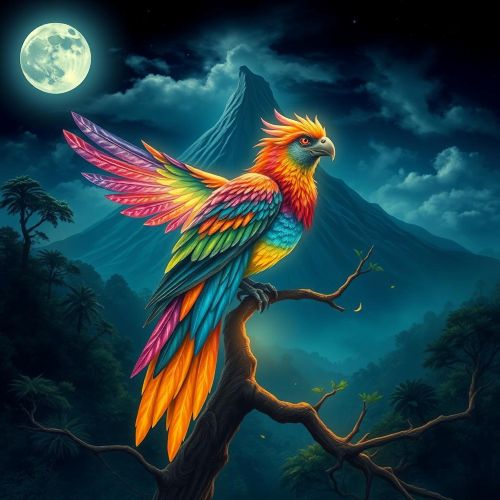
Instead of depicting Hauā directly, Rapa Nui religious art expressed his presence through symbols connected to the Birdman cult. At the ceremonial village of Orongo, hundreds of volcanic rock carvings portray bird-headed human figures, seabirds, eggs, and ceremonial symbols associated with Makemake and the Birdman tradition. While these famous petroglyphs are not universally identified as images of Hauā himself, they represent the sacred world in which he played an essential role.
Unlike the iconic moai, which represent deified ancestors rather than gods, the Orongo carvings reflect a more symbolic form of religious expression. Hauā’s identity is therefore understood through his association with birds, eggs, and sacred ritual rather than through a defined human form.
Family
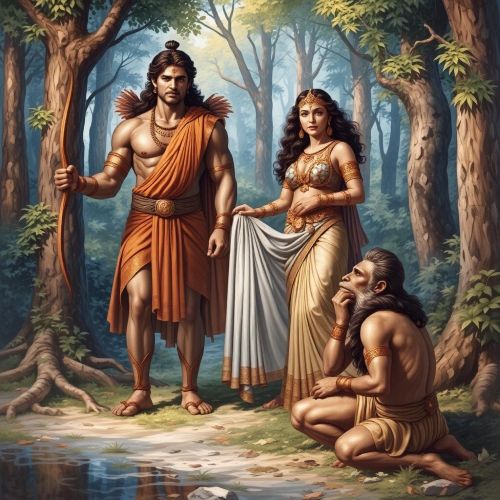
The surviving traditions place Hauā among the principal deities of the Birdman religious system. His wife is identified as Viꞌe Hoa (also written as Vîꞌe Hoa in some sources), although very little mythology concerning her has survived. Hauā’s closest divine relationship is with Makemake, who served as the supreme creator deity of Rapa Nui religion.
Ethnographic records also mention Viꞌe Kenatea, the wife of Makemake. Together, Hauā, Viꞌe Hoa, Makemake, and Viꞌe Kenatea formed a central group of deities associated with the Birdman cult. Some accounts further suggest that each deity was attended by a supernatural servant, illustrating the structured nature of the ancient Rapa Nui religious hierarchy.
Although Hauā is often described as Makemake’s companion, this relationship should not be interpreted as a familial one. Instead, it reflects a sacred partnership that governed ritual life, seasonal ceremonies, and the protection of the island’s resources.
Other names
Hauā appears under several spellings in historical records because early European researchers documented the Rapa Nui language using different transliteration systems. The most common variations include Haua, Hawa, Haua tuꞌu taketake, and Hawa-tuu-take-take. The longer title appears in traditional chants and emphasizes Hauā’s ancient and foundational role within the Birdman tradition.
He is also remembered by the descriptive title “Chief of the Eggs.” This name reflects his sacred connection to the annual collection of the first manutara egg, the central event of the Tangata manu competition. Rather than being merely symbolic, the egg represented divine favor, fertility, and legitimate leadership for the victorious clan.
Powers and Abilities
Hauā’s influence is expressed primarily through sacred authority rather than displays of supernatural combat or magical feats. His powers revolve around maintaining harmony between the divine world, nature, and the Rapa Nui people.
According to oral tradition, Hauā and Makemake brought the nesting manutara seabirds to the offshore islets of Motu Nui and Motu Iti. By relocating the birds away from the main island, the deities protected the nesting grounds from excessive harvesting while ensuring that the annual Birdman competition remained both sacred and sustainable.
Hauā is also associated with mana, the sacred spiritual force that permeates Polynesian belief systems. His mana was believed to bring prosperity, fertility, and divine blessing to the island. Rather than controlling nature through force, Hauā maintained the balance between humans and the natural environment.
Historical accounts also preserve a ritual connected with food offerings. Before eating, the Rapa Nui people were instructed to set aside a portion of food while invoking Hauā and Makemake with the phrase, “Take for Hauā, for Makemake!” This ritual acknowledged that food ultimately belonged to the gods before it could be consumed by humans. Through these traditions, Hauā became a guardian of sacred customs, seasonal abundance, and religious order.
Modern Day Influence
Although the traditional Birdman religion disappeared following the spread of Christianity during the nineteenth century, Hauā continues to occupy an important place in Rapa Nui cultural heritage and academic research.
The ceremonial village of Orongo remains one of Easter Island’s most significant archaeological sites. Its remarkable petroglyphs preserve the symbolism of the Birdman cult and offer valuable insights into the religious world in which Hauā was worshipped. Today, Orongo attracts visitors from around the world interested in understanding the island’s unique mythology and history.
Modern celebrations such as the Tapati Rapa Nui festival also help preserve elements of the island’s traditional culture. While the festival does not recreate the ancient Birdman competition in its original religious form, it celebrates ancestral customs through <a class="wpil_keyword_link" href="https://mythlok.com/archetypes/music-dance/” title=”Music and Dance : Gods, Spirits and Legendary Figures of Rhythm” data-wpil-keyword-link=”linked” data-wpil-monitor-id=”535320″>music, dance, storytelling, canoe racing, traditional arts, and cultural performances inspired by Rapa Nui heritage.
Beyond the island itself, Hauā continues to appear in scholarly studies of Polynesian religion and mythology. Researchers such as Katherine Routledge and Alfred Métraux preserved many of the surviving oral traditions that mention Hauā, allowing modern audiences to better understand his role within the Birdman cult. Although Makemake remains the better-known deity internationally, Hauā’s association with ritual, fertility, sacred offerings, and the protection of nature ensures his lasting place in the mythology of Rapa Nui.
Related Images


Source
Métraux, A. (1940/1971). Ethnology of Easter Island. Bernice P. Bishop Museum Bulletin 160. Bishop Museum Press.
Métraux, A. (1957). Easter Island: Stone-Age Civilization of the Pacific. London: Oxford University Press.
Routledge, K. (1919). The Mystery of Easter Island. London: Sifton, Praed & Co.
Englert, S. (1948/1970). Island at the Center of the World: New Light on Easter Island. New York: Charles Scribner’s Sons.
Fischer, S. R. (2005). Island at the End of the World: The Turbulent History of Easter Island. London: Reaktion Books.
Van Tilburg, J. A. (2020). Rapa Nui. In Encyclopedia of Global Archaeology. Springer.
“Haua.” Wikipedia. Retrieved July 31, 2026, from https://en.wikipedia.org/wiki/Haua
“Tangata manu.” Wikipedia. Retrieved July 31, 2026, from https://en.wikipedia.org/wiki/Tangata_manu
Frequently Asked Questions
Who is Hauā in Rapa Nui mythology?
Hauā is a deity in Rapa Nui mythology who serves as the sacred companion of Makemake and is closely associated with the Birdman cult, fertility, ritual offerings, and the annual egg-gathering ceremony.
What is Hauā's role in the Birdman cult?
According to Rapa Nui tradition, Hauā helped establish the Birdman cult by bringing the nesting manutara birds to the offshore islets, making the annual egg competition possible.
Is Hauā the same as Makemake?
No. Hauā and Makemake are separate deities. Makemake is the creator god, while Hauā is his divine companion and an important figure in Birdman rituals.
What powers does Hauā possess?
Hauā is associated with mana, fertility, prosperity, sacred ritual, the protection of seabirds, and maintaining harmony between nature and the divine.
Why is Hauā called the ``Chief of the Eggs``?
The title reflects his sacred connection to the first manutara egg collected during the annual Birdman competition, which symbolized divine favor, fertility, and legitimate leadership.


