


Grýla : Iceland’s Terrifying Yule Child-Eating Ogress
At a glance
The Mythlok Perspective
In Mythlok’s Perspective, Grýla represents the embodiment of survival-driven morality rather than simple villainy. She emerges from a landscape where winter itself is a threat, making discipline a necessity rather than a choice. Her story aligns with figures like Krampus and Baba Yaga, both of whom punish rather than protect. What sets Grýla apart is her integration into a full family system that balances fear with playfulness. While Krampus stands alone and Baba Yaga exists on the fringes, Grýla operates within a structured narrative of seasonal behavior. This makes her less of an outlier and more of a cultural mechanism, reflecting how societies encode discipline into myth.
Grýla
Introduction
Grýla is one of the most striking figures in Icelandic mythology, remembered as a towering ogress who appears during the dark winter season. Her roots can be traced to medieval literature, including references in the Prose Edda, where her name appears among troll-women. Over time, especially by the 17th century, her legend evolved into a powerful moral tale used to discipline children during Iceland’s harsh winters.
Unlike benevolent winter figures such as Santa Claus, Grýla represents the darker side of seasonal storytelling. She is said to descend from her mountain cave during Yule, searching for misbehaving children to capture. This transformation from a vague troll figure into a central Christmas enforcer reflects how folklore adapts to social needs, particularly in societies where survival during winter required strict discipline and obedience.
Physical Traits
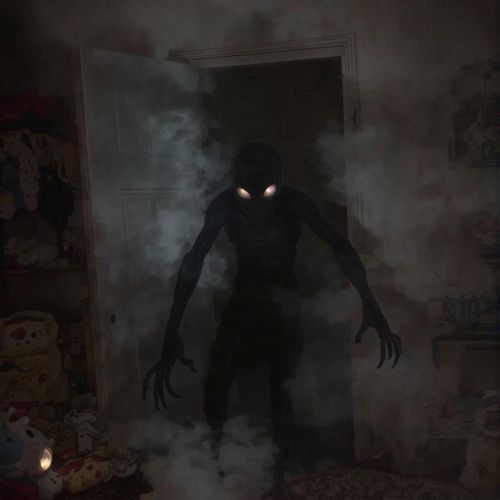
Grýla is consistently described as a grotesque and imposing being, embodying the raw fear of nature. She is portrayed as a massive troll-like giantess with distorted proportions, a hunched posture, and an overwhelming physical presence. Her face is often described as twisted and frightening, with a hooked nose, sharp teeth, and deeply set eyes that reflect her predatory nature.
Some accounts expand her form into something even more surreal. She may possess horns, hooves, or multiple tails, sometimes said to number as many as thirteen or more. These tails are occasionally imagined as tools for carrying sacks filled with captured children, reinforcing her role as a relentless hunter. Her hair is depicted as wild and unkempt, often grey or matted, adding to her untamed appearance.
Rather than a fixed design, Grýla’s form shifts across stories, which is typical of oral traditions. What remains constant is her scale and menace. She is not merely ugly; she is overwhelming, a physical manifestation of winter’s cruelty and the unknown dangers lurking in Iceland’s mountainous wilderness.
Family
Grýla’s story is inseparable from her unusual and equally memorable family. Her husband, Leppalúði, is portrayed as lazy and largely passive, often staying at home while Grýla takes on the active, fearsome role. His character provides a contrast that highlights her dominance within the household.
Their most famous children are the thirteen Yule Lads, mischievous tricksters who visit homes during the thirteen nights leading up to Christmas. Each has a distinct personality and behavior, often centered around minor pranks like stealing food or making noise. Over time, they evolved from frightening figures into more playful characters who leave gifts for well-behaved children.
The family is also associated with the Yule Cat, a gigantic feline said to devour those who do not receive new clothes for Christmas. This addition, which became prominent in later folklore, reinforces the theme of reward and punishment tied to seasonal traditions.
Together, this family forms a complete mythological system around Yule, blending fear, humor, and morality into a single narrative structure.
Other names
Grýla is primarily known by her single name, which is believed to carry meanings related to “growler” or “one who threatens.” This linguistic root aligns perfectly with her role as a fear-inducing figure used to correct behavior.
Her name appears in medieval Icelandic lists of troll-women, particularly within the Nafnaþulur section of early literature. However, unlike many mythological beings who accumulate multiple titles across regions, Grýla remains remarkably consistent in identity.
This lack of variation suggests that her story was deeply localized, shaped by Iceland’s specific cultural and environmental conditions rather than widespread mythological diffusion.
Powers and Abilities
Grýla’s abilities are centered on her role as a supernatural enforcer. She is believed to possess an uncanny awareness of children’s behavior, allowing her to identify those who have been disobedient. This perception is often described as almost instinctive, as though she can sense wrongdoing across great distances.
Her most defining trait is her appetite. She captures children in large sacks and carries them back to her cave, where she cooks them in a massive cauldron. This imagery is both vivid and symbolic, representing the ultimate consequence of misbehavior in a harsh and unforgiving world.
Beyond this, she is portrayed as immensely strong, capable of traversing rugged mountains even during the darkest winter nights. Some later interpretations add elements like shape-shifting or animal-like cunning, though these are not consistently present in older sources.
Her powers are less about magic in a traditional sense and more about inevitability. Once she sets her sights on someone, escape feels impossible, reinforcing her function as a cautionary figure.
Modern Day Influence
In modern Iceland, Grýla remains a powerful cultural symbol, though her image has softened over time. She appears in Christmas celebrations, parades, and storytelling events, often alongside the Yule Lads. While her darker traits are still acknowledged, they are usually toned down for younger audiences.
Her influence extends into popular media, where she has been reimagined in films, games, and literature. Appearances in titles like God of War Ragnarök introduce her to global audiences, blending traditional folklore with modern storytelling.
Historically, her use as a fear tactic became so widespread that authorities intervened. In 1746, a decree in Iceland discouraged parents from using Grýla to terrify children, reflecting concerns about psychological harm. Despite this, her legend endured, transitioning from a tool of fear into a symbol of cultural identity. Today, she represents a unique blend of tradition and adaptation, showing how ancient stories can evolve without losing their core meaning.
Related Images




Source
American Psychological Association. (2020). Publication manual of the American Psychological Association (7th ed.). https://doi.org/10.1037/0000165-000
Simpson, J. (2013). Grýla in Sléttuhlíd. Gripla, 24, 211-233. https://iris.hi.is/en/publications/gr%C3%BDla-in-sl%C3%A9ttuhl%C3%ADd-2/
Snorri Sturluson. (1982). Edda (A. Faulkes, Trans.). Viking Society for Northern Research. (Original work published ca. 1220)
The Warrior Lodge. (2025, July 30). Grýla: The gigantic ogre of Icelandic folklore. https://thewarriorlodge.com/blogs/news/gryla
Mythical Encyclopedia. (2023, December 22). Grýla: A mythical creature overview and history. https://mythicalencyclopedia.com/gryla/
Wikipedia. (2024). Icelandic Christmas folklore. https://en.wikipedia.org/wiki/Icelandic_Christmas_folklore
God of War Wiki. (2025). Grýla. https://godofwar.fandom.com/wiki/Gr%C3%BDla
Locations of Lore. (2024, December 22). Iceland’s Christmas trolls: Grýla and the Yule Lads. https://locationsoflore.com/2024/12/22/gryla-and-the-yule-lads/
Frequently Asked Questions
Who is Grýla in Icelandic folklore?
Grýla is a fearsome ogress who punishes naughty children during Yule by capturing and eating them.
Where does Grýla live?
She is said to live in remote mountain caves in Iceland, emerging only during winter.
Is Grýla connected to Christmas traditions?
Yes, she is a key figure in Icelandic Yule folklore alongside the Yule Lads and Yule Cat.
What does Grýla symbolize?
She represents discipline, survival, and the harsh realities of winter in Icelandic culture.
Is Grýla still relevant today?
Yes, she appears in festivals, media, and cultural storytelling, though often in a softened form.
