


Mythic Battles: Pantheon : Gods, Heroes, and Mythological Warfare
| Description | |
|---|---|
| Inspiration | Greek Mythology |
| Developer | Monolith Board Games & Mythic Games |
| Type | Board Game |
| Release Year | 2017 |
| Storyline | Post-apocalyptic Greece; Gods, heroes, and monsters battle for fragments |
Mythlok Perspective
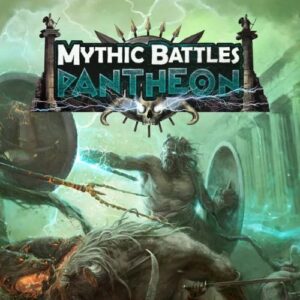
In Mythlok’s Perspective, Mythic Battles: Pantheon is less a faithful recreation of Greek mythology and more a celebration of its enduring adaptability. Rather than retelling ancient myths, the game places gods, heroes, and monsters into an original conflict while preserving the personalities and symbolism that made them legendary. Similar reinterpretations exist across cultures, where familiar mythological figures are reimagined for new audiences without losing their cultural significance. Like Japan’s Okami or India’s modern retellings of the Mahabharata, Mythic Battles: Pantheon demonstrates that mythology remains alive when each generation reshapes ancient stories into new forms of storytelling.
Mythic Battles: Pantheon
Introduction
Mythic Battles: Pantheon is a tactical miniatures board game that brings Greek mythology to life through strategic battles between legendary gods, heroes, monsters, and mortal warriors. First released in 2017 by Monolith after a successful Kickstarter campaign, the game combines deep tactical gameplay with a richly imagined mythological setting.
Rather than retelling classical Greek myths, the game imagines an alternate world where Olympus has fallen and divine power has been scattered across Greece. Players command iconic figures from Greek legend as they fight to reclaim this lost power, creating an experience that blends authentic mythology with original storytelling. Its cinematic miniatures, engaging mechanics, and faithful use of mythological characters have made it one of the most respected mythology-themed board games ever created.
Game Overview
Designed for two to four players, Mythic Battles: Pantheon typically lasts between 60 and 90 minutes and is recommended for players aged 14 and above. Every match begins with players selecting a god to lead their army before drafting a combination of heroes, monsters, and troops.
Victory can be achieved in two ways. A player may eliminate the opposing god, ending the battle outright, or collect and absorb five Omphalos crystals, fragments of divine essence scattered across the battlefield. This dual victory condition creates meaningful strategic choices throughout every game, forcing players to balance direct combat with objective control.
Gameplay revolves around tactical positioning, hand management, custom dice, area control, and resource management. Modular battlefields featuring temples, forests, rivers, ruins, and sacred locations ensure that no two games unfold in exactly the same way, encouraging players to adapt their strategies to the terrain and the composition of their armies.
Mythological Inspirations
The foundation of Mythic Battles: Pantheon lies firmly in Greek mythology. The game’s original narrative begins with Hera unleashing the Titans in her rage against Zeus, an event that devastates Olympus and plunges the world into chaos. Although this storyline is original to the game, it draws inspiration from familiar Greek themes such as divine rivalry, revenge, succession, and cosmic upheaval.
The conflict echoes the ancient Titanomachy—the legendary war between the Olympian gods and the Titans—while introducing a fresh post-apocalyptic interpretation of Greece. The collapse of Olympus allows heroes, monsters, and legendary beings to return to the mortal world, creating a setting where myths that were never connected in classical literature can exist side by side.
Many battlefields are inspired by iconic locations from Greek mythology, including ruined temples, sacred sanctuaries, and landscapes associated with the gods. These settings reinforce the game’s mythological atmosphere while providing tactical variety during play.
Characters
One of the game’s greatest strengths is its expansive roster of mythological characters. Every army is built around a central deity supported by heroes, monsters, and mortal troops, allowing players to create combinations that suit their preferred strategy.
The Olympian gods include famous figures such as Zeus, Athena, Ares, Hades, Poseidon, Artemis, Apollo, and Hera. Each deity possesses distinctive abilities that reflect their traditional roles within Greek mythology. Athena excels at tactical support, Ares dominates through aggression, while Hades specializes in manipulating the battlefield through powers associated with death and the underworld.
Players can also recruit celebrated heroes including Achilles, Heracles, Atalanta, Leonidas, Odysseus, Perseus, and Jason. Their abilities often mirror the legendary feats for which they are remembered, making each hero feel true to their mythological origins.
Monsters such as the Hydra, Medusa, Cerberus, Minotaur, Cyclops, and Echidna introduce powerful offensive and defensive capabilities, while troops including Hoplites, Spartans, Amazons, and Centaurs provide numerical strength and tactical flexibility. Every unit has unique statistics and special powers, encouraging players to discover effective synergies between divine and mortal forces.
Symbolism & Gameplay Mechanics
The gameplay mechanics of Mythic Battles: Pantheon are closely tied to its mythological themes. The most significant symbol is the Omphalos crystal. In ancient Greek religion, the Omphalos was the sacred stone at Delphi believed to represent the center of the world. The game transforms this concept into fragments of divine power that gods seek to restore their strength, providing a clever mythological interpretation rather than a literal adaptation.
Players activate their units through a card-driven system in which each character has dedicated activation cards. Additional Art of War cards function as versatile resources that can trigger special abilities, manipulate the deck, or provide tactical flexibility during battle. This system rewards careful planning without sacrificing the unpredictability expected from mythological warfare.
Combat is resolved using custom dice, positioning, and unit abilities rather than simple numerical comparisons. Terrain also plays an important role, with obstacles, elevation, rivers, and ruins affecting movement, visibility, and combat decisions. Success depends not only on powerful characters but also on timing, positioning, and efficient resource management, making strategy more important than luck alone.
Cultural Impact
Since its release, Mythic Battles: Pantheon has become one of the most influential mythology-themed board games in the modern tabletop industry. Its successful crowdfunding campaign demonstrated the growing demand for premium miniature games based on classical mythology and helped establish Monolith as a major publisher within the hobby.
The game has attracted a dedicated international community of painters, collectors, and competitive players who continue to create scenarios, strategy guides, and custom content years after its release. Multiple expansions have further expanded its mythological roster while maintaining the tactical depth that made the original game successful.
Beyond tabletop gaming, Mythic Battles: Pantheon reflects the continuing popularity of Greek mythology in modern entertainment. Like films, novels, and video games inspired by ancient legends, it introduces new audiences to iconic mythological figures through an interactive experience. Although its narrative differs from traditional myths, the game encourages players to explore the original stories behind its legendary characters, helping preserve interest in Greek mythology for contemporary audiences.
Creative Liberties
While Mythic Battles: Pantheon draws extensively from Greek mythology, it intentionally departs from classical sources to create a balanced and engaging strategy game. Its central storyline—the destruction of Olympus following Hera’s release of the Titans—is entirely original and does not appear in surviving Greek literature. Likewise, heroes and monsters who lived in different mythological eras can fight together despite never meeting in the traditional myths.
The drafting system also allows gods to recruit virtually any hero or monster regardless of their historical or mythological relationships. These combinations would rarely occur in classical Greek stories but provide greater strategic freedom for players.
The visual design similarly embraces a modern fantasy aesthetic while retaining recognizable mythological identities. Rather than attempting historical reconstruction, the game blends authentic symbolism with contemporary artistic interpretation, creating a version of Greek mythology that feels both familiar and exciting. These creative liberties serve gameplay first while remaining respectful of the legendary figures that inspired them.

Sources
BoardGameGeek. (n.d.). Mythic Battles: Pantheon. https://boardgamegeek.com/boardgame/186751/mythic-battles-pantheon
Dice Tower. (2023, February 28). Mythic Battles: Pantheon. https://www.dicetower.com/board-game/186751
Nerdly. (2024, January 23). ‘Mythic Battles: Pantheon’ board game review. https://www.nerdly.co.uk/2024/01/24/mythic-battles-pantheon-board-game-review/
The Esoteric Order of Gamers. (n.d.). Mythic Battles: Pantheon [PDF]. https://www.orderofgamers.com/downloads/MythicBattlesPantheon_v2.1.pdf
Mythic Battles: Pantheon rulebook. (n.d.). 1jour-1jeu.com. https://cdn.1j1ju.com/medias/cd/11/b3-mythic-battles-pantheon-rulebook.pdf
Vogt, B., & Bourlett, E. (2017). Mythic Battles: Pantheon [Board game]. Monolith Board Games.
Antonis, M. (2024). The Greek Pantheon in Popular Culture. Greek Mythology Journal.
Frequently Asked Questions
What is Mythic Battles: Pantheon?
Mythic Battles: Pantheon is a strategy miniatures board game set in an alternate version of Greek mythology where players command gods, heroes, monsters, and troops in tactical battles.
Is Mythic Battles: Pantheon based on real Greek mythology?
Yes, the game is inspired by authentic Greek mythology and features legendary gods and heroes, although its main storyline and many battles are original creations designed for gameplay.
How do you win Mythic Battles: Pantheon?
Players win by either defeating the opposing god or collecting and absorbing five Omphalos crystals, which represent fragments of divine power.
Which Greek gods appear in Mythic Battles: Pantheon?
Why is Mythic Battles: Pantheon popular?
The game is praised for its detailed miniatures, strategic depth, faithful mythological inspiration, high replayability, and innovative blend of tactical combat with Greek mythology.


