


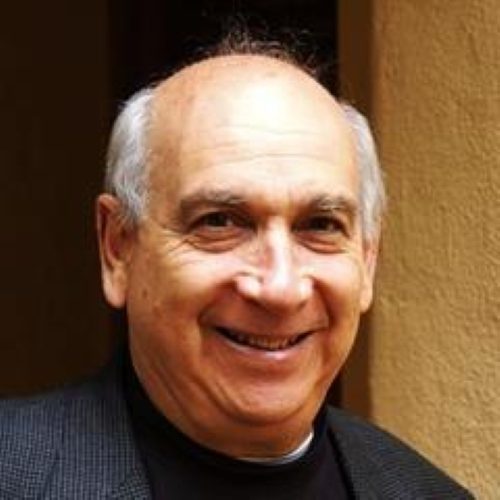
Dr. Alan Dundes : American Folklorist Who Transformed Myth Studies
Mythlok Perspective
In Mythlok’s Perspective, Alan Dundes represents the scholar who refused to treat myth as decorative storytelling. He approached folklore as psychological code, much like Carl Jung treated archetypes or Claude Lévi-Strauss examined mythic structure. Where Mircea Eliade emphasized sacred symbolism, Dundes probed the unconscious beneath it. Across cultures, from European fairy tales to American urban legends, his work mirrors similar interpretive traditions in Indian narrative exegesis and Greek myth analysis. Dundes reminds us that myths are not passive relics but active reflections of the human mind.
Dr. Alan Dundes
Introduction
Dr. Alan Dundes stands as one of the most transformative figures in twentieth-century folklore scholarship. Born on September 8, 1934, in New York City, he would go on to redefine how scholars interpret myth, legend, ritual, humor, and everyday cultural expression. For more than four decades at University of California, Berkeley, Dundes built a program that elevated folklore from a marginal specialty into a theoretically sophisticated discipline that intersected with anthropology, literary studies, religious studies, and psychology.
Educated at Yale University and later earning his PhD in folklore from Indiana University Bloomington under Richard Dorson, Dundes entered academia at a moment when folklore was often limited to collecting tales and classifying motifs. He insisted that folklore deserved interpretation. Myths, jokes, proverbs, urban legends, and rituals were not trivial survivals from the past. They were living texts that revealed the emotional and ideological foundations of society.
Dr. Alan Dundes reshaped the intellectual landscape of folklore studies by arguing that culture speaks symbolically, and that scholars must learn how to decode it.
Area of Expertise
The central expertise of Dr. Alan Dundes lay in folkloristics, but his approach was never confined to a single discipline. He combined structural analysis, psychoanalytic theory, and comparative mythology to interpret cultural narratives across societies.
Dundes was especially known for applying Freudian concepts to folklore. Drawing on Sigmund Freud’s theory of dreams as disguised wish fulfillment, he argued that myths and legends often encode unconscious anxieties and desires. His studies explored themes such as male birth envy, Oedipal tensions, ritual symbolism, and projective inversion. While controversial, these psychoanalytic readings pushed folklore into dialogue with psychology and cultural theory.
At the same time, Dundes emphasized structuralism. Influenced by scholars such as Claude Lévi-Strauss, he analyzed narrative units and patterns within folktales. His essay “From Etic to Emic Units in the Structural Study of Folktales” encouraged scholars to identify culturally meaningful narrative components rather than impose external classifications.
He also expanded the scope of folklore to modern settings. Dundes famously studied American jokes, graffiti, urban legends, and even office humor, demonstrating that folklore thrives in contemporary life. His work on national character—particularly studies of German folklore and American football—argued that collective identity is expressed symbolically through popular traditions.
For Dr. Alan Dundes, folklore was universal, dynamic, and psychologically charged. It existed wherever human beings shared meaning.
Books & Publications
Dr. Alan Dundes was extraordinarily prolific. He authored or edited around forty books and published more than 250 articles and essays. His works remain foundational in folklore and myth studies. Among his most influential books is Interpreting Folklore (1980), published by Indiana University Press. This volume argued that folklore scholarship must move beyond collection toward interpretation, combining structural and psychoanalytic methods.
He edited Sacred Narrative: Readings in the Theory of Myth (1984), published by University of California Press, which brought together major theoretical voices in myth studies and became a staple in university courses. In Cinderella: A Casebook (1982), Dundes compiled cross-cultural versions of the Cinderella tale, demonstrating how a single narrative archetype appears globally with culturally specific variations. His edited volume The Vampire: A Casebook (1998) examined vampirism as a symbolic expression of fears surrounding sexuality, death, and contamination.
Another provocative work, Holy Writ as Oral Lit: The Bible as Folklore (1999), treated biblical texts as forms of sacred folklore shaped by oral performance and communal transmission. This argument generated debate but reinforced his thesis that folklore includes sacred as well as secular narratives. After his death, Simon J. Bronner edited The Meaning of Folklore: The Analytical Essays of Alan Dundes (2007), preserving some of his most enduring theoretical writings. Collectively, these publications ensure that Dr. Alan Dundes remains one of the most cited folklorists in academic literature.
Research & Contributions
The lasting contribution of Dr. Alan Dundes lies in his insistence that folklore must be analyzed as meaningful symbolic behavior. He rejected purely descriptive cataloging and instead treated myths, rituals, and jokes as texts requiring interpretation.
One major contribution was his concept of motifeme and structural sequencing in folktales. By identifying recurring narrative functions, he provided tools for analyzing oral stories across cultures. These methods have been applied internationally, including in Southeast Asian oral traditions and indigenous storytelling research.
In the section of his work often summarized as “World View and Identity,” Dundes demonstrated how folklore reveals collective mentalities. His essay “Folk Ideas as Units of World View” showed how proverbs and sayings encode cultural logic. Studies such as “Viola Jokes” examined occupational humor as a reflection of social hierarchy.
His psychoanalytic essays, later grouped under themes like “Symbol and Mind,” explored mirror legends such as Bloody Mary, ritual symbolism, and mythic narratives of birth and heroism. While some scholars critiqued his Freudian lens, many acknowledge that Dundes forced the field to confront psychological dimensions previously ignored.
Beyond theory, Dundes was a dedicated mentor. At Berkeley, he supervised numerous doctoral dissertations and helped institutionalize folklore archives that continue to serve researchers today. Dr. Alan Dundes professionalized folklore studies, broadened its scope, and gave it interpretive depth.
Awards & Recognitions
Throughout his career, Dr. Alan Dundes received prestigious honors that reflect his scholarly impact. He twice won the Chicago Folklore Prize, first for The Morphology of North American Indian Folktales (1962) and later for La Terra in Piazza (1976), co-authored with Alessandro Falassi.
He served as President of the American Folklore Society in 1980, marking his leadership within the discipline. In 2001, he became the first folklorist elected to the American Academy of Arts and Sciences, a milestone that elevated folklore within the broader academic world.
At Berkeley, he received the Distinguished Teaching Award, reflecting his reputation as a dynamic and charismatic educator. Internationally, he was honored with the Pitrè Prize for lifetime achievement in folklore studies. These recognitions confirm that Dr. Alan Dundes was not merely influential within folklore circles but across the humanities.
Social Media Profiles
Dr. Alan Dundes passed away in 2005, before the widespread adoption of modern social media platforms. As such, he did not maintain personal accounts on contemporary networks.Today, his presence endures through institutional archives, academic tributes, and digital bibliographies. University memorial pages, scholarly societies, and book platforms continue to document his work. Lectures and interviews circulate online through educational channels, ensuring that new generations encounter his ideas. While he does not have social media profiles, his intellectual legacy remains digitally accessible.
Sources
American Folklore Society. (2005). In memoriam: Alan Dundes (1934–2005). https://www.afsnet.org/page/InMemoriamAlanDundes
American Academy of Arts and Sciences. (n.d.). Alan Dundes: Member profile. https://www.amacad.org/person/alan-dundes
University of California, Berkeley, Department of Anthropology. (2005). Alan Dundes obituary. https://anthropology.berkeley.edu/in-memoriam/alan-dundes
Encyclopaedia Britannica. (n.d.). Alan Dundes. https://www.britannica.com/biography/Alan-Dundes
Bronner, S. J. (Ed.). (2007). The meaning of folklore: The analytical essays of Alan Dundes. Utah State University Press.
https://www.usu.edu/usupress/books/index.cfm?isbn=9780874216733
Dundes, A. (1980). Interpreting folklore. Indiana University Press. https://iupress.org/9780253200704/interpreting-folklore/
Dundes, A. (1999). Holy writ as oral lit: The Bible as folklore. Rowman & Littlefield. https://rowman.com/ISBN/9780847690614/Holy-Writ-as-Oral-Lit-The-Bible-as-Folklore
Dundes, A. (1962). From etic to emic units in the structural study of folktales. Journal of American Folklore, 75(296), 95–105. https://www.jstor.org/stable/538171



Frequently Asked Questions
Who was Alan Dundes?
Alan Dundes was an American folklorist and professor at UC Berkeley known for applying psychoanalytic and structural analysis to myths, legends, and cultural traditions.
What is Dr. Alan Dundes famous for?
He is famous for transforming folklore into a theory-driven discipline and for works such as Interpreting Folklore and Holy Writ as Oral Lit.
Did Alan Dundes use Freud’s theories?
Yes. Dundes frequently applied Freudian psychoanalysis to interpret myths, jokes, and rituals as symbolic expressions of unconscious desires.
What did Alan Dundes contribute to folklore studies?
He expanded folklore beyond rural traditions, analyzed modern cultural expressions, and developed structural methods for interpreting folktales.
Where did Alan Dundes teach?
He taught for over forty years at the University of California, Berkeley.