


Dr. Maman Lesmana : Humor, Culture, and Myth Through Scholarship
Mythlok Perspective
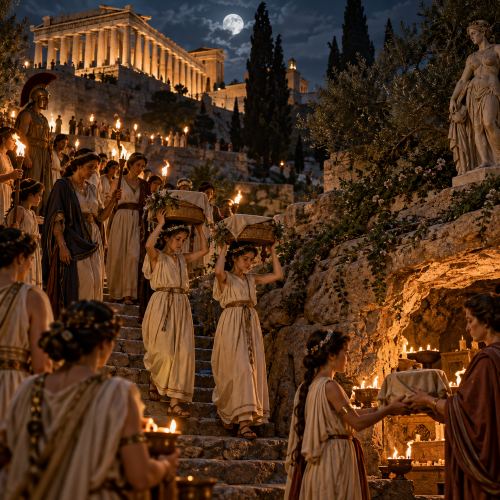
In Mythlok’s View, Dr. Maman Lesmana represents a rare intellectual bridge between humor and cultural memory. His work reveals that laughter is not trivial but deeply embedded in how societies process identity and power. By linking Arabic literary traditions with Southeast Asian folklore, he demonstrates that humor often carries the same symbolic weight as myth. This perspective aligns with global patterns. In Greek traditions, satire shaped philosophical debate, while in African oral cultures, trickster figures used humor to challenge authority. Similarly, Dr. Lesmana’s research shows how modern memes echo ancient storytelling forms, proving that humor remains a timeless narrative force across cultures.
Dr. Maman Lesmana
Introduction
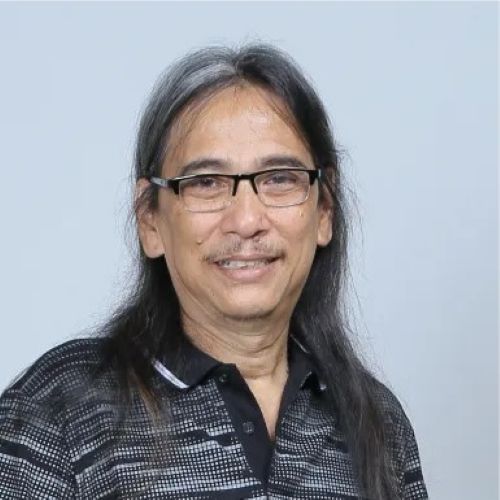
Dr. Maman Lesmana is a prominent Indonesian academic whose work bridges literature, humor, and cultural identity. As a professor at Universitas Indonesia’s Faculty of Humanities and Head of the Department of Area Studies, he has spent decades examining how stories, laughter, and language shape societies. His career, which began in the late 1980s, reflects a sustained commitment to understanding culture not just through texts but through lived expressions such as folklore, humor, and digital communication.
What sets Dr. Lesmana apart is his interdisciplinary approach. He does not treat humor as mere entertainment but as a serious intellectual tool that reveals deeper truths about power, identity, and tradition. By connecting Arabic literature, Southeast Asian cultural narratives, and modern media, he has created a body of work that feels both historically grounded and strikingly contemporary. His research demonstrates that humor and mythology are not separate domains but intertwined systems that influence how communities understand themselves.
Area of Expertise
Dr. Lesmana’s expertise spans multiple fields within the humanities, but they all converge on a central theme: how culture communicates meaning. His foundation lies in Arabic language and literature, where he has closely studied classical texts, particularly those that incorporate humor as a narrative device. His doctoral research on Al-Jahiz’s Kitab al-Bukhala exemplifies this focus, analyzing how humor operates within intellectual traditions.
Beyond classical literature, he is deeply involved in humor studies. As a member of the International Society for Humor Studies and Institut Humor Indonesia Kini, he examines humor as both a cultural product and a critical lens. His work explores how jokes, satire, and even internet memes reflect societal tensions, especially around gender, identity, and authority.
Another key area of his expertise is comparative cultural analysis. He studies how myths, folklore, and humor evolve across regions, particularly in Southeast Asia. His research into rice god traditions, for example, reveals how indigenous beliefs were reshaped by Hindu-Buddhist influences and later integrated into modern agricultural practices. This ability to connect ancient traditions with contemporary realities is a defining feature of his scholarship.
Language also plays a central role in his work. Dr. Lesmana investigates how meaning shifts across linguistic boundaries, especially in Arabic-English discourse. His studies on language errors and cultural nuance highlight how communication itself becomes a site of cultural negotiation.
Books & Publications
Dr. Lesmana has produced a substantial body of work that reflects both depth and diversity. His publications range from academic monographs to journal articles, each contributing to a broader understanding of culture and communication.
Among his most influential works is Kritik Sastra Arab dan Islam (2010), which offers a critical exploration of Arabic and Islamic literary traditions. This book has become a key reference in literary studies, particularly for those examining the intersection of religion, culture, and narrative.
His later works expand into humor studies more explicitly. Analyzing Humor (2022) compiles his research on humor across different cultural contexts, while his studies on Kitab al-Bukhala provide a detailed examination of humor in classical Arabic manuscripts. These works highlight how humor can function as both a literary device and a social critique.
He has also contributed extensively to academic journals. His articles cover topics such as Indonesian humorous riddles, Madurese ethnic humor, and the role of internet memes in challenging patriarchal systems. One of his notable studies analyzes Arabic internet memes, showing how digital humor can act as a subtle but powerful form of resistance.
What makes his publications particularly valuable is their balance between theory and real-world application. Whether discussing classical texts or modern memes, his work consistently demonstrates how cultural expressions reflect broader social dynamics.
Research & Contributions
Dr. Lesmana’s research is both wide-ranging and impactful. He has led several projects that focus on preserving cultural heritage while also interpreting it through modern frameworks. One such project involved cataloging manuscripts from Penyengat Island, an important cultural site linked to the Bintan Sultanate. This work not only preserves historical texts but also makes them accessible for future scholarship.
Another significant area of his research examines the role of Arabic language in Indonesia. By studying its variations and applications, he highlights how language contributes to education, identity, and social development. His work in this field underscores the importance of linguistic diversity in shaping national and regional identities.
He has also explored cultural politics in Southeast Asia, analyzing how identity is constructed and contested across the region. His research on rice god myths is particularly noteworthy, as it demonstrates how ancient beliefs continue to influence modern agricultural practices and community life.
In recent years, Dr. Lesmana has turned his attention to digital culture. His studies on internet memes reveal how humor adapts to new media while retaining its role as a tool for critique. By applying structuralist and semiotic methods, he shows how even seemingly simple images can carry complex cultural meanings.
Awards & Recognitions
While detailed records of formal awards are limited, Dr. Lesmana’s recognition is evident through his academic influence and leadership roles. His long-standing position at Universitas Indonesia and his role as Head of Area Studies reflect institutional trust and respect.
His membership in international organizations such as the International Society for Humor Studies highlights his global relevance. Additionally, his work as an editor and reviewer for academic journals demonstrates his contribution to shaping scholarly discourse.
Citation metrics, including his h-index and publication record, further indicate his impact within the academic community. More importantly, his ability to bridge multiple disciplines has earned him recognition as a scholar who expands the boundaries of traditional humanities research.
Social Media Profiles
Dr. Lesmana maintains a professional academic presence rather than a conventional social media footprint. His Google Scholar profile serves as a central hub for his publications and citations, allowing researchers to track his contributions.
His official profile on Universitas Indonesia’s website provides detailed information about his academic roles and research projects. He is also listed on platforms such as SINTA, which track Indonesian research metrics, and ResearchGate, where scholars engage with his work. These platforms collectively reflect his commitment to academic accessibility, ensuring that his research reaches both local and international audiences.
Sources
Lesmana, M. (n.d.). Google Scholar. https://scholar.google.com/citations?user=U2HTnS0AAAAJ&hl=en
Lesmana, M. (n.d.). Maman Lesmana. Universitas Indonesia Scholar. https://scholar.ui.ac.id/en/persons/maman-lesmana/
Lesmana, M. (n.d.). Maman Lesmana | LinkedIn. https://www.linkedin.com/in/maman-lesmana-8044b4120
Lesmana, M. (n.d.). Dr. Maman Lesmana. Institut Humor Indonesia Kini. https://ihik3.com/tim-ihik3/dr-maman-lesmana/
Lesmana, M. (2010). Kritik sastra Arab dan Islam. Fakultas Ilmu Pengetahuan Budaya, Universitas Indonesia.
Lesmana, M. (2019). Beberapa catatan tentang cara penulisan karya ilmiah untuk tujuan akademik. LSM Males Arts Studio.
Riswan, J., & Lesmana, M. (2021). Understanding the characteristics of Arabic store signboards in Cisarua, Bogor, West Java, Indonesia. In On language, education, politics, and identity: A cross-linguistics perspective. Nova Science Publishers.
Lesmana, M. (2021). A critical reading of Arabic internet memes against patriarchal systems. Journal of International Women’s Studies, 22(5), 333-346. https://scholar.google.com/citations?user=U2HTnS0AAAAJ&hl=en


Frequently Asked Questions
Who is Dr. Maman Lesmana?
Dr. Maman Lesmana is an Indonesian professor specializing in Arabic literature, humor studies, and cultural analysis at Universitas Indonesia.
What is Dr. Maman Lesmana known for?
He is known for studying humor in literature, folklore, and digital culture, especially its role in shaping identity and society.
What are Dr. Lesmana’s main research areas?
His work covers Arabic literature, humor studies, cultural identity, folklore, and internet memes as modern cultural expressions.
Has Dr. Lesmana published any books?
Yes, his key works include Analyzing Humor and Kritik Sastra Arab dan Islam, along with many journal articles.
Why is humor important in his research?
He sees humor as a tool for critique and cultural insight, revealing hidden social dynamics and power structures.


