


Draupadi : The Indian Princess Whose Humiliation Changed History
At a glance
| Description | |
|---|---|
| Origin | Indian Mythology |
| Classification | Mortals |
| Family Members | Draupad (Father), Prishati (Mother), Dhrishtadyumna (Brother), Pandavas (Husbands) |
| Region | India |
| Associated With | Royalty |
Mythlok Perspective
In Mythlok’s Perspective, Draupadi represents more than a woman wronged by a powerful court; she embodies the courage to question authority when righteousness becomes a convenient excuse for silence. Like Antigone in Greek mythology, she challenges established power in defence of moral conviction. Yet, while Antigone confronts the authority of a king, Draupadi questions an entire assembly of elders. Her story reveals that injustice becomes most dangerous when those capable of stopping it choose silence.
Draupadi
Introduction
Draupadi is one of the most compelling and influential characters in the Indian epic Mahabharata. Born from a sacrificial fire, she becomes a princess, queen and wife of the five Pandavas, eventually occupying a central position in the conflict between the Pandavas and Kauravas. Her life is shaped by extraordinary circumstances, political rivalries, personal humiliation and an unrelenting demand for justice. Known for her beauty, intelligence and formidable spirit, Draupadi is far more than a supporting figure in the story of the Kurukshetra War.
Her experiences expose the contradictions within royal duty, family loyalty and the interpretation of dharma. As the daughter of King Drupada of Panchala, she enters the epic through an unusual birth and becomes one of the principal forces influencing its unfolding events. Her story continues to invite discussion about female agency, justice, marriage and the consequences of unchecked ambition.
Physical Traits
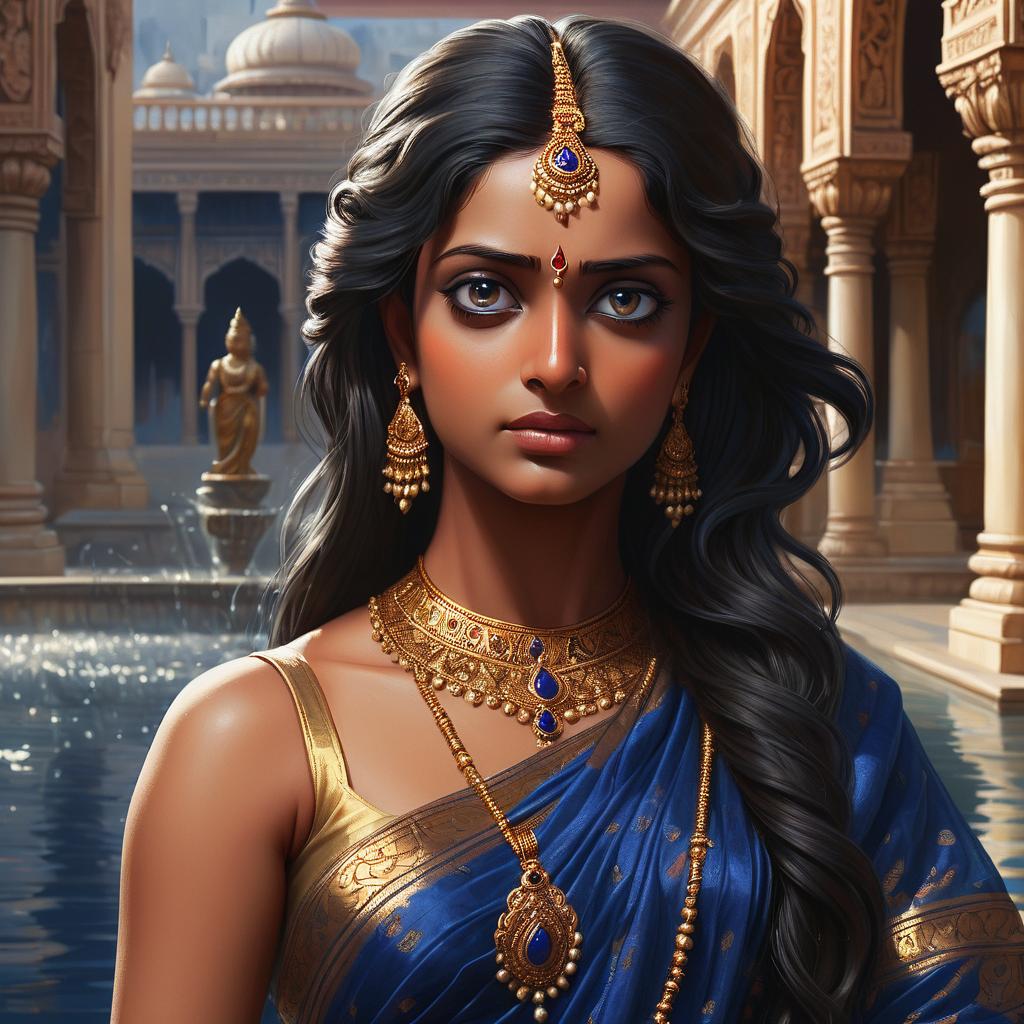
Draupadi is celebrated for her extraordinary beauty in the Mahabharata. The Adi Parva describes her as a woman with a dark complexion, large lotus-like eyes and long, dark, curly hair. Her striking appearance earned her the name Krishnaa, meaning the dark-complexioned one. She is also described as possessing a natural fragrance resembling that of blue lotuses, which could be perceived from a considerable distance. Her beauty attracted attention across royal courts and became an important element in the political and personal relationships surrounding her.
However, Draupadi’s identity extends well beyond her physical appearance. Her sharp intellect, commanding presence and ability to challenge powerful individuals distinguish her from conventional portrayals of royal women. Her beauty frequently places her at the centre of attention, but it is her personality and determination that establish her lasting significance in the epic.
Family
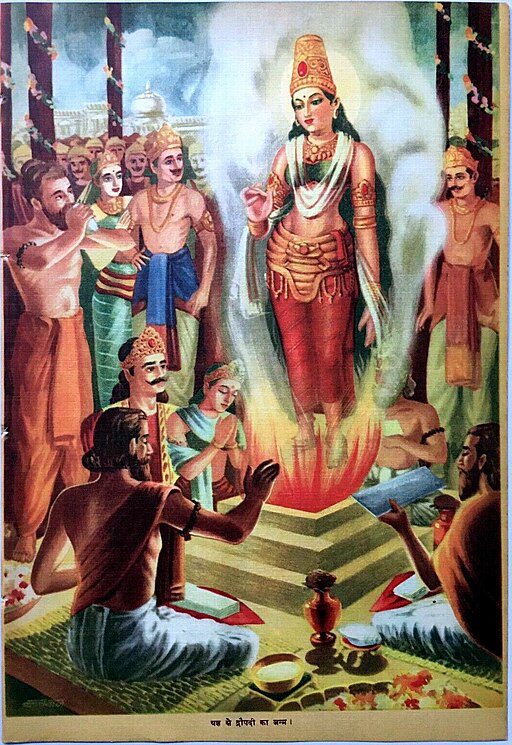
Draupadi was born from a sacrificial fire performed by King Drupada of Panchala. The king had undertaken the yajna with the intention of obtaining a son capable of defeating Drona, his former friend who had become his enemy. From the sacrificial platform emerged Dhrishtadyumna, destined to kill Drona, followed by Draupadi, who appeared fully grown and radiant.
A celestial proclamation associated with her birth foretold that she would play a decisive role in the destruction of the Kshatriya warriors and the downfall of the Kauravas. Her unusual origin gave her the name Yajnaseni, a patronymic meaning daughter of Yajnasena, another name associated with King Drupada. Her mother was Prishati, and Dhrishtadyumna was her twin brother.
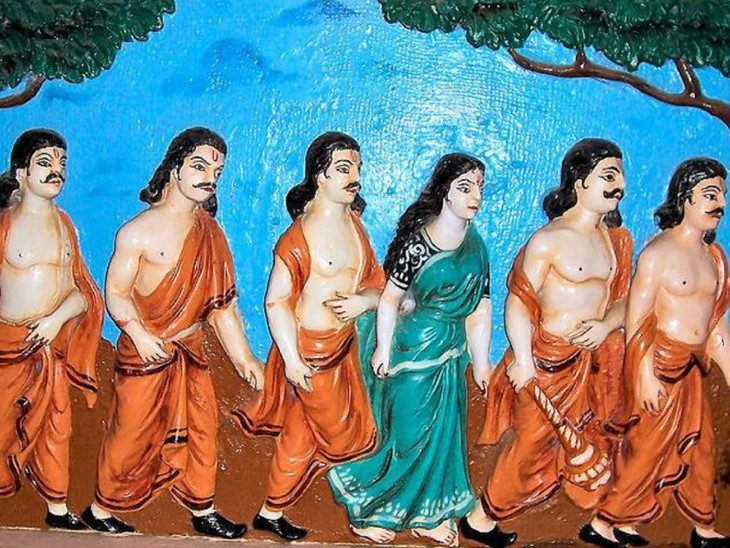
Draupadi’s life took another extraordinary turn during her swayamvara, the ceremony in which a princess chooses her husband from among assembled suitors. King Drupada arranged an archery challenge requiring participants to strike a target by observing its reflection. Arjuna, disguised as a Brahmin, successfully completed the task and won Draupadi’s hand. When the Pandavas returned home, Kunti, unaware of what they had brought, instructed her sons to share it equally. This statement became part of the circumstances leading to Draupadi’s marriage to all five brothers: Yudhishthira, Bhima, Arjuna, Nakula and Sahadeva.
The epic also provides a divine explanation through Vyasa, who connects her five husbands to a boon associated with Shiva and her previous birth. Her marriage became one of the most unusual and debated relationships in Indian epic literature. As the wife of the five Pandavas, Draupadi eventually became queen of Indraprastha and shared their fortunes, exile and eventual return to power.
Other names
Draupadi is known by several names that reflect her ancestry, appearance and different circumstances throughout the Mahabharata. Panchali identifies her with Panchala, the kingdom ruled by her father, King Drupada. Yajnaseni refers to her parentage through Yajnasena and also recalls her extraordinary birth during a sacrificial ritual. Krishnaa describes her dark complexion, which distinguishes her physical appearance in the epic.
During the Pandavas’ thirteenth year of exile, when they lived in disguise in the kingdom of Virata, Draupadi assumed the identity of Sairindhri. Under this name, she served Queen Sudeshna while concealing her royal identity. These different names capture the many dimensions of her existence, from fire-born princess and queen to a woman forced to live under an assumed identity while protecting herself and her family.
Powers and Abilities
Draupadi’s greatest strengths lie in her intelligence, eloquence, courage and determination rather than supernatural abilities. Her understanding of dharma and her willingness to question established authority make her one of the most intellectually formidable characters in the Mahabharata. Her most significant demonstration of these qualities occurs during the infamous game of dice in the Kuru court.
After Yudhishthira loses his kingdom, possessions and brothers before staking himself and subsequently Draupadi, she challenges the legitimacy of the wager. She asks whether a man who has already lost his freedom possesses the authority to stake his wife. This question places the assembled elders in a difficult moral position and exposes their unwillingness to confront an obvious injustice.
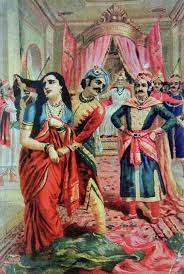
Draupadi’s courage becomes even more evident when she is dragged into the assembly and publicly humiliated by Dushasana. Rather than accepting her treatment, she challenges the Kuru elders, including Bhishma, Drona and Dhritarashtra, demanding an explanation grounded in dharma. Her appeal to Krishna during this episode is associated with the miraculous protection of her dignity, as Dushasana’s attempts to disrobe her are thwarted by an endless supply of cloth. This event is among the most widely recognised accounts of divine intervention in the Mahabharata.
Her determination also shapes the events following the humiliation. Draupadi refuses to allow the injustice to disappear through silence or reconciliation without accountability. She holds the Kauravas responsible and remains committed to seeing justice delivered. During the Pandavas’ exile, she continues to question their restraint and challenges the moral choices that allow their enemies to prosper. Her arguments reveal a sophisticated understanding of power, responsibility and justice. These qualities make her a formidable presence even when she possesses no kingdom or political authority of her own.
Modern Day Influence
Draupadi remains one of the most discussed female characters in Indian epic literature because her story raises questions that extend beyond the world of the Mahabharata. Her marriage to five husbands has attracted different interpretations, ranging from its explanation through divine destiny to discussions about the position of women within ancient royal societies. Her experiences also invite examination of female agency, consent and the expectations placed upon women within patriarchal structures.
Her confrontation in the Kuru assembly has become particularly significant in contemporary interpretations. Draupadi does not accept the authority of powerful men simply because of their position or reputation. Instead, she questions their decisions and demands that they justify their actions through dharma. Her challenge to Yudhishthira’s wager remains a powerful exploration of individual dignity, marital rights and the limits of authority. Her refusal to remain silent in the face of humiliation has consequently made her an important figure in feminist readings of the epic.
Draupadi’s influence extends across literature, theatre, dance, painting, sculpture and television. Regional retellings have explored her character through different cultural and philosophical perspectives, sometimes presenting her as a divine figure, a symbol of resistance or a woman whose personal experiences shape the destiny of kingdoms. Her story also continues to inspire discussions about the relationship between justice and revenge, particularly as her humiliation becomes one of the defining events leading towards the Kurukshetra War.
Ultimately, Draupadi represents the consequences of injustice in a society that frequently places royal duty, political alliances and male authority above individual dignity. Her life is inseparable from the larger conflict of the Mahabharata, yet her identity is never entirely defined by the five Pandavas or the war they fight. She remains a powerful character in her own right, remembered for questioning authority, defending her dignity and demanding accountability from those who failed to protect her.
Related Images




Sources
Hiltebeitel, A. (2001). Rethinking the Mahabharata: A reader’s guide to the education of the dharma king. University of Chicago Press.
Smith, J. D. (2009). The Mahabharata: An abridged translation. Penguin Books.
van Buitenen, J. A. B. (Trans.). (1973). The Mahabharata: Volume 1, The book of the beginning. University of Chicago Press.
Black, B. (2013). Draupadī in the Mahābhārata. Religion Compass, 7(5), 169–178. https://doi.org/10.1111/rec3.12042
Encyclopaedia Britannica. (1911). Draupadi. Wikisource. https://en.wikisource.org/wiki/1911_Encyclop%C3%A6dia_Britannica/Draupadi
EBSCO. (n.d.). Draupadī. Research Starters. https://www.ebsco.com/research-starters/religion-and-philosophy/draupadi
Mahabharata Katha. (n.d.). Virata Parva. https://mahabharatkatha.org/en/parva/parva-4/
Turīya-Sūtra. (n.d.). The Pāṇḍavas go incognito: Arrival at Virāṭa’s court. https://turiya-sutra.in/stories/mahabharata/pandavas-incognito-arrive-at-virata
Frequently Asked Questions
Who was Draupadi in the Mahabharata?
Draupadi was the fire-born princess of Panchala, daughter of King Drupada and wife of the five Pandava brothers. She played a pivotal role in the events leading to the Kurukshetra War.
Why was Draupadi called Yajnaseni?
Draupadi was called Yajnaseni, meaning daughter of Yajnasena, another name for her father King Drupada. She was also born from a sacrificial fire.
Why did Draupadi marry all five Pandavas?
Draupadi married all five Pandavas following Kunti’s inadvertent instruction and a divine explanation involving a boon granted by Shiva in her previous birth.
What were Draupadi's other names?
Draupadi was also known as Panchali, Krishnaa and Yajnaseni. During the Pandavas’ incognito exile in Virata’s kingdom, she assumed the identity of Sairindhri.
Why was Draupadi's humiliation important in the Mahabharata?
Draupadi’s humiliation in the Kuru assembly exposed the failure of its elders to uphold dharma and became a major turning point in the conflict between the Pandavas and Kauravas.


