

Philippine (Igorot) Creation Story : The Sacred Origins of Kabunian’s Creation
| Description | |
|---|---|
| Origin | Philippine Mythology |
| Country | Philippines |
| Deities Involved | Kabunian |
| Symbolism | Clay (human diversity), Breath of life (divine essence), Mountains (sacred presence), Ladder (divine-human connection) |
| Process | Shaping earth and humans; Clay oven myth of three races; Entrusting humans with stewardship |
Mythlok Perspective
In Mythlok’s Perspective, the Igorot Creation Story is ultimately a story about responsibility rather than power. Kabunian does not simply create the world and withdraw; he establishes a lasting relationship between humanity, nature, and the spiritual realm. The mountains, rivers, and forests are not resources to be exploited but sacred trusts to be protected. What makes this tradition particularly distinctive is its strong environmental focus. While many creation myths emphasize humanity’s dominance over nature, the Igorot narrative stresses coexistence and stewardship. In this way, it resembles the worldview found in many Native American traditions, where landscapes possess spiritual significance, and also echoes the reverence for sacred mountains seen in Tibetan beliefs.
Philippine (Igorot) Creation Story
Introduction
The Igorot Creation Story is one of the most important indigenous traditions of the Philippines. Passed down through generations among the highland communities of the Cordillera region, it explains how the world, humanity, and the natural landscape came into existence through the power of Kabunian, the supreme deity. More than a tale of beginnings, the story reflects the values, beliefs, and relationship with nature that have guided Igorot communities for centuries.
Unlike many creation myths that focus on conflicts between rival gods, the Igorot Creation Story centers on a single divine creator. Kabunian is regarded as the source of life, the guardian of moral order, and the force behind the mountains, rivers, forests, and living creatures that define the Cordilleran landscape. Through various versions of the myth, the story teaches respect for the environment, reverence for ancestors, and the importance of living in harmony with both the spiritual and physical worlds.
Cosmic Origins
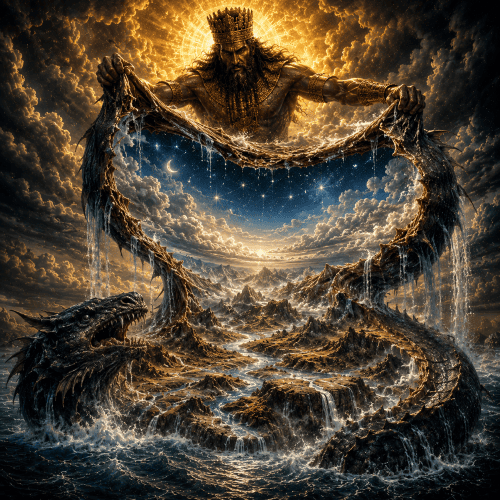
In traditional Igorot belief, the universe existed as a structured cosmos governed by Kabunian also known as Kabunyan. The world was not seen as a random creation but as a carefully ordered realm where every element had a purpose. Kabunian dwelled in the skyworld, the highest spiritual realm, from where he watched over the earth below. The physical world was surrounded by other spiritual dimensions inhabited by ancestral spirits, deities, and supernatural beings. These realms were interconnected, allowing communication between humans and the divine through rituals, prayers, and sacred ceremonies.
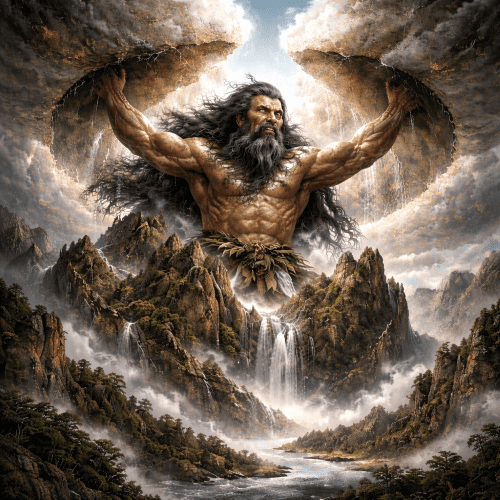
Many versions of the Igorot Creation Story describe the earth before humanity as a vast and uninhabited place. Kabunian shaped the land, raised mountains, carved river valleys, and filled the world with plants and animals. These natural features were not viewed as mere geographical formations but as sacred elements infused with spiritual significance.
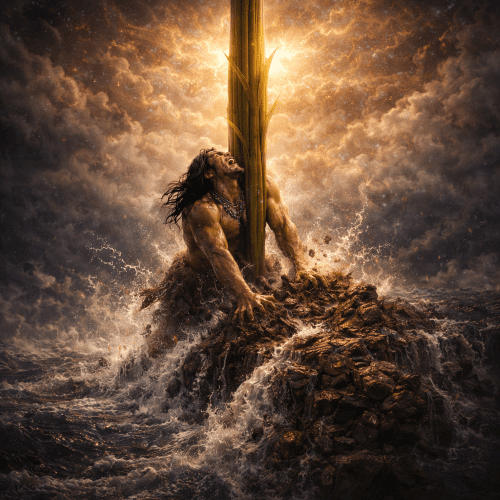
Some traditions also preserve a flood narrative. According to these accounts, humanity once existed but became disobedient to divine laws. As punishment, a great flood covered the land and destroyed nearly all life. Only a brother and sister survived after seeking refuge on a mountain peak, often identified as Mount Kalawitan. Following the flood, they became the ancestors of future generations, marking the renewal of human life.
Deities and Forces Involved
At the center of the Igorot Creation Story stands Kabunian, the supreme creator and highest divine authority. Among different Cordilleran groups, he is known by several names, including Kabunyan, Kadaklan, and Adikaila, though his role remains largely the same.
Kabunian is portrayed as all-powerful and all-knowing. He created the world, established moral laws, and continues to oversee human affairs. Unlike distant creator gods found in some traditions, Kabunian remains actively involved in the lives of his people through blessings, guidance, and judgment.
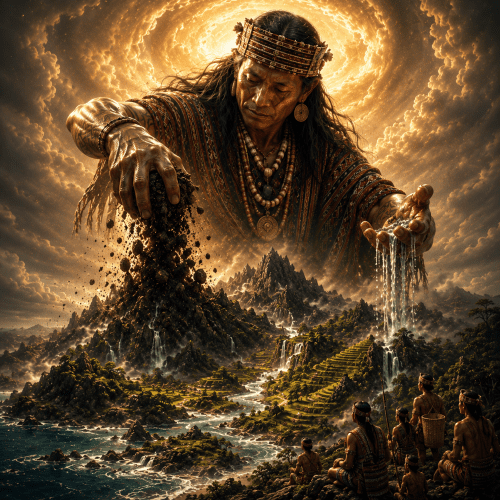
Another important figure associated with Igorot traditions is Lumawig, particularly among the Bontoc and Kankanaey peoples. In some versions, Lumawig is described as Kabunian’s son, while in others he is viewed as a manifestation of the supreme deity himself. Lumawig descended from the heavens to teach humanity practical skills such as farming, irrigation, pottery making, and community governance.
The spiritual world also includes the Anito, ancestral spirits who maintain a close relationship with the living. These spirits serve as protectors and intermediaries between humans and Kabunian. They are honored through rituals and offerings, ensuring harmony between the physical and spiritual realms.
Process
The creation of humanity is told through several distinct traditions, each highlighting Kabunian’s role as both creator and teacher. One widely known version recounts how Kabunian fashioned the first humans from clay. After molding human figures, he placed them in a fire to complete their creation. The first figures remained in the fire too long and emerged with dark skin. The second group was removed too quickly and appeared pale. Learning from these attempts, Kabunian carefully timed the final batch, producing people with brown skin.
Rather than portraying one group as superior to another, the story explains human diversity through a shared origin. All people were created by the same divine hand, emphasizing common ancestry and interconnectedness.
Another tradition describes Kabunian creating the first humans directly and giving them knowledge/” data-wpil-keyword-link=”linked” data-wpil-monitor-id=”38558″>wisdom, knowledge, and stewardship over the earth. These early people were entrusted with maintaining balance in the natural world and respecting the sacred gifts they had received.
Flood traditions add another layer to the creation narrative. Following the destruction of the earlier population, the surviving brother and sister became the founders of future generations. Their survival symbolized divine mercy and the opportunity for humanity to begin anew while remaining faithful to Kabunian’s laws.
Symbolism
The Igorot Creation Story contains rich symbolism that reflects the worldview of Cordilleran communities. Mountains occupy a central place in the narrative. Peaks such as Mount Kalawitan are viewed as sacred spaces where the human and divine realms intersect. They represent protection, spiritual power, and continuity between generations.
Clay symbolizes humanity’s physical connection to the earth. Since humans are formed from the same material as the land itself, the story reinforces the belief that people are inseparable from nature and have a responsibility to care for it.
Fire serves as a symbol of transformation. Through the clay creation narrative, it becomes the force that shapes humanity and explains the diversity of human appearance. The process illustrates that differences among people are part of a purposeful creation rather than a cause for division.
Water carries both destructive and renewing meanings. The great flood represents divine judgment against disorder, while the survival of a few individuals demonstrates hope, renewal, and the continuation of life.
The ladder associated with Mount Kalawitan symbolizes communication between heaven and earth. It reflects the belief that the spiritual world is not separate from daily life but remains accessible through faith, ritual, and respect for tradition.
Comparative Analysis
The Igorot Creation Story shares several themes with creation myths from other parts of the Philippines and the wider world. Like many indigenous traditions, it presents humanity as a direct creation of a divine being. The use of clay as the material for human creation resembles stories found in ancient Mesopotamian, African, and Abrahamic traditions, where divine figures shape humans from earth and give them life.
The flood narrative also parallels myths found across many cultures. Stories of a catastrophic flood followed by renewal appear in traditions from Asia, the Middle East, Europe, and the Americas. These recurring themes often express ideas about morality, destruction, and rebirth.
Despite these similarities, the Igorot Creation Story remains unique because of its deep connection to the mountainous environment of the Cordillera. The landscape itself is not simply a backdrop but an active participant in the narrative. Sacred peaks, rivers, forests, and agricultural lands all possess spiritual significance, reflecting the intimate relationship between the Igorot people and their homeland.
Legacy
For centuries, the Igorot Creation Story has shaped cultural identity throughout the Cordillera region. It provided explanations for the origins of humanity, the sacred nature of the land, and the responsibilities that come with living within a community.
The story reinforced social values such as cooperation, respect for elders, reverence for ancestors, and stewardship of natural resources. These principles became deeply embedded within customary laws and community practices.
During periods of outside influence and colonization, traditional beliefs helped preserve a sense of cultural independence. The connection between Kabunian, the land, and the people strengthened indigenous identity and reinforced the importance of protecting ancestral territories.
Oral storytelling ensured that each generation inherited not only the myth itself but also the values it contained. Through songs, chants, rituals, and communal gatherings, the story remained a living part of Igorot culture rather than a forgotten legend.
Modern Influence
Today, the Igorot Creation Story continues to play an important role in cultural preservation and identity. While many Igorots practice Christianity, traditional beliefs surrounding Kabunian remain influential and are often integrated into modern spiritual life.
Festivals, ceremonies, and community gatherings still honor ancestral traditions. Ritual specialists, known in some communities as mumbaki, continue to conduct ceremonies seeking blessings for health, harvests, and communal harmony.
The story has also gained renewed attention through education, literature, visual arts, and digital media. Cultural organizations and indigenous advocates use these narratives to teach younger generations about their heritage and strengthen awareness of Cordilleran traditions.
Environmental movements frequently draw inspiration from the creation story’s teachings about stewardship and respect for nature. As concerns about land rights and ecological protection grow, the narrative remains a powerful reminder of the sacred relationship between people and the environment.
The enduring presence of the Igorot Creation Story demonstrates how ancient traditions can continue to provide meaning in the modern world while preserving the cultural heritage of one of the Philippines’ most distinctive indigenous communities.
Sources
Cole, M. C. (1916). Philippine folk tales. A. C. McClurg and Company.
Igorotage. (2025). Kabunian and the deities in Igorot culture: Exploring Igorot gods. https://www.igorotage.com/blog/kabunian-and-igorot-deities
Aswang Project. (2022). Early conceptions of the universe in Philippine mythology. https://www.aswangproject.com/universe-philippine-mythology/
Scott, W. H. (1969). The Igorot: Ethnography of the Mountain People of the Philippines. Quezon City: New Day Publishers.
Jocano, F. L. (1969). Philippine Mythology. Quezon City: Capitol Publishing.
Demetrio, F. R. (1992). The Soul Book: Introduction to Philippine Pagan Religion. Quezon City: GCF Books.
Eugenio, D. L. (1993). Philippine Folk Literature: The Myths. Quezon City: University of the Philippines Press.
Salazar, Z. (1999). Igorot Mythology and Rituals. Manila: Ateneo de Manila University Press.
Frequently Asked Questions
Who is Kabunian in the Igorot Creation Story?
Kabunian is the supreme creator deity of Igorot tradition who created the world, humanity, and the natural order.
How were humans created in the Igorot Creation Story?
Many versions state that Kabunian molded humans from clay and used fire to complete their creation.
What is the significance of Mount Kalawitan?
Mount Kalawitan is considered a sacred mountain linked to divine protection and the connection between heaven and earth.
Does the Igorot Creation Story include a flood myth?
Yes. Several versions describe a great flood that destroyed humanity, leaving only a few survivors to repopulate the world.
Why is the Igorot Creation Story important today?
It preserves indigenous identity, teaches environmental stewardship, and keeps Cordilleran cultural traditions alive.