


Sigbin : The Backward-Walking Creature of Philippine Folklore
At a glance
| Description | |
|---|---|
| Origin | Philippine Mythology |
| Classification | Hybrids |
| Family Members | N/A |
| Region | Philippines |
| Associated With | Shapeshifting, Blood Sucking |
Mythlok Perspective
From the Mythlok perspective, the Sigbin reflects the fear of supernatural forces operating beyond human control, particularly through sorcery and death. Its role as a supernatural familiar invites comparison with the Japanese Shikigami, spirits commanded by practitioners of onmyōdō. While both serve human masters, the Sigbin carries a darker association with predation, shadows and stolen life essence. This distinction reveals how different cultures imagine the relationship between supernatural power and human ambition.
Sigbin
Introduction
The Sigbin, also spelled Sigben, is a mysterious supernatural creature found in Philippine folklore, particularly among communities in the Visayas and parts of Mindanao. Known for its unusual appearance and strange way of moving, it is traditionally described as a nocturnal being that walks backwards, keeping its head lowered between its hind legs. Stories about the creature vary considerably across regions, with some portraying it as a dangerous predator and others describing it as a supernatural familiar kept by sorcerers.
The Sigbin occupies an interesting position in Filipino supernatural traditions because it is associated with both death and the acquisition of wealth. In certain accounts, it preys on vulnerable people by draining their life essence through their shadows, while other traditions describe it as a servant capable of carrying out its owner’s commands. Its association with the Aswang further connects it to the wider collection of supernatural beliefs surrounding witchcraft, familiars and malevolent beings in Philippine folklore.
Unlike mythological figures with established individual identities, the Sigbin represents a type of supernatural creature whose characteristics depend largely on the community telling its story. Its unusual physical features, nocturnal behaviour and relationship with human owners have helped preserve its place in the folklore of the Philippine archipelago.
Physical Description
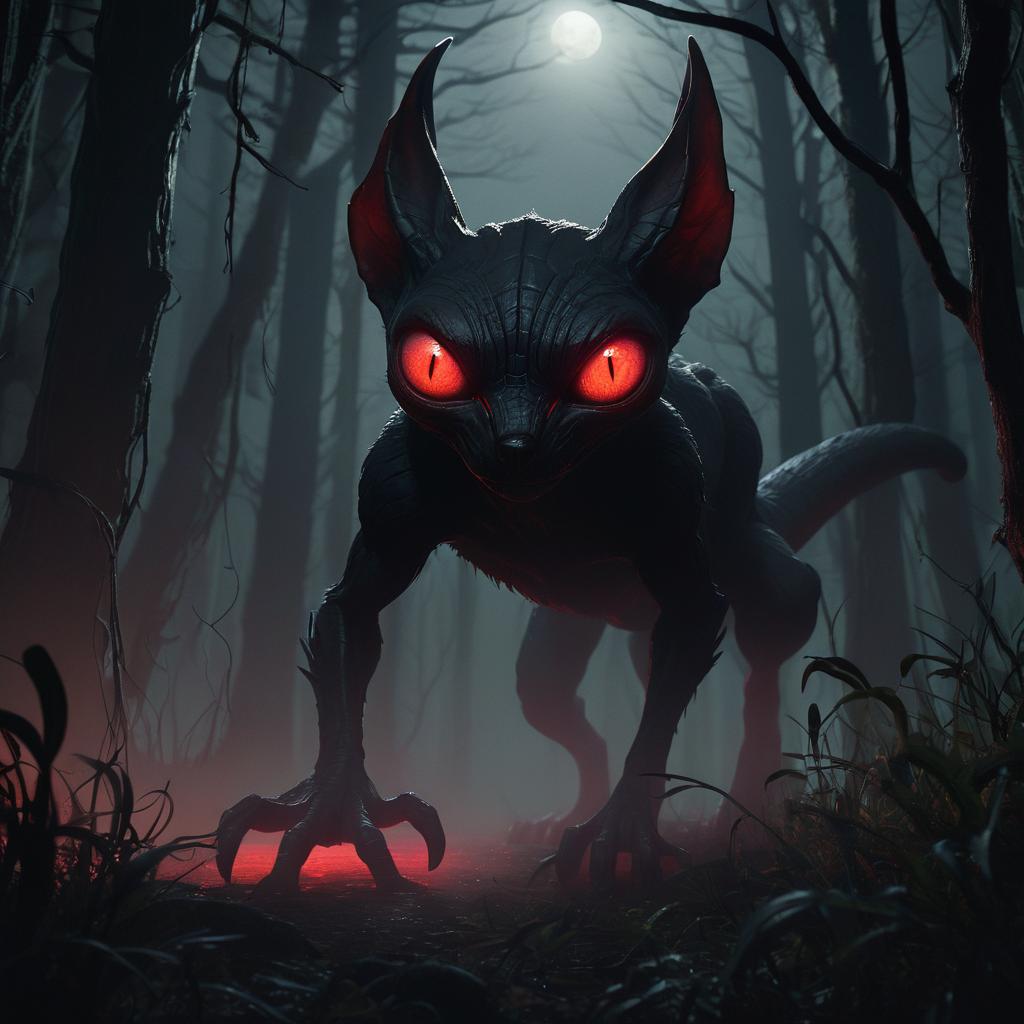
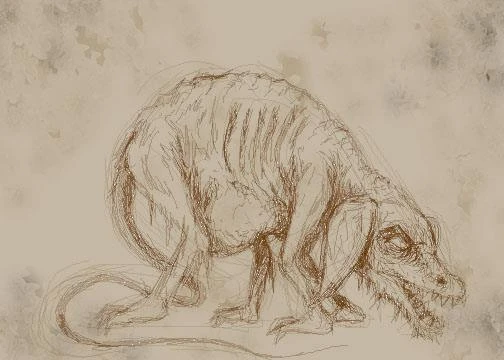
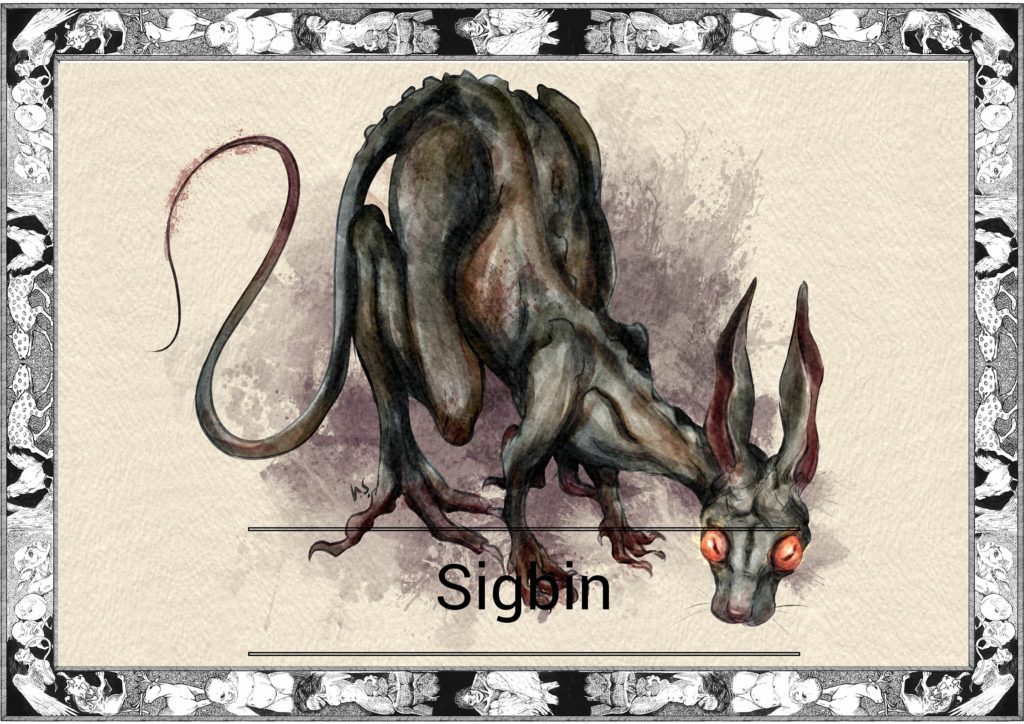
The Sigbin is generally described as a peculiar animal with characteristics resembling a goat, dog or kangaroo. One of its most recognisable features is its unusual gait. Instead of walking normally, it moves backwards with its head positioned between its hind legs, making it difficult for observers to determine its direction of movement. This distinctive posture is among the most frequently repeated elements in descriptions of the creature.
Traditional accounts describe it as having a hornless, goat-like body, unusually long hind legs and comparatively short forelegs. Its large ears are another prominent feature, with some stories claiming that they flap or clap together when the creature runs. It is also associated with a long, flexible tail that can reportedly be used as a weapon. Certain accounts describe its presence as accompanied by an extremely unpleasant smell, which serves as a warning of its approach.
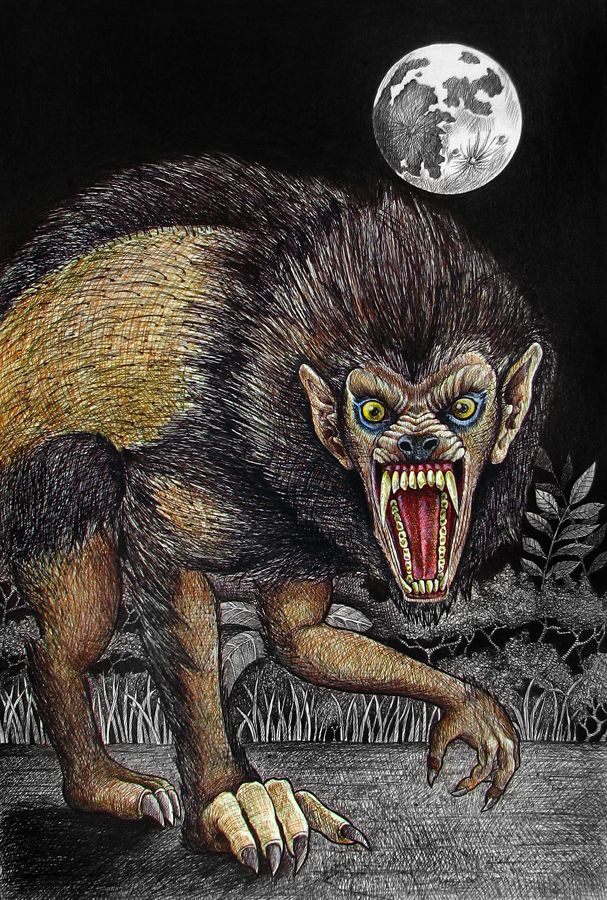
Not every community imagines the Sigbin in the same way. Some descriptions portray it as dog-like, while Hiligaynon accounts have associated it with a frog-like appearance. Other traditions emphasise its ability to become invisible to people other than its owner. These differences demonstrate how its physical identity has evolved through regional storytelling rather than following one universally accepted description.
Mythological Context
The Sigbin belongs to the wider supernatural traditions of the Philippines, where unusual creatures, spirits and familiars are frequently associated with human affairs. Its stories are particularly prominent in Visayan folklore, where it is sometimes regarded as an animal-like supernatural familiar that serves a particular individual.
In some traditions, the creature is believed to emerge at night to hunt or carry out the instructions of its master. Its activities include attacking people, stealing possessions and protecting the interests of the person who controls it. The belief that a Sigbin can be kept as a companion or servant gives it a distinctive place among Philippine supernatural creatures.
Certain Hiligaynon narratives describe a more sinister role. The creature is believed to approach people who are close to death and drain their life essence through their shadows. In these accounts, the Sigbin is not simply an unusual nocturnal animal but a supernatural presence associated with the boundary between life and death.
Origins
There is no single documented creation story explaining the origin of the Sigbin. Its history is primarily preserved through regional oral traditions and descriptions collected by folklorists, historians and ethnographers. One important historical reference is Ferdinand Blumentritt’s Diccionario Mitológico de Filipinas (1895), which records the Sigbin as a type of supernatural familiar associated with the Visayan people. Blumentritt also describes the Sigbinan, a figure associated with sorcery and the ability to command supernatural creatures. This distinction is important because the Sigbin and Sigbinan do not represent two names for the same being.
Another valuable reference is John U. Wolff’s A Dictionary of Cebuano Visayan (1972). It describes the Sigbin as an animal possessed by and serving an individual, with the ability to become invisible to anyone other than its owner. The dictionary also records the belief that ownership could pass to relatives after the owner’s death. Together, these historical references demonstrate that the Sigbin tradition extends beyond its portrayal as a nocturnal predator.
Notable Members
Unlike mythological traditions that identify individual gods, spirits or legendary heroes, Philippine folklore does not establish a recognised individual Sigbin with a distinct name and personal history. The term refers primarily to a type of supernatural creature rather than a single character.
Some traditions describe Sigbins belonging to particular families or individuals who possess the ability to command them. These creatures may be kept in large earthenware jars when they are not performing tasks for their owners. Such accounts suggest the existence of multiple Sigbins within the folklore tradition, although individual members are rarely distinguished by personal identities. The Sigbinan, meanwhile, refers to a person associated with possessing or commanding a Sigbin in certain traditions. It should not be confused with an individual member of the creature’s kind.
Relationship with Other Beings
The Sigbin is particularly associated with the Aswang, one of the most widely recognised categories of supernatural beings in Philippine folklore. In certain Hiligaynon traditions, the Aswang is believed to keep the Sigbin as a familiar or companion. The creature serves its master while remaining hidden from ordinary people.
Its relationship with the Sigbinan is equally important. In Visayan traditions, Sigbinan refers to a person associated with possessing or controlling these creatures. Historical accounts describe Sigbinan practitioners as sorcerers who could also assume the forms of animals such as alligators, snakes and dogs. The association between these practitioners and the Sigbin reinforces the creature’s connection with witchcraft and supernatural power.
However, the Sigbin is not simply another form of Aswang. Some traditions treat it as an independent creature, while others place it within the supernatural household of an Aswang. Its identity therefore depends on the particular regional tradition being considered.
Similar Beings
Several other supernatural creatures in Philippine folklore share characteristics or associations with the Sigbin, although they are not necessarily related. The Wak-Wak is a nocturnal creature associated with predatory behaviour and supernatural attacks. Like the Sigbin, it appears in stories involving darkness and vulnerable victims. However, the Wak-Wak is generally associated with bird-like characteristics and should not be considered another name for the Sigbin.
The Balbal is another frightening creature in Philippine folklore, commonly associated with consuming corpses and disturbing burial places. Its association with death creates some thematic similarities with the Sigbin, particularly in traditions where the latter is believed to carry away bodies.
The Amamayong also appears in some secondary collections of Philippine folklore as a creature associated with the Sigbin. However, the extent to which the two are interchangeable remains unclear, and regional descriptions should be considered before treating them as synonyms. These comparisons illustrate the diversity of Philippine supernatural traditions, where creatures may share certain characteristics without necessarily belonging to the same category.
Symbolism and Interpretations
The Sigbin represents several fears and beliefs found within traditional Filipino communities. Its unusual appearance and nocturnal behaviour reflect the anxieties associated with unfamiliar animals, unexplained occurrences and the dangers believed to exist beyond the safety of settlements. Its association with sorcerers and wealthy families also gives the creature an interesting social dimension. In some traditions, families believed to possess a Sigbin were thought to benefit from its supernatural services. The creature could supposedly protect its owner, transport them over long distances or attack people on command. Such beliefs connected unexplained wealth and influence with supernatural bargains.
The stories about the Sigbin draining life through a person’s shadow offer another interpretation. They reflect traditional associations between shadows, life essence and spiritual vulnerability. Rather than attacking the physical body directly, the creature targets something less tangible, making it an especially unsettling presence in local folklore. Through these different interpretations, the Sigbin embodies anxieties surrounding death, sorcery, unexplained prosperity and the hidden supernatural forces believed to influence everyday life.
Modern Influence
The Sigbin continues to attract interest as one of the distinctive creatures of Philippine folklore. Its unusual physical appearance and backward-walking behaviour make it an especially recognisable subject in contemporary discussions of Filipino supernatural traditions. Folklore collections, books about mythical creatures and online cultural publications have helped introduce its stories to audiences beyond the communities where the traditions originated.
It also offers considerable creative potential for contemporary horror, fantasy and visual storytelling. Its association with shadows, supernatural familiars and nocturnal encounters provides material for modern interpretations while retaining connections to traditional beliefs.
Despite changing cultural attitudes and the influence of modern entertainment, the Sigbin remains an intriguing part of the Philippines’ supernatural heritage. Its many regional descriptions demonstrate how folklore evolves through storytelling, preserving local fears and beliefs while allowing each generation to interpret familiar creatures in new ways.
Related Images




Sources
Aswang Project. (n.d.). The Sigbin: The mysterious goat-like creature of Philippine folklore. The Aswang Project. Retrieved November 1, 2025, from https://www.aswangproject.com/sigbin/
Demetrio, F. R. (1991). Encyclopedia of Philippine folk beliefs and customs (Vols. 1–2). Xavier University Press.
Eugenio, D. L. (2007). Philippine folk literature: An anthology (2nd ed.). University of the Philippines Press.
Fansler, D. S. (1921). Filipino popular tales. American Folklore Society.
Paraiso, S., & Paraiso, J. J. (2003). The Balete book: A collection of demons, monsters, elves and dwarfs from the Philippine lower mythology. Giraffe Books.
Ramos, M. D. (1971). The creatures of Philippine lower mythology. University of the Philippines Press.
Ramos, M. D. (1990). The creatures of midnight: Mythical beings from Philippine folklore. CreateSpace Independent Publishing Platform.
PHSpirits. (n.d.). Sigbin. PHSpirits. Retrieved November 1, 2025, from https://phspirits.com/sigbin/
Mythus Wiki. (n.d.). Sigbin. Myth and Folklore Wiki. Retrieved November 1, 2025, from https://mythus.fandom.com/wiki/Sigbin
Wikipedia. (n.d.). Sigbin. Wikipedia. Retrieved November 1, 2025, from https://en.wikipedia.org/wiki/Sigbin
Frequently Asked Questions
What powers does the Sigbin have?
The Sigbin is said to possess numerous supernatural abilities. It can become invisible, shape-shift into human form, and move with extraordinary speed. Folklore also claims it can drain energy from people’s shadows or cause illness and misfortune to those it targets. Some stories even say the Sigbin collects human hearts to create magical amulets, giving rise to its reputation as both a physical and spiritual predator.
What is the Sigbin in Philippine mythology?
The Sigbin is a mysterious creature from Philippine folklore often described as a goat- or dog-like being that walks backwards with its head lowered between its legs. It is said to come out at night to suck the blood of its victims, usually from their shadows or hearts. Some versions claim that the Sigbin serves the Aswang, while others describe it as a unique supernatural species with its own dark powers.
What does the Sigbin look like?
Descriptions of the Sigbin vary by region, but most accounts agree that it has large ears that flap like bat wings, glowing red or green eyes, and a whip-like tail it uses as a weapon. It often emits a foul odor and has backward-facing feet, allowing it to move stealthily and confuse pursuers. Its disturbing, crouched posture and animal-human hybrid features make it one of the most terrifying creatures in Philippine mythology.
Is the Sigbin related to the Aswang?
Yes, the Sigbin is frequently associated with the Aswang, a broader category of shape-shifting monsters in Filipino folklore. Some legends describe the Sigbin as a servant or companion of the Aswang, helping it hunt for victims. In other tales, the Sigbin acts independently, preying on humans or animals under the cover of darkness. This connection emphasizes the shared themes of deception, predation, and fear that unite these mythic beings.
Does the Sigbin still appear in modern Filipino culture?
Yes, the Sigbin remains a prominent figure in modern Philippine culture. It often appears in horror films, comics, and novels as a symbol of fear and the unknown. The creature is also referenced in children’s stories, folk festivals, and online discussions about mythology. Through its adaptability, the Sigbin continues to represent the balance between folklore, morality, and mystery within Filipino identity.


