
Kupua : Shapeshifting Spirits of Hawaiian Tradition
| Description | |
|---|---|
| Origin | Hawaiian Mythology |
| Nature | Dual |
| Notable Members | Kamapuaʻa, Moʻo, Ka-poe, Akua-pehu-ale, Iwa |
| Symbolism | Duality of nature, Moral lessons, Sacredness of environment |
| Epics | Kamapuaʻa legends, Moʻo guardian tales, Westervelt’s Kupua classifications |
Mythlok Perspective
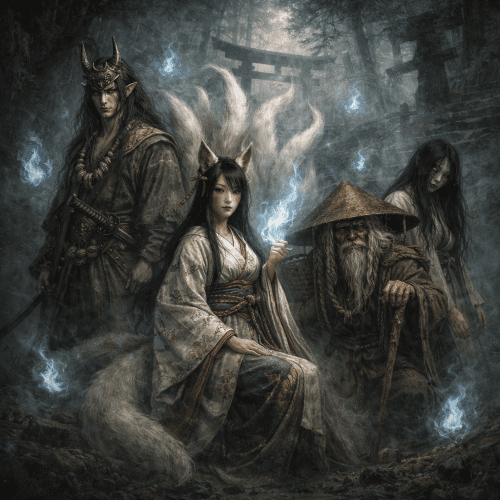
In Mythlok’s View, Kupua are not just shapeshifters but embodiments of a worldview where identity is fluid and inseparable from nature. They challenge rigid definitions of god, spirit, and human, instead presenting existence as layered and interconnected. This idea finds parallels in other cultures. Norse traditions reflect similar fluidity through figures like Loki, while Japanese folklore expresses it through kitsune. Native American traditions also echo this through animal spirits and transformation myths. Across cultures, such beings reveal a shared human understanding that life is not fixed but constantly shifting. Kupua stand out because their transformations are not tricks but truths. They remind us that nature itself is alive, unpredictable, and deeply tied to human existence.
Kupua
Introduction
Kupua are among the most fascinating beings in Hawaiian tradition, known for their ability to shift between forms and move between worlds. They are not easily classified as gods, spirits, or monsters because they exist somewhere in between all three. In many stories, a Kupua may live as a human while secretly possessing another form tied to an animal, plant, or natural force. This dual nature reflects a worldview where the boundaries between the physical and spiritual are fluid rather than fixed.
These beings appear throughout Hawaiian storytelling as tricksters, protectors, rivals, and sometimes terrifying forces. Their actions often revolve around family ties, survival, and the use of mana, the spiritual energy that defines power and presence. Unlike distant deities, Kupua feel immediate and unpredictable, reminding people that nature itself can be both nurturing and dangerous.
Physical Description
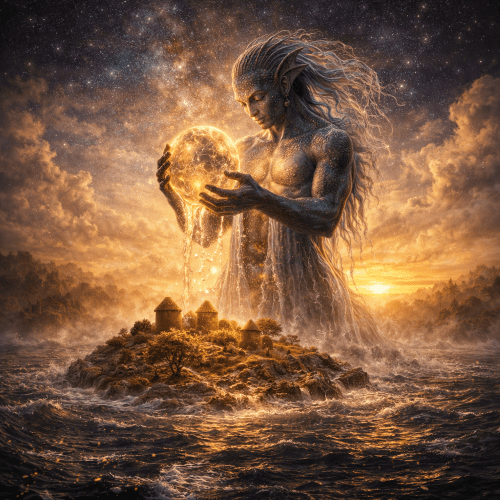
There is no single way to describe a Kupua because their defining trait is transformation. Most are understood to possess more than one body, a concept known as kino pāpālua or kinolau. This means a Kupua might appear human in one moment and then reveal a completely different form when their true nature emerges.
These alternate forms are deeply tied to the natural world. Some Kupua take the shape of animals such as pigs, sharks, lizards, or birds, while others manifest as plants like trees and ferns. There are also accounts of Kupua linked to elements such as fire, mist, or ocean waves. Even when disguised, there is usually something unusual about them, whether it is unnatural size, strength, or presence.
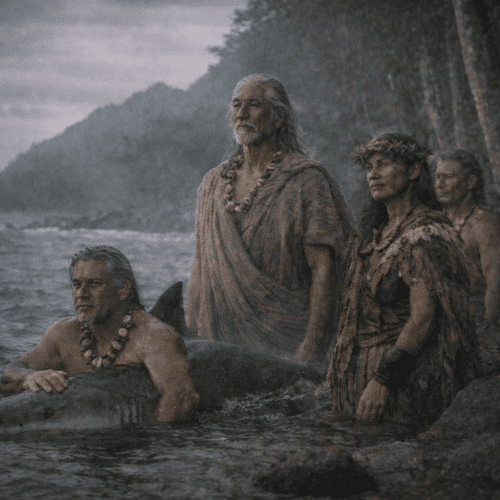
For example, Kamapuaʻa is known for shifting between human, pig, fish, and plant forms, while Kaupe appears as a dog-headed man with a violent and predatory nature. The moʻo, often described as giant lizard beings, can also take on human appearances to interact with people.
Mythological Context
Kupua exist within a rich spiritual framework where gods, ancestors, and natural forces are all interconnected. Hawaiian cosmology, as preserved in chants like the Kumulipo, describes a universe that evolves through different realms, where life emerges in both physical and spiritual forms. Within this system, Kupua occupy a liminal space between akua and humans.
Their stories often follow recognizable patterns. Many are born in unusual ways, sometimes appearing in nonhuman forms at birth. Elders or grandparents are often the first to recognize their true nature and protect them until their powers awaken. As they grow, Kupua frequently engage in acts of mischief, conflict, or heroism, using their abilities to influence events around them.
These narratives are not just entertainment. They explain natural phenomena, social structures, and moral consequences. Whether through battles, alliances, or transformations, Kupua stories reflect a world where the spiritual is constantly interacting with everyday life.
Origins
Kupua do not have a single origin story. Instead, they emerge naturally from the broader spiritual ecology of Hawaiian belief. Many are described as descendants of divine or semi-divine lineages, often connected to powerful ancestral beings or natural forces.
In some traditions, Kupua are born from unions between gods and humans, while in others, they are linked to animal ancestors whose spirit becomes part of the child. This idea reinforces the belief that humans and nature are deeply interconnected. The Kumulipo even references early forms of beings that blur the line between human and animal, suggesting that such transformations are part of the natural order.
What makes Kupua unique is that their power is not granted externally but is inherent. It is something they are born with, tied to their lineage and environment. Their abilities are expressions of the same forces that shape the islands themselves.
Notable Members
Several Kupua stand out in Hawaiian storytelling due to their influence and complexity. Kamapuaʻa is perhaps the most famous, known for his shifting forms and his connection to agriculture, rain, and fertility. His stories often involve conflict with other powerful beings, including Pele, the volcano deity.
Māui, although often considered a demigod, shares many Kupua traits. His intelligence, strength, and ability to challenge both gods and nature place him within this broader category. Unlike many others, he tends to remain in human form while still displaying extraordinary abilities.
Kaupe represents the darker side of Kupua. As a dog-man associated with Nuʻuanu, he is remembered for his violent and cannibalistic nature. Other figures include Mamala, a surf-riding chiefess with multiple forms, and Pikoi-a-ka-alala, a skilled warrior with animal traits. The moʻo, often linked to freshwater sources, are among the most widespread Kupua, acting as both protectors and threats.
Relationship with Other Beings
Kupua interact with a wide range of beings, and their relationships are rarely simple. With humans, they can be either allies or dangers. Some protect their families and communities, while others prey on the unwary. Their behavior often depends on how they are treated and whether their mana is respected.
Their interactions with chiefs are particularly important. Kupua may support certain leaders, fight alongside them, or challenge their authority. These relationships often shape the outcome of conflicts and reinforce the idea that power is not purely political but also spiritual.
When it comes to gods, Kupua are not always subordinate. Some rival major deities, forming alliances or engaging in direct conflict. The relationship between Kamapuaʻa and Pele is one of the most well-known examples, combining rivalry, attraction, and elemental balance.
Similar Beings
Kupua share similarities with shapeshifting beings across the world, but their cultural context sets them apart. In Polynesian traditions, similar figures appear as atua with multiple forms. In other cultures, they resemble tricksters like Loki or shapeshifters such as skinwalkers and selkies.
Within Hawaiian belief itself, Kupua are often compared to ʻaumakua, which are ancestral guardians, and menehune, known for their craftsmanship and hidden presence. However, Kupua are more unpredictable and powerful, capable of both creation and destruction on a larger scale.
What distinguishes Kupua is their deep integration with nature. Their transformations are not disguises but expressions of their true identity, reflecting a worldview where all forms of life are connected.
Symbolism and Interpretations
Kupua represent the dual nature of existence. They embody both harmony and chaos, creation and destruction. Their stories remind people that nature is not something to be controlled but something to be respected.
They also carry strong moral themes. Some tales warn against arrogance, greed, or disrespect toward the environment. Others emphasize loyalty, family bonds, and the responsible use of power. The concept of mana runs through all these interpretations, highlighting the importance of balance and awareness.
Modern interpretations often view Kupua as symbolic of ecological relationships. Their ability to shift forms reflects the interconnectedness of ecosystems, where every element depends on another. Psychologically, they can also represent the multiple identities within individuals, showing how different aspects of the self coexist.
Modern Influence
Kupua continue to play a role in contemporary Hawaiian culture. They appear in storytelling, art, and cultural education, helping preserve traditional knowledge while adapting to modern contexts. Artists and writers reinterpret these figures to explore identity, heritage, and environmental responsibility.
Their influence extends into global media as well. Elements of Kupua can be seen in modern films, literature, and games that draw on Polynesian themes. At the same time, local efforts focus on maintaining authenticity, ensuring that these stories remain rooted in their cultural origins.
There is also a growing connection between Kupua narratives and environmental awareness. By linking natural elements to spiritual beings, these stories encourage respect for land, water, and wildlife, making them relevant in discussions about conservation and sustainability today.
Sources
Beckwith, M. W. (1970). Hawaiian mythology. University of Hawaii Press.
Beckwith, M. W. (Ed.). (2024). A legendary tradition of Kamapua’a, the Hawaiian pig-god. University of Hawaiʻi at Mānoa ScholarSpace. https://scholarspace.manoa.hawaii.edu/items/fa6dc2aa-ac33-4e23-90b2-12334c58bc52
Elbert, S. H. (1956). The chief in Hawaiian mythology. Journal of American Folklore, 69(272), 197–207. https://www.jstor.org/stable/536341
Nakuina, M. K. (1902). Hawaiian folk tales: A collection of native legends. A. C. McClurg & Co. https://www.gutenberg.org/files/18450/18450-h/18450-h.htm
Pukui, M. K., & Elbert, S. H. (1986). Hawaiian dictionary: Hawaiian-English, English-Hawaiian (Rev. ed.). University of Hawaii Press.
Westervelt, W. D. (1916). Hawaiian legends of volcanoes (collected and translated from the Hawaiian). G. H. Ellis Press. https://en.wikisource.org/wiki/Page:Hawaiian_Legends_of_Volcanoes_(Westervelt,_1916).pdf/151
Wikipedia contributors. (2026). Kamapuaʻa. Wikipedia, The Free Encyclopedia. https://en.wikipedia.org/wiki/Kamapua%CA%BBa
Wikipedia contributors. (2026). Kupua. Wikipedia, The Free Encyclopedia. https://en.wikipedia.org/wiki/Kupua
Frequently Asked Questions
What are Kupua in Hawaiian tradition?
Kupua are supernatural beings with the ability to shapeshift between human and nonhuman forms, often linked to animals, plants, or natural elements.
Are Kupua gods or spirits?
Kupua exist between categories. They can be considered semi-divine beings, sharing traits with both gods and spirits.
What powers do Kupua have?
Their main power is transformation, but they also possess enhanced strength, intelligence, and spiritual energy known as mana.
Who is the most famous Kupua?
Kamapuaʻa is one of the most well-known Kupua, famous for his multiple forms and complex role in Hawaiian stories.
Do Kupua still influence modern culture?
Yes, Kupua continue to inspire art, storytelling, cultural practices, and even environmental awareness today.