
Aumakua: The Ancestral Guardian Spirits of Hawaii
| Description | |
|---|---|
| Origin | Hawaiian Mythology |
| Nature | Benevolent |
| Notable Members | Shark ʻAumākua, Owl (Pueo), Plant guardians |
| Symbolism | Lineage, Protection, Moral accountability, Cultural resilience |
| Epics | Oral traditions, Chants, Family-specific legends (not centralized epics) |
Mythlok Perspective
In Mythlok’s View, Aumakua represent one of the most grounded expressions of ancestral spirituality, where divinity is not distant but inherited. Unlike the universal guardians of Greek or Norse traditions, Aumakua are intimate and lineage-bound. This concept closely parallels the totemic spirits of Indigenous American cultures and the ancestor reverence found in Chinese traditions, yet it remains uniquely Hawaiian in its deep ecological integration. Across cultures, the idea is consistent: ancestors do not disappear. They transform into guiding forces, reminding humanity that identity is not individual but inherited across generations.
Aumakua
Introduction
In Hawaiian tradition, the concept of Aumakua represents one of the most intimate forms of spirituality. These are not distant gods ruling the cosmos but ancestral guardians who remain closely tied to their families even after death. The word itself combines “au,” meaning time or era, and “makua,” meaning parent or ancestor, reflecting their role as eternal family protectors across generations.
Aumakua are believed to guide, protect, and sometimes discipline their descendants. They communicate through dreams, natural signs, or encounters with specific animals, making their presence deeply personal. Unlike universal deities, each Aumakua belongs to a lineage, reinforcing the idea that spirituality in Hawaiian culture is rooted in ancestry, family, and the natural world.
Physical Description
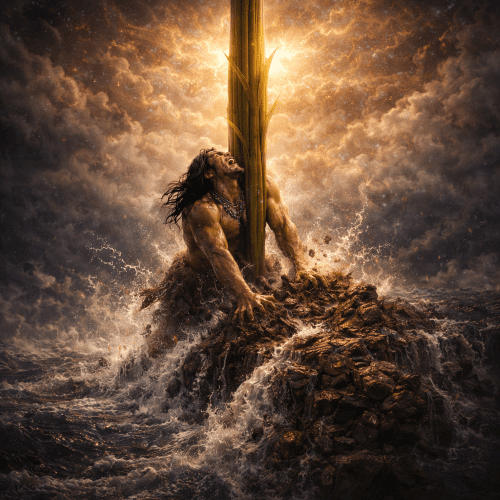
Aumakua do not have a single fixed form. Instead, they possess the ability known as kino lau, meaning “many bodies,” allowing them to appear in various physical manifestations. These forms often include animals such as sharks, owls, hawks, lizards, or octopuses, as well as plants or even natural elements like rocks.
These manifestations are not random. Each family recognizes its own Aumakua through inherited knowledge, visions, or repeated encounters. For example, a coastal family might identify with a shark, while those living inland may connect with birds like the owl or hawk. Importantly, the Aumakua is not the entire species but a specific being that embodies the ancestral spirit. Because of this, these animals or forms are treated with reverence. Harming them is considered a direct offense to the ancestor, reinforcing a deep respect for nature.
Mythological Context
In Hawaiian cosmology, Aumakua occupy a unique space between humans and higher gods. They act as intermediaries, carrying prayers from their descendants to the greater divine forces and returning guidance in subtle ways.
The Hawaiian worldview does not separate the natural and spiritual realms. Everything is interconnected through mana, the life force that flows through gods, ancestors, and living beings. Within this system, Aumakua are both protectors and moral guides.
Stories describe them intervening during moments of danger, warning families of threats, or ensuring safe journeys. At the same time, they enforce ethical behavior. Disrespect, neglect, or violation of sacred taboos can result in illness, misfortune, or spiritual withdrawal. This dual role ensures that cultural values such as respect, responsibility, and harmony with nature are maintained.
Origins
Aumakua originate from deceased ancestors who have been elevated to a spiritual state. Unlike souls that fully depart to the afterlife, these ancestors remain connected to their families, continuing their role as guardians.
Traditionally, this transformation was recognized through rituals and interpretations by spiritual experts. Once acknowledged, the ancestor would become part of the family’s spiritual lineage, passed down through generations.
This belief is closely tied to Hawaiian genealogical traditions, where ancestry is not just a matter of heritage but a living, active force. The connection between the living and the dead is continuous, forming an unbroken chain of guidance and protection.
Notable Members
Because Aumakua are family-specific, there is no single universal list of these spirits. However, certain forms appear frequently across Hawaiian traditions due to their symbolic roles. Shark Aumakua are among the most well-known, especially among coastal communities. They are seen as powerful protectors of fishermen and ocean travelers, often credited with saving lives during dangerous voyages.
The owl, known as pueo, is another significant form. It is associated with wisdom, foresight, and protection, particularly in times of conflict. Historical accounts suggest that warriors believed the owl could guide them in battle. Some families also recognize plant forms, such as taro, reflecting the deep agricultural roots of Hawaiian culture. In these cases, the Aumakua embodies nourishment, growth, and sustenance.
Relationship with Other Beings
The relationship between humans and Aumakua is deeply reciprocal. Families honor their Aumakua through respect, offerings, and proper conduct, while the spirit provides protection, guidance, and support.
Communication is often subtle. Dreams, omens, or sudden intuitive feelings are considered ways in which Aumakua convey messages. In times of distress, individuals may call upon their ancestral guardians for help, trusting in their continued presence.
Aumakua also interact with higher gods, acting as intermediaries rather than independent cosmic rulers. This layered structure of spirituality emphasizes both personal connection and universal order.
If a family dishonors its Aumakua, consequences may follow. These can range from misfortune to illness, reinforcing the importance of maintaining respect and balance in both personal behavior and environmental interactions.
Similar Beings
The idea of ancestral spirits taking protective forms is not unique to Hawaii. Across Polynesia, similar beliefs exist, reflecting shared cultural origins. In Tonga and Samoa, guardian spirits can appear as animals or natural forces tied to specific families.
Beyond the Pacific, parallels can be found in many cultures. Native American traditions include totemic animal spirits linked to clans. In East Asia, ancestor veneration emphasizes the continued influence of the deceased in family life. Even in European traditions, concepts like personal spirit companions echo this idea of guidance from beyond. What distinguishes Aumakua is their strong integration with nature and genealogy, creating a system where identity, environment, and spirituality are inseparable.
Symbolism and Interpretations
Aumakua symbolize continuity between generations. They represent the idea that ancestors are not gone but remain active participants in the lives of their descendants. This creates a sense of responsibility, as actions are not just personal but reflect on the entire lineage.
They also embody harmony with nature. Since Aumakua often appear in animal or natural forms, respecting the environment becomes a spiritual duty. This reinforces ecological awareness long before modern environmental movements.
On a deeper level, Aumakua can be seen as manifestations of intuition and inherited wisdom. They remind individuals that guidance often comes from within, shaped by ancestral knowledge and cultural memory.
Modern Influence
Despite historical changes, including the introduction of new religions, the belief in Aumakua continues to exist in modern Hawaiian life. Today, Aumakua are reflected in cultural practices such as storytelling, traditional art, and tattoos. Many people still identify with specific animal guardians, seeing them as symbols of protection and identity.
In a broader sense, the concept has gained renewed relevance in discussions about environmental preservation. Respecting nature is not just practical but spiritual, echoing the traditional role of Aumakua as guardians of both people and the land. For many Hawaiians, Aumakua remain a living connection to their past, offering a sense of continuity in an ever-changing world.

Sources
Pukui, M. K., & Elbert, E. M. (1986). Hawaiian dictionary. University of Hawaii Press.
Beckwith, M. W. (1970). Hawaiian mythology. University of Hawaii Press.
Malo, D. (1951). Hawaiian antiquities. Bishop Museum Press.
Kameʻeleihiwa, L. (2000). Ancestral spirits in Polynesia. Manoa: Journal of Fried Bread Aesthetics, 12.
Wikipedia. (2026, April 14). Aumakua. https://en.wikipedia.org/wiki/Aumakua
Shark Stewards. (2024, June 23). Hawaii’s spiritual connection to the shark. https://sharkstewards.org/hawaiis-spiritual-connection-to-the-shark/
Maui Magazine. (2016, October 20). Hawaii’s spirit guardians: Aumakua. https://www.mauimagazine.net/hawaii-spirit-guardians-aumakua/
Images of Old Hawaii. (n.d.). ‘Aumakua. https://imagesofoldhawaii.com/aumakua/
Frequently Asked Questions
What is an Aumakua?
An Aumakua is an ancestral guardian spirit in Hawaiian belief that protects and guides a specific family lineage.
How do Aumakua communicate?
They communicate through dreams, signs in nature, or encounters with animals linked to the family.
Are Aumakua gods?
No, they are ancestral spirits, not universal gods, and serve as personal guardians for families.
What animals represent Aumakua?
Common forms include sharks, owls, hawks, octopuses, and sometimes plants or natural elements.
Do people still believe in Aumakua today?
Yes, many Hawaiians continue to honor Aumakua through cultural practices and spiritual beliefs.
